Showing posts with label france. Show all posts

Thursday, January 1, 2026

Review: Louis Mie and the Trial of Hautefaye by LM Twist

Synopsis: In the birth of a new French Republic, a man must risk his honor, his marriage and even his life in a battle between his ideals and his ambition.

France, 1870. A frenzied mob brutally murders a man they believe to be a Prussian spy and a threat to the cult of Emperor Napoleon III. Louis Mie, a republican lawyer, finds himself entangled in a web of political intrigue and moral dilemmas when he is tasked with defending one of the murderers: a political show trial that could send his career to new heights.

But as Louis delves deeper into the high-profile case, he quickly realizes that defending the enigmatic Leonard Piarrouty is far more complex than he ever imagined. And now his entire life is about to fall apart as his obsession with his work takes his strained marriage to the brink of collapse.

In a gripping race against time, Louis must confront the blurred lines between justice, loyalty, and the pursuit of power, risking everything to unearth the truth: secrets that ruthless men will kill to protect.

~ ~ ~

The narrative alternates between the events that led to the trial (both the crime and the appointment of Louis Mie for the defence) and the actual "present day" of the trial and the outcome. The past narrative also includes details of Louis' life leading up to the trial.

The author notes that this is a "fictional account" of events, being a novel of speculation and interpretation, especially with regards to the main character - Louis Mie. This for me was a little disappointing, although I do understand that it is hard to surmise what an historical figure may be thinking or feeling - and without it, the main character may appear a little one dimensional.

The novel deals with the themes of mob violence, suspicion and paranoia, fear and panic in an enclosed community during the height of war; it details the violence and torture quite openly.

Myself, I would have preferred a more non-fictional account that than a fictional one; but kudos to the author for tackling such an obscure historical event, which is what drew me to this tome originally.

If you are after something different in the historical fiction genre - and are not particularly squeamish - then this might be a tome worth tackling.

Monday, September 29, 2025

Review: Killing Monarchs by Richard Heath


Synopsis: Rulers (and would-be rulers) have always faced the possibility of a violent death. Between the seventh and eighteenth centuries over 20% of all British and European monarchs suffered such a fate. Some died in battle or in accidents but most of them were murdered or executed.

During the time of the Tudors and Stuarts some monarchs were the victims of lone assassins, some were killed after palace coups led by relatives or royal officials, and others after being defeated in a civil war. Their manner of death included public beheading, internal injury as a result of a knife attack, being hacked down by a group of noblemen, and ritual strangulation with a silk cord.

Killing Monarchs takes us on a journey across Europe. Starting in England and Scotland (Lady Jane Grey and Mary Queen of Scots), it moves to France (Kings Henry III and Henry IV), and then further east to Russia (Tsar Feodor II and various pretenders to the throne) and the Ottoman Empire (Sultans Osman II and Ibrahim I). It then returns to Britain to consider why Charles I was executed.

It provides a clear picture of the various forces that existed in society at the time and these are reflected in the motives of the regicides - the killers of monarchs – even though many were not honest about them. The lust for power, the desire for a more effective leader, religious differences, and occasionally the wish to do away with monarchy altogether, all played a significant role.

~ ~ ~

This book explores not only the regicides of England, but also of France, Russia and the Ottoman Empire. Whilst it is presented in an informative, easy to read fashion, some may find it a bit of a slog if you are new to certain components of the book (ie: Russian / Ottoman history). For me it was familiar ground which I enjoyed revisiting
.

Review: Medieval Nuns At War by Elizabeth Quillen

Synopsis: Medieval Nuns at War by Elizabeth Quillen uncovers the extraordinary lives of nuns who defied expectations, embracing roles that went far beyond contemplation and prayer. From the rebellion of Princess Clothild and her sister Basina, who led mercenaries to storm their abbey, to Queen Radegund's quest for autonomy within the cloistered world of Poitiers, these stories reveal women unafraid to wield power in times of crisis. "These women made their marks briefly, but brightly in the pages of chronicles, poems, and letters," Quillen writes, bringing to life their audacity and ambition in shaping medieval society.

Quillen's deeply researched narrative explores how these nuns balanced spiritual devotion with an intense drive for influence, often clashing with both secular and ecclesiastical authorities. Not content to remain within convent walls, women like Leoba, who served as an imperial regent, and Hildegund von Schonau, who disguised herself as a monk to escape persecution, exemplify the resilience of medieval nuns. Quillen illustrates how convents functioned as political centres, not isolated enclaves, with nuns as pivotal figures in military defence, treaty negotiations, and even political rebellion.

For readers fascinated by the hidden currents of medieval history, Medieval Nuns at War is a rare treasure. Quillen's captivating prose and meticulous scholarship shed new light on these "rebellious, resilient, and rowdy women," who not only fought for survival but also left indelible marks on their societies. Through letters, chronicles, and centuries-old biographies, this book finally gives these fearless women the recognition they deserve as warriors, leaders, and guardians of their communities.

~ ~ ~

Having read this book, I am probably not the best person to provide a review for a reader new to this topic. I read (and have read) quite extensively across the periods of history under study here, am familiar with the names and stories, so I get a little picky with topics that don't live up to their hype - specifically some of the tediously anachronistic titles that don't follow up with any meaningful substance.

The subjects at hand were at least varied from the Merovingian period right through the Crusades and to the 17th century - and kudos certainly for providing a modicum of originality in the choice of subjects. However, the lack of adequate information and the overall density of that provided made for very dull reading, and a tome that had to be "propped up" with other pieces of information not directly relevant to the topic at hand (the chapter on the Crusades stands out in this).

To be honest, the more I think about this, the more I wonder what the actual premise was ...... provide a sourcebook on nuns or other female religieuse who went to war / war zones, or who battled it out for power between themselves or rival institutions - both could have been achievable with a great deal of selective editing, and a few more examples.  

We the reader are fully aware of the political role played but some female religieuse, who stepped out of their community and into the secular world - even more documentation and examples in this field would have been welcomed - but again, there was a scarcity.  The focus in some chapters was so narrow that there was inadequate data to fill them - and so the "puff" was added - again, other examples would have been quite sufficient.

Again, one must be careful when one attributes so much to their subject but fails to deliver.  The reader does not like to be deceived.

The more I read, the more diverse I am becoming, looking for niche topics. I am not concerned with quantity - just quality! Less is more I believe someone once said - the same applies to books. We know you have done your research - it doesn't need for every piece to be put into print. This just didn't work for me.

The two stars is for Catelina de Erauso, whom I discovered many many years ago, and am glad to see someone else has now.

Wednesday, January 1, 2025

Review: The Signare of Goree by Laura Rahme

Synopsis: 1846. In the heat of West Africa, the French navy uncovers the corpses of two French soldiers. Inspector Maurice Leroux arrives at the island of Gorée. It seems death has come to this small colonial outpost off the Senegal coast, home to the prosperous mixed-blood women known as the signares.

The navy suspects that the Bambara people, emboldened by approaching emancipation, may be out for blood. While confronted by the locals’ strange magical beliefs, Maurice remains skeptical. Does malevolence play a part, or are these deaths accidental, brought upon by the brutality of nature in an island known as the white man's grave?

But when murder strikes, it becomes clear that a killer is stalking Gorée.

Swept by a mystery unlike any he has known, Maurice meets Signare Angélique Aussenac. The proud métis, deserted by her wealthy Bordeaux lover, casts her spell upon Maurice.

But beyond the throbbing sounds of the tam-tams and the glittering signare soirées, danger lurks. Someone is watching. And the deaths go on.

Could the killer be one of the rich Bordeaux merchants? Or are they hiding among the powerful signares?

~ ~ ~

I finally started this a couple of days ago and finished it today (20 Sept 2024). I would have completed it in one sitting but was rudely interrupted by life.

In the 18th and 19th century, Gorée was home to a Franco-African Creole, or Métis, community of merchants. Métis women, called signares, were descendants of African women and European traders, were especially important to the city's business life. The signares owned ships and property and commanded male clerks. They were also famous for cultivating fashion and entertainment. As the trade in slaves declined in the late eighteenth century, Gorée converted to legitimate commerce. In 1872, Goree became a French commune with an elected mayor and a municipal council.  However, our story is set in the 1840s.

The Signare of Goree is a compelling mystery, dripping in ancient culture and superstitions, the land of Goree and its people sweep evocatively across the pages, as Laura Rahme demonstrates her mastery of story-telling. Without giving too much away, the reader, like Leroux, is beguiled and bewitched by Goree, succumbing to the rhythmic tam-tams and its ancient magic, a distraction from the task at hand - finding a killer that may not be human.

Highly recommended.

Tuesday, December 31, 2024

Review: The Mirror of Simple Souls by Aline Kiner

Synopsis: A captivating story of love, jealousy and faith, set amid a community of independent women in medieval Paris — the perfect summer read for fans of historical fiction.

This thrilling, sensual evocation of medieval Paris sold over 100,000 copies in France and offers a fascinating insight into the world of the beguines — communities of women who lived independently of men and successfully managed their own affairs all the way back in the Middle Ages.

A heretical text, a vengeful husband, a forbidden love...

It's 1310 and Paris is alive with talk of the trial of the Templars. Religious repression is on the rise, and the smoke of execution pyres blackens the sky above the city. But sheltered behind the walls of Paris's great beguinage, a community of women are still free to work, study and live their lives away from the domination of men.

When a wild, red-haired child clothed in rags arrives at the beguinage gate one morning, with a sinister Franciscan monk on her tail, she sets in motion a chain of events that will shatter the peace of this little world-plunging it into grave danger...

~ ~ ~

Historical fiction set in the Beguinage of Paris 1310 - 1317.

The Beguines were usually women who lived in semi-monastic communities but did not take formal religious vows, were allowed to leave at any time, though they did promise not to marry whilst within the community. Beguines were part of a larger spiritual revival movement of the 13th century, that soon attracted the attention of secular and clerical authorities, and came under criticism as a result of their ambiguous social and legal status. The decline of the Beguines in Paris commenced around 1312 - after the death of Margaret Porete.

Paris 1300s

The story opens with the trial of the doomed mystic Marguerite Porete (who was burned at the stake in Paris on charges of heresy in 1310) and of a fleeing young woman, Mahaut, who is rescued and protected by the Beguine, Ysabel.

And after that the story pretty much falls flat. I'm really not sure what was trying to be achieved - a history of the Beguines, historical fiction, a linkage around the title of Margaret Porete's book .... maybe a sense of lost in translation as I certainly felt no connection to the plot or characters.  A case of what might have been ..

Sunday, December 22, 2024

Review: Eleanore of Avignon by Elizabeth DeLozier

Synopsis: Provence, 1347. Eleanore (Elea) Blanchet is a young midwife and herbalist with remarkable skills. But as she learned the day her mother died, the most dangerous thing a woman can do is draw attention to herself. She attends patients in her home city of Avignon, spends time with her father and twin sister, gathers herbs in the surrounding woods, and dreams of the freedom to pursue her calling without fear.

In a chance encounter, Elea meets Guigo de Chauliac, the enigmatic personal physician to the powerful Pope Clement, and strikes a deal with him to take her on as his apprentice. Under Chauliac’s tutelage she hones her skills as a healer, combining her knowledge of folk medicine with anatomy, astrology, and surgical techniques.

Then, two pieces of earth-shattering news: the Black Death has made landfall in Europe, and the disgraced Queen Joanna is coming to Avignon to stand trial for her husband’s murder. She is pregnant and in need of a midwife, a role only Elea can fill.

The queen’s childbirth approaches as the plague spreads like wildfire, leaving half the city dead in its wake. The people of Avignon grow desperate for a scapegoat and a group of religious heretics launch a witch hunt, one that could cost Elea—an intelligent, talented, unwed woman—everything.

~ ~ ~

Narrated in the first person by the main character, Eleanore, events in 14th century France are played out against a backdrop of fear, superstition, religious persecution, plague and papal politics.

Even for historical fiction, I was less than invested in the storyline as both it and the character of Eleanore was far from believable, especially for someone who is well read in the medieval universe. The main character just seemed a little too larger than life, taking on roles that only they are capable as there was certainly no-one else in the whole wide world who can. And the plot itself ...  bordering on fantasy fiction.

I would probably suggest this is more suited to young adult fiction or for someone with no idea of the historical times in which this is set. I actually hesitated in picking this up for review.  I wished I had let it pass by. Disappointing debut.


Sunday, April 2, 2023

Occupation Series by Chris Lloyd

Taken from the CRA Newsletter:

Layers of Research by Chris Lloyd

There is only one rabbit hole that is deeper and more relentless than researching for a novel. And that is asking a historical novelist about their research. Never, under any circumstances, do it. You may never escape.

I write the Occupation series, featuring Eddie Giral, a French police detective in Paris under the Nazi Occupation. To get the story right calls for a lot of research. This ranges from the general – the major events of the war – to the specific – the occupying authorities and the French police, rationing and criminality. To get the atmosphere and the setting right calls for much more targeted research into the day-to-day minutiae of people’s lives under Nazi rule. Where other writers have a social life, I have layers of research.

The bottom layer is immersive research. This is where I spend hours staring at photos of people of the period, what they’re wearing, where they work, how they move about the city. Films released at the time are a great source of getting a sense of the place and period. Eddie used to moonlight at jazz clubs, so I listen to the jazz he would have listened to.

The next layer up is general research. If my story takes place in autumn 1940, as in the case of Paris Requiem, I need to know what was happening in France and elsewhere and decide how much of it Eddie could have known, given censorship and restrictions.

Next up is specific research. As I set each book at a specific time during the Occupation, the bulk of the research goes into what was happening in Paris during that particular time. What laws were passed, what groups were being persecuted, which senior Nazis visited the city. I look for specific events and curiosities, such as French prisoners going missing from a Paris prison and interpret that through Eddie. His investigation turns up the same truth as the research gave to me but cast through his prism.

Finally comes the targeted research. This comes mainly from diaries and interviews. Recorded memories of people who lived through the Occupation are essential. This is what creates the atmosphere – what it was like to queue for bread, the silence of the streets without cars and buses, the sound of boots on cobbles.

Uniting all of the above, there is one underlying piece of research that is both extremely important and extremely enjoyable – walking Paris. If you want to bring all the strands of your research together, you need to walk the streets your characters walk. Just don’t ask me to talk about it. As I will. At length.

Read more about Chris and his books here.


Wednesday, January 4, 2023

Royal Childhood and Child Kingship by Emily Joan Ward

Refining adult-focused perspectives on medieval rulership, Emily Joan Ward exposes the problematic nature of working from the assumption that kingship equated to adult power. 

Children's participation and political assent could be important facets of the day-to-day activities of rule, as this study shows through an examination of royal charters, oaths to young boys, cross-kingdom diplomacy and coronation. 

The first comparative and thematic study of child rulership in this period, Ward analyses eight case studies across northwestern Europe from c.1050 to c.1250. The book stresses innovations and adaptations in royal government, questions the exaggeration of political disorder under a boy king, and suggests a ruler's childhood posed far less of a challenge than their adolescence and youth. 

Uniting social, cultural and political historical methodologies, Ward unveils how wider societal changes between the eleventh and thirteenth centuries altered children's lived experiences of royal rule and modified how people thought about child kingship.

Sunday, May 29, 2022

Blood, Fire & Gold by Estelle Paranque

A fascinating joint biography of Elizabeth I and Catherine de' Medici, which explores how their complex 30-year relationship redefined the course of history.

Sixteenth-century Europe was a hostile world dominated by court politics and patriarchal structures, and yet against all odds, two women rose to power: Elizabeth I and Catherine de' Medici.

One a Virgin Queen who ruled her kingdom alone, and the other a clandestine leader who shaped the dynasties of Europe through her children. Much has been written about these two iconic women but nothing has been said of their complicated relationship—thirty years of friendship, competition and conflict that would change the face of Europe.

This is a story of two remarkable visionaries. It is also a tale of ceaseless calculation, of love and rivalry, of war and wisdom—and of female power in a male world. Shining new light on their legendary kingdoms Blood, Fire and Gold provides a new way of looking at two of history's most powerful women, and how they shaped each other as profoundly as they shaped the course of history. This is a lively and meticulously researched book that moves cleverly from the intimate details of female lives to the big power struggles of Europe during the period.

Saturday, August 7, 2021

Review: Crusaders and Revolutionaries: De Montfort by Darren Baker

Synopsis: One of the families that dominated the thirteenth century were the de Montforts. They arose in France, in a hamlet close to Paris, and grew to prominence under the crusading fervour of that time, taking them from leadership in the Albigensian wars to lordships around the Mediterranean. They marry into the English aristocracy, join the crusade to the Holy Land, then another crusade in the south of France against the Cathars.The controversial stewardship of Simon de Montfort (V) in that conflict is explored in depth. It is his son Simon de Montfort (VI) who is perhaps best known. His rebellion against Henry III of England ultimately establishes the first parliamentary state in Europe.

The decline of the family begins with Simon’s defeat and death at Evesham in 1265. Initially they revive their fortunes under the new king of Sicily, but they scandalise Europe with a vengeful political murder. By this time it is the twilight of the crusades era and the remaining de Montforts either perish or are expelled. Eleanor de Montfort, the last Princess of Wales, dies in childbirth and her daughter is raised as a nun.


I had been drawn to the de Montforts many years ago, long before this book was quite possibly conceived, so was immediately attracted to the fact that the focus of this was on the family themselves, particularly as pertaining to the remnants of the family post Evesham.

The de Montforts appeared on the political scene during the crusading era, and were, for all intents and purposes, enthusiastic in their support. This did not necessarily mean that they were always in agreeance with motivations of those pulling the strings, however, it may help us to understand the religious fervour of later generations.

They were a family with their collective fingers in many political pies - their ties with other notable and powerful families as well as the crowns of both England and France, I feel, had been long forgotten until now as Baker weaves all the threads together into one tome. The de Montforts' connections - socially, politically and familially - often saw them at odds with each other, despite the fact that they were an extremely tight-knit family collective - and Baker demonstrates this well.

There is ample research done of the early de Montforts but the focus will always be on father and son - Simon V and Simon VI - whose exploits have come down to us over the many years, and are explored in depth here as well. But as I mentioned earlier, for me, it was the latter de Montforts that I was particularly interested in, and was able to glean a few snippets to enhance my knowledge. And readers will be interested in the role of the de Montfort women, who were no shrinking violets.

The de Montforts ended how they began, in obscurity. But whilst in the ascendant, they were the Icarus of their generation - flying that little bit too close to the sun. This is one tome that I will definitely be adding to my own library.

Friday, April 2, 2021

Review: Scourge of Henry VIII by Melanie Clegg

Synopsis: Although Mary, Queen of Scots continues to fascinate both historians and the general public alike, the story of her mother, Marie de Guise, is much less well known. A political power in her own right, she was born into the powerful and ambitious Lorraine family, spending her formative years at the dazzling and licentious court of Francois I. Although briefly courted by Henry VIII, she instead married his nephew, James V of Scotland, in 1538.

James' premature death four years later left their six day old daughter, Mary, as Queen and presented Marie with the formidable challenge of winning the support of the Scottish people and protecting her daughter s threatened birthright. Content until now to remain in the background and play the part of the obedient wife, Marie spent the next eighteen years effectively governing Scotland, devoting her considerable intellect, courage and energy to safeguarding her daughter s inheritance by using a deft mixture of cunning, charm, determination and tolerance.

The last serious biography of Marie de Guise was published in 1977 and whereas plenty of attention has been paid to the mistakes of her daughter s eventful but brief reign, the time has come for a fresh assessment of this most fascinating and under appreciated of sixteenth century female rulers."


Considering I already have over half of the reference sources listed at the end, this was nothing new for me. As an introduction to Marie de Guise, it is suitable and admirable in bringing to life a woman so often overshadowed by her daughter, Mary.

However, like many others, I had an issue with the title - one expected to see Marie and Henry duke it out but alas, alack,and anon ...... twould have been better titled "A Life of Marie de Guise".  And to say that the last serious biography on Marie was 1977 is to overlook quite a number of tomes published since then, including works by Linda Porter, Pamela Ritchie, even a reprint of Dr Rosalind Marshall's book (used by Clegg as a source).


Wednesday, October 21, 2020

Review: The Lost & Damned by Olivier Norek

The Lost and the Damned (The Banlieues Trilogy)

Synopsis: A corpse that wakes up on the mortuary slab. A case of spontaneous human combustion. There is little by the way of violent crime and petty theft that Capitaine Victor Coste has not encountered in his fifteen years on the St Denis patch - but nothing like this.

Though each crime has a logical explanation, something unusual is afoot all the same, and Coste is about to be dragged out of his comfort zone. Anonymous letters addressed to him personally have begun to arrive, highlighting the fates of two women, invisible victims whose deaths were never explained. Just two more blurred faces among the ranks of the lost and the damned.

Olivier Norek's first novel draws on all his experience as a police officer in one of France's toughest suburbs - the same experience he drew on as a writer for the hit TV series Spiral.

Translated from the French by Nick Caistor.


Brilliant! The synopsis covers it all: "Olivier Norek's first novel draws on all his experience as a police officer in one of France's toughest suburbs." 

Through the eyes of Capitaine Vincent Coste and his team, we accompany the Groupe Crime 1 of the Seine-Saint-Denis as they deal with some disturbing murders - even more than they are used to. "Murder is ... never a piece of theatre..." Reading some real-time stats, it seems that Seine-Saint-Denis holds the record for the highest rate of violence in France and in Europe. The area hosted a vast industrialised sector as well as farmland; unemployment was high; its growing population is one of the most ethnically mixed in the country.


So, what do these crimes have in common, will there be any more, will Coste be able to find the truth or will it be conveniently covered up and swept under the carpet.

The investigation isn't following all the usual lines - Coste feels like there is an unknown hand guiding him in a particular direction. The team sense a familiarity with past cases but just can't quite put their finger on it ... yet.

The writing flows so well that the chapters fly by and you find yourself fully immersed in the lives of Coste and his team of the SDJP93 as they try and solve these grisly crimes. You feel part of the team and have an invested interested in finding out the truth.

This is my first real foray into modern French crime fiction, having been introduced to this genre much earlier with Georges Simenon's "Maigret" and also through the great Frederic Dard's noir fiction. I loved every page of this crime thriller - and Norek's experiences and knowledge come to the fore when weaving this dark tale that is far removed from the gentile Parisian sidewalks of "Maigret". 

I am hoping that this is merely the first in a series that is being translated from the original French into English for a new generations of crime aficionados. Dip your toe in, you wont be disappointed. 


Capitaine Coste series by Olivier Norek:
- The Lost and Damned (aka Code 93)
- Terrtories
- Surges

Saturday, September 26, 2020

Put that in your pipe: why the Maigret novels are still worth savouring

As a six-year reissue project of the series reaches completion, Scottish author Graeme Macrae Burnet explains why Simenon’s Parisian sleuth still matters, 90 years after his first case.

This project has introduced a whole new audience to Simenon’s work, and provided long-standing fans with the chance to renew their acquaintance with the world of Maigret. When Simenon was asked how the Maigret novels differed from his other books – his romans durs – he described them as “sketches”. But are they more than that? Ninety years after the series was begun, are they still worth reading? Yes, and yes.


The character of Maigret is introduced in Pietr the Latvian (1930). It’s a novel that bears some of the hallmarks of the hundreds of pulp novels Simenon had written in the previous years (a surfeit of action and exclamation marks), and this embryonic manifestation of Maigret is more of the alpha-male action hero than in the later novels: “He was a big, bony man. Iron muscles shaped his jacket sleeves. He had a way of imposing himself just by standing there.” But even at the very beginning, there was something else. Maigret has his pet theory: “Inside every wrong-doer and crook there lives a human being. What he waited and watched out for was the crack in the wall, the instant when the human being comes out from behind the opponent.”

In 1948, Simenon was to provide something of a second introduction to Maigret. Maigret’s First Case predates Pietr the Latvian by some 20 years. Maigret is the 26-year-old secretary to Superintendent Le Bret of the Saint-Georges station in Paris. Simenon was by then at the height of his powers as a novelist, and the portrayal of the detective is now more nuanced.

One does not read the Maigret novels in expectation of wild revelation or plot twists, but to inhabit the vividly realised world of Parisian streets, dives, bistros and high-class hotels. If the books are sketches, they are the sketches of an old master. But the thread that runs though all the books is Maigret’s inquiries into the psychology of his adversaries, and it is this unfailing humanity that makes the Maigret books truly worth reading.


read more @ The Guardian


I fell in love with the Maigret books many years ago and borrowed as many as I could find from local libraries. Recently, I came across a number of volumes via local bookshops and secondhand book sales, so eagerly added these to my crime shelf of my own personal library.

I also recently invested in the BBC / Rowan Atkinson series but remember fondly the Michael Gambon series from years gone by.


Sunday, September 20, 2020

Review: The Inspector of Strange & Unexplained Deaths by Olivier Barde-Cabucon

The Inspector of  Strange and Unexplained DeathsSynopsis: Everyone has secrets. Even the king.

When a gruesomely mutilated body is found on the doorstep of the Versailles Palace in 1759, the Inspector of Strange and Unexplained Deaths is called to the scene. His ensuing investigation is thwarted at every turn by shady figures such as notorious seducer Casanova, a mysterious Italian gentlewoman who knows more than she lets on and a secret order harbouring revolutionary sentiment.

As the body count rises, the Inspector is brought even further into a web of deceit that he soon suspects may go all the way to the very top of society.


France in the mid-1700s was a melting pot of new enlightened thinking, religious turmoil, and the murmurs of a society fed up with its monarchy. The French King, Louis XV, was on the throne and was well noted for his many mistresses, including the most famous - Madame de Pompadour. It was rumoured that the King kept a private brothel of teenage girls, and was served by some 2000 courtiers, whose main job was to keep him from becoming bored, and he bored easily – and lost his temper readily. Madame de Pompadour, when her relationship with the king was waning was said to have provided the king with suitable female company whilst still ensuring her influence was in the ascendant.

Whilst the nobility lived the high life, attending parties and balls, and reveling in their wealth and status, the majority of the people were poor, illiterate farmers were slowly being broken under the arcane laws and increased taxation. The middle-classes gathered at coffeehouses, where in addition to drinking coffee they read newspapers and discussed ideas. Middle-class and aristocratic professionals formed societies that explored intellectual issues. As time moved on, the disparity between the nobility and commoners grew ever wider.


There was a distinct lack of civil rights. The king could have anyone arrested without reason and imprisoned (and tortured) for as long as he wanted. The kingdom of King Louis XV had no uniform system of law. French society was filled with swindlers, thieves, beggars and vagabonds, and the average Frenchman delighted in witnessing their punishment (there was no guillotine just yet). Security was provided by two different corps of police; the Garde de Paris and the Guet Royal, or royal watchmen. Both organizations were under the command of the Lieutenant General of Police. Parisians considered the police both corrupt and inefficient, and relations between the people and the police were increasingly strained. Paris possessed an extraordinary number and variety of prisons, used for different classes of persons and types of crimes. The fortress of the Châtelet was the oldest royal prison, where the office of the Provost of Paris was also located. It had about fifteen large cells; the better cells were on the upper levels, where prisoners could pay a high pension to be comfortable and well-fed, while the lower cells were extremely damp and barely lit by the sun coming through a grate at street level. The Bastille and the Château de Vincennes were both used for high-ranking political prisoners, and had relatively luxurious conditions.

The Catholic Church played an enormous role in the everyday life of people.  However, petty jealousies existed within its ranks and local parish priests were becoming increasingly displeased by the ambition, indifference and vanity of the upper clergy who behaved more like the nobility than prelates. The Church's influence declined toward the end of the century, partly because of the Enlightenment, and partly from conflicts within the church establishment.

There were many plots and secret societies in France at the time. Pre-eminent among those societies were the Freemasons and a group known as the Encyclopediests. Encyclopedism was a burgeoning movement within France. The 32-volume "Encyclopédie", edited by Diderot and D'Alembert, was the pride of Enlightenment France. There were 74,000 articles written by more than 130 contributors. It presented a secular worldview, drawing the ire of several Church officials. Authorities saw it as a dangerous work-it was banned in France, and the Catholic Church placed it on the Index librorum prohibitorum, or Index of Prohibited Books. The authors themselves came under attack and were threatened with imprisonment. Despite all this, work continued "in secret," partially because the project had highly placed supporters. It sought to empower its readers with knowledge and played a role in fomenting the dissent that led to the French Revolution.


Freemasonry acquired the image of the secret society par excellence. One important reason was the early and long-lasting opposition of the Roman Catholic Church, which first condemned the "liberi Muratori seu Francs Massons" in the bull In eminenti (1738). In fact, the society was used for subversive purposes (on both sides) in the lead up the the French Revolution. Freemasonry membership in France included French nobles and many military men, but the largest portion of membership was the bourgeoisie who liked the idea of being members because they appreciated Freemasonry’s motto of equality. Those excluded from joining included Jews, actors, employees, workers, and servants, as well as women - however, Lodges of Adoption soon sprouted through which women could actively participate. 

The Devot (Devout) Party also makes an appearance. This real group were fiercely opposed to the idea of an absolute monarchy and worked with a number of other secretive groups to achieve their ends, including the (fictional) Brotherhood of the Serpent (possibly modeled on the ancient Brotherhood of the Snake whose purpose was to oppose the enslavement of the spirit and to enlighten through scientific knowledge).

The alternating narrative (Volnay and Casanova) begin with a gruesome murder of a young woman. Volnay investigates whilst Casanova's own motives are never quite revealed until the reader has been well drawn into the tale. During the course of his investigation, Volynay finds himself up against a number of different factions, all with their own endgame, all trying to manipulate and direct the detective for their own purpose.

The characters littered across the pages are suitably human, odious, mysterious, enlightened; a good mix of both fiction and real personages. We have our main character, the Inspector of Strange and Unexplained Deaths - the Chevalier de Volnay, aided in all things by his mysterious and sinister accomplice known as "the Heretic Monk". A worthy foil to Volnay is the ever encroaching presence of Giacomo Casanova, who is content to conduct his own investigation in his own inimitable way. However, Volnay is also up against one Antonie Raymond de Sartine, Lieutenant General of Police, who though admired by his contemporaries, was also criticized for using his highly efficient secret police to spy not only on criminals but also on ordinary citizens. It is in this role we are introduced to Sartine. Then there is also the obscure and mysterious Comte de Saint-Germaine with his connections to the monarchy. A number of fictional characters take centre stage with Volnay including Chiara D'Ancilla (one of Madame de Pompadour's ladies); Wallace, the old soldier

Barde-Cabucon certainly takes the reader on a wild journey through the underbelly of pre-Revolutionary France - with its political and religious intrigue; espionage; secret societies; rumblings of revolution; and a murder or two. There were so many reveals towards the end that I felt like a carnival clown, mouth perpetually open. I literally felt exhausted (in a good way) when I finally finished this.  Whilst there are many themes peppered throughout, rest assured, it does all come together, and Barde-Cabucons extensive research is evident .

This novel (originally titled Casanova and the Faceless Woman) is the first in a series - and I hope that the rest will be translated and re-published in due course as I am looking forward to reading more - and will definitely read this again. 


Recommended reading: 
The Chatelet Apprentice by Jean-Francois Parot

Tuesday, August 11, 2020

Review: The Mystery of Henri Pick by David Foenkinos

The Mystery of Henri Pick
Synopsis: In the small town of Crozon in Brittany, a library houses manuscripts that were rejected for publication: the faded dreams of aspiring writers. Visiting while on holiday, young editor Delphine Despero is thrilled to discover a novel so powerful that she feels compelled to bring it back to Paris to publish it. The book is a sensation, prompting fevered interest in the identity of its author - apparently one Henri Pick, a now-deceased pizza chef from Crozon. Sceptics cry that the whole thing is a hoax: how could this man have written such a masterpiece? An obstinate journalist, Jean-Michel Rouche, heads to Brittany to investigate.

By turns farcical and moving, The Mystery of Henri Pick is a fast-paced comic mystery enriched by a deep love of books - and of the authors who write them. 


Thoroughly enjoyable novel about the mystery surrounding the author of a book found in  regional library housing an area for rejected manuscripts, which when published, becomes a sensation. It is a story of how this fame has affected not only those directly associated with the book, but also the town in which the book was discovered. It is also the story of a washed-up critic and his journey for a final piece of redemption by discovering the truth behind the facade.

Translated from the original French by Sam Taylor, this story flows across the pages, separated by neat little chapters and some highly amusing footnotes from the author. Well worth discovering and reading for your selves!

Friday, June 26, 2020

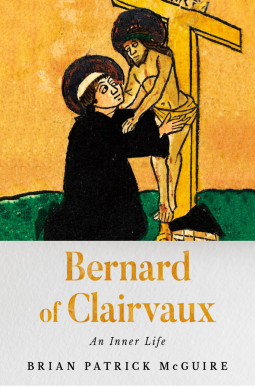
Review: Bernard of Clairvaux - An Inner Life by Brian Patrick McGuire

Synopsis: In this intimate portrait of one of the most consequential men of the Middle Ages, Brian Patrick McGuire delves into the life of Saint Bernard of Clairvaux to offer a refreshing interpretation that finds within this grand historical figure a deeply spiritual human being who longed for the reflective quietude of the monastery even as he helped shape the destiny of a church and a continent. Heresy and crusade, politics and papacies, theology and disputation shaped this astonishing man's life, and McGuire presents it all in a deeply informed and clear-eyed biography.

Following Bernard from his birth in 1090 in Burgundy to his death in 1153 at the abbey he had founded four decades earlier, McGuire reveals a life teeming with both momentous events and spiritual contemplation, from his central roles in the first great medieval reformation of the Church and the Second Crusade, which he came to regret, to the crafting of his books, sermons, and letters. We see what brought Bernard to monastic life, how he founded Clairvaux Abbey, established a network of Cistercian monasteries across Europe, and intervened on behalf of his brethren monks and abbots, as well as in heresy trials, affairs of state, and the papal schism of 1130.

By reevaluating Bernard's life and legacy through his own words and those of the people closest to him, this intimate account reveals how this often challenging saint saw himself and conveyed his convictions to those around him. Above all, McGuire depicts Saint Bernard of Clairvaux in a new light, as a man guided by Christian revelation and open to the achievements of the human spirit.


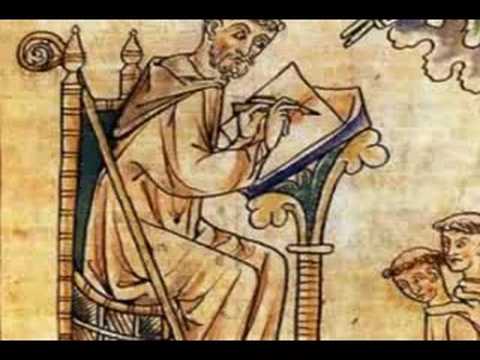
Saint Bernard The great Saint Bernard of Clairvaux ... | Bernard ...Bernard of Clairvaux was and is a complicated historical figure - a contradiction, an enigma, a politician, a saint; humble yet arrogant, proud, egotistical; passive yet domineering; retiring yet forthright and downright interfering. 

McGuire tells us that he seeks " ... to find Bernard as a man, monk, abbot, political figure and central actor in Christian Europe ...".  He successfully dispels some of the myths surrounding Bernard, whilst discussing the interpretation of the earlier sources and how they came to be adopted in later biographies.  McGuire uses Bernard's own writings to "... cast light on the way Bernard understood himself and the world around him ...".

For me personally, I was interested in Bernard's involvement in the papal schism, the Crusades, and his dealings with the Knights Templar and King Roger II of Sicily.  Despite repeated entreaties to return to his humble life within the Cistercian Order, Bernard still managed to insinuate himself upon the international political stage whenever the opportunity presented - in fact he comes across as being quite offended if he was not being consulted by princes, kings and popes!

McGuire mentions that Bernard "... worked to define orthodox belief and at the same time responded for the most part generously to the churchmen and others who turned to him for counsel and assistance ..."

There is no doubting the global influence and magnetism of Bernard, and McGuire provides a readily accessible study of this great man - though with the following proviso - he sees "... no reason to whitewash Bernard to make him politically correct for our age ...".  And rightly so, for Bernard was not of our age and we not of his.

St. Bernard of Clairvaux - Saints & Angels - Catholic Online
Towards the end of the book McGuire takes our certain themes and expounds upon them - themes such as: sources used; prior biographies written; Second Crusade and the Knights Templar; Bernard's relationships with Peter Abelard, Stephen Harding (Abbot of Citeaux) and Peter the Venerable (Abbot of Cluny); his sermons.

For those wishing to learn more and add to their own studies of Bernard, McGuire's book is definitely one to read.

Sunday, June 21, 2020

Review: Espionage in the Divided Stuart Dynasty 1685 - 1715 by Julian Whitehead

Synopsis: King James II was the Catholic king of a Protestant nation, but he had inherited a secure crown and was able to put down the rebellion by his nephew the Duke of Monmouth. In just over three years James had been deserted by those he loved and trusted and had to flee to France in exile. His throne was seized by his son-in-law and daughter, and when they died, his younger daughter succeeded. For James it was a personal tragedy of King Lear proportions; for most of his subjects it was a ‘Glorious Revolution’ that saved his kingdoms from Popery.

Over the next hundred years James or his descendants would attempt to win back the crown with French support and conspiring with British Jacobites and Tories. In Espionage in the Divided Stuart Dynasty Julian Whitehead charts the inner workings of government intelligence during this unstable period, where it was by no means a forgone conclusion that James or his heirs would never regain the throne. It throws light on the murky world of spies and double agents at a time of intensive intrigue and betrayal, with many politicians and peers trying to keep a foot in both camps. It was especially important in such circumstances for a monarch to receive good intelligence about the many intrigues, but could those providing the intelligence be trusted?


This is another one of those books which has me conflicted. On the one hand, it is an engrossing tale of the reign of James II of England and the subsequent quest for the throne after he fled in the face of growing religious opposition and the invasion by invitation of William of Orange - "... the overriding issue that was to fracture both family and nation was religion ..". And for someone dipping their toes into this period, it is a highly useful and informative resource.

On the other it purports to be a look at the role of espionage during this particular period in English history - which leads to more conflict as I find this component to be - at times - somewhat overshadowed by the first (ie: the history).

As my reading "career" has progressed, I have surpassed the general histories and am looking for more niche subjects. I guess what I was hoping for was more on the espionage side of things rather than a history of the Jacobites for I think to pick up this tome based on title alone one already assumes some understanding of events. I wanted to know more about the methods - the modus operandi, the people involved, the problems they faced - a bit more along the lines of Michael Smith's "Anatomy of a Spy" wherein each chapter highlights a particular theme with examples given to illustrate.


James II of England
England in the 17th and 18th centuries faced a very fluid, very dangerous and incredibly complex situation of threats from France, Scotland, the Netherlands, the Papacy, and Spain. Here was a country that was outnumbered and surrounded by its much more powerful continental European rivals. Into this mix was added the overt religious and domestic political factions, and finally the Jacobites

As Paul Fritz notes in The Anti-Jacobite Intelligence System of the English Ministers, 1715–1715 - "Their earlier experiences of attempted plots, near assassinations, foreign aid, open rebellion, and the inability to gauge the movement's strength, created in the ministers between 1715 and 1745 an almost pathological fear of a Stuart restoration - Jacobites must be hunted out, their secrets penetrated, their plans squashed. The best evidence of this pre-occupation of the government with fear of a Stuart restoration lies in an examination of its methods of securing intelligence through the post office, the employment of spies, and personal interviews [interrogations] with the Jacobites themselves."

So, to deal with this myriad of problems, England like its European counterparts, set up elaborate intelligence gathering systems. It relied heavily on intercepted mail and dispatches. A few agents in the postal system could intercept likely correspondence and have it deciphered, copied and forwarded to the intended receiver. And here a real gem of information stands out - Cromwell's "machines of intelligence".  What were these machines that could "open, copy and seal letters" that were rebuilt by John Wildman when he was in charge of the Post Office but later destroyed when he was suspected of disloyalty. I wanted to know more but alack and alas nothing more was forthcoming. Moving on, once the information was in hand, analysts (set up in the cabinet noir or black chamber) tried to interpret diplomatic policies and intentions of states. 

Information dispersal via propaganda and disinformation was another favoured tool - "... because just as governments developed their arcana imperii, or secrets of state, outside in the world a new landscape of media thronged with reams of printed newspapers, pamphlets and books, while in coffee houses political gossip and whispered knowledge flourished – of politicians, but also of the state’s secret affairs ...". In addition, the threat of Jacobitism triggered a new period of military map making with the state urgently requiring details on fortifications, landscapes, roads and rebels - a theme that was not touched upon.
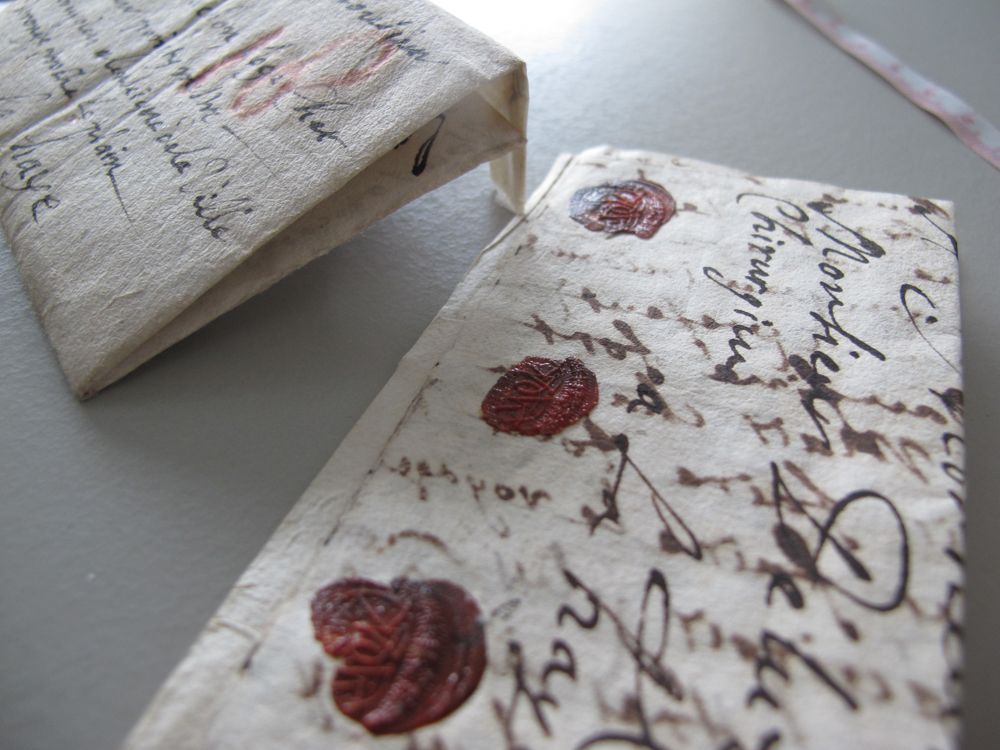
Photos: Treasure Trove of Unopened 17th-Century Letters | Live Science
Sealed Letters
Active agents or spies were also used, especially to estimate military and naval strength and associated activities. These agents, spies and informers were recruited from all aspects of society - diplomats, military, religious, refugees, defectors, fellow exiles, prisoners and captives, local government officials, professional agents provocateur. What I personally gained from this was that espionage was personal - adherence was to religion, nation, monarch but aboveall, to self preservation. Informants transferred their allegiance to whomever paid the most - "... there was money to be had for information ..." - or could offer them the best deal, usually reward or preferment, life and liberty. Lack of opportunity or advancement led some informants to play both sides of the fence. Towards the end of the period under discussion, it is noted that intelligence was "... dominated by adventurers motivated by self-interest and money and thus untrustworthy and often double agents ...". 

Jacobite Rebellion. Several Jacobite uprisings took place in the period 1688-1745
Jacobites
The methods used by the Jacobites, French, Dutch and English were not dissimilar - some were more effective in the collection, collation and usage of intel gathered than others. For as Hugh Douglas, author of Jacobite Spy Wars: Moles, Rogues and Treachery, notes, "... the final betrayal of the Stuart cause had not come about through a mistress's pillow talk: they had finally been shafted by one of their own needy Highland chiefs.."


Further reading:
A history of espionage in early-modern Britain, 1598-1715 by Alan Marshall (publication pending)

The Secret Service under Charles II and James II by James Walker

The Stuart Court in Exile and the Jacobites edited by Eveline Cruickshanks and Edward Corp

The Stuart Secret Army: The Hidden History of the English Jacobites by Evelyn Lord


Wednesday, April 1, 2020

The King's Midwife : A History and Mystery of Madame du Coudray by Nina Rattner Gelbart

Front CoverThis unorthodox biography explores the life of an extraordinary Enlightenment woman who, by sheer force of character, parlayed a skill in midwifery into a national institution. In 1759, in an effort to end infant mortality, Louis XV commissioned Madame Angélique Marguerite Le Boursier du Coudray to travel throughout France teaching the art of childbirth to illiterate peasant women. For the next thirty years, this royal emissary taught in nearly forty cities and reached an estimated ten thousand students. She wrote a textbook and invented a life-sized obstetrical mannequin for her demonstrations. She contributed significantly to France's demographic upswing after 1760.

Who was the woman, both the private self and the pseudonymous public celebrity? Nina Rattner Gelbart reconstructs Madame du Coudray's astonishing mission through extensive research in the hundreds of letters by, to, and about her in provincial archives throughout France. Tracing her subject's footsteps around the country, Gelbart chronicles du Coudray's battles with finance ministers, village matrons, local administrators, and recalcitrant physicians, her rises in power and falls from grace, and her death at the height of the Reign of Terror. 

At a deeper level, Gelbart recaptures du Coudray's interior journey as well, by questioning and dismantling the neat paper trail that the great midwife so carefully left behind. Delightfully written, this tale of a fascinating life at the end of the French Old Regime sheds new light on the histories of medicine, gender, society, politics, and culture.


further reading:
New York Academy of Medicine - biography
New York Times: Baby Boom

Going Public: Women and Publishing in Early Modern France by Elizabeth C. Goldsmith, Dena Goodman
The Art of Midwifery: Early Modern Midwives in Europe edited by Hilary Marland

Saturday, December 7, 2019

Review: Death in Saint-Chartier by Ivo Fornesa

47622221
Synopsis: Seeking a quiet spot to write his memoirs, Laurent de Rodergues secludes himself in Saint-Chartier, a village in the heart of France. Yet his tranquil life is soon disturbed by Carlos, an eccentric millionaire determined to give the town's medieval chateau a costly and controversial makeover. When the chateau is unveiled after months of anticipation, the whole town turns out to gaze in wonder - only to find their host lying dead in a pool of blood. 

Laurent suspects foul play, and when the gendarmes find nothing, he makes it his mission to unmask the murderer. But where to begin? From jilted lovers to jealous rivals, disgruntled employees to shadowy associates practically everyone had a reason to want Carlos dead. As Laurent quickly learns, beneath its idyllic facade, the town of Saint-Chartier is rife with resentment and secret passions.


Laurent de Rodrigues returns to the village of his youth looking for peace and quite. Laurent plans on writing his memoirs, however procrastination and writers' block see the budding author exploring his local village. Dominating the small village is the Chateau de Saint-Chartier. And here elements of real-life intrude into our fictional story.

From 1974 to 2008, the castle had hosted the festival of Saint-Chartier, called the International Meeting of Luthiers and Master-Ringers. This festival, hosted in the park of the castle as well as in the whole village, featured concerts, balls and various activities. It took place every year for 4 days around Bastille Day. 


Following the change of ownership, the festival moved to the Castle of Ars and the restoration of the Chateau began in 2009, a fire in the mid 19th century destroyed part of it. Much of the reconstruction work in the novel is based upon these past works. 

The village of Saint-Chartier itself is quite isolated, the nearest railway station is indeed that of Chateauroux, some 30km away, and its population managed to barely creep above 500 in 2016. The are is noted for both milk production and the production of cheese.

As Laurent settles back into village life, we meet not only the locals, but the one man who has raised a number of hackles - millionaire Carlos Shennan. Carlos himself is a rather shady character whose background and business dealings raise more questions than are answered. His renovations have caused a bit of a stir in the village - though Laurent himself views both these and Carlos as rather refreshing. In a show of communal conviviality, Carlos opens the doors to the recently renovated Chateau and treats the locals to wine, music, and a feast.

When the death of the current own of the Chateau, Carlos Shennan is ruled as suicide, this leaves a bad taste in the mouth of our amateur detective. Laurent de Rodrigues, who, though still regarded as somewhat of a newcomer, decides that there is more to this death and begins his own investigation some many months later. "... nothing gives you a new perspective on things like a bit of distance .."

As Laurent investigates, there is more to each of his list of suspects than meets the eye; and as he reaches his conclusions, self-doubt enters. The final build up to the denouement is palpable - and we are left with a perplexing solution (no spoiler alert here).

The chapters are short yet richly detailed. I really enjoyed this mystery which loses nothing in the translation (originally published in Spanish). I loved how the author's own life is as every bit exciting as the one he has given his protagonist, and the added authenticity of real location and events makes it all the more intriguing. I am looking forward to more from this author.