Showing posts with label stuarts. Show all posts

Sunday, December 22, 2024

Review: Tudor Executions by Helene Harrison

Synopsis: The Tudors as a dynasty executed many people, both high and low. But the nobility were the ones consistently involved in treason, either deliberately or unconsciously. Exploring the long sixteenth century under each of the Tudor monarchs gives a sense of how and why so many were executed for what was considered the worst possible crime and how the definition of treason changed over the period.

This book examines how and why Tudor nobles like Edward Stafford, 3rd Duke of Buckingham; Queen Consort Anne Boleyn; Henry Howard, Earl of Surrey; and Robert Devereux, 2nd Earl of Essex, fell into the trap of treason and ended up on the block under the executioner’s axe. Treason and the Tudor nobility seem to go hand in hand as, by the end of the sixteenth century and the advent of the Stuart dynasty, no dukes remained in England. How did this happen and why?

~ ~ ~

Rather good insight into the Tudor paranoia over the usurpation ..... I mean succession. And as the reader continues on their grisly journey, they will discover how closely related to each other were both monarch and executed noble, as well as noble to noble.

Harrison begins with Edward Plantagenet, Earl of Warwick (ex. 1499) and completed her list with Robert Devereaux, Earl of Essex (ex. 1601) - spanning the reigns of Henry VII to Elizabeth I. All those "victims" contained within the pages of this tome are already known - so no new surprises. 

The narrative is not cumbersome, the research is obvious without being overbearing, the tome is easily readable, and dare I say it, entertaining.

One definitely for the Tudor history buffs!

Friday, September 10, 2021

Review: Crown & Sceptre by Tracy Borman

Synopsis: The author of The Private Lives of the Tudors illuminates the almost thousand-year history of the British monarchy.

Since William the Conqueror, duke of Normandy, crossed the English Channel in 1066 to defeat King Harold II and unite England's various kingdoms, forty-one kings and queens have sat on Britain's throne. "Shining examples of royal power and majesty alongside a rogue's gallery of weak, lazy, or evil monarchs," as Tracy Borman describes them in her sparkling chronicle, Crown & Sceptre. Ironically, during very few of these 955 years has the throne's occupant been unambiguously English--whether Norman French, the Welsh-born Tudors, the Scottish Stuarts, and the Hanoverians and their German successors to the present day.

Acknowledging the intrinsic fascination with British royalty, Borman lifts the veil to reveal the remarkable characters and personalities who have ruled and, since the Restoration of the monarchy in 1660, more ceremonially reigned. It is a crucial distinction explaining the staying power of the monarchy as the royal family has evolved and adapted to the needs and opinions of its people, avoiding the storms of rebellion that brought many of Europe's royals to an abrupt end. Richard II; Henry VIII; Elizabeth I; George III; Victoria; Elizabeth II: their names evoke eras and the dramatic events Borman recounts. She is equally attuned to the fabric of monarchy: royal palaces; the way monarchs have been portrayed in art, on coins, in the media; the ceremony and pageantry surrounding the crown.

Elizabeth II is already one of the longest reigning monarchs in history. Crown & Sceptre is a fitting tribute to her remarkable longevity and that of the magnificent institution she represents.


Again, I am very wary when it comes to books with the title "new" in them as I invariably find nothing new. And again there was really nothing new here for me. I am going to preface this review, however, by stating that I read only up to the reign of Anne for beyond that was not really within my purview - therefore whether there was anything "new" or not to be gleaned I will leave in the capable hands of another reader.

Borman compartmentalizes the book according to familial term designated for each ruler and their dynasty. As such, it is broken down as follows (making it easier to chose where you want to start):

Part One - Normans: William I to Stephen
Part Two - Plantagenets: Henry II through to Richard II
Part Three - Tudors: Henry VII to Elizabeth I
Part Four - Stuarts: James VI & I to Anne, and also includes the interegnum of the Protectorate
Part Five - Hanoverians: George I to Edward VII
Part Six - Windsors: George V to Elizabeth II.

Each section provides enough detail on and about each monarch and their reign; however, there are the usual tropes associated with a number of monarchs that I would hesitate in recommending it as an unbiased primer for someone starting.  Having said that, there is enough here from which to launch into more detailed or specialised accounts.

Now whilst I mentioned that for me there was nothing new in the bulk of the narrative - there were a couple of little nuggets that I would have loved more detail on, as Borman disappointingly does not follow up with any actual source material. These are:

Page 22: Borman mentions that Matilda of Flanders, wife to William I, had once been told some prophecy foretelling the deaths of three of her sons in the New Forest.
Page 118: Henry IV's last words acknowledging himself as an usurper to his son and heir Henry V - the only reference is the Oxford Book of Anecdotes! But that is hardly a reliable source surely. I want to know who originally documented this.
Page 155: Borman in discussing the discovery of the remains of bones in the Tower - and their general acceptance without any proof that they are the two lost princes - makes mention that workman accidentally damaged the vault of Edward IV and Elizabeth Woodville (c.1789) and discovered two smaller tombs contained within. These were then attributed to two of their children, whose actual tombs were located elsewhere within St George's Chapel. So who was buried within - again, a source for this would be appreciated.

These nuggets are the type of thing that stands out for me - but as no source was / can be provided, it just falls within the realm of whimsical hearsay, and places this book back firmly on the shelf of popularist general history.

Still, there are many who will appreciate the condensed accounts of England's monarchs, spanning a period of some nine hundred odd years.

Friday, April 2, 2021

Review: Scourge of Henry VIII by Melanie Clegg

Synopsis: Although Mary, Queen of Scots continues to fascinate both historians and the general public alike, the story of her mother, Marie de Guise, is much less well known. A political power in her own right, she was born into the powerful and ambitious Lorraine family, spending her formative years at the dazzling and licentious court of Francois I. Although briefly courted by Henry VIII, she instead married his nephew, James V of Scotland, in 1538.

James' premature death four years later left their six day old daughter, Mary, as Queen and presented Marie with the formidable challenge of winning the support of the Scottish people and protecting her daughter s threatened birthright. Content until now to remain in the background and play the part of the obedient wife, Marie spent the next eighteen years effectively governing Scotland, devoting her considerable intellect, courage and energy to safeguarding her daughter s inheritance by using a deft mixture of cunning, charm, determination and tolerance.

The last serious biography of Marie de Guise was published in 1977 and whereas plenty of attention has been paid to the mistakes of her daughter s eventful but brief reign, the time has come for a fresh assessment of this most fascinating and under appreciated of sixteenth century female rulers."


Considering I already have over half of the reference sources listed at the end, this was nothing new for me. As an introduction to Marie de Guise, it is suitable and admirable in bringing to life a woman so often overshadowed by her daughter, Mary.

However, like many others, I had an issue with the title - one expected to see Marie and Henry duke it out but alas, alack,and anon ...... twould have been better titled "A Life of Marie de Guise".  And to say that the last serious biography on Marie was 1977 is to overlook quite a number of tomes published since then, including works by Linda Porter, Pamela Ritchie, even a reprint of Dr Rosalind Marshall's book (used by Clegg as a source).


Friday, September 27, 2019

Love, Madness, and Scandal by Johanna Luthman

Cover for 

Love, Madness, and Scandal


The high society of Stuart England found Frances Coke Villiers, Viscountess Purbeck (1602-1645) an exasperating woman. She lived at a time when women were expected to be obedient, silent, and chaste, but Frances displayed none of these qualities. Her determination to ignore convention contributed in no small measure to a life of high drama, one which encompassed kidnappings, secret rendezvous, an illegitimate child, accusations of black magic, imprisonments, disappearances, and exile, not to mention court appearances, high-speed chases, a jail-break, deadly disease, royal fury, and - by turns - religious condemnation and conversion.


As a child, Frances became a political pawn at the court of King James I. Her wealthy parents, themselves trapped in a disastrous marriage, fought tooth and nail over whom Frances should marry, pulling both king and court into their extended battles. When Frances was fifteen, her father forced her to marry John Villiers, the elder brother of the royal favourite, the Duke of Buckingham. But as her husband succumbed to mental illness, Frances fell for another man, and soon found herself pregnant with her lover's child.

The Viscountess paid a heavy price for her illicit love. Her outraged in-laws used their influence to bring her down. But bravely defying both social and religious convention, Frances refused to bow to the combined authority of her family, her church, or her king, and fought stubbornly to defend her honour, as well as the position of her illegitimate son.

On one level a thrilling tale of love and sex, kidnapping and elopement, the life of Frances Coke Villiers is also the story of an exceptional woman, whose personal experiences intertwined with the court politics and religious disputes of a tumultuous and crucially formative period in English history.


Thursday, September 26, 2019

The Correspondence of Elizabeth Stuart, Queen of Bohemia - Nadine Akkerman

The Correspondence of Elizabeth Stuart is the first complete edition of the letters of Elizabeth Stuart (1596-1662), Electress Palatine of the Rhine and Queen of Bohemia, daughter of King James I of England and Anna of Denmark.


Volume I covers Elizabeth's life as princess and consort in the years between 1603 and 1631. It includes letters exchanged with her brother, Henry Frederick, the courtship letters of Frederick V, Elector Palatine, and Elizabeth's experiences of both marital and court life in Heidelberg, especially her struggle with Germanic culture and her arguments with both her husband and mother-in-law over rights of precedence. From 1619 her letters become increasingly political as she begs her father, the Duke of Buckingham, and others for assistance in the desperate struggle for the Crown of Bohemia. Deposed in 1620, Elizabeth spends her time in exile devising ploys to gain further financial, moral, and military support from statesmen and military leaders such as Sir Dudley Carleton, the 'Mad Halberstadter' Christian of Brunswick, Count Ernest of Mansfeld, King Christian IV of Denmark, and Bethlen Gabor, Prince of Transylvania, behaviour increasingly in defiance of her father's wishes and demands.

Elizabeth's letters evidence her slow transformation from political ingenue to independent stateswoman, a position cemented as her husband fell victim to the war they had precipitated. The diplomatic writing skills she developed in this period were to become her only weapon for securing both the inheritance of her many children and her own position as a key religious, political, and cultural figure in early-modern Europe.


Monday, July 1, 2019

Bourbon and Stuart by John Miller

Bourbon and Stuart: An enlightening comparison of the French and English monarchy in the seventeenth century by [Miller, John]In the seventeenth century most educated Europeans took it for granted that monarchy was the best form of government. Across Europe, monarchy was the norm, from the kings of England and France in the west, to the tsar of all the Russias in the east. But despite the widespread belief that kings were part of the natural order of things, the mid seventeenth century saw the execution of Charles I and the abolition of the monarchy in England, and a civil war in France which seemed to threaten to overturn the French monarchy.

John Miller’s entertaining and scholarly book is a rare comparison of monarchy in France and England during the seventeenth century, showing the weaknesses which led to civil war in both countries and the resilience which enabled the monarchies to emerge from their respective crises and go from strength to strength in the latter part of the century. This is a highly original work which covers new ground, questions received assumptions and shows the importance of the personalities and abilities of the key characters in influencing the course of events.

Throughout the text, John Miller has included lively and entertaining pen-portraits of the various kings and those most closely associated with them. This colourful background puts key characters of the age into a wider context, and shows clearly how closely the private lives of individual monarchs were related to decision-making.

Above all, this fascinating and wide-ranging account suggests fundamental differences between France and England which explain why the English monarchy recovered from the mid century crisis and still survives today, while the French monarchy came to grief at the Revolution.

Bourbon and Stuart: An enlightening comparison of the French and English monarchy in the seventeenth century is essential reading for anyone interested in the seventeenth century and the key personalities of the age.

Saturday, May 25, 2019

Redemption by Andrew Murrison

Redemption by [Murrison, Andrew]Synopsis: January 1649

The people of London are gathering around the scaffold to witness the execution of King Charles I. The English Civil War between Roundhead and Cavalier – followers of Parliament or King – appears to have reached its bloody climax.

But who’s the executioner sweating beneath his heavy disguise? The clerk scribbling the King’s last words is in no doubt. He scratches the name that has eluded historians since and calculates the money he can make from it.

Six years earlier, a heated disagreement between west-country yeoman Nathaniel Salt and his neighbour, the wealthy merchant Erasmus Carew, turns into a dangerous vendetta when Nat’s house is torched by Carew’s thugs and his children burned alive.

Carew supports the King and his cause. Nat meanwhile joins the Parliamentarians, vowing to avenge his dead children and he rises up within the ranks of Oliver Cromwell’s side against the King, and against Carew.

Marriage to his childhood sweetheart, the Squire’s daughter Euphemia – Effam - Farrington, brings Nat land, status and a new name. He becomes Captain Nathaniel Farrington and succeeds the Squire as Member of Parliament for Hinton. 

An incompetent midwife dashes the couple’s hopes of children but adopting the product of an earlier liaison gives them their son and heir. The child is named after his godfather Oliver Cromwell.

Nat’s rise is facilitated by one Foxwood, a political fixer and spin-doctor. The Westminster insider’s diary of secrets contains plenty of material to feed the news books of London and for blackmail.

As King Charles’ vengeful son is restored to his father’s throne, Foxwood prepares his final deception. With Nat taking ship for Massachusetts, the identity of the King’s executioner is finally revealed, and his true relationship with Erasmus Carew…

The Language and Literature of Chastity


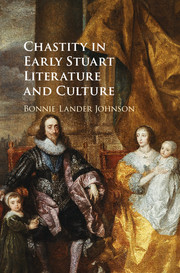
Chastity in Early Stuart Literature and CultureIn her book Chastity in Early Stuart Literature and Culture, Dr Bonnie Lander Johnson (Faculty of English) describes how chastity became a cult that was as much embodied by the ceremonies and performances of the court as it was espoused by the anti-court Puritan writers working in the new world of popular print. Lander Johnson writes that chastity, as an important Christian virtue, was “one of the key conceptual frameworks through which individual men and women understood their relationship to their own bodies, to their community, to the wider Christian world and to God”. But “the same virtue that could protect the body from infection and a marriage from dissolution could eventually help to topple a government and undo a King”.

Lander Johnson has written her first book in order to look in depth at chastity as a theme running through the life of the royal court, and the circles of power around it, in the first half of the 17th century – as seen through the literature of William Shakespeare, John Milton and a number of lesser known poets and playwrights, including John Ford. It is a scholarly book, aimed at an academic readership, but it touches on universal human preoccupations – how we see ourselves, how we want to be seen, how we curate our own image through private and public performance. 

read more here @ University of Cambridge


Tuesday, September 29, 2015

September Additions - Part 3

And, finally, Part 3 of September's additions to the Library:

Byzantium and the Rise of Russia: A Study of Byzantino-Russian Relations in the Fourteenth Century by John Meyendorff - This book describes the role of Byzantine (predominantly ecclesiastical) diplomacy in the emergence of Moscow as the capital of Russia in the fourteenth century, and the cultural, religious and political ties which connected the Northern periphery of the Byzantine Orthodox 'Commonwealth' with its centre in Constantinople. 

Colonial Ireland, 1169-1369 by Robin Frame - This book examines the processes of conquest and colonization, against the background of economic expansion and seigneurial enterprise apparent elsewhere in Britain and Europe. It also explores the nature and extent of colonial retreat, and the political and cultural adjustments that were evident amid the less favorable conditions of the 14th century.

The Kingdom of the Isles: Scotland's Western Seaboard C.1100-C.1336 by Andrew McDonald - Exploring the history of Scotland's western seaboard during the central Middle Ages, this study discusses three interrelated themes: the existence of the Isles and coastal mainland as a kingdom; the monarchs of the region, from Somerled to his descendant John MacDonald, the first Lord of the Isles; and the complex relations among the Isles, Scotland, Norway, and England. 

Thomas Becket : Warrior, Priest, Rebel, Victim: a 900-year-old Story Retold by John Guy - The story of "Thomas Becket" is the story of an enigma, as well as of one of the most tumultuous periods in English history. Drawing on a vast array of contemporary records, personal letters and first-hand accounts, John Guy has reconstructed a psychologically compelling, stunningly nuanced and utterly convincing account of this most remarkable man, the dramatic times in which he lived and the pivotal role he played in his nation's history.

The Royal Stuarts : A History of the Family That Shaped Britain by Allan Massie - Exploring the family's lineage from the first Stuart king to the last, The Royal Stuarts is a panoramic history of the family that acted as a major player in the Scottish Wars of Independence, the Union of the Crowns, the English Civil War, the Restoration, and more. Drawing on the accounts of historians past and present, novels, and plays, this is the complete story of the Stuart family, documenting their path from the salt marshes of Brittany to the thrones of Scotland and England and eventually to exile. 

The Audacious Crimes of Colonel Blood : The Spy Who Stole the Crown Jewels and Became the King's Secret Agent by Robert Hutchinson - Bestselling historian Robert Hutchinson paints a vivid portrait of a double agent bent on ambiguous political and personal motivation, and provides an extraordinary account of the perils and conspiracies that abounded in Restoration England.