Showing posts with label religion. Show all posts

Tuesday, November 4, 2025

Review: The Last Days by Lindsay Jacob

Synopsis: It is the year 833, and in the land of the East Angles, the rains have failed. The poor pray and starve. Then foreign hermits enter the north of the kingdom. They preach that God’s wrath has fallen upon the people because the king and the head of the Church are heralds of the Antichrist and have allowed sin to flourish. In the fevered atmosphere, lives are taken.

In the kingdom’s south, a boy with royal connections commits an inexplicable crime. The situation spirals out of control, and murder follows. The body of one of the victims is rumoured to have caused a miracle, drawing starving folk to surround the abbey where the body lies. In desperation, the ealdorman calls on Father Eadred—a simple priest with an ability to solve murders— to investigate the crimes.

Eadred throws himself into the task, risking his sanity and life to discover the truth. He uncovers a vile plot, where Christians and pagans are entangled in a volatile web. Eadred rushes from one end of the kingdom to the other, in an attempt to prevent the final crime.

But has someone beaten him?

~ ~ ~

I have read the first in the series but missed the second - this one is the third mystery.

One of the key themes in this mystery is the concept of "the last days". The concept of the "last days" varies across religions, but generally refers to a final period before an end-time event, often involving a final judgment. In Christianity, this period includes signs like moral decline, false prophets, and a coming tribulation before a final judgment and Christ's return.

"... it is a time of false prophets and deceivers ..."

All of these elements are present - church corruption, religious turmoil, vice, crop failure, drought, war, famine. As a sign of religious favour, the people and the church look to miracles as a sign that all will be well. It also means that the site of the miracle may become a place of pilgrimage, drawing in more income (and prestige) for the religious establishment.

However, murder has been committed against a royal personage and Eadred is sent forth to investigate. He comes up against a community shrouded in superstition and a regression to pagan ways, itinerant heretics preaching the end of the world, and suddenly - a miracle amid the bloodshed.

Once Eadred looks like he may have a firm grasp on events, things take a turn as egos vie for dominance, and church and state vie for the power of the people. Will Eadred solve the mysteries at hand or become one of the victims himself .... only time will tell.

This is a well constructed mystery that often takes one step forward and two steps back as the various cases Eadred must solve overlap, and his thoroughness in investigating often has him going hither and thither. The 9th century is depicted well with the ongoing battle of church and state for the souls of those under its protection and as detailed within, when all else fails, the people resort to the "old" religion of the ancestors. Despite Christianity's spread, there were still pockets resistance and a resurgence was on the horizon!

Jacob engages and immerses his readers without appearing to be providing a history lesson. A good little mystery series.

Monday, October 27, 2025

Review: Ravenna by Judith Herrin

Synopsis: In 402 AD, after invading tribes broke through the Alpine frontiers of Italy and threatened the imperial government in Milan, the young Emperor Honorius made the momentous decision to move his capital to a small, easy defendable city in the Po estuary - Ravenna. From then until 751 AD, Ravenna was first the capital of the Western Roman Empire, then that of the immense kingdom of Theoderic the Goth and finally the centre of Byzantine power in Italy.


In this engrossing account Judith Herrin explains how scholars, lawyers, doctors, craftsmen, cosmologists and religious luminaries were drawn to Ravenna where they created a cultural and political capital that dominated northern Italy and the Adriatic. As she traces the lives of Ravenna's rulers, chroniclers and inhabitants, Herrin shows how the city became the meeting place of Greek, Latin, Christian and barbarian cultures and the pivot between East and West. The book offers a fresh account of the waning of Rome, the Gothic and Lombard invasions, the rise of Islam and the devastating divisions within Christianity. It argues that the fifth to eighth centuries should not be perceived as a time of decline from antiquity but rather, thanks to Byzantium, as one of great creativity - the period of 'Early Christendom'. These were the formative centuries of Europe.

While Ravenna's palaces have crumbled, its churches have survived. In them, Catholic Romans and Arian Goths competed to produce an unrivalled concentration of spectacular mosaics, many of which still astonish visitors today. Beautifully illustrated with specially commissioned photographs, and drawing on the latest archaeological and documentary discoveries, Ravenna: Capital of Empire, Crucible of Europe brings the early Middle Ages to life through the history of this dazzling city.

~ ~ ~

I picked this one as: (1) I have Herrin's "Byzantium" which I enjoyed; and (2) for the inclusion of Galla Placidia and the Visigoth Kingdom, and the succeeding Ostrogoth and Lombard Kingdoms.

The period covered off was one of turmoil - political and religious, of conspiracy and machinations, internal and external power struggles, creation and destruction of empires. It was a period I was familiar with - and Herrin's tome is more on the academic side of things rather than a travel guide for the uninitiated. The city prospered after the fall of Rome, and this is evident in the church building program undertaken in the early 6th century and the city's position as a key power base for the Byzantine Empire.

For me, Herrin's book provided me with what I was specifically looking for - for others, a more general history may be in order.


Note: read in 2020 / review posted 2025

Thursday, February 6, 2025

Review: The Pope's Butcher by Joseph C Gioconda

Synopsis: A new novel inspired by the true historical account of one man and his penchant for murder and misogyny in the medieval Roman Catholic Church is being released.

A story that has never been released to the public, The Pope's Butcher recounts the life of Father Heinrich Institoris, the Grand Inquisitor, a visionary man driven to cleanse the world of Eve's original sin by eradicating any woman he suspects of witchcraft. As Inquisition courts bloom across Europe, he vows to leave no stone unturned, no hovel unexamined, and no woman alive, in his search of his own perverse version of justice.

At a time when women had no power or voice, only one man seeks to stop him. The reader follows the life of Sebastian, a young seminarian who was abandoned as a child but carries with him an innate sense of morality that drives him to stand up for even the most vulnerable victims against his own Church. Will such a humble man be able to stop this powerful murderer, a killer even the Pope admires?

This astonishing account of religion, witchcraft and the occult in the Middle Ages reminds us that violence against women is as old as civilization itself and we must understand the events of the past, so we never repeat them.

~ ~ ~

I was expecting something a bit different and as a result found no connection to the narrative nor the characters.

On the one hand we have the character of the witch-hunter and Grand Inquisitor, Fra Heinrich Institoris, a perverse and perverted man, whose mission is to eradicate witches and women he deems are witches. This is definitely a man worthy of further exploration, even if in a fictionalised account - but we are left with only a rudimentaty glance.

Then we have the naive, unworldly Sebastian, who is sent off on what is deemed to be a mission of such importance - to gather as much information as he can about witches and any heretical texts and report back to Heinrich. Quite frankly - Sebastian and his storyline was - for me - pure fantasy - it just didn't ring true for a supposed fictionalised account of actual historic events. Was Sebastian surplus to stock - probably, as I found myself wondering if he was really necessary at all, just there to pad out the word count and "make discoveries" (ie: display the author's research).

When this narrative finally gets to the point, we discover that this is the foundation story for the infamous "Malleus Maleficarum" or "Hammer of Witches" - and the narrative might have been put to better use by instead focusing more on the character of the tome's author, Heinrich Kramer or Heinrich Institor and just plain ditching the woeful character of Sebastian.

Overall, this just didn't cut it for me - I did read it through to the end but was disappointed I didn't set it aside sooner.

Monday, December 27, 2021

The VERY raunchy history of sex in the Middle Ages is revealed in a new book

From monks thought to have died from a lack of sex, to priests conjuring demons to lure women into bed, a new book offers fascinating glimpses into the history of sex in the Middle Ages.

Katherine Harvey's illuminating novel The Fires of Lust: Sex in the Middle Ages offers a peak into the bedrooms of ordinary mediaeval men and women living in western Europe.

Harvey is a London-based historian and author specialising in the medieval period and Honorary Research Fellow specialising in history, classics and archaeology at Birkbeck, University of London.

The book explains how the majority of ideas and attitudes towards sex and relationships were rooted in two dominant belief systems: Roman Catholic Christianity and Galenic medicine.

From women trying to reduce their breasts to look more virginal to drinking wine mixed with powdered hare testicles in a bid to conceive a son, the book reveals many astonishing practices.

As well as some surprises, like an emphasis on female pleasure when it came to reproduction, there are shocking anecdotes of brutal punishments for behaviour deemed immoral during the period.

read more here @ Daily Mail.

Saturday, September 11, 2021

Review: Brotherhood of the Shroud by Julia Navarro

Synopsis: The Brotherhood of the Holy Shroud is the explosive international bestseller that mixes fact and fiction to tell the riveting story of one of the world’s most controversial relics—the Holy Shroud of Turin—and the desperate race to save it from those who will stop at nothing to possess its legendary power....

A fire at the Turin cathedral and the discovery of a mutilated corpse are the latest in a disturbing series of events surrounding the mysterious cloth millions believe to be the authentic burial shroud of Jesus Christ. Those who dare to investigate will be caught in the cross fire of an ancient conflict forged by mortal sacrifice, assassination, and secret societies tied to the shadowy Knights Templar.

Spanning centuries and continents, from the storm-rent skies over Calvary, through the intrigue and treachery of Byzantium and the Crusades, to the modern-day citadels of Istanbul, New York, London, Paris, and Rome, The Brotherhood of the Holy Shroud races to a chilling climax in the labyrinths beneath Turin, where astounding truths will be exposed: about the history of a faith, the passions of man, and proof of the most powerful miracle of all….


This is two stories in one. The first is the story of the Turin Shroud and how it came to be whilst the second is set in modern-day times, following a team of investigators from the Italian Art Crimes Department as they look into a series of "accidents" at Turin Cathedral. Both stories run along side each other, so the narrative alternates as we progress.

So to the first narrative - the Turin Shroud. There is much history and mythos surrounding this particular relic that to discuss any of at here would be quite lengthy. Suffice to say that the Shroud is said to be the burial cloth of Jesus after the Crucifixion. Carbon dating on the shroud hints at a later date rather than the biblical one. So, which is right - well here Navarro offers an alternate theory. To explain her theory, she relates the tale of how the Shroud came to be in the possession of a small Christian community in biblical Edessa (modern day Urfa) which was ruled by the Abgarid dynasty - and of how it was lost before the narrative merges with the modern day "life" of the Shroud. To be honest, I do like an author / writer who explore an alternate to the traditional line of thought or "the party line" as it opens up opportunities to delve into potential resources used (which I have done) to develop and creative the narrative.

However, all is not so simple as there are two groups, each of whom have a vested interest in not only the Shroud but in its possession, and each are attempting to reclaim it for their own ends - one descended from the original guardians of the Shroud (based in Urfa) and the other from the Knights Templar, or rather their modern-day interpretation.

Enter Marco Valoni, Chief of the Italian Art Crimes Department and his team who are brought into investigate the latest attempt on the Cathedral of Turin. This act of arson has now prompted Marco to look deeper into previous attempts to find some link, some explanation.  As a side note, and it is only speculation on my part, but it is possible that the massive fire in the Chapel of the Holy Shroud in 1997 (which is still a mystery) may have been the catalyst for this story. The Chapel remained closed for over 21 years whilst repairs and restoration work was being carried out.

And so the reader is taken on the same course as the investigative team as they discover new "facts" and unravel the convoluted history of the Shroud - and the presences of these shadowy groups are slowly revealed.  It is in the following of the investigation that the reader is given a history lesson on the Shroud whilst at the same time getting an insight into the daily and private lives of the team. This side of the narrative was a little tedious and there was not much action going on to make it worthy of a true thriller. It is only as the team start to place the pieces together and move the players around the proverbial chessboard, that the action does pick up - though not until much later in the book.

I enjoyed it for what it is - I wouldn't say it was an action-packed thriller along the lines of a Dan Brown book, but it is still an decent enough read.  The ending did feel a little rushed, but the narrative does need resolution.  I bought my copy cheaply, second hand, have had it for a numbers of years, and this was my second reading.  Time to pass it on.

Navarro has another book out along similar lines - The Bible of Clay - which I haven't read.

Sunday, August 22, 2021

Review: Powers & Thrones by Dan Jones

Synopsis: Dan Jones's epic new history tells nothing less than the story of how the world we know today came to be built. It is a thousand-year adventure that moves from the ruins of the once-mighty city of Rome, sacked by barbarians in AD 410, to the first contacts between the old and new worlds in the sixteenth century. It shows how, from a state of crisis and collapse, the West was rebuilt and came to dominate the entire globe. The book identifies three key themes that underpinned the success of the West: commerce, conquest and Christianity.

Across 16 chapters, blending Dan Jones' trademark gripping narrative style with authoritative analysis, Powers and Thrones shows how, at each stage in this story, successive western powers thrived by attracting – or stealing – the most valuable resources, ideas and people from the rest of the world. It casts new light on iconic locations – Rome, Paris, Venice, Constantinople – and it features some of history's most famous and notorious men and women.

This is a book written about – and for – an age of profound change, and it asks the biggest questions about the West both then and now. Where did we come from? What made us? Where do we go from here?


It should come as no surprise that Jones has decided to take on 1000 years of history and condense it into one tome.

To be perfectly blunt, I can take or leave Jones as an author - its nothing personal. I've read his books and find them entertaining enough, but to be honest he is not one of my "go to" authors - I don't go all "fan girl" when I see his books.

Having said that, this is quite a good, well-rounded read, that will appeal to the masses. It is broken down into four parts, and four sub topics, that flow in a linear timeline. The focus encompasses both Roman Empires (East & West), Europe and the UK. Its only when discussing the Arabs and Mongols does Jones veer from a predominantly Euro-centric narrative.

To give you an idea of what is in store for the reader, I have provided a little summary - each chapter and part can be read as a "stand alone" .

Part I - 470 - 750.
Its four sub catergories are:
Romans - the Roman Empire (social, military, culture and religion) with a focus on Britain and its invaders
Barbarians - Goths, Vandals, Visigoths, Huns, et el
Byzantines - predominantly Justinian and Theodora
Arabs - invasions and their conflict in the Mediterranean (Greeks and Franks)

Part II - 750 - 1215
Franks - Merovingians and Carolingians, focusing on Charlemange up the fracturing of the kingdom
Monks - looking mainly at the Christianity of the monks, pilgrimage sites
Knights - rather self explanatory, with good detail on El Cid, and the chivalric romances
Crusades - covers from the First to the decline, circa Emperor Frederick III

Part III 1215 - 1347
Mongols - their push westward, biographies on notable leaders including Tamerlane
Merchants - Venice and Genoa feature, with the emphasis on trade routes, banking, the rise of the Republics, and of course, Marco Polo and Dick Whittington
Scholars - rise of the universities, translations of Arabic sources, the insular nature of the church scholars, Isidore of Seville
Builders -Edward I's castle building in Wales, cathedrals, fortified cities

Part IV 1347 - 1527
Survivors - plague, little ice age, economic reform and rebellion, reign of Richard II of England
Renewers - Joan of Arc, Jan van Eyck, Leonardo da Vinci, the Medici, the Renaissance, Chaucer, Dante, Petrarch
Navigators - siege of Constantinople, medieval voyager to India, Africa and the Americas, and the explorers such as Henry the Navigator, Magellan, Columbus, and the Conquistadors
Protestants - papal schism, reformation, Martin Luther, Henry VIII, Charles V

So, you can pick and choose areas of interest, which makes the one thousand year history over seven hundred plus pages seem not that daunting.

The aim here is to entertain and inform, and Jones does this remarkably well; and there is - of course - plenty of notes and references for the avid history buff to go exploring further on their own.

I would recommend this to anyone looking for a slightly different take on the history narrative - and for all fans of Jones!

Saturday, August 21, 2021

Going to Church in Medieval England by Nicholas Orme

An engaging, richly illustrated account of parish churches and churchgoers in England, from the Anglo-Saxons to the mid-sixteenth century.

Parish churches were at the heart of English religious and social life in the Middle Ages and the sixteenth century. In this comprehensive study, Nicholas Orme shows how they came into existence, who staffed them, and how their buildings were used. He explains who went to church, who did not attend, how people behaved there, and how they—not merely the clergy—affected how worship was staged.

The book provides an accessible account of what happened in the daily and weekly services, and how churches marked the seasons of Christmas, Lent, Easter, and summer. It describes how they celebrated the great events of life: birth, coming of age, and marriage, and gave comfort in sickness and death. A final chapter covers the English Reformation in the sixteenth century and shows how, alongside its changes, much that went on in parish churches remained as before.


read more in this article by Monica Greep @ Mail Online

Sunday, May 3, 2020

Books: Medieval Spain

The Unconquered Knight: A Chronicle of the Deeds of Don Pero Niño, Count of Buelna by Gutierre Diaz de Gamez
The heroic exploits of the 15th-century Count of Buelna, including tournament glories, knightly romance and the bitter hardships of life on campaign.

Gutierre Diaz de Gamez entered the service of Pero Niño, count of Buelna, in 1402, when they were both about 23, and served as head of his military household for nearly fifty years. He began a chronicle of his master's deeds in about 1431, and it is this eyewitness account of the life of a knight, both in war and peace, which is translated here. 

It is written in praise of his master, but beneath the veneer of hero-worship a good deal of the reality of a knight's existence shows through: even in the prologue, Diaz de Gamez gives a bitter picture of the hardships of a military campaign: 'Knights who are at the wars eat their bread in sorrow; their ease in weariness and sweat... Mouldy bread or biscuit, meat cooked or uncooked, water from a pond or a butt, poor sleep with their armour still on their backs, the enemy an arrow-shot off...' On the other hand, he can evoke the glories of a tournament, in which his master excelled, and his triumphs as a military commander both by sea and land. It is a story full of colour, adventure and romance, and one which deserves its place in the chronicles of chivalry.


The Duke of Alba by Henry Kamen
"The Duke of Alba" by Henry KamenFerdinand Alvarez de Toledo, the third duke of Alba (1507–82), is known to history as “the butcher of Flanders.” The general who carried out Philip II’s repressive policies in the Netherlands, he was responsible for the massacre of thousands of men, women, and children, considering it better to lay waste an entire country than leave it in the hands of heretics. Alba came to represent for contemporaries as well as for future generations the unacceptable face of Spanish imperialism.

In this intriguing re-evaluation, Henry Kamen narrates the duke’s personal history, looking beyond the conventional image to reveal motives and to explain rather than simply to condemn. Kamen examines the early years of Alba’s life, his travels over the whole of Europe, and the complex military and political career that made him Spain’s leading general of the imperial age. Drawing on the duke’s rich and expressive surviving correspondence, Kamen explores Alba’s beliefs and considers his infamous actions within the contexts of his time and of the monarchs—Emperor Charles V and King Philip II of Spain—whom he served.


Phillip II by Henry Kamen
"Philip of Spain" by Henry KamenPhilip II of Spain—ruler of the most extensive empire the world had ever known—has been viewed in a harsh and negative light since his death in 1598. Identified with repression, bigotry, and fanaticism by his enemies, he has been judged more by the political events of his reign than by his person. This book, published four hundred years after Philip's death, is the first full-scale biography of the king. Placing him within the social, cultural, religious, and regional context of his times, it presents a startling new picture of his character and reign.

Drawing on Philip's unpublished correspondence and on many other archival sources, Henry Kamen reveals much about Philip the youth, the man, the husband, the father, the frequently troubled Christian, and the king. Kamen finds that Philip was a cosmopolitan prince whose extensive experience of northern Europe broadened his cultural imagination and tastes, whose staunchly conservative ideas were far from being illiberal and fanatical, whose religious attitudes led him to accept a practical coexistence with Protestants and Jews, and whose support for Las Casas and other defenders of the Indians in America helped determine government policy. Shedding completely new light on most aspects of Philip's private life and, in consequence, on his public actions, the book is the definitive portrayal of Philip II.


Commander of the Armada: The Seventh Duke of Medina Sidonia by Peter Pierson
"Commander of the Armada" by Peter PiersonThe seventh Duke of Medina Sidonia is best known as the man who led to defeat the Spanish Armada of 1588. This book by Peter Pierson is the first complete biography in any language of this important figure. Based on previously inaccessible documents from the Medina Sidonia archives, it offers fascinating material on sixteenth-century Spain and new and exciting details about the armada campaign.

Pierson begins by describing the Duke’s youth and his close ties to the court of Philip II. He discusses the Duke’s lifelong involvement with the shipping that navigated the treasure route from Spain to the Indies, his significant role in Philip’s successful quest for the Portuguese Crown, and his appointment as Captain General of the Ocean-Sea. Spain’s war with England dominates the central chapters of the book. Pierson relates how Medina Sidonia embargoed ships and recruited men for the armada, the largest fleet yet concentrated in early modern Europe, and he analyzes Philip’s choice of the Duke to command the armada. 

Pierson provides a radical reinterpretation of the armada campaign, and with the aid of ten superb maps and diagrams he reconstructs the positions of the two navies, the number and names of ships, and their movements from the fleet’s departure for England to the surviving vessel’s arrival home. Pierson continues with Medina Sidonia’s life after the armada campaign and discusses his second appearance on the world stage, as the unsuccessful defender of Cádiz against a major Anglo-Dutch attack in 1596. 


"The Count-Duke of Olivares" by J. H. ElliottThe Count-Duke of Olivares: The Statesman in an Age of Decline by JH Elliott
A masterful biography of Don Gaspar de Guzmán, Count Duke of Olivares—righthand advisor to Spain’s Philip IV, archrival of Cardinal Richelieu, and a central figure in seventeenth-century Europe. Written by the eminent historian J. H. Elliott and based on many original sources, this elegant book is a landmark in the study of a man and an age.


The Catalan Rule of the Templars: A Critical Edition and English Translation from Barcelona, Archivo de la Corona de Aragón, `Cartas Reales', MS 3344 translated by J.M. Upton-Ward
The Catalan Rule of the Templars: A Critical Edition and English Translation from Barcelona, Archivo de la Corona de Arag�n, `cartas Reales', MS 3344The Knights Templar, part monastic order, part military force, lived by a firm code, or rule, which exists in differing versions. This Spanish version is a follow-up to J.M. Upton-Ward's highly successful edition of the French Rule. 

The introduction to this Catalan Rule, Barcelona Archivo de la Corona de Aragón, Cartes Reales, MS 3344, discusses the content, language and dating of the manuscript. It also provides background information derived from the French Rule (which the reader may require for a fuller appreciation of the text - see author note below) on the circumstances of the Knights Templar.

There is a brief description of the provincial organisation of the Order with particular reference to the houses in Aragon, where it is most likely that the manuscript was used; a summary of clauses; and a concordance with de Curzon's 1886 edition of the French Rule. Compared to de Curzon's edition, the Barcelona text is incomplete, but it contains important clauses not found in other manuscripts. 

A partial transcription claiming to represent all the clauses without equivalents in de Curzon's edition was published in 1889, but it omitted several clauses now published here for the first time. 

Footnotes to the English translation elucidate the text; give biographical information on the named officers of the Order where possible; and indicate significant differences compared with the French Rule.


The Victors and the Vanquished: Christians and Muslims of Catalonia and Aragon, 1050–1300 by Brian A Catlos
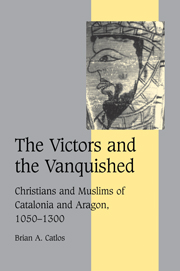
The Victors and the VanquishedThis is a revisionary study of Muslims living under Christian rule during the Spanish 'reconquest'. It looks beyond the obvious religious distinctions and delves into the subtleties of identity in the thirteenth-century Crown of Aragon, uncovering a social dynamic in which sectarian differences comprise only one of the many factors in the causal complex of political, economic and cultural reactions. 

Beginning with the final stage of independent Muslim rule in the Ebro valley region, the book traces the transformation of Islamic society into mudéjar society under Christian domination. This was a case of social evolution in which Muslims, far from being passive victims of foreign colonisation, took an active part in shaping their institutions and experiences as subjects of the Infidel. Using a diverse range of methodological approaches, this book challenges widely held assumptions concerning Christian-Muslim relations in the Middle Ages, and minority-majority relations in general.


Sunday, November 17, 2019

Review: The Ismaili Assassins by James Waterson

4895606
Synopsis: The Ismaili Assassins were an underground group of political killers who were ready to kill Christians and Muslims alike with complete disregard for their own lives. These devoted murderers were under the powerful control of a grand master who used assassination as part of a grand strategic vision that embraced Egypt, the Levant and Persia and even reached the court of the Mongol Khans in far away Qaraqorum. The Assassins often slayed their victims in public, cultivating their terrifying reputation. They assumed disguises and their weapon of choice was a dagger. The dagger was blessed by the grand master and killing with it was a holy and sanctified act poison or other methods of murder were forbidden to the followers of the sect.


The Ismailis have had a long and eventful history, stretching over more than 12 centuries, during which they subdivided into a number of major branches and minor groupings. They came into existence as a separate Shi‘i community around the middle of the eighth century; and, in medieval times, they twice founded states of their own, the Fatimid caliphate and the Nizari state. 

The first group of assassins to be found in the historical record is that of the Hashshashin who operated in Persia, Syria, and Turkey, eventually spreading throughout the Middle East. Being much weaker than their main adversaries in conventional military terms, the Nizaris relied on guerrilla warfare that included espionage, infiltration of enemy territory, and targeted killings of enemy leaders. 

When the fortress of the Assassins was conquered in 1256, their library was destroyed so there are no written historical accounts from the sect itself available to us. Those accounts that have survived into our times have come down to us in the form of the recollections from two openly hostile sources - Sunni Muslims and Crusaders.  The more outlandish aspects of the legends, such as the use of drugs, are not supported by Ismaili sources. Even the name Assassin, from the Arabic hashashi, was a pejorative term and was never used by the Nizaris themselves. Nor were the Nizaris unique in their use of political murder. Sunnis and Crusaders in the Middle East also practiced assassination. And, of course, Europeans were perfectly adept at killing off their political rivals long before the Nizaris came along.

The distorted image of the Ismailis in general and the Nizari Ismailis in particular was maintained in orientalist circles until the opening decades of the twentieth century, although this fanciful impressions of the Orient had long persisted since the Middle Ages. Like the proverbial Chinese whisper, these idea evolved over time until legend was regarded as fact. A truly scholarly assessment of the Ismailis had to await the recovery and study of a large number of Ismaili texts, a process that did not start until later in the 20th century when progress in Islamic studies, and a remarkable modern breakthrough in the study of the history and doctrines of the Ismailis, have finally made it possible to dispel once and for all some of the seminal legends of the ‘Assassins’.

Image result for ismaili assassins
As per the synopsis, "The Ismaili Assassins explores the origins, actions and legacy of this notorious sect. Enriched with eyewitness accounts from Islamic and Western sources, this important book unlocks the history of the Crusades and the early Islamic period, giving the reader entry into a historical epoch that is thrilling and pertinent."

I came into this wanting to know more about the sect that I had come across in my own studies of the Crusades - those allegedly responsible for the murders of Raymond II of Tripoli and Conrad of Montferrat. I was not disappointed. Waterson presents us with a historically accurate and detailed account of the Ismaili Asaassins, from their earliest inception to their devastation at the hands of the Mongols, and all the complicated political and dynastic maneuvering in between. definitely one for the history shelf of my Library.


further reading
The Templars and the Assassins: The Militia of Heaven by James Wasserman
Eagle's Nest: Ismaili Castles in Iran and Syria by Peter Willey
The Assassin Legends: Myths of the Isma'ilis by Farhad Daftary, Antoine Isaac Baron & Silvestre de Sacy
The Assassins: A Radical Sect in Islam by Bernard Lewis
The Assassins of Alamut by Anthony Campbell
Ismaili History and Intellectual Traditions by Farhad Daftary
Hasan-I-Sabbah: His Life and Thought by Dr Ali Mohammad Rajput
The Secret Order of Assassins: The Struggle of the Early Nizârî Ismâʻîlîs Against the Islamic World by Marshall G. S. Hodgson
The Isma'ilis: Their History and Doctrines by Farhad Daftary


further reading online
National Geographic Magazine
History Net


Saturday, October 26, 2019

Review: God's Spies by Elizabeth Braw

God's Spies: The Stasi's Cold War Espionage Campaign inside the Church
Synopsis: East Germany only existed for a short forty years, but in that time, the country’s secret police, the Stasi, developed a highly successful “church department” that—using persuasion rather than threats—managed to recruit an extraordinary stable of clergy spies. Pastors, professors, seminary students, and even bishops spied on colleagues, other Christians, and anyone else they could report about to their handlers in the Stasi.


Thanks to its pastor spies, the Church Department (official name: Department XX/4) knew exactly what was happening and being planned in the country’s predominantly Lutheran churches. Yet ultimately it failed in its mission: despite knowing virtually everything about East German Christians, the Stasi couldn’t prevent the church-led protests that erupted in 1989 and brought down the Berlin Wall.


This presents a very different aspect of Cold War espionage. One simply does not expect this kind of spying when we think of agents and spies - but here they are, local religions figures within the community of not only East Germany, but other Eastern Bloc nations and Scandinavia.

Author Elizabeth Braw injects a personal, human element, through both family recollections and interviews with still living Stasi Officers, in particular, Joachim Wiegard, the Director of the Stasi Church division.

There is a hell of a lot of information to take in ... this is no quick read, despite the almost conversational style of writing. The reader must immerse themselves in the period, the politics, the religion, the mindset of those being the Iron Curtain. Braw writes that " Stasi Church espionage was exhilarating and mysterious and repulsive ...".

The Stasi was a formidable operation, with 1.7 million informants, and literally half the population being spied on in the German Democratic Republic. Christianity was Communism's greatest foe as it it represented a competing world view. The Pastor-spies were focused on social groups and associations who attracted many dissidents, in an effort to keep the Church powerless.

We are introduced to a number of Pastor-spies and their activities, whilst Braw takes us back to her conversations with Wiegard, who never quite reveals all that he knows. These agents, we are told, did not expect to get wealthy - they instead received material and consumers goods (a luxury in the East); travel permits; promotions; medications; cars, books; things we in the West took (and still take) for granted - "... the bonus being an agent in your own country was that your employer can make your life more comfortable..".

With the fall of the Berlin Wall in 1989 and the collapse of East Germany, the Stasis files were not completely destroyed - and the identities of the vast network of spies, not just the Pastor-spies, were revealed. Braw notes that whilst the Stasi were experts at collecting information, they were not so good when it came to what to do with it all! There was the presumptions that the GDR would last so there was no haste to destroy anything or put this information beyond reach. People's long hidden pasts was being raised up like a proverbial Lazarus.

A recommend read for all Cold War and espionage enthusiasts.


Friday, October 4, 2019

Heresy and Dissent in the Carolingian Empire by Matthew Bryan Gillis

Cover for 

Heresy and Dissent in the Carolingian Empire
Heresy and Dissent in the Carolingian Empire recounts the history of an exceptional ninth-century religious outlaw, Gottschalk of Orbais. Frankish Christianity required obedience to ecclesiastical superiors, voluntary participation in reform, and the belief that salvation was possible for all baptized believers. Yet Gottschalk-a mere priest-developed a controversial, Augustinian-based theology of predestination, claiming that only divine election through grace enabled eternal life. Gottschalk preached to Christians within the Frankish empire-including bishops-and non-Christians beyond its borders, scandalously demanding they confess his doctrine or be revealed as wicked reprobates. Even after his condemnations for heresy in the late 840s, Gottschalk continued his activities from prison thanks to monks who smuggled his pamphlets to a subterranean community of supporters. 

This study reconstructs the career of the Carolingian Empire's foremost religious dissenter in order to imagine that empire from the perspective of someone who worked to subvert its most fundamental beliefs. Examining the surviving evidence (including his own writings), Matthew Gillis analyzes Gottschalk's literary and spiritual self-representations, his modes of argument, his prophetic claims to martyrdom and miraculous powers, and his shocking defiance to bishops as strategies for influencing contemporaries in changing political circumstances. In the larger history of medieval heresy and dissent, Gottschalk's case reveals how the Carolingian Empire preserved order within the church through coercive reform. The hierarchy compelled Christians to accept correction of perceived sins and errors, while punishing as sources of spiritual corruption those rare dissenters who resisted its authority.

Monday, September 30, 2019

Bishops in the Political Community of England, 1213-1272 by Sophie Therese Ambler

Cover for 

Bishops in the Political Community of England, 1213-1272


Thirteenth-century England was a special place and time to be a bishop. Like their predecessors, these bishops were key members of the regnal community: anointers of kings, tenants-in-chief, pastors, counsellors, scholars, diplomats, the brothers and friends of kings and barons, and the protectors of the weak. But now circumstance and personality converged to produce an uncommonly dedicated episcopate-dedicated not only to its pastoral mission but also to the defence of the kingdom and the oversight of royal government. This cohort was bound by corporate solidarity and a vigorous culture, and possessed an authority to reform the king, and so influence political events, unknown by the episcopates of other kingdoms.


These bishops were, then, to place themselves at the heart of the dramatic events of this era. Under King John and Henry III-throughout rebellion, civil war, and invasion from France, and the turbulent years of Minority government and Henry's early personal rule-the bishops acted as peacemakers: they supported royal power when it was threatened, for the sake of regnal peace, but also used their unique authority to reform the king when his illegal actions threatened to provoke his barons to rebellion. This changed, however, between 1258 and 1265, when around half of England's bishops set aside their loyalty to the king and joined a group of magnates, led by Simon de Montfort, in England's first revolution, appropriating royal powers in order to establish conciliar rule.

Bishops in the Political Community of England, 1213-1272 examines the interaction between the bishops' actions on the ground and their culture, identity, and political thought. In so doing it reveals how the Montfortian bishops were forced to construct a new philosophy of power in the crucible of political crisis, and thus presents a new ideal-type in the study of politics and political thought: spontaneous ideology.


Monday, September 23, 2019

Being Protestant in Reformation Britain by Alec Ryrie

The Reformation was about ideas and power, but it was also about real human lives. Alec Ryrie provides the first comprehensive account of what it actually meant to live a Protestant life in England and Scotland between c. 1530-1640, drawing on a rich mixture of contemporary devotional works, sermons, diaries, biographies, and autobiographies to uncover the lived experience of early modern Protestantism.


Beginning from the surprisingly urgent, multifaceted emotions of Protestantism, Ryrie explores practices of prayer, of family and public worship, and of reading and writing, tracking them through the life course from childhood through conversion and vocation to the deathbed. He examines what Protestant piety drew from its Catholic predecessors and contemporaries, and grounds that piety in material realities such as posture, food and tears.

This perspective shows us what it meant to be Protestant in the British Reformations: a meeting of intensity (a religion which sought authentic feeling above all, and which dreaded hypocrisy and hard-heartedness) with dynamism (a progressive religion, relentlessly pursuing sanctification and dreading idleness). That combination, for good or ill, gave the Protestant experience its particular quality of restless, creative zeal.

The Protestant devotional experience also shows us that this was a broad-based religion: for all the differences across time, between two countries, between men and women, and between puritans and conformists, this was recognisably a unified culture, in which common experiences and practices cut across supposed divides. Alec Ryrie shows us Protestantism, not as the preachers on all sides imagined it, but as it was really lived.


Sunday, October 7, 2018

Historical Fiction - Albigensian Crusades Series - Order By Fire

The Apostles of Satan (Ordeal by Fire) (Volume 1)The Apostles of Satan by F Scott Kimmich
Caught up in the turbulent politics in the land of the Troubadours at the beginning of the 13th century, Olivier de Mazan discovers a secret that could change history. At the same time, corruption in the Roman Church and the subsequent rise of heresy has set off a chain of events that pits Olivier and his countrymen against crusaders from the North in a cruel war that threatens an entire civilization and is fought against the background of a long struggle between the dynasties of the Capets and the Plantagenets. The power-hungry prelate in charge of the Crusade seethes over papal restraints to his insatiable ambition, and schemes to gain control of Olivier's secret, stopping at nothing, not even murder, to get it. While Olivier battles to defend his country, he finds he must also protect his family from the ruthless churchman and his crusading minions. 


The Fiery Furnace (Ordeal by Fire) (Volume 2)The Fiery Furnace by F Scott Kimmich
It is 1234, and heretic Olivier de Mazan possesses a secret that makes him a prime target of the Inquisitions secular thugs. At the same time, Count Raimond of Toulouse and Queen Blanche of France are using the boudoir to pursue the policies of their respective dynasties. Oliviers grandsons Odon and Rainier come of age fighting the French usurpers at the side of Robin Hoods son, a veteran mercenary. Along the way, the lovely performer Huguetta steals Odons heart, and Rainier loses his own to Miranda, who embodies Oliviers secret. In contrast, Count Raimond risks a rupture with Blanche by attempting to save his dynasty via strategic marriages and consequently delays rescuing his subjects trapped in the mountain fastness of Montsgur, Mount Secure. In this continuing saga, a Cathar family embarks on an epic struggle as they discover their true heritage, embrace their faith, and learn what it means to make the ultimate sacrifice.

Friday, September 28, 2018

The Queen and the Heretic by Derek Wilson


Derek Wilson’s The Queen and the Heretic: How two women changed the religion of England describes itself as a dual biography of Anne Askew, a noblewoman who was burnt at the stake for heresy during Henry VIII’s reign, and Catherine Parr, the King’s final wife and the first woman ever to publish a theological text under her own name.

In reality, the first part of the book is more of a history of the Reformation and religious changes in Britain during Henry’s reign, although Wilson does try to relate the changes back to the lives of both women as much as possible, besides attempting to establish where the foundations for their religious convictions stemmed from.

The book is easy to read and accessible. Wilson does not assume any prior knowledge from his readers, and is careful to give wider contextual information where relevant. Both women are brought to life with vibrancy, and as fully formed individuals. It is engaging, and the book deserves credit for highlighting the part played by Catherine’s works in influencing British religious policies and beliefs during this period of history. 

read more here @ Church Times


Sunday, August 19, 2018

How Fiction Fueled Madeleine L’Engle’s Faith......

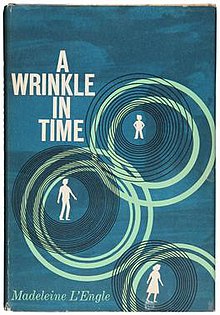
WrinkleInTimePBA1.jpgFrom Christianity Today:
Story, at its heart, is one of the primary modes in which God speaks to us, which means it’s one of the main vehicles for God’s truth. It’s also formative truth: The best, most ennobling stories have the power to shape our actions and play a vital role in moral and spiritual formation. “Rather than taking the child away from the real world,” wrote Madeleine L’Engle, author of A Wrinkle in Time, “such stories are preparation for living in the real world with courage and expectancy.”

In writing about her growing up years, L’Engle claimed that “the greatest gift my mother gave me, besides her love, was story. She was a wonderful storyteller, especially about her childhood in the South. . . . ‘Tell me a story,’ I would beg, and my mother would take me in imagination back to her world so different from mine.”

“I’m particularly grateful that I was allowed to read my Bible as I read my other books,” she wrote in Walking on Water, “to read it as story, that story which is a revelation of truth. People are sometimes kept from reading the Bible itself by what they are taught about it, and I’m grateful that I was able to read the Book with the same wonder and joy with which I read The Ice Princess or The Tempest.”

read more here @ Christianity Today


Saturday, August 18, 2018

Review: The Vikings - From Odin to Christ by Martyn and Hannah Whittock

Synopsis: The popular image of the Vikings is of tall red-headed men, raping and pillaging their way around the coast of Europe, stopping only to ransack monasteries and burn longships. But the violent Vikings of the 8th century became the pious Christians of the 11th century, who gave gold crosses to Christian churches and in whose areas of rule pagan idols were destroyed and churches were built.

So how did this radical transformation happen, and why? What difference did it make to the Vikings, and to those around them, and what is their legacy today? This book takes a "global" look at this key period in Viking history, exploring all the major areas of Viking settlement. Written to be an accessible and engaging overview for the general reader.


For me, this was a highly informative journey into the transformation of the "pagan" Viking into the acceptable "christian" that is well annotated and referenced, and makes use of the voices of the Vikings themselves, through their sagas, to provide context. The authors explore the conversion of the Viking peoples and how and why this religious transformation took place.  What is interesting is the differing views on what constituted conversion, where the roots of conversion eminated from, and the how each conversion event was unique. 

The authors make clever use of their chapters to sort out and compartmentalise the history of the conversion of each group or nation, making it more accessible to the reader.  We take a look at who were the Vikings of the pre-christian world, and compare that with our modern perception of them. We look at how different forms of Christianity were the driving forces behind the conversions - German, Irish, British and Greek missionaries each had their sphere of influence and success.

First up is the raids on Anglo Saxon England, Ireland, Frisia and the Frankish Empire.  Were these raids a serious threat to the already established Christian religions - for following these attacks was a serious collapse in pastoral care throughout into which the pagan religions filled the vacuum.

To the subject at hand - we now get down to the chapters that are the most interesting, and I will give a brief summary of each, starting with Chapter 4 -"The Cross and the Hammer" - the Vikings in northern England, the dominance of pagan rule, and of co-existance and assimilation.

Chapter 5 find us in 8th Century Ireland, with the inability of local leaders to unite and form a cohesive front against the Viking attacks and the establishment of permanent bases - at least not until the Battle of Clontarf.  The foundation of Normandy is covered in Chapter 6, with the transition of conversion taking a mere century, and the development of Church reform under these newly christianised leaders gained prominance.

Now we get to the main Viking nations: Chapter 7 covers the conversion process in 10th Century Denmark under the leadership of of Harold Bluetooth, despite earlier missions two centuries prior; and also clarifies some of the misnomers of the reign of both Svein Forkbeard and Cnut.  Chapter 8 takes us to Norway, whose missionary kings - the Olafs - lead the fight against pagan resistance.  The use of burials as an indicator of the level of the reaches of conversion, and the connection between conversion and the expansion of royal power is also discussed. 

Sweden and the arrival of the German missionaries in the 9th Century is covered in Chapter 9.  This conversion took much longer as this area was not so politically unified as its neighbours.  Unity and royal power increased at the same rate as the conversion, and was more or less complete with the incorporation of Finland by 13th Century.

Chapter 10 deals with the spread of the Vikings in the east, namely through the Byzantine Empire, the Baltic, the establishment of the kingdom of Rus, the reach of trade as far as Baghdad, and of course, the hero Harald Hardrada.  The colonisation and conversion of the North Atlantic Viking outposts of Iceland, Greenland, and the Faroe Islands in Chapter 11 quite naturally leads into the the voyages of the Greenlanders to Vinland in the 11th Century, and the first American Christians.

Back we head to Anglo Saxon England, and the reign of the first Viking Kings, Svein of Denmark and his son Cnut the Great, under who, as a loyal son the the Chruch, actively suppressed paganism.  The obliteration of Pictish culture under the Vikings in the islands to the north and the west (Hebrides, Orkneys, Shetland, et el), and the missions from Germany and Ireland, forms one of our final chapters.  It is assimilation, expansion, trade, spread of ideas, and the unity of political power in the mid 12th century that finally ended the "Viking Age".

This is truly a remarkable journey of the Christianisation of the Scandinavian world that really kicked off in the late 9th century and lasted for a period of three hundred years.

Saturday, June 16, 2018

'Benjamin Franklin' takes a more nuanced look at Franklin's views of God

Image result for benjamin franklin thomas kiddRandy Dontigo reviews for Christian Science MonitorBen Franklin seems like the rare founding father who'd actually be fun to hang around – at least if you weren't his wife.

Turns out this remarkable renaissance man – scientist, best-selling author, inventor, diplomat, political powerhouse – spent his lifetime on a complex journey of faith.

As historian Thomas S. Kidd reveals in Benjamin Franklin: The Religious Life of a Founding Father, Franklin started wrestling with religion and morality as a teenager and never stopped pondering the natures of God, humanity and universe.

Kidd vividly brings Franklin's spiritual quest to life throughout his book, and he provides a direct line from Franklin's beliefs to those we see around us today.

Saturday, February 3, 2018

Review - Crusade & Jihad by William Polk

Crusade and Jihad: The Thousand-Year War Between the Muslim World and the Global North (The Henry L. Stimson Lectures Series)
Crusade and Jihad: The Thousand-Year War Between the Muslim World and the Global North by William R. Polk is strictly academic in both tone and content - so set aside quite some time to absorb the information to hand and be prepared to be in for the long haul.

Polk's book begins, quite naturally, with the advent of Islam, it development, its spread and its metamorphosis into its current, sometimes militaristic, form we see today. As Islam came into contact and conflict with the imperialistic powers of the West, Polk shows how this heavily impacted Muslim culture and society, and how hostility fermented over the ages. Polk doesn't confined himself to just the European field, but takes on a global view.

"A sobering, scrupulous, and frank account of imperialism, colonialism, insurgency, and terrorism ..."