Showing posts with label plantagenets. Show all posts

Wednesday, January 1, 2025

Review: Henry V's Brother by Joanna Arman

Synopsis: Named after his famous grandfather, John of Gaunt, John of Lancaster Duke of Bedford, has been largely forgotten and sidelined in history. As the third of four sons, he was not his father’s heir, but he nonetheless distinguished himself in his youth in his service on the Scottish borders.

As an adult, he was overshadowed by his charismatic older brother, the warrior king and victor of Agincourt, Henry V. Yet Henry trusted John the most of all his brothers and twice left him to rule England during his expeditions in France. John Duke of Bedford was the man who really governed England for almost half of his brother’s nine-year reign.

John reached the pinnacle of his career when he was appointed Regent of France. As Regent, he governed a polity that had not existed for three centuries: a truly Anglo-Norman realm. It was not just ruled by England but populated by English settlers who lived & fought alongside the French.

For thirteen years, John held the English kingdom of France together on the negotiating table and often on the battlefield. He struggled against renegade soldiers and his adversary, Charles VII of France, but sometimes against the political machinations of his relatives to keep his late brother’s dream alive.

John became a man noted for equitable rule and an unshakeable commitment to justice. In England, people looked to him to heal the divisions which poisoned Henry VI’s government, and in France, they viewed him as the only statesman fully committed to the good governance of Normandy and Paris.

Today, John is only remembered as the man who condemned Joan of Arc, even though he was not involved. This biography provides a much-needed reassessment of John’s life and political career.

~ ~ ~

My thoughts are mixed with this one.

This purports to be a biography on John of Lancaster, Duke of Bedford, Regent of France and bother of Henry V, King of England; however, John really only comes into his own halfway through as before that he is lost amid a sea of Henrys.

After noting his birth, it is not really until about page 51 that John makes his political entrance under the mentorship of Ralph Neville, Earl of Westmoreland (c.1403) - and this is roughly the same time any real page time has been dedicated / allocated to him. He reappears again at page 108 when recognised as Henry V's heir presumptive and is summoned to France (1419); page 122 when made regent of France (1422). Even after this, it is still hit and miss through to page 187, which marks the end of the tome, with a two paragraph summary of his life, influence and achievements.

Much of the information contained therein is readily available on the internet. Too much time was spent of Richard II, Henry IV, Henry V and other (unnecessary) diversions for this to be even considered a relevant biography of a singular individual. Providing the basic history of the era is fine - getting bogged down in it due to a lack of biographical information on your primary subject is another matter. And unfortunately, too often this is the case - preferable to read the synopsis and move on.

For someone well-read on the period, this is pretty basic stuff and in fact there is nothing new here at all.  For a dedicated "re-assessment" I was expecting so much more. For some-one new to this period, there may be some confusion as to whom this book is actually about - it reads as a basic history of the events leading up to the war in France, using John of Lancaster is a very flimsy anchor. So much more of John's life and career could have been explored without the information dump. If the information is not there / not available - don't just fill the pages for the sake of it. I personally would rather read 50 pages of fact than 200 pages of waffle.

As initially mentioned, this tome brought about mixed thoughts - one, being kudos for selecting to write about John of Lancaster, and two, points off for presentation and delivery; this was poorly executed. To my mind, John of Lancaster is never in the forefront of this narrative.

"A much-needed reassessment of John’s life and political career" this most definitely is not.

Monday, April 22, 2024

Review: The Sisters of Richard III by Sarah J Hodder

Synopsis: This book is the narrative of three women of York, sisters to not one, but two kings of England. Anne, Elizabeth and Margaret Plantagenet were the daughters of Richard, Duke of York and his wife, Cecily Neville, and therefore sisters to Edward IV and Richard III. These women watched from the sidelines as their father challenged England’s anointed king and lost his life, as their brothers fought together for the throne of England and then amongst themselves and as the Plantagenet dynasty fell, making way for the reign of the Tudors.

But they were not just bystanders; they had their own stories to tell. Anne of York was married to the Lancastrian Duke of Exeter who sided against her father and brother, before finding later happiness, albeit briefly, with her second husband. Elizabeth of York married John de la Pole, Duke of Suffolk and became the mother of eleven children who would become thorns in the side of the Tudor kings and Margaret of York became Duchess of Burgundy, a hugely influential woman in her adopted kingdom although she never stopped supporting her family back in England. Between them, they witnessed and contributed to one of the most turbulent times in English history yet they have naturally been overshadowed by their more famous brothers. This is their story.

~ ~ ~

The story of the three Yorkists sisters - Anne, Elizabeth and Margaret - as told against the backdrop of the Wars of the Roses. And the story of the sisters is one full of persistence in keeping both the Yorkist cause and that of their family name, alive. With their mother Cecily, these three women were the great survivors of this tumultuous period in history.

Hodder provides the reader with a well-researched tome that covers off the events of the Wars of the Roses, whilst linking the lives of these women to both their family and the events.

That there may have been a perception that they had gone unremarked is only due to the fact that two of their brothers - Edward IV and Richard III - outshone them. However, they did not go completely unobserved - a careful historian or student of history will find all three women,scattered across the pages of numerous tomes. What Hodder does is bring this all under one book cover and puts their lives into context with events as their not only occurred but also how they impacted this particular family.

The keen reader of the Wars of the Roses history will enjoy this as will someone who is coming new into this period. There were many extraordinary women at this point in history - this is the story of three of them (four if you also count in their mother, Cecily).

Sunday, December 25, 2022

Review: The Woodville Women by Sarah Hodder

Synopsis: Elizabeth Woodville, queen to Edward IV and mother of the Princes in the Tower.

Elizabeth of York, daughter of Elizabeth Woodville and the first Tudor queen of England.

Elizabeth Grey, granddaughter of Elizabeth Woodville and Countess of Kildare, whose life both in England and across the Irish sea was closely entwined with the Tudor Court.

This is the tale of three generations of women, linked by their name, Elizabeth, and by their family relationship. The story begins in the reign of the great Plantagenet Kings with the life of Elizabeth Woodville and ends in the reign of perhaps England’s most famous dynasty, that of the Tudor kings and queens. Through the life of Elizabeth of York, the first Tudor queen and Elizabeth Grey, cousin to Henry VIII and Mary Tudor, we explore the Tudor court and its dealings with the Earls of Kildare.

From the birth of our first Elizabeth to the death of our last, these three women lived through wars and coronations, births and deaths, celebration and tragedy and between them they experienced some of the most exciting and troubled times in English history. Mother, daughter and granddaughter: individually they each have their own fascinating story to tell; together their combined stories take us on a journey through a century of English life.


Okay - so what did I think. Well, what I had hoped for was a bit more about the Woodville Women - not just three Elizabeths. Whilst it is fairly obvious that there was a lot of research involved, the application could have done with some finessing. It is a very pro-Tudor piece, covering the usual myths, rumours and tropes, interspersed with assumption and supposition.

The first part deals some background including that of the period in which these women lived; Elizabeth Woodville's mother, Jacquetta of Luxembourg; the potential (and I stress potential) household dynamics, with a whole of lot of myth (including the legend of Melusine) and repeated referencing the works of Christine de Pizan. Whilst there is some merit to this introductory chapter, there is much that should have been left out.

The second part looks at mother and daughter - Elizabeth Woodville and Elizabeth Plantagenet - both queens of England, before the final part deals with Elizabeth Grey - though interesting in her own right, a rather curious choice.

Whilst we began with Jacquetta, and followed this with her daughter, granddaughter, and great granddaughter, as I mentioned, I was looking for a few more female family members. The inclusion of Elizabeth Woodville's sisters and nieces would have fleshed this out to present a more rounded overview of this particular familial branch of women. It is clear, however, that these three main women - four if we include, as we should - Jacquetta - managed to navigate the male dominated political world of their own times, to ensure that their place in it would not go unnoticed nor unremarked.

I would suggest that before diving head first into this tome, a little preemptive research of your own would be recommended.

Friday, September 10, 2021

Review: Crown & Sceptre by Tracy Borman

Synopsis: The author of The Private Lives of the Tudors illuminates the almost thousand-year history of the British monarchy.

Since William the Conqueror, duke of Normandy, crossed the English Channel in 1066 to defeat King Harold II and unite England's various kingdoms, forty-one kings and queens have sat on Britain's throne. "Shining examples of royal power and majesty alongside a rogue's gallery of weak, lazy, or evil monarchs," as Tracy Borman describes them in her sparkling chronicle, Crown & Sceptre. Ironically, during very few of these 955 years has the throne's occupant been unambiguously English--whether Norman French, the Welsh-born Tudors, the Scottish Stuarts, and the Hanoverians and their German successors to the present day.

Acknowledging the intrinsic fascination with British royalty, Borman lifts the veil to reveal the remarkable characters and personalities who have ruled and, since the Restoration of the monarchy in 1660, more ceremonially reigned. It is a crucial distinction explaining the staying power of the monarchy as the royal family has evolved and adapted to the needs and opinions of its people, avoiding the storms of rebellion that brought many of Europe's royals to an abrupt end. Richard II; Henry VIII; Elizabeth I; George III; Victoria; Elizabeth II: their names evoke eras and the dramatic events Borman recounts. She is equally attuned to the fabric of monarchy: royal palaces; the way monarchs have been portrayed in art, on coins, in the media; the ceremony and pageantry surrounding the crown.

Elizabeth II is already one of the longest reigning monarchs in history. Crown & Sceptre is a fitting tribute to her remarkable longevity and that of the magnificent institution she represents.


Again, I am very wary when it comes to books with the title "new" in them as I invariably find nothing new. And again there was really nothing new here for me. I am going to preface this review, however, by stating that I read only up to the reign of Anne for beyond that was not really within my purview - therefore whether there was anything "new" or not to be gleaned I will leave in the capable hands of another reader.

Borman compartmentalizes the book according to familial term designated for each ruler and their dynasty. As such, it is broken down as follows (making it easier to chose where you want to start):

Part One - Normans: William I to Stephen
Part Two - Plantagenets: Henry II through to Richard II
Part Three - Tudors: Henry VII to Elizabeth I
Part Four - Stuarts: James VI & I to Anne, and also includes the interegnum of the Protectorate
Part Five - Hanoverians: George I to Edward VII
Part Six - Windsors: George V to Elizabeth II.

Each section provides enough detail on and about each monarch and their reign; however, there are the usual tropes associated with a number of monarchs that I would hesitate in recommending it as an unbiased primer for someone starting.  Having said that, there is enough here from which to launch into more detailed or specialised accounts.

Now whilst I mentioned that for me there was nothing new in the bulk of the narrative - there were a couple of little nuggets that I would have loved more detail on, as Borman disappointingly does not follow up with any actual source material. These are:

Page 22: Borman mentions that Matilda of Flanders, wife to William I, had once been told some prophecy foretelling the deaths of three of her sons in the New Forest.
Page 118: Henry IV's last words acknowledging himself as an usurper to his son and heir Henry V - the only reference is the Oxford Book of Anecdotes! But that is hardly a reliable source surely. I want to know who originally documented this.
Page 155: Borman in discussing the discovery of the remains of bones in the Tower - and their general acceptance without any proof that they are the two lost princes - makes mention that workman accidentally damaged the vault of Edward IV and Elizabeth Woodville (c.1789) and discovered two smaller tombs contained within. These were then attributed to two of their children, whose actual tombs were located elsewhere within St George's Chapel. So who was buried within - again, a source for this would be appreciated.

These nuggets are the type of thing that stands out for me - but as no source was / can be provided, it just falls within the realm of whimsical hearsay, and places this book back firmly on the shelf of popularist general history.

Still, there are many who will appreciate the condensed accounts of England's monarchs, spanning a period of some nine hundred odd years.

Sunday, May 30, 2021

Review: Plantagenet Princes by Douglas Boyd

Synopsis: When Count Henry of Anjou and his formidable wife Eleanor of Aquitaine became king and queen of England, they amassed an empire stretching 1,000 miles from the Pyrenees to the Scottish border, including half of France. Henry's grandmother Empress (of Germany) Mathilda had taught him that ruling is like venery: show the hawk the reward, but take it away at the last moment, to keep the bird eager to please. To sons and vassals alike, Henry promised everything but gave nothing, keeping the three adult princes hating him and the other siblings all their lives.

Plantagenet Princes traces the lives and infamous webs of mistrust and intrigue among them. What sons they were! Henry (b. 1155), 'the Young king' was entitled to succeed his father, yet was a rich playboy who died crippled by debt before his thirtieth birthday, after living the life of a robber baron. Richard (b. 1157), 'the Lionheart' was lord of his mother's duchy of Aquitaine and became, thanks to her, England's most popular king despite bankrupting the Empire twice in his disastrous 10-year reign. Geoffrey (b. 1158), count of Brittany, was the cleverest, but was trampled to death by horses aged 32 in a pointless melee at Paris, leaving his wife Constance to act as regent for their son Arthur in a long power struggle between Philip Augustus, king of France, and the Plantagenets. The runt of the litter, John (b. 1166) was nicknamed Lackland, since no inheritance was initially promised him. He proved the longest-lived by far, dying at the age of fifty after signing Magna Carta, losing the key duchy of Normandy and most of the other continental possessions - also murdering his nephew Arthur, imprisoning Arthur's sister for life and waging war against his barons, continued by Henry III.


The Plantagenet line continued with Richard of Cornwall, Edward I conquering Wales, gay Edward II, Edward III, Edward the Black Prince and Richard II, who died in prison while his usurper sat on the throne.


I will say this makes for a better introductory book on the male Plantagenet line from Henry II through to Richard II rather than an actually study of the four surviving sons of Henry II and Eleanor of Aquitaine. Yes these sons are featured, but barely half the book is dedicated to them before diverging down the line to encompass the selected offspring of the princes and then continuing - selectively again - down the line to Richard II.


For someone more well read, this will provide nothing new - and this type of reader has most likely already tackled individual biographies - for someone looking for an overview or introductory text, then this is more than suitable - though I would re-think the title and leave it just as "Plantagenet Princes".

Friday, April 2, 2021

Review: The Killer of the Princes in the Tower by MJ Trow

Synopsis: The disappearance of two boys during the summer of 1483 has never been satisfactorily explained. They were Edward, Prince of Wales, nearly thirteen at the time, and his brother, Richard of York, nearly ten. With their father, Edward IV, dying suddenly at forty, both boys had been catapulted into the spotlight of fifteenth-century politics, which was at once bloody and unpredictable.

Thanks to the work of the hack 'historians' who wrote for Henry VII, the first Tudor, generations grew up believing that the boys were murdered and that the guilty party was their wicked uncle, Richard, Duke of Gloucester. Richard crowned himself King of England in July 1483, at which time the boys were effectively prisoners in the Tower of London.  After that, there was no further sign of them.

Over the past 500 years, three men in particular have been accused of the boys' murders - Richard of Gloucester; Henry Tudor, Earl of Richmond; and Henry Stafford, Duke of Buckingham. The evidence against them would not stand up in a court of law today, but the court of history is much less demanding and most fingers remain pointed squarely at Richard of Gloucester.

This book takes a different approach, the first to follow this particular line of enquiry. It is written as a police procedural, weighing up the historical evidence without being shackled to a particular 'camp'. The supposition has always been made that the boys were murdered for political reasons. But what if that is incorrect? What if they died for other reasons entirely? What if their killer had nothing to gain politically from their deaths at all?  And, even more fascinatingly, what if the princes in the Tower were not the only victims?

And that there, readers, is the hook that will send you down the proverbial rabbit hole.

I came to this from reading Trow's earlier book on Richard III - Richard III in the North - this tome, however, covers the mystery of the princes in the tower. Using the time honoured technique of analysing means, motive and opportunity, Trow posits the question - qui bono? Who benefits?

Trow sets forth his case utilising methods familiar to anyone who has watched or read a police procedural, court room drama or forensic investigation. As the with any suspicious death, he looks at those closest to the victims - the most obvious suspects (Richard III and Henry VII), some lesser suspects (the adherents, the family) before putting forth one who he considers highly likely and almost unanimously overlooked suspect. A person who had the holy trinity of means, motive and opportunity - a person who quite literally - if it was them - got away with murder, and possibly others. In fact, someone I myself had not even considered!

I found this to be a most compelling read - it covers off the period of the Wars of the Roses, the reigns of Edward IV and Richard III, Bosworth, and the succession of Henry VII, the mystery of the princes and the pretenders rather succinctly without bogging the reader down in a mire of dry information overload (or information dump). There is enough here for even the most casual reader to follow without having to take a crash course in medieval history.

Whether you agree or disagree with Trow's conclusions, this makes for some thought-provoking reading - who knows, maybe there is another unconsidered suspect lurking in the shadows that no-one has considered ... after five centuries, nothing is conclusive but nor should it be dismissed for not following the two "standard" lines of thought.

Definitely one for my own library!

Wednesday, February 17, 2021

Warriors of the Pale: An Irish Saga by Raymond Reagan Butler

In 1185, King Henry II of England sent a messenger to Rome, requesting that his youngest son, Prince John, should be recognised as King of Ireland. With the request granted, John went to Ireland to fight for his dominion and with him went Theobald Walter, the first of the warriors of the Pale - that part of Ireland completely under English rule in the Medieval period. The Butlers would produce an unbroken succession of male heirs right down to 1515.

For the first two centuries the military struggle between the native Irish and the Normans was a bloody stalemate; then in 1399 Richard II attempted to quell the Irish chieftains once and for all, but was pushed back to the Pale - and in the process lost the English throne to Henry IV. Raymond Butler follows the fascinating and not always well documented military struggle in Ireland, focussing upon the extraordinary Butler dynasty, who supported the English kings and were duly rewarded, the eighth earl being made Chief Governor of Ireland by Henry VIII.

The last of the great warriors of The Pale, the 'Black Earl', was Lieutenant-General of Ireland at his death in 1614, still loyal to the English King James I: though the Butlers had not always been loyal, not when their vast lands and wealth had been threatened. This is a 400-year-long story of pitched battles, shifting loyalties, political confusion, assimilation, treachery and military prowess that sheds new light on the entwined histories of England and Ireland.

Monday, October 5, 2020

Making of the Neville Family in England, 1166-1400 by Charles Young

A study of power in the middle ages: the Nevilles of Raby, who included among their members Warwick the Kingmaker, was one of the major baronial families in England.

The story of the Neville family is a fascinating one. From their inconspicuous beginnings in Lincolnshire after the Norman Conquest, by the fourteenth century the Nevilles of Raby were among the most influential groups in the north of England, virtually ruling the area by means of the royal offices they held, and their political power reached its zenith in the fifteenth century with Richard de Neville, earl of Warwick, the so-called Kingmaker. 

This new study aims to answer the question of how a family of knightly status but with no special prominence was able to rise to such heights, tracing its growth and development through a careful examination of surviving documents; it also illustrates how the governance of medieval England worked with the cooperation of baronial families in a pragmatic manner, quite apart from any abstract legal or constitutional principles.


see also:
- The Lordly Ones: A History of the Neville Family and Their Part in the Wars of the Roses by Geoffrey Richardson
- The Nevills of Middleham: England's Most Powerful Family in the Wars of the Roses by KL Clark
- Warwick the Kingmaker by Michael Hicks

Sunday, May 3, 2020

Books: Notable Nobles

Sir Francis Drake: The Queen`s Pirate by Harry Kelsey
"Sir Francis Drake" by Harry KelseyIn this lively and engaging new biography, Harry Kelsey shatters the familiar image of Sir Francis Drake. The Drake of legend was a pious, brave, and just seaman who initiated the move to make England a great naval power and whose acts of piracy against his country’s enemies earned him a knighthood for patriotism. Kelsey paints a different and far more interesting picture of Drake as an amoral privateer at least as interested in lining his pockets with Spanish booty as in forwarding the political goals of his country, a man who became a captain general of the English navy, but never waged traditional warfare with any success.

Drawing on much new evidence, Kelsey describes Drake’s early life as the son of a poor family in sixteenth-century England. He explains how Drake dabbled in piracy, gained modest success as a merchant, and then took advantage of the hostility between Spain and England to embark on a series of daring pirate raids on undefended Spanish ships and ports, preempting Spanish demands for punishment by sharing much of his booty with the Queen and her councillors. Elizabeth I liked Drake because he was a charming rogue, and she made him an integral part of her war plans against Spain and its armada, but she quickly learned not to trust him with an important command: he was unable to handle a large fleet, was suspicious almost to the point of paranoia, and had no understanding of personal loyalty. For Drake, the mark of success was to amass great wealth, preferably by taking it from someone else and the primary purpose of warfare was to afford him the opportunity to accomplish this.


Sir John Hawkins by Harry Kelsey
"Sir John Hawkins" by Harry KelseyAlthough his cousin Sir Francis Drake is more famous, Sir John Hawkins (1532–1595) was a more successful seaman and played a pivotal role in the history of England and the emergence of the global slave trade. Born into a family of wealthy pirates, Hawkins became fascinated by tales of the riches of foreign lands. Early in his career he led an illegal expedition in which he captured three hundred slaves in Sierra Leone and transported them to the West Indies. There he traded them for pearls, hides, and sugar--thus giving birth to the British slave trade. His voyages were so lucrative that Queen Elizabeth herself sponsored subsequent missions.

Discouraged from his career as a pirate by a near-fatal encounter with angry Spanish troops, Hawkins spent much of his later life in England at the service of the queen. Although he committed treason, murder, and adultery at various points in his career, he was nonetheless knighted in 1588 for his role in defeating the Spanish Armada.


Martin Frobisher: Elizabethan Privateer by James McDermott
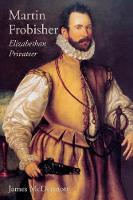
"Martin Frobisher" by James McDermottAdventurous and willful, the swashbuckling Martin Frobisher was both a brave sea-commander who served Elizabeth I with distinction and a privateer who single-mindedly pursued his own interests. This highly entertaining biography provides the first complete picture of the life and exploits of Frobisher—from his voyages in search of the fabled Northwest Passage to his courageous resistance to the Spanish Armada and his exploits as privateer and sometime pirate. The book explores Frobisher’s vigorous personality and its manifestation in the turbulence of his career and his impact on others. It also illuminates the robust world of maritime enterprise in England in the sixteenth century, when the shifting objectives of the Elizabethan age brought together felons, merchants, and great officers of state.

James McDermott, a leading authority on Martin Frobisher and the Northwest Passage, offers a riveting account of the explorer, based on all extant manuscript and documentary sources. McDermott sets aside the distortions of Frobisher’s popular reputation as a hero and offers instead a richly detailed portrait of a fascinating but flawed man whose ceaseless search for wealth and fame defined his extraordinary life.


Arthur Tudor, Prince of Wales: Life, Death and Commemoration edited by Steven Gunn & Linda Monckton
The Tudor king who never was: Arthur's life and death newly examined.Prince Arthur (1486-1502), son of Henry VII and Elizabeth of York, was the great hope of early Tudor England. Today he is largely forgotten, remembered only as Henry VIII's shadowy elder brother, the first husband of Katherine of Aragon. But in his lifetime Arthur counted for much more than that. Groomed for kingship, sent to govern Wales and the Marches, married to secure the Spanish alliance, celebrated in portraits, poems and pageants, Arthur stood at the centre of his father's plans. His death brought a grand funeral and a lasting monument, the chantry chapel covered in Tudor badges that still stands in Worcester Cathedral. 

These richly illustrated essays, by historians, art historians and archaeologists, investigate Arthur's life and posthumous commemoration from every angle. They set him in the context of the fledgling Tudor regime and of the religion, art and architecture of late medieval death and memory. They close with an exploration of the re-enactment of Arthur's funeral at Worcester in 2002, an event that sought to rescue the prince from the oblivion that has been his lot for five hundred years.


The History of William Marshal translated by Nigel Bryant
The History of William Marshal (0)The History of William Marshal is the earliest surviving biography of a medieval knight -- indeed it is the first biography of a layman in the vernacular in European history. Composed in verse in the 1220s just a few years after his death, it is a major primary source not simply for its subject's life but for the exceptionally stormy period he had had to navigate. It could hardly be other than major, given that its subject was regarded as the greatest knight who ever lived and that he rose in the course of his long life to be a central figure in the reigns of no fewer than four kings: Henry II, Richard Lionheart, John and Henry III. This remarkable biography was brought to light in the late nineteenth century thanks to a determined hunt for the manuscript by its first editor, the eminent French scholar Paul Meyer. It gives a vigorous account of events, full of vivid detail and passionate comment and frequent flashes of humour. And it gives revelatory insights into the attitudes and perceptions of the time, especially into the experience and nature of warfare in the late twelfth and early thirteenth centuries.

But while its quality and value have been long acknowledged, the poem has sometimes been deemed less than impartial and objective. Commissioned as it was by Marshal's own son, and intended not least for his family's fond enjoyment, it is little surprise that the poem's adulation of its subject is rarely qualified by regrets for failings or what are nowadays referred to as "errors of judgement". Marshal is presented as -- to all intents and purposes -- flawless: not simply a magnificent warrior, supreme in tournaments and battles alike, but a paragon of the key chivalric virtues of prowess, largesse and unfailing loyalty. But this is not surprising: the idea of the fallible hero is a modern invention, and the writer of this work - like Marshal himself -- was steeped in the old ideals of the chansons de geste as well as the more recent ideology of chivalry. In any case, there can be no denying that Marshal's achievements -- and sometimes his behaviour -- were by any standards extraordinary and seen as such by his contemporaries, and the poem corresponds with what we know of his life from other sources.


Hugh de Lacy, First Earl of Ulster: Rising and Falling in Angevin Ireland by Daniel Brown
This book charts the striking rise, fall and restoration of the first earl of Ulster, Hugh II de Lacy, described by one contemporary chronicler as 'the most powerful of the English in Ireland'. A younger son of the lord of Meath, de Lacy ascended from relatively humble beginnings to join the top stratum of Angevin society, being granted in 1205 the first earldom in Ireland by King John. Subsequently, in 1210, having been implicated in rebellion, Hugh was expelled from Ulster by a royal army and joined the Albigensian crusade against Cathar heretics in southern France. Unusually, after almost two decades in exile and a second revolt against the English crown, de Lacy was restored to the earldom of Ulster by King Henry III in 1227, retaining it to his death, c. 1242.

Situated in the north-east of Ireland, Ulster's remoteness from centres of colonial administration allowed Hugh de Lacy to operate beyond the normal mechanisms of royal control, forging his own connections with other powerful lords of the Irish Sea province. The fluidity of noble identity in frontier zones is also underlined by the career of someone who, according to his political needs, presented himself to different audiences as a courtly sophisticate, freebooting colonist, crusading warrior, or maurauding 'Irish' ruler.

The foundation for this study is provided by Hugh de Lacy's acta, provided as an appendix, and representing the first collection of comital charters in an Irish context. These cast fresh light on the wider themes of power and identity, the intersection of crown and nobility, and the risks and rewards for ambitious frontiersmen in the Angevin world.


John de Vere, Thirteenth Earl of Oxford (1442-1513): `The Foremost Man of the Kingdom' by James Ross
John de Vere, Thirteenth Earl of Oxford (1442-1513): `the Foremost Man of the Kingdom'First book to deal with de Vere's life and extraordinary career, during the Wars of the Roses and beyond.Earl of Oxford for fifty years, and subject of six kings of England during the political strife of the Wars of the Roses, John de Vere's career included more changes of fortune than almost any other. He recovered his earldom after the execution of his father and brother for treason, but his resistance to Edward IV led to a decade in prison. He escaped in time to lead Henry Tudor's vanguard at Bosworth in 1485 and subsequently enjoyed twenty-five years as perhaps "the foremost man of the kingdom", virtually ruling East Anglia for the king.
This is the first full-length study of de Vere's life and career. Through this lens it also tackles a number of broader themes. It reconsiders the role of the nobility under Henry VII, challenging the common perception of Henry as an anti-aristocratic king. It also explores East Anglian political society in the second half of the fifteenth century, how the earl came to dominate it, how successfully he exercised his power, and the personnel, including the Paston family, he used to run the region.


Humphrey Newton (1466-1536): an early Tudor Gentleman by Deborah Youngs
Humphrey Newton (1466-1536): An Early Tudor Gentleman
The public and political lives of the fifteenth- and early sixteenth-century gentry have been extensively studied, but comparatively little is known of their private lives and beliefs. Humphrey Newton of Pownall, Cheshire, offers a rare and fascinating opportunity to redress the balance, thanks to the fortunate survival of a commonplace book he compiled c.1498-1524. Drawing upon this unique manuscript, this interdisciplinary and multi-dimensional study of Newton explores his family life, landed estate, legal work, piety, and his literary skills [he composed nearly twenty courtly love lyrics]. It charts his social advancement and the self-fashioning of his gentle image, while placing him in the context of current discussions of gentry culture.

What makes Newton even more noteworthy is that he was among the unsung and little known stratum of English society historians have labelled the 'lesser' gentry. As such, this book provides the first comprehensive biography of an early Tudor gentleman.


Robert Grosseteste as Bishop of Lincoln: The Episcopal Rolls, 1235-1253 by Edited by Philippa M. Hoskin
Robert Grosseteste as Bishop of Lincoln: The Episcopal Rolls, 1235-1253Robert Grosseteste, teacher, scholar and pastor, remains one of the dominant figures of the medieval English church. A major influence on the early history of Oxford University, his writings on a wide range of theological and scientific subjects have been widely studied. His concern for pastoral care is also well attested; as bishop of Lincoln from 1235 until his death in 1253, he had the opportunity to exercise the pastoral office in the largest diocese in western Europe. But how did Grosseteste's theories of pastoral care work out in practice?

The study of Grosseteste's career as a diocesan bishop has been hampered by the relative inaccessibility of the records of his episcopate, published in an unsatisfactory edition in 1911 and long out of print. This completely new edition of Grosseteste's episcopal rolls makes it possible to take a fresh look at how he tackled the vexed issues of clerical ignorance, pluralism and non-residence in the aftermath of the reforms of the Lateran Council of 1215. They are presented here with an introductory study and elucidatory notes.


Roger of Lauria (c.1250-1305): "Admiral of Admirals" by Charles D. Stanton
Roger of Lauria (c.1250-1305): "Admiral of Admirals" (Warfare in History)Just before Vespers on 30 March 1282 at the Church of the Holy Spirit on the outskirts of Palermo, a drunken soldier of the occupying French forces of Charles of Anjou accosted a young Sicilian noblewoman. It sparked a bloody conflagration, the so-called War of the Sicilian Vespers, that would ultimately involve every part of the Mediterranean. The struggle for the coveted throne of Sicily eventually enmeshed all the great powers of medieval Europe - the pope, the Byzantine Emperor and the kings of France, England and Aragon.

Because the core of the Kingdom of Sicily was a wealthy, strategic island dominating the centre of the Mediterranean, the battles were fought mostly at sea. And in war at sea, a single figure proved pre-eminent: Roger of Lauria - Aragon's "Admiral of Admirals". In the course of some twenty years of naval combat, he orchestrated decisive victories in six pitched battles and numerous limited actions, never once suffering a defeat: a feat never equalled - not even by the legendary Lord Horatio Nelson.

Drawing from multiple Sicilian and Catalan sources as well as Angevin and Aragonese registers, this chronological narrative details the tactics and strategy Lauria employed to become the most successful galley fleet commander of the Middle Ages, while highlighting a crucial conflict at a pivotal point in European history, long overshadowed by the Hundred Years War.

Saturday, November 30, 2019

Review: Plantagenet Princess, Tudor Queen by Samantha Wilcoxson

26086754. sy475 Synopsis: She was the mother of Henry VIII and wife of Henry VII, but who was Elizabeth of York? Raised as the precious eldest child of Edward IV, Elizabeth had every reason to expect a bright future until Edward died, and her life fell apart.

When Elizabeth's uncle became Richard III, she was forced to choose sides. Should she trust her father's brother and most loyal supporter or honor the betrothal that her mother has made for her to her family's enemy, Henry Tudor?

The choice was made for her on the field at Bosworth, and Elizabeth the Plantagenet princess became the first Tudor queen. Did Elizabeth find happiness with Henry? And did she ever discover the truth about her missing brothers, who became better known as the Princes in the Tower? Lose yourself in Elizabeth's world in Plantagenet Princess Tudor Queen.


I shelved this as "to read" in 2015 on Goodreads and got the opportunity to read it this year.

I'm not a fan - sorry. I don't think I was the target audience - I am thinking this was aimed at a younger reading audience, then again I might be wrong, but that's how it comes off to me. A little to much "fluff" (romance) for me - I like my historical fiction with a bit more edge to it - warts and all. Here, I am presented with - a the start - with a young woman who appears much older than she is - a 4yo (1470) with an adult's perception of events around her - not a good start. The story whisks along - years pass over mere pages; characters walk on and off as if on cue. There was no real attachment to any of them for me. The usual mythologies are given a new light, and whilst some authors take liberties with plot-lines and characters, sometimes it works, sometimes it doesn't. 

I will applaud the author for taking on the person of Elizabeth. Very little is really known about this woman who lived through so much yet remained in the background for a greater part of her life. She was the peace-weaver between the Lancastrians and Yorkists; she was the sister and mother of kings; but she had no political role in her husband's reign - except for that of wife and mother.

I have no interest in pursuing the rest of the books in this series. Just doesn't fit in with what I am looking for in my historical fiction - I will probably tackle something a little more in the realm of non-fiction. 


Saturday, November 16, 2019

Review: Stephen and Matilda's Civil War - Cousins of Anarchy by Matthew Lewis

Synopsis: The Anarchy was the first civil war in post-Conquest England, enduring throughout the reign of King Stephen between 1135 and 1154. It ultimately brought about the end of the Norman dynasty and the birth of the mighty Plantagenet kings. When Henry I died having lost his only legitimate son in a shipwreck, he had caused all of his barons to swear to recognize his daughter Matilda, widow of the Holy Roman Emperor, as his heir and remarried her to Geoffrey, Count of Anjou. When she was slow to move to England on her father’s death, Henry’s favorite nephew Stephen of Blois rushed to have himself crowned, much as Henry himself had done on the death of his brother William Rufus. By following both sides of the dispute and seeking to understand their actions and motivations, Matthew Lewis aims to reach a more rounded understanding of this crucial period of English history and asks to what extent there really was anarchy.

Again, this is not a period that I have come into blindly - I have a number of books on the subject matter on my own books shelves. What I found in Lewis' book, with his alternating chapters between Stephen and Matilda, was a more balanced history of this turbulent period.

For most, the most common definition of this period is summarised as follows:
The Anarchy was a civil war in England and Normandy between 1135 and 1153, which resulted in a widespread breakdown in law and order. The conflict was a succession crisis precipitated by the accidental death by drowning of William Adelin, the only legitimate son of Henry I, in the sinking of the White Ship in 1120
However, what Lewis questions is that whilst this period was called The Anarchy, did this period between the death of Henry I (1153) and the accession of Henry II (1154) - see a complete and total breakdown and absence of government during Stephen's reign. For the very definition of the word anarchy is ".. a state of disorder due to absence or non-recognition of authority or other controlling systems ..." and ".. absence of government and absolute freedom of the individual, regarded as a political ideal. ..."  For this was not the case - a king was in situ and recognised by both the Church and the Anglo-Norman Magnates, including Robert of Gloucester.

The Anarchy was quite simply a civil war in which there were four potential claimants - with only two interested enough to battle it out for a period of 19 years - Stephen and Matilda. I am taken back to the events of the Norman Conquest, when the death of a King left the playing field wide open - in this instance, we are not only left with a male relative who was favoured by the late King but with a female, whilst of unquestionable royal blood, at a time when such acceptance of a sole female monarch was just not on the cards. There was only one crown ... and for as long as one wanted it and the other refused to give it up, there were be no coming to terms.

The actual violence and destruction was not as widespread as is documented by the three main contemporary writers of the times, all of whose accounts are riddled with their own forms of bias. These chronicles were in essence, written by churchmen, recounting localised events and their direct effects whilst providing an opportunistic moral lesson at the same time.

England was hardly the peaceful realm when Stephen took the throne (for succession was still not hereditary at this point) - Normandy was in rebellion, Scotland and Wales were simmering with tension, and the selection of a king was more preferable to ".. the enforcement of lineal descent ...'' and the oaths made under duress in favour of the late king's nominated heir. Matilda was absent and in no hurry; Stephen, like his uncle before him, was on the spot, and once anointed, few with loathe to remove him  "... for who can stretch out his hand against the Lord’s anointed ....".

As I mentioned, Lewis portrays both Stephen and Matilda evenly.  Stephen is lauded for his careful balancing act in governing and maintaining unity of the realm whilst not upsetting the powerful magnates around him and on both sides of the Channel; and Matilda, who had " ... achieved more than many of her sex in her period .." and like so many women both before and after her, is only remembered for the men in her life. This is a fascinating period of history filled with powerful personalities that is worth exploring, and this book will provide a good introduction into the period.


further reading:
The Anarchy of King Stephen's Reign edited by Edmund King
Matilda: Empress, Queen, Warrior by Catherine Hanley
King Stephen and the Anarchy by Chris Peers
Stephen and Matilda: The Civil War of 1139-53 by Jim Bradbury
The Empress Matilda: Queen Consort, Queen Mother and Lady of the English by Marjorie Chibnall
The Reign of Stephen: Kingship, Warfare and Government in Twelfth-Century England by Keith J. Stringer
King Stephen's Reign (1135-1154) edited by Paul Dalton & Graeme J. White
King Stephen by Donald Matthew
Henry I by C. Warren Hollister
Henry I: King of England and Duke of Normandy by Judith A. Green
The Government of England Under Henry I by Judith A. Green

Review: The Brothers York by Thomas Penn

Synopsis: Thomas Penn's brilliant new telling of the wars of the roses takes us inside a conflict that fractured the nation for more than three decades. During this time, the house of York came to dominate England. At its heart were three charismatic brothers - Edward, George and Richard - who became the figureheads of a spectacular ruling dynasty. Together, they looked invincible. But with Edward's ascendancy the brothers began to turn on one another, unleashing a catastrophic chain of rebellion, vendetta, fratricide, usurpation and regicide. The brutal end came at Bosworth Field in 1485, with the death of the youngest, then Richard III, at the hands of a new usurper, Henry Tudor. The story of a warring family unable to sustain its influence and power, The Brothers York brings to life a dynasty that could have been as magnificent as the Tudors. Its tragedy was that, in the space of one generation, it destroyed itself.


The Wars of the Roses were a series of English civil wars for control of the throne of England fought between supporters of two rival cadet branches of the royal House of Plantagenet: the House of Lancaster and the House of York. Eventually, the wars eliminated the male lines of both families. Although the conflict lasted through many sporadic episodes between 1455 and 1487, there was related fighting before and after this period between the parties. 

Penn's narrative begins with the rise and Edward IV and his ascendancy over Henry VI in claiming the throne of England (1461), first sought by Edward's father Richard, Duke of York (1460). For those who are unfamiliar with this period, Penn's book provides a springboard from which to launch your own journey. All the major players and events are covered off in a detailed history that is neither dry nor sleep inducing. 

So as I read, I was being tempted with interesting passages describing the wars as "... a destructive chain of rebellion, deposition, vendetta, fratricide, usurpation and regicide ..... they dynasty's end was brutal .." and of the character of the brother York who ".. burned fiercely and died young .." as being ".. shaped [by] the way the saw the world and their place in it ..". Penn further tempts us with ".. the tragedy of the brother York was that they destroyed themselves ..." and Penn was going to enlighten us as to how and why.

What is abundantly clear is that Edward himself was the architect of the demise of the House of York. His blantant favouritism, initially of his brother George and then of his collective in-laws (the Rivers and Woodville clans) at the expense of his own family and loyal supporters, created an atmosphere of bitter and petty rivalry and jealousies, punctuated by backstabbing, paranoia, treachery and ultimately, betrayal and rebellion.

Prior to his brother's marriage, George Plantagenet found himself in the enviable and complicated position of heir presumptive. As the brother of the newly crowned Edward IV, whose succession was not hereditary, George's own position needed some serious elevation. Edward began to groom George as his successor - he was endowed with lands and titles whilst still a teen, creating a strong sense of entitlement in a young man ill-strained and ill-suited for such a role. For when Edward announced his marriage to Elizabeth Woodwville, George is more or less side-lined in favour of Elizabeth's extensive family, upon whom honours and lands are loaded, and advantageous marriages are arranged. George's position as heir presumptive is now uncertain, and as he is finding himself more and more on the outer, falling ever more under the sway of the Earl of Warwick (his uncle) who sees George as the perfect foil against Edward and possibly a new tool for his kingmaking pursuits. Warwick and George collaborate and make a plan to take the crown from Edward but after their attempts fail, they are declared traitors and driven out of England.

Richard figures very little in this story as he really doesn't come into his own until late into the second part of Edward's reign. He is not the heir presumptive and spends much of his time away from Court. He is the doting and loyal younger brother of the King, not involved in the machinations of brother George and the Earl of Warwick. His character is very different from that of his brothers - he had never really known a time when war was not prevalent and was said to have been unbending in his beliefs. However, as he reaches his teens and in the wake of George's rebellion, Richard is given more responsibility in the northern part of England - afterall, Edward is far too busy satiating is carnal pursuits, preferring to leave the government to others. 

I am in two minds with this book. On the one hand, it is a very well researched and engaging history of the Wars of the Roses, that was fascinating and dramatic. However, to me, it was more of a chronicle of the rise and fall of a prominent family, with a heavy focus of Edward, his court and courtiers, contemporary politics, peppered with quite a few side journeys into other areas which I found to be both distracting, unnecessary, and of no real interest to me. 

I came into this with an already sound knowledge of the Wars of the Roses, so what I was hoping for was more of an analytical approach to the three brothers and their inter-personal relationships; I felt that there should have been more focus on this aspect to explain why the dynasty imploded ".. within a generation.." I guess I wanted a more psycho-analytical approach to explain the family dynamic - Edward (the sunne in splendour), George (the petulant middle child), Richard (the broody dark horse) - these explorations were few and far between.  Edward's nepotism on a grand scale was hardly a secret and that this would have created bitterness and tension amongst his brothers and his supporters is not surprising but this is hardly unique as history is, quite frankly, full of similar stories.


I hugely enjoyed Penn's Winter King: The Dawn of Tudor England (bio on Henry Tudor) so was looking forward to this - but left feeling just a little disappointed in that it was not structured how I thought it would have been and really, for me personally, there was nothing that I had not already read in various other tomes.  

As I mentioned, nothing should be taken away from this book as it is a quite good re-telling of the Wars of the Roses.


Sunday, September 22, 2019

Review: The Two Eleanors of Henry III by Darren Baker

The Two Eleanors of Henry IIISynopsis: Eleanor of Provence has come to England at the age of twelve to marry the king, Henry III. He’s sixteen years older, but was a boy when he ascended the throne. He’s a kind, sensitive sort whose only personal attachments to women so far have been to his three sisters.  The youngest of them is called Eleanor too. She was only nine when, for political reasons, her first marriage took place, but she’s already a chaste twenty-year old widow when the new queen arrives in 1236. In a short time, this Eleanor will marry the rising star of her brother’s court, a French parvenu named Simon de Montfort, thus wedding the fates of these four people together in an England about to undergo some of the most profound changes in its history.


It’s a tale that covers three decades at its heart, with loyalty to family and principles at stake, in a land where foreigners are subject to intense scrutiny and jealousy. The relationship between these two sisters-in-law, close but ultimately doomed, will reflect not just the turbulence and tragedy of their times, but also the brilliance and splendour. 


I will begin with a quote: " ... it is impossible to separate these women from the men whose relationships and conflicts with each other helped shape their lives ...". And to be honest, this could apply to many women of their time, before their time and after their time. With so little primary source documentation available, it is sometimes difficult for even the most ardent researcher to come up with the goods all the time. I fully understand how hard it can be to write about any historical figure when there is a distinct lack of material available - I know this from my own research. And so, we are often left with dissembling information from those who surround these women.


And this was more of the case here I think. Henry III and Simon de Montfort are two strong characters that many - not just their wives - are often overshadowed. This isn't a typical stand-alone biography of either women, but more, I think, they are used as a conduit for the telling of the story of the inter-relationship between Henry and Simon and the intricacies of the political scene during Henry's reign.


For more background on this period, see my review of "The Song of Simon de Montfort" by Sophie Therese Ambler.


For better or worse, women were often defined by their roles in life: daughter, wife, mother. And with a lack of sources available or detailed even recorded contemporaneously, it is often how they are then written about. This, however, shouldn't negate towards an author's attempts to introduce an historical figure to a new audience - not just an academic one. Baker's book does this - it brings to the fore two women at one of the most important periods in English history.

What the average reader will find in this is a decent story - it is not pretentious or dry - and not filled with useless information that should be relegated to the appendices. There is a decent chronology and plenty of notes because if you are reading this, you will be wanting to go off and read more. For me, I especially liked the wrap up of Simon's family after his death at Evesham.

One for the shelves - next to my copy of Baker's "Simon de Montfort" (previously released as "With All For All").


further reading:
Eleanor Plantaganet by Louise Wilkinson
Eleanor of Provence by Margaret Howell
Plantagenet Queens & Consorts: Family, Duty and Power by Steven J. Corvi
Baronial Reform and Revolution in England, 1258-1267 edited by Adrian Jobson
The Southern French Nobility and the Albigensian Crusade by Elaine Graham-Leigh
England and Europe in the Reign of Henry III (1216–1272) by Ifor W. Rowlands
Henry III: The Son of Magna Carta by Matthew Lewis
Chronica Majora by Matthew Paris

Sunday, August 18, 2019

Amberley Publishing - Interest History Titles

Amberley Publishing have some history titles out that have caught my eye - thought I would share:


La Reine Blanche by Sarah Bryson
This is the story of Mary Tudor, told through her own words via primary sources, state papers and letters, for the first time.


The Anarchy: the Darkest Days of Medieval England by Teresa Cole
The Anarchy blends contemporary, sometimes eyewitness accounts with modern analysis to describe a period of England’s history so dark and lawless that those who lived through it declared that ‘Christ and his saints slept.'


Edward the Elder: King of the Anglo-Saxons by Michael John Key
Edward the Elder succeeded his father Alfred the Great to the kingdom of Wessex ... and deserved to be recognised for his contribution to Anglo-Saxon history and a new assessment of his reign is overdue. He proved equal to the task of cementing and extending the advances made by his father, and paved the way for the eventual unification of the Anglo-Saxon kingdoms and the nation-state of England. The course of English medieval history after his death was a direct outcome of military successes during his reign.


Plantagenet Queens & Consorts: Family, Duty & Power by Dr Steven J. Corvi
Examination of the lives and influence of ten figures, comparing their different approaches to the maintenance of political power in what is always described as a man’s world. On the contrary, there is strong evidence to suggest that these women had more political impact than those who came later – with the exception of Elizabeth I – right up to the present day. Beginning with Eleanor of Provence, loyal spouse of Henry III, the author follows the thread of queenship: Philippa of Hainault, Joan of Navarre, Katherine Valois, Elizabeth Woodville, and others, to Henry VII’s Elizabeth of York. 


The House of Grey: Friends & Foes of Kings by Melita Thomas
The Grey family was one of medieval England’s most important dynasties, serving the kings of England as sheriffs, barons and military leaders from the reign of William the Conqueror. Family came to prominence in the period known as the Wars of the Roses and under the Tudor Monarchs.


Lovell Our Dogge: The Life of Viscount Lovell by Michèle Schindler
Francis Lovell was not only an ally of Richard III but his closest friend, and one of the wealthiest barons in England. Author Michèle Schindler returns to primary sources to reveal the man who was not only a boyhood friend of the king-to-be as a ward of Edward IV, but also linked to him by marriage: his wife, Anne FitzHugh, was first cousin to Richard’s wife, Anne Neville.


Ranulf de Blondeville: The First English Hero Iain Soden
The study of a nobleman whose exploits became the stuff of medieval romance, once recounted in the same breath as Robin Hood. Ranulf de Blondeville was fabulously rich and powerful. He served six kings, endured difficult regime-change, fought his way across half of France and back and more than once turned wrested victory from defeat. He never forgot that his roots were Norman although his efforts were for England, where he made his home.


Lawson Lies Still in the Thames: The Extraordinary Life of Vice-Admiral John Lawson by Gill Blanchard
This biography charts the tumultuous life and times of an ordinary seaman born in Scarborough who would come to play a major role in the English Civil War, the Restoration, the Anglo-Dutch Wars and the start of the transformation of England into a global political and economic power in the seventeenth century.


Monday, April 30, 2018

Review: The Plantagents by Dan Jones

The Plantagenets: The Warrior Kings and Queens Who Made England
Accessible, readable, enthusiastic, factually orientated whilst avoiding the cliched myths.

Eight generations of Plantagenets are covered off from 1120 - beginning with the loss of Henry I's heir in the "white ship" disaster - to 1399, finishing up with the death of Richard II.

A firm base camp from which to embark on a reading journey.


Tuesday, December 22, 2015

December's Additions 2015

December is nearly over, but these latest additions to the Library arrived about a week ago!

Domesday Book: A Complete Translation
Compiled in a matter of months in 1086 at the behest of William the Conqueror, Domesday quickly established itself as document of immense legal importance. It was last consulted for legal precedent in 1982. It is also the most remarkable portrait of England in the late eleventh century. 

Sisters to the King by Maria Perry
In the Tudor age, both Margaret and Mary were thought to be more important personalities than Henry's six wives. Margaret became Queen of Scotland at the age of 13. Mary, Henry's famously beautiful younger sister, was married off to the ageing King of France. Against convention both chose their second husbands for love. 

Mary Rose : Tudor Princess, Queen of France, the Extraordinary Life of Henry VIII's Sister by David Loades
David Loades' biography, the first for almost 50 years, brings the princess alive once more. Of all Tudor women, this Queen of France and later Duchess of Suffolk remains an elusive, enigmatic figure.

Cecily Neville : Mother of Kings by Amy Licence
One of a huge family herself, Cecily would see two of her sons become kings of England, but the struggles that tore apart the Houses of Lancaster and York also turned brother against brother. Cecily's life cannot have been easy. 

Lordship in Four Realms : The Lacy Family, 1166-1241 by Colin Veach
This book examines the rise and fall of the aristocratic Lacy family in England, Ireland, Wales and Normandy. This involves a unique analysis of medieval lordship in action, as well as a re-imagining of the role of English kingship in the western British Isles and a rewriting of seventy-five years of Anglo-Irish history.

The Greatest Knight : The Remarkable Life of William Marshal, the Power Behind Five English Thrones by Thomas Asbridge
In The Greatest Knight, renowned historian Thomas Asbridge draws upon an array of contemporary evidence, including the thirteenth-century biography, to present a compelling account of William Marshal's life and times, from rural England to the battlefields of France, the desert castles of the Holy Land and the verdant shores of Ireland. Charting the unparalleled rise to prominence of a man bound to a code of honour, yet driven by unquenchable ambition, this knight's tale lays bare the brutish realities of medieval warfare and the machinations of royal court, and draws us into the heart of a formative period of our history, when the West emerged from the Dark Ages and stood on the brink of modernity.