Showing posts with label tudor england. Show all posts

Thursday, January 1, 2026

Review: Uncrowned Queen by Nicola Tallis

Synopsis: The first comprehensive biography in three decades on Margaret Beaufort, the mother of the Tudor Dynasty.

In 1485, Henry VII became the first Tudor king of England. His victory owed much to his mother, Lady Margaret Beaufort. Over decades and across countries, Margaret had schemed to install her son on the throne and end the War of the Roses. Margaret's extraordinarily close relationship with Henry, coupled with her role in political and ceremonial affairs, ensured that she was treated -- and behaved -- as a queen in all but name. Against a lavish backdrop of pageantry and ambition, court intrigue and war, historian Nicola Tallis illuminates how a dynamic, brilliant woman orchestrated the rise of the Tudors.

~ ~ ~

Well .... no. Not the first comprehensive biography - but certainly one of a few including the recent works by Lauren Johnson and Elizabeth Norton.

Tallis provides the reader with a very accessible biography of a woman who put aside her ego and loyalty to play the long game - that was putting her son Henry on the throne of England.

Much of Margaret's life is covered: her childhood, marriages, birth of her only child; in addition to a history of events of her time leading up to the coronation of Henry as Henry VII. Tallis focuses on the cultural, social and religious aspects of Margaret's life, including he role as patron to both educational and religious establishments, and her role as counsellor and confidante of her son Henry.

There is nothing new here that has not been covered off in previous biographies and histories but as mentioned, it accessible to the lay reader.

Monday, November 10, 2025

Review: The Ruffler's Child by John Pilkington

Synopsis: Introducing Thomas Finbow – falconer to Sir Robert Vicary and Lady Margaret of Petbury, Berkshire. He keeps his mind sharp and his body primed as he goes about his duties with the diligent confidence of one who once served Queen and country.

When Nathaniel Pickering, Lady Margaret’s older brother is found murdered, Thomas takes her away to London, in search of gryfalcons. Lady Margaret being a keen lover of the sport of falconry herself, Thomas hopes it will help distract his mistress from her grief, however once they reach the city it becomes apparent that much bigger things are at play – and the murder of Master Pickering was just the beginning…

Thomas's astute mind is unable to ignore the clues, and in uncovering some dark secrets, he places himself - and his mistress - in grave danger. Now a target himself, Thomas must face some of London's most notorious criminals, in a battle of both brain and brawn.

~ ~ ~

For some reason, I had thought I had come across this series prior to now - and realised that it was published some twenty years ago and there are seven books in the series - The Ruffler's Child being the first.

Widowed Thomas Finbow, a former solder, is falconer to a local lordly couple. The death of the lady's brother sets both Thomas and Lady Margaret off to London to see what brother Nathaniel may have left behind by way of clues to why he was killed.

Thomas remains behind to investigate, following leads,discovering long-hidden secrets, that result in many a misfortune for our gallant falconer. Along the way, we learn a little about the Dutch community that settled in London at this time - which I found most enlightening.

England in the 1580s was a period of rising internal (see Mary Queen of Scots) and international political tension, particularly with Spain. In addition, the government - headed by Queen Elizabeth I and her Council - dealt with religious tensions from both Catholics and radical Puritans, while managing the economy which was benefiting from new Atlantic trade routes but facing financial strains from war.

Pilkington immerses the reader to the underbelly of London in the 1580s which included a mix of licensed and unlicensed establishments like taverns, alehouses, and brothels, alongside organized crime and povertyLondon was home to what we would now refer to as organised crime - "dissolute, loose and insolent people" harbored in various disorderly houses, including gambling dens, brothels, and illicit taverns.

During this period, there was a growing Dutch community in England consisting primarily of Protestant refugees fleeing religious persecution in the Spanish-controlled Netherlands. These "strangers" formed distinct communities, established their own churches, and contributed to the English economy through new industries like silk and lace weaving. While generally welcomed for their skills, they faced some social friction with the local English population - this is also touched upon. 

This then is the social and political landscape into which the reader is drawn. Events build to the dramatic climax wherein the secret and the identity of the "ruffler's child" is revealed - and the connection to Lady Margaret's family is established.

A good first novel, not an overly long read but one which is nicely paced out to keep the narrative and action perpetually flowing. Looking forward to investing in the rest of the series.


Monday, January 27, 2025

Review: The Women Who Saved Catholic England by Martyn Beardsley

Synopsis: Much has been written about the historical persecution of Catholics. Priests in particular became prime targets during the heightened tensions of the Armada and the Gunpowder Plot. But those whom they relied on for shelter have received little attention – until now. The underground network of lay supporters, the Catholic Resistance, mostly comprised courageous women of the great (and sometimes not so great) families of England, and their houses riddled with priest holes.


These women fought a cat-and-mouse game with spymasters like Walsingham and Cecil and their spider’s web of clandestine informants, knowing that one slip might lead to arrest, torture and execution.

The indomitable Anne Vaux and her sister Eleanor provide the focus of this story but there were others, including their niece Frances, who as an 11-year-old boldly confronted armed raiders in search of priests; and Margaret Clitherow of York, arrested during a similar search and ultimately pressed to death.

To escape the clutches of Elizabeth’s brutal torturer Richard Topcliffe and others like him, men like Father John Gerard, whose ‘zipwire’ escape from the Tower of London is the stuff of Tom Cruise films, and genius priest-hole creator ‘Little John’, turned to these sisters of mercy.

~ ~ ~

This tome details the religious persecutions under Elizabeth I with an overview of Catholicism during the reigns of James I, Charles I & II, and James II. It features biographical detail on the most recognised of the renegade priests and their associates, as well as locations, ways and means of providing refuge and support, during these times of suspicion, spies, persecution and betrayal. The subject at hand was not unknown to me as I had read about this period across a number of other tomes.

For me, however, this book created mixed feelings: at times the narrative was choppy; the author presumes the reader has some previous background knowledge whilst at the same time coming across as an introductory text; the biographical detail is often interspersed with others when I personally felt that these maybe should have been more stand-alone for easier reading for those with limited or no background knowledge. I also agree with one reviewed that the "summary" at the end should have actually been more of an introduction - giving context from the beginning.

Monday, April 22, 2024

Review: The Mysterious Death of Katherine Parr by June Woolerton

Synopsis: What killed Katherine Parr?

She was the ultimate Tudor survivor, the queen who managed to outwit and outlive Henry VIII. Yet just over eighteen months after his passing, Katherine Parr was dead. She had been one of the most powerful people in the country, even ruling England for her royal husband, yet she had died hundreds of miles from court and been quickly buried in a tiny chapel with few royal trappings. Her grave was lost for centuries only for her corpse to be mutilated after it was rediscovered during a tea party. The death of Katherine Parr is one of the strangest of any royals – and one of the most mysterious.

The final days of Henry VIII’s last queen included a faithless husband and rumors of a royal affair while the weeks after her funeral swirled with whispers of poison and murder. The Mysterious Death of Katherine Parr dives into the calamitous and tumultuous events leading up to the last hours of a once powerful queen and the bizarre happenings that followed her passing.

From the elaborate embalming of her body, that left it in a state of perfect preservation for almost three centuries despite a burial just yards from her place of death, to the still unexplained disappearance, without trace, of her baby, the many questions surrounding the death of Queen Katherine are examined in a new light.

This brand new book from royal author and historian June Woolerton brings together, for the first time, all the known accounts of the strange rediscovery of Katherine’s tomb and the even odder decision to leave it open to the elements and grave-robbers for decades to ask – how did Katherine Parr really die?

~ ~ ~

When Henry VIII died in 1547, his widow Katherine Parr was not only still considered to be Queen, she was also free to remarry - which she did, six months later, to the man who became her fourth husband, Thomas Seymour. Then Katherine found herself pregnant - and eight days after the birth of her only child, a daughter, Katherine was dead and hastily buried.

Woolerton takes the reader through the discovery of Katherine's tomb at Sudeley, the rumours surrounding her death, and her rather hasty and low key funeral. Katherine's husband - Thomas Seymour - hot-foots it back to London, leaving the newborn in the care - initially - of Katherine's attendants. We already know that Katherine's daughter Mary will soon be left without both mother or father, as after a plot was discovered to put the protestant Elizabeth on the throne, her father Sir Thomas Seymour was beheaded for treason.

Woolerton explores Katherine's final months and days, and notes her actions were in sharp contrast to the self-assured woman she was prior to and during her marriage to Henry VIII - and considers this against the backdrop of what we already know - or think we know. Katherine's funeral, in stark contrast to other female monarchs was, as mentioned, a rather hasty and covert affair, not even attended by her husband - and Woolerton delves into this quite deeply, as she does with Katherine's will.

I found Woolerton's exploration of events quite engaging and her open-mindedness to other hypothesis rather refreshing. She posits a number of plausible theories for Katherine's actions and behaviours after Henry's death whilst exploring Seymour's own actions against the changing political tableau.

A must for Tudor lovers, and for those with an interest in royalty and notable women.

Monday, February 12, 2024

Review: Fool by Peter K Andersson

Synopsis: The first biography of Henry VIII’s court fool William Somer, a legendary entertainer and one of the most intriguing figures of the Tudor age.

In some portraits of Henry VIII there appears another, striking figure―a gaunt and morose-looking man with a shaved head and, in one case, a monkey on his shoulder. This is William or "Will" Somer, the king’s fool, a celebrated wit who reportedly could raise Henry’s spirits and spent many hours with him, often alone. Was Somer an “artificial fool,” a cunning comic who could speak freely in front of the king, or a “natural fool,” someone with intellectual disabilities, like many other members of the profession? And what role did he play in the tumultuous and violent Tudor era? Fool is the first biography of Somer―and perhaps the first of a Renaissance fool.

After his death, Somer disappeared behind his legend, and historians struggled to separate myth from reality. Unearthing as many facts as possible, Peter K. Andersson pieces together the fullest picture yet of an enigmatic and unusual man with a very strange job. Somer’s story provides new insights into how fools lived and what exactly they did for a living, how monarchs and courtiers related to commoners and people with disabilities, and whether aspects of the Renaissance fool live on in the modern comedian. But most of all, we learn how a commoner without property or education managed to become the court’s chief mascot and a continuous presence at the center of Tudor power from the 1530s to the reign of Elizabeth I.

Looking beyond stereotypes of the man in motley, Fool reveals a little-known world, surprising and disturbing, when comedy was something crueler and more unpleasant than we like to think.

~ ~ ~

A strictly academic work that is neither a standard nor chronological biography on this rather enigmatic character from Tudor history.

With the use of contemporaneous sources and comparisons outside of the Tudor court, Andersson explores to what extent was the fool a servant or a courtier. Andersson also acknowledges that there is too little information on the actual man - Will Somer - for the reader to gain any real insight into him - what we know is based upon scant administration records of the Tudor period.

I came into this wanting to know more, but came away no closer to finding any real substance to the real man. I have given it three stars are this looks to be the first - for me anyway - real attempt to put some flesh on the bones of an elusive historical person. However, for my mind, this particular work is more of an exploration into the perception and the role of the fool and comedy during the early renaissance period.

Definitely one for those with an interest in the Tudor and Elizabethan courts.

Saturday, February 10, 2024

Review: The Cecils by David Lee

Synopsis: The Cecils: The Dynasty and Legacy of Lord Burghley looks at the lives of William Cecil, Lord Burghley, Elizabeth I’s Chief Minister and Secretary of State and that of his son, Robert Cecil, Earl of Salisbury.

Lord Burghley served three Tudor Monarchs in an unparalleled rise to power during the reign of Elizabeth I and his political influence on state matters, his remarkable close bond to the queen, and the self-sacrifice in his service to the state and crown, are closely examined in this unprecedented work. The life and career of William’s youngest son Robert, Earl of Salisbury, who also became Elizabeth’s Chief Minister as heir to his father’s political mantle, will also be discussed.

Robert served his queen equally to, if not more ruthlessly than his father. His powerful position remained intact during the transition of the crown from the House of Tudor to the House of Stuart upon Elizabeth’s death in 1603. Robert’s loyalties and his relationship with his father remain a topic of discussion and debate. This book will also explore the transition of power from one Cecil to another, and how both men created a powerful dynasty and legacy that continues to fascinate readers today.

The book is based on a close examination of William and Robert Cecil’s correspondence, personal papers, state papers, legal documents, and memoranda. By closely examining these sources, the author has gained a clearer insight into the lives and careers of the Cecil’s, the true powerhouse behind the throne.

~ ~ ~

A detailed look at the father / son duo of William and Robert Cecil, from their humble beginnings to their prominence under Queen Elizabeth I. Author David Lee explores their political careers and personal lives, their personalities and relationship with Elizabeth, politics and religions, their rises and rewards, and finally their legacy.

We begin with William - his family and early life, his own marriage and family, and his formation of ties to the monarchy. His career began under Henry VIII and continued under Henry's son and successor Edward VI - Lee comments that Cecil's "... early life and religiosity reflected that of the monarchs .." - a wise move no doubt under Henry. Even at this stage (1540s & 1550s), Cecil was developing his relationship with Elizabeth. When Catholic Mary Tudor came to power, Cecil, a protestant, wisely stayed away from court, and he only re-emerges when Elizabeth takes the throne.

Lee then examines Cecil's position as secretary and how he was viewed by his contemporaries; his patronage and influence; and onto his own family and their positions.

Cecil's tenure coincided with religious tensions both in England and Europe. There was also the question of Mary Queen of Scots and the secret marriages of Elizabeth's kinswomen. During this time, another key player at the Elizabethan court was on the rise - Walsingham - the Spy Master. Quite timely as the 1580s were marked by plots and treason, the execution of Mary, the rise of the Jesuits and the threat of the Spanish Armada.

Cecil's final decade witnessed the rise of his son Robert, who had taken over from Walsingham whilst his eldest son by his first marriage, Thomas, took his place in the parliament, and succeeded his father as Lord Burghley.

We move onto Robert's career under James I, which begins rather precariously due to his rivalry with Walter Raleigh. However, following the Gunpowder Plot, Robert's position stablises and he too rises in esteem. But the court of James I was a hotbed of scandal, not the least for Thomas Cecil.

What Lee provides is a valuable insight into a family whose sense of duty to the monarch and crown saw them well rewarded and regarded even if not by those courtiers who viewed them with a slightly envious eye. Their political legacy extended even into the 20th century.

Recommended for those wanting to expand their reading beyond general histories of both the Tudor, Elizabethan and Jacobite periods.

Saturday, December 23, 2023

The House of Dudley by Joanne Paul

The shocking and extraordinary story of the most conniving, manipulative Tudor family you've never heard of—the dashing and daring House of Dudley.

Each Tudor monarch made their name with a Dudley by their side—or by crushing one beneath their feet.

The Dudleys thrived at the court of Henry VII, but were sacrificed to the popularity of Henry VIII. Rising to prominence in the reign of Edward VI, the Dudleys lost it all by advancing Jane Grey to the throne over Mary I. That was until the reign of Elizabeth I, when the family was once again at the center of power, and would do anything to remain there. . . .

With three generations of felled favorites, what was it that caused this family to keep rising so high and falling so low?

Here, for the first time, is the story of England's Borgias, a noble house competing in a murderous game for the English throne. Witness cunning, adultery, and sheer audacity from history's most brilliant, bold, and deceitful family.

Monday, January 2, 2023

Review: Courting Dragons by Jeri Westerson

Synopsis: Introducing Will Somers, the king's jester but nobody's fool in this exuberant, intriguing and thoroughly entertaining mystery set in Tudor England – the first in a new series from the author of the critically acclaimed Crispin Guest Medieval Noir series.

1529, London. Jester Will Somers enjoys an enviable position at the court of Henry VIII. As the king's entertainer, chief gossip-monger, spy and loyal adviser, he knows all of the king's secrets – and almost everyone else's within the walls of Greenwich Palace.

But when Will discovers the body of Spanish count Don Gonzalo while walking his trusted sidekick Nosewise in the courtyard gardens, and a blackmail note arrives soon after demanding information about the king, is one of his own closely guarded secrets about to be exposed? Trouble is afoot at the palace. Are the king's enemies plotting a move against him? Will must draw on all his wit and ingenuity to get to the bottom of the treacherous and deadly goings-on at the court before further tragedy strikes . . .

~~~

A mystery set in the time of Henry VIII of England - in this instance, the amateur detective is none other that Henry's own Fool, Will Somers.

Will Somers makes his appearance at the court of Henry VIII around 1525. Court jesters were permitted familiarities without regard for deference, and Somers was said to have possessed a shrewd wit, which he exercised without fear or favour.


Having become familiar with the character of Will Somers via my reading of all things Tudor, I was looking forward to how Jeri would make use of this personage in the role of sleuth. Whilst she does do a fair job of it, however, I didn't really feel myself engaged in either story nor characters in this instance. The novel is set four years after Will's arrival at court - Catherine of Aragon is still Queen of England, but Anne Boylen is becoming more noticeable. Somers' liaison with the Spaniard Don Gonzalo de Yscar, who is attached to the entourage of the Spanish Ambassador, Eustache Chapuys, is imagined by the author, as much of his own personal life is shrouded in mystery.

It is the first in a new series, so there are bound to be some background foundation laying and character building in the original instance before things develop over time.

Plenty will love this new series - however, I am unsure as to whether I will be pursuing this series further or not.

Saturday, February 27, 2021

Review: Mary Queen of Scots Secretary by Robert Stedall

Synopsis: Maitland was the most able politician and diplomat during the lifetime of Mary Queen of Scots. It was he who masterminded the Scottish Reformation by breaking the 'Auld Alliance' with France, which presaged Scotland's lasting union with England.

Although he gained English support to defeat French troops defending Mary's Scottish throne, he backed her return to Scotland, as the widowed Queen of France. His attempts to gain recognition for her as heir to the English crown were thwarted by her determined adherence to Catholicism.

After her remarriage, he spearheaded the plotting to bring down her objectionable husband, Lord Darnley, leading to his murder, after concluding that English and Scottish interests were best served by creating a Protestant regency for their son, Prince James. With encouragement from Cecil in England and the Protestant Lords in Scotland, he concocted evidence to implicate her in her husband's murder, resulting in her imprisonment and deposition from the Scottish throne.

Despite her escape to England, he remained personally loyal to her and attempted to conjure Scottish support for her restoration by backing her allies holding Edinburgh Castle on her behalf. When it fell in 1573, he resorted to suicide.


Maitland - who was he? what was his role in the government of Mary Queen of Scots? what was his role in Darnely's murder? did he bring about the downfall of Mary?

Maitland is a shadowy character, and I found myself often comparing him to Cecil, Elizabeth's right hand man - a man, I think, Maitland admired and wanted to emulate. However, he never did manage to maintain the consistency that Cecil did, and Scottish politics would not allow him to do so.

Those looking for a standard biography of this man may be slightly disappointed. He is more to be found in the shadows, working behind the scenes, often out of Scotland on diplomatic missions, so it difficult to assess just how influential he actually was.

I was interested in Stedall's take on Maitland is one of the instigators in Darnley's murder, one of those behind the infamous "casket letters" (of which I am no expert), and as a rather inconsistent supporter of Mary.

The reign of Mary is the focus - Maitalnd was - as the title suggests - a politician, a religious reform, and ultimately, a conspirator, before coming full circle as ardent supporter. With very little to go on, it becomes evident that Maitland would be seen in relation to the events of Mary's life and reign - a bit much like many women who lived off the pages that their more historically dominant husbands occupied.

Even with the benefit of hindsight, it is every difficult to judge and assess a person' motivations at that point in time; and even hindsight is often clouded by an author's bias, whether they be a contemporary or modern source. And as we have seen, it is also very easy to make facts support just about any theory.

But Stedall's book does give pause for thought - and I enjoy reading another author's perspective on events, especially when they diverge from mainstream consensus - I mean, who wants to read the same thing over and over again - you would only ever need to buy one book!

Yes, I would love to have had Maitland feature more prominently - but sometimes there is just not enough factual documentation for this to occur. It does however, shed light on the political and religious struggles within Scotland at the time of Mary's reign, which is often overlooked as her cousin, Elizabeth, takes the limelight nine times out of ten. But in the end he did achieve one thing - the succession of a Scottish monarch upon the English throne.


read more 
> The Memoirs of Secretary Maitland as contained in George Chalmer' second volume of the Life of Mary Queen of Scots (page 450)
> Maitland of Lethington by Sir John Skelton

Saturday, October 24, 2020

Review: The Secret Diaries of Juan Luis Vives by Tim Darcy Ellis

Synopsis: It is 1522, The Spanish Netherlands, Juan Luis Vives, a renowned academic, has fled Spain to avoid the fires of the Inquisition, yet even here he is not safe. When England's Sir Thomas More offers him the role of tutor to Mary, daughter of Catherine of Aragon and Henry VIII, he eagerly accepts.While publicly navigating life as a 'New Christian,' Vives is quickly drawn into the secretive and dangerous world of London's Jewish community. With a foot in each world, he is torn between the love of two women.

Inside the Tudor court, the king and queen separately seek Vives's assistance to support their opposed demands. He must betray one to help the other, knowing his decision could cost him his life. Whom will he choose? Will his wily skills allow him to manipulate them both? Not only his survival but that of his family and his entire people hang in the balance.


But first, a little background ....

The Jews In England:
There were individual Jews living in England in Roman and Anglo-Saxon times (80-1066 A.D.), but not an organized community. When William the Conqueror arrived in England in 1066, he encouraged Jewish merchants and artisans from northern France to move to England. One of the oldest Jewish communities in England was in Oxford, where Jews had begun to settle as early as 1075. Jews still faced persecution and were not fully protected by the Crown. They were still the targets of attacks on themselves, their businesses, their communities. The 13th century witness rampant anti-semitism. 

By 1290 the inevitable happened when Edward I - who had found an alternative source of finance in the Italian merchants known as the "pope's usurers" - banished the Jews from England. England was the first European country to do so but in the following centuries France, Spain, Portugal and others would follow suit.

A small number remained, either by converting to Christianity or concealing their identity and religion. These converts were know as crypto-Christian or marranos. It was documented from Inquisition records that many still (secretly) practised their beliefs. The problem with the records of English Jewish converts to Christianity from the pre-Expulsion period is that their "former" Jewish names were rarely, if ever, recorded. A census of Oxford Jewish converts from the year 1247 survives and, typically, records only their new "Christian" names without any reference to their previous lifelong Jewish identity.

Small communities of Spanish and Portuguese conversos in London and Bristol were tolerated by both Henry VIII and Edward VI. Many were required to reside in the Domus Conversorum, or "House of Converts". Interestingly, Registers of the inmates of the London Domus Conversoruum from 1331 to 1608 survive, but only list forty eight Jewish individuals (38 men and 10 women) - over this entire period of 277 years.


Fast forward a couple of hundred years and we find Jews prominent at the Tudor and Elizabethan courts. Many of the foreign musicians at this time, notably the Lupos and Bassanos, were most probably also originally or covertly Jewish, brought over from Italy. Others might be found teaching Hebrew at Oxford and Cambridge, or helping Bodley with the Hebrew catalogue at the University Library. In fact, Henry VIII openly welcomed Jewish Hebrew scholars who he hoped would help him find the Biblical loophole through which he could extricate himself from his marital complications. (see Henry VIII & the Oxford Hebraists by Rabbi Eli, Oxford University Chabad Society)

Years later, in the reign of Queen Elizabeth I, a converso, Hector Nunes was celebrated for being the first to give warning of he impending Spanish Armada.  And shortly after, a prominant Jew and converso, Roderigo Lopez, Elizabeth I’s personal physician, was tortured, then drawn and quartered in 1594 for allegedly conspiring to poison the Queen. As a result, many Jews fled to the Low Countries, often disguised as Catholics.

While the overwhelming majority of Elizabethans had never knowingly met a Jew, by the end of the 16th century, interactions between Jews and English were becoming more frequent, especially abroad, in Morocco and Turkey as well as in Antwerp, Amsterdam and Venice, where Jewish communities were flourishing. These encounters gradually called into question many of the stereotypes that had prevailed in an England largely free of Jews for 300 years.

So, for more than 300 years no Jew, officially, existed in the country. It was not until Charles I was beheaded that the Jews felt safe to return. In 1655, the position of Jews in England was transformed when Rabbi Menasseh ben Israel of Amsterdam delivered his famous petition to the Council of State, requesting their readmission. Oliver Cromwell supported the petition and established that no actual law forbade readmission, thus paving the way for Jews to return to the country, a gradula process which took many years.


Jews In The Low Countries (Belgium, Flanders, the Netherlands)
In the 13th and 14th centuries, Jews settled in the Low Countries after being expelled from England and France, where they were received and permitted to settle, providing services, paying taxes and under the protection of the law. 

After the initial persecutions of the 14th century, another wave of immigration to Belgium came in the 15th century from Spain and Portugal, fleeing the Spanish Inquisition with Antwerp hosting the largest community. Whilst many Jews still remained in the Iberian peninsula under constant suspicion and fear of denunciation, practicing either their new religion in public and Judaism in secret, or both, the newly independent and tolerant Dutch provinces of the Low Countries provided more favourable conditions for observant Jews to establish a community, and to practice their religion openly. They also brought navigation knowledge and techniques from Portugal, which enabled the Netherlands to start competing in overseas trade with the Spanish and Portuguese colonies.


Juan Luis Vives (1493–1540) was a Spanish humanist and educational theorist who strong opposition to scholasticism made his one of the most influential advocates of humanistic learning in the early sixteenth century. After fleeing his native Valencia in the facing of the Spanish Inquisition (where his family, who converted from Judaisim to Christinaity, suffered greatly), he ended up in Paris where he was immersed in the learning offered there. Settling in Bruges (1514), he was introduced to Erasmus and appointed as tutor to the Flemish nobleman William of Croy. Vives lived in Louvain and taught at the Collegium Trilingue. From 1523 to 1528, Vives divided his time between England, which he visited on six occasions, and Bruges, where he married Margarita Valldaura in 1524. 

In England he attended the court of Henry VIII and Catherine of Aragon, and was tutor to their daughter, Mary. He also held a lectureship at Corpus Christi College, Oxford, and associated with English humanists such as Thomas Linacre and Thomas More (though to what extent this intimate familial relationship was I am unsure). In 1528 he lost the favor of Henry VIII when he supported Catherine of Aragon in the matter of the divorce. He was placed under house arrest for a time, before being allowed to return to Bruges. The last twelve years of Vives’ life were his most productive, and it was in this period that he published several of the works for which he is best known today. 

Juan Luis Vives was a towering figure of the Renaissance, a man of immense learning, integrity, and originality, yet he still remains very little known, even to the scholarly world. His conception of Christianity was developed in a posthumous and influential treatise De veritate fidei Christianae. Among Vives’s last works was a handbook of private prayers intended for the laity.


This is the period we as readers are interested in - Vives time in Bruges, Louvain and England - the period in which he wrote his diaries, and of his ongoing battles with his personal and religious identities - he was the son of coversos and was born into Christianity - wherein he spent much time trying to reconcile these two facets of his identity, both privately and publicly.  Vives is portrayed as a tortured soul, pouring out his religious frustrations onto the pages of his (not so secret) diary.  He is a deeply flawed man, walking a political tightrope who is clearly out of his depth, and somewhat naive in his approach to the machinations of those around him.  The reader is also left wondering whether Vives is mourning not only the loss of his family (at the hands of the Inquisition) but also his religious identity - is he a Jew or Christian?


This is a fascinating and well researched work into a man who I would not hesitate to say is barely known.  Though a work of fiction, author Tim Darcy Ellis peppers the diary pages with real historical figures and events, giving that authenticity that readers love.  I would have liked to have known more about Vives actions in England toward bringing about an open Jewish settlement, however I am guessing documentation on this aspect is few and far between.  Overall, an enjoyable read on a less known figure.


read more here:
- Letters of Juan Luis Vivies at the Bodleian
- Juan Luis Vives on Poor Relief
Chapter 2. A short history of the Conversos from The Long Journey of Gracia Mendes by Marianna D. Birnbaum
Interfaith Encounters between Jews and Christians in the Early Modern Period and Beyond by Daniel Jütte

Sunday, October 4, 2020

Review: The Murder of Edward VI by David Snow

The Murder of Edward VI
Synopsis: We all know the story of Henry VIII, the man who created a religious schism for the sake of divorce. A man desperate for a son he had six wives. Henry VIII had only one son in his life, Edward VI, and this is his story...

Edward ascended to the throne of England at just nine years old and became the last male of the House of Tudor, dying at the young age of fifteen under somewhat dubious circumstances. Was it poison or tuberculous? Was Edward’s half-sister, Bloody Mary, the murderer?

In The Murder of Edward VI, readers follow castle intrigue through the eyes of Richard Barton, a fictional protagonist who takes part in the events of the period. What starts as a story of King Henry’s desperate efforts to obtain a healthy male heir ends in murders.


The premise is the murder of Edward VI, son and heir of Henry VIII of England, with events being recounted by one Sir Richard Barton, a confidant of Henry.


After suffering a number of illnesses, in January 1553 Edward became seriously ill with fever, progressive weakness, and shortness of breath. He was troubled by a persistent cough, his legs swelled so severely that he had to lie on his back. He became increasingly worse and died in July 1553. At his autopsy, two large “putrefied ulcers” were found in his lungs. His physicians declared that he had died of consumption, which has been interpreted as tuberculosis. The truth is we will never know for sure whether it was tuberculosis or not. But we do know it was a long, painful and excruciating death.

This is a fictional work and one in which the author has admittedly taken many liberties with the facts. It is speculative history, positing an alternate or plausable scenario for an historical event that may have been shrouded in a bit of mystery. Sometimes it works - sometimes it doesn't. Unfortunately, this didn't.

The plot - the alleged murder of Edward VI - was a good start. However, it was in the execution (pardon the pun) of the storytelling that I think a good idea became quite lost. We begin with the imprisoned Barton retelling the tale of how he came to be in this predicament to William Cecil, Chief Minister of Elizabeth I. 

" ... years of confinement have made it difficult .. to distinguish between that which is real and that which is imagined, or even to correctly recall events in the sequence of time in which they occurred ... "

The first line of the synopsis says "we all know the story". Unfortunately, we spend far too much time in the court / reign of Henry VIII laboriously retelling this known story before we get anyway near the murder plot (page 357 out of 408). I am fairly certain that the narrative of the preceding thirteen chapters could have been condensed and then the final chapters expanded to reveal more of the "plot" and courtly intrigue.


The detailed accounts of the fictional Barton's time in Calais, in Rome sparring with Pope Clement VII, and as a witness to the political skirmishes between Henry and his chief ministers could and should have been seriously condensed. A simple couple of chapters of background and then get into it from the birth of Edward. This period, where the plot against Edward by Mary was to be manifested, should have been given more page time - and here the "castle intrigue through the eyes of Richard Barton" should really have started to take shape and formalise. It was claimed that upon his succession, Edward kept a diary which upon reading, "... portrays him as cold, unfeeling and uncompromising – a dangerous blend of traits that might have hardened into tyranny if he had lived ..." (source: History Extra).  But Edward's reign, including his relationship with his sisters Mary and Elizabeth, is merely glossed over until he is presented to us on his deathbed.

In addition, I did not feel that the Marta narrative necessary, nor did I find the Catherine / Mary narrative convincing. Then we skip over the succession of Lady Jane Grey - which was okay - and then onto Mary's quest for the throne. Just what our narrator - who passes himself off as a loyal supporter of Henry and Edward - was doing at this time in unknown until he comes before an "angry, aggressive, bitter" Mary, and ends up in the tower. 

Back to the present, Barton finally tells Cecil what exactly it was that he knew of Edward's death. Barton laments "... she got all of use, just as she promised her mother she would, everyone who had ever harmed her mother or stood between Mary and the throne was dead .."

I just really did not bond with Barton - I didn't find him a credible character, and could not understand why he - and not one of the many other confidants of Henry VIII - would be included in the cabal of Henry, Cramner and Wolsey, especially concerning the activities of the Star Chamber. Even Cecil doubts Barton's character and involvement! I wasn't a fan of the structure of the narrative which really let down what could have been a more engaging story.

Those who liked the TV Series, "The Tudors" and are fine with a generous amount of artistic license may like this - but I would suggest doing so with a very open mind. For the purists, maybe not.

Friday, June 26, 2020

Review: Chaos by AD Swanston

Chaos by A.D. SwanstonSynopsis: February 1574. Winter holds London in its icy grasp, but the city is also caught in a fervour of paranoia, superstition and rumour. Mob violence is commonplace. A whispered word is all it takes to condemn a woman to burn as a witch.

Following his success in foiling the ‘Incendium’ plot against the queen, Dr Christopher Radcliff’s standing within court is high. However, he has no time to reap any rewards. Counterfeit coins are circulating on London’s streets, bearing the likeness of his master, Robert Dudley, Earl of Leicester. This in itself is a treasonous offence, but slogans have also begun to appear. Daubed on walls and doorways, they suggest that someone close to the queen harbours treacherous intent – none other than Leicester himself . . .

So Radcliff and his team of informants and amateur spies are sent out into the city’s markets, drinking dens and brothels to track down who might be behind such outrageous and subversive acts. The investigation will lead them down a murderous path to face an elusive foe with an extraordinary agenda. And time is running out: for when rumour and fear catch fire, then surely violent insurrection and bloody chaos will follow.


Chaos follows two years after The Incendium Plot and whilst many themes from the first are touched upon in the second, I would recommend reading Incendium prior to Chaos.

The above synopsis fairly accurately sums up the storyline whereby Dr Christopher Radcliff - doctor of law, convicted killer and intelligencer for Robert Dudley, Earl of Leicester - is again sent out by Leicester to find the source and reasoning behind a spate of counterfeiting for as we are told "... currency that cannot be trusted is more dangerous than an enemy in plain sight ...".  


With mysterious slogans, funny money, pamplets, desecration, and murder, it is up to Radcliff and his rag-tag team of spies and informers to seek out "... perception and reality .. fact and rumour ..." before chaos does prevail.  And like Incendium, just when you think that things are all neatly wrapped up, you realise there is still much more of the story that is in need of telling and that nothing really has been concluded.

Alan Swanston is a writer whose works I am becoming increasingly fond of to the point where I think I will invest in the series and add these books to my own personal library.  Looking forward to the next instalment in this series.

Sunday, May 3, 2020

Books: Notable Nobles

Sir Francis Drake: The Queen`s Pirate by Harry Kelsey
"Sir Francis Drake" by Harry KelseyIn this lively and engaging new biography, Harry Kelsey shatters the familiar image of Sir Francis Drake. The Drake of legend was a pious, brave, and just seaman who initiated the move to make England a great naval power and whose acts of piracy against his country’s enemies earned him a knighthood for patriotism. Kelsey paints a different and far more interesting picture of Drake as an amoral privateer at least as interested in lining his pockets with Spanish booty as in forwarding the political goals of his country, a man who became a captain general of the English navy, but never waged traditional warfare with any success.

Drawing on much new evidence, Kelsey describes Drake’s early life as the son of a poor family in sixteenth-century England. He explains how Drake dabbled in piracy, gained modest success as a merchant, and then took advantage of the hostility between Spain and England to embark on a series of daring pirate raids on undefended Spanish ships and ports, preempting Spanish demands for punishment by sharing much of his booty with the Queen and her councillors. Elizabeth I liked Drake because he was a charming rogue, and she made him an integral part of her war plans against Spain and its armada, but she quickly learned not to trust him with an important command: he was unable to handle a large fleet, was suspicious almost to the point of paranoia, and had no understanding of personal loyalty. For Drake, the mark of success was to amass great wealth, preferably by taking it from someone else and the primary purpose of warfare was to afford him the opportunity to accomplish this.


Sir John Hawkins by Harry Kelsey
"Sir John Hawkins" by Harry KelseyAlthough his cousin Sir Francis Drake is more famous, Sir John Hawkins (1532–1595) was a more successful seaman and played a pivotal role in the history of England and the emergence of the global slave trade. Born into a family of wealthy pirates, Hawkins became fascinated by tales of the riches of foreign lands. Early in his career he led an illegal expedition in which he captured three hundred slaves in Sierra Leone and transported them to the West Indies. There he traded them for pearls, hides, and sugar--thus giving birth to the British slave trade. His voyages were so lucrative that Queen Elizabeth herself sponsored subsequent missions.

Discouraged from his career as a pirate by a near-fatal encounter with angry Spanish troops, Hawkins spent much of his later life in England at the service of the queen. Although he committed treason, murder, and adultery at various points in his career, he was nonetheless knighted in 1588 for his role in defeating the Spanish Armada.


Martin Frobisher: Elizabethan Privateer by James McDermott
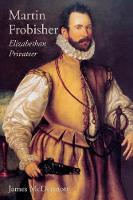
"Martin Frobisher" by James McDermottAdventurous and willful, the swashbuckling Martin Frobisher was both a brave sea-commander who served Elizabeth I with distinction and a privateer who single-mindedly pursued his own interests. This highly entertaining biography provides the first complete picture of the life and exploits of Frobisher—from his voyages in search of the fabled Northwest Passage to his courageous resistance to the Spanish Armada and his exploits as privateer and sometime pirate. The book explores Frobisher’s vigorous personality and its manifestation in the turbulence of his career and his impact on others. It also illuminates the robust world of maritime enterprise in England in the sixteenth century, when the shifting objectives of the Elizabethan age brought together felons, merchants, and great officers of state.

James McDermott, a leading authority on Martin Frobisher and the Northwest Passage, offers a riveting account of the explorer, based on all extant manuscript and documentary sources. McDermott sets aside the distortions of Frobisher’s popular reputation as a hero and offers instead a richly detailed portrait of a fascinating but flawed man whose ceaseless search for wealth and fame defined his extraordinary life.


Arthur Tudor, Prince of Wales: Life, Death and Commemoration edited by Steven Gunn & Linda Monckton
The Tudor king who never was: Arthur's life and death newly examined.Prince Arthur (1486-1502), son of Henry VII and Elizabeth of York, was the great hope of early Tudor England. Today he is largely forgotten, remembered only as Henry VIII's shadowy elder brother, the first husband of Katherine of Aragon. But in his lifetime Arthur counted for much more than that. Groomed for kingship, sent to govern Wales and the Marches, married to secure the Spanish alliance, celebrated in portraits, poems and pageants, Arthur stood at the centre of his father's plans. His death brought a grand funeral and a lasting monument, the chantry chapel covered in Tudor badges that still stands in Worcester Cathedral. 

These richly illustrated essays, by historians, art historians and archaeologists, investigate Arthur's life and posthumous commemoration from every angle. They set him in the context of the fledgling Tudor regime and of the religion, art and architecture of late medieval death and memory. They close with an exploration of the re-enactment of Arthur's funeral at Worcester in 2002, an event that sought to rescue the prince from the oblivion that has been his lot for five hundred years.


The History of William Marshal translated by Nigel Bryant
The History of William Marshal (0)The History of William Marshal is the earliest surviving biography of a medieval knight -- indeed it is the first biography of a layman in the vernacular in European history. Composed in verse in the 1220s just a few years after his death, it is a major primary source not simply for its subject's life but for the exceptionally stormy period he had had to navigate. It could hardly be other than major, given that its subject was regarded as the greatest knight who ever lived and that he rose in the course of his long life to be a central figure in the reigns of no fewer than four kings: Henry II, Richard Lionheart, John and Henry III. This remarkable biography was brought to light in the late nineteenth century thanks to a determined hunt for the manuscript by its first editor, the eminent French scholar Paul Meyer. It gives a vigorous account of events, full of vivid detail and passionate comment and frequent flashes of humour. And it gives revelatory insights into the attitudes and perceptions of the time, especially into the experience and nature of warfare in the late twelfth and early thirteenth centuries.

But while its quality and value have been long acknowledged, the poem has sometimes been deemed less than impartial and objective. Commissioned as it was by Marshal's own son, and intended not least for his family's fond enjoyment, it is little surprise that the poem's adulation of its subject is rarely qualified by regrets for failings or what are nowadays referred to as "errors of judgement". Marshal is presented as -- to all intents and purposes -- flawless: not simply a magnificent warrior, supreme in tournaments and battles alike, but a paragon of the key chivalric virtues of prowess, largesse and unfailing loyalty. But this is not surprising: the idea of the fallible hero is a modern invention, and the writer of this work - like Marshal himself -- was steeped in the old ideals of the chansons de geste as well as the more recent ideology of chivalry. In any case, there can be no denying that Marshal's achievements -- and sometimes his behaviour -- were by any standards extraordinary and seen as such by his contemporaries, and the poem corresponds with what we know of his life from other sources.


Hugh de Lacy, First Earl of Ulster: Rising and Falling in Angevin Ireland by Daniel Brown
This book charts the striking rise, fall and restoration of the first earl of Ulster, Hugh II de Lacy, described by one contemporary chronicler as 'the most powerful of the English in Ireland'. A younger son of the lord of Meath, de Lacy ascended from relatively humble beginnings to join the top stratum of Angevin society, being granted in 1205 the first earldom in Ireland by King John. Subsequently, in 1210, having been implicated in rebellion, Hugh was expelled from Ulster by a royal army and joined the Albigensian crusade against Cathar heretics in southern France. Unusually, after almost two decades in exile and a second revolt against the English crown, de Lacy was restored to the earldom of Ulster by King Henry III in 1227, retaining it to his death, c. 1242.

Situated in the north-east of Ireland, Ulster's remoteness from centres of colonial administration allowed Hugh de Lacy to operate beyond the normal mechanisms of royal control, forging his own connections with other powerful lords of the Irish Sea province. The fluidity of noble identity in frontier zones is also underlined by the career of someone who, according to his political needs, presented himself to different audiences as a courtly sophisticate, freebooting colonist, crusading warrior, or maurauding 'Irish' ruler.

The foundation for this study is provided by Hugh de Lacy's acta, provided as an appendix, and representing the first collection of comital charters in an Irish context. These cast fresh light on the wider themes of power and identity, the intersection of crown and nobility, and the risks and rewards for ambitious frontiersmen in the Angevin world.


John de Vere, Thirteenth Earl of Oxford (1442-1513): `The Foremost Man of the Kingdom' by James Ross
John de Vere, Thirteenth Earl of Oxford (1442-1513): `the Foremost Man of the Kingdom'First book to deal with de Vere's life and extraordinary career, during the Wars of the Roses and beyond.Earl of Oxford for fifty years, and subject of six kings of England during the political strife of the Wars of the Roses, John de Vere's career included more changes of fortune than almost any other. He recovered his earldom after the execution of his father and brother for treason, but his resistance to Edward IV led to a decade in prison. He escaped in time to lead Henry Tudor's vanguard at Bosworth in 1485 and subsequently enjoyed twenty-five years as perhaps "the foremost man of the kingdom", virtually ruling East Anglia for the king.
This is the first full-length study of de Vere's life and career. Through this lens it also tackles a number of broader themes. It reconsiders the role of the nobility under Henry VII, challenging the common perception of Henry as an anti-aristocratic king. It also explores East Anglian political society in the second half of the fifteenth century, how the earl came to dominate it, how successfully he exercised his power, and the personnel, including the Paston family, he used to run the region.


Humphrey Newton (1466-1536): an early Tudor Gentleman by Deborah Youngs
Humphrey Newton (1466-1536): An Early Tudor Gentleman
The public and political lives of the fifteenth- and early sixteenth-century gentry have been extensively studied, but comparatively little is known of their private lives and beliefs. Humphrey Newton of Pownall, Cheshire, offers a rare and fascinating opportunity to redress the balance, thanks to the fortunate survival of a commonplace book he compiled c.1498-1524. Drawing upon this unique manuscript, this interdisciplinary and multi-dimensional study of Newton explores his family life, landed estate, legal work, piety, and his literary skills [he composed nearly twenty courtly love lyrics]. It charts his social advancement and the self-fashioning of his gentle image, while placing him in the context of current discussions of gentry culture.

What makes Newton even more noteworthy is that he was among the unsung and little known stratum of English society historians have labelled the 'lesser' gentry. As such, this book provides the first comprehensive biography of an early Tudor gentleman.


Robert Grosseteste as Bishop of Lincoln: The Episcopal Rolls, 1235-1253 by Edited by Philippa M. Hoskin
Robert Grosseteste as Bishop of Lincoln: The Episcopal Rolls, 1235-1253Robert Grosseteste, teacher, scholar and pastor, remains one of the dominant figures of the medieval English church. A major influence on the early history of Oxford University, his writings on a wide range of theological and scientific subjects have been widely studied. His concern for pastoral care is also well attested; as bishop of Lincoln from 1235 until his death in 1253, he had the opportunity to exercise the pastoral office in the largest diocese in western Europe. But how did Grosseteste's theories of pastoral care work out in practice?

The study of Grosseteste's career as a diocesan bishop has been hampered by the relative inaccessibility of the records of his episcopate, published in an unsatisfactory edition in 1911 and long out of print. This completely new edition of Grosseteste's episcopal rolls makes it possible to take a fresh look at how he tackled the vexed issues of clerical ignorance, pluralism and non-residence in the aftermath of the reforms of the Lateran Council of 1215. They are presented here with an introductory study and elucidatory notes.


Roger of Lauria (c.1250-1305): "Admiral of Admirals" by Charles D. Stanton
Roger of Lauria (c.1250-1305): "Admiral of Admirals" (Warfare in History)Just before Vespers on 30 March 1282 at the Church of the Holy Spirit on the outskirts of Palermo, a drunken soldier of the occupying French forces of Charles of Anjou accosted a young Sicilian noblewoman. It sparked a bloody conflagration, the so-called War of the Sicilian Vespers, that would ultimately involve every part of the Mediterranean. The struggle for the coveted throne of Sicily eventually enmeshed all the great powers of medieval Europe - the pope, the Byzantine Emperor and the kings of France, England and Aragon.

Because the core of the Kingdom of Sicily was a wealthy, strategic island dominating the centre of the Mediterranean, the battles were fought mostly at sea. And in war at sea, a single figure proved pre-eminent: Roger of Lauria - Aragon's "Admiral of Admirals". In the course of some twenty years of naval combat, he orchestrated decisive victories in six pitched battles and numerous limited actions, never once suffering a defeat: a feat never equalled - not even by the legendary Lord Horatio Nelson.

Drawing from multiple Sicilian and Catalan sources as well as Angevin and Aragonese registers, this chronological narrative details the tactics and strategy Lauria employed to become the most successful galley fleet commander of the Middle Ages, while highlighting a crucial conflict at a pivotal point in European history, long overshadowed by the Hundred Years War.

Sunday, July 14, 2019

Diarmaid MacCulloch: ‘I got very irritated with Henry VIII’

From The Guardian

Thomas Cromwell
Diarmaid MacCulloch’s vast and exhaustive Thomas Cromwell: A Life, published in 2018, was described by Hilary Mantel – no slouch when it comes to the book’s subject – as “the biography we have been awaiting for 400 years”. Delving deeply into Cromwell’s private papers, MacCulloch argues for Cromwell’s central position in the supercharged power-politics of Henry VIII’s court.

MacCulloch studied under the great Tudor historian Sir Geoffrey Elton. He has written extensively on ecclesiastical history, and was ordained a deacon in the 1980s. He declined ordination to the priesthood because of the church’s attitude to homosexuality, but remains “a candid friend of Christianity”. He is now professor of the history of the church at Oxford University.

read interview here @ The Guardian

Saturday, December 1, 2018

Review: The Queen's Progress by MJ Trow

Synopsis:
May, 1591. When Queen Elizabeth decides to embark on a Royal Progress, visiting some of the grandest homes in England, her new spymaster, Sir Robert Cecil, sends Kit Marlowe on ahead, to ensure all goes smoothly. But Marlowe’s reconnaissance mission is dogged by disaster: at Farnham Hall, a body is hurled from the battlements; at Cowdray Castle, a mock tournament ends in near tragedy; at Petworth, a body is discovered in the master bedroom, shot dead.

By the time he reaches Chichester, Marlowe fears the worst. Are the incidents linked? Is there a conspiracy to sabotage the Queen’s Progress? Who is pulling the strings – and why? To uncover the truth, Marlowe must come up with a fiendishly clever plan.

So firstly, the scene for this latest episode in the Kit Marlowe series is real.  Elizabeth I did progress through Sussex, Surrey and Hampshire in August and September 1591.  As was the custom of the times, the "harbingers" were sent ahead to scout out locations, tighten security, check the accommodation (and kick out the hosting family if necessary), and ensure suitable "entertainments" were arranged.  To be selected to be a host to Glorianna was an honour - but there was a downside as well - there was usually great upheaval for the hosts and it was a huge expense for the family - it wasn't funded by the monarch and some families bankrupted themselves!.  For example, at Elvetham, such entertainments included: tennis, an opera and fireworks performed from the island in the great pond as seen above.

In this episode, there are rumblings of rebellion - nothing new in Tudor England.  The previous decade played witness to a series of plots involving Spain and Mary Queen of Scots.  Unfortunately the year prior, Elizabeth lost her spymaster, Sir Francis Walsingham, and in his stead was Sir Robert Cecil (son of Lord Burghley, Elizabeth's Prime Minister).

So, covertly employed as spies, but overtly as harbinger's of the Queen's progress, Kit Marlowe and Thom Sledd (his faithful stage manager), head out of London for Middleham.  A couple of suspicious deaths puts a proverbial spanner in the works - and Kit investigates.  Along the way we are introduced to a veritable cast of questionable characters including Nicholas Faunt, another of Walsingham's former spies, and the ever present busy-body and budding playwright, Will Shaxsper.
"... the rat, the cat and Lovel our dog, all rule England under a hog ..."
Well written as always, humourous, subtle, action-aplenty, treason, plots, personal and political jousting.  A great story that has a rather good twist at the end.

Further Reading:
The Portable Queen Elizabeth I and the Politics of Ceremony by Mary Hill Cole

The Mail Online - Was The Virgin Queen An Imposter?