Showing posts with label historical mysteries. Show all posts

Saturday, November 9, 2019

Review: Scottish Series by Clio Gray

Down in the coalmine, underneath the ground
Where a gleam of sunshine never can be found
Digging up the dusky diamonds all the seasons round
Deep down in the coalmine, underneath the ground


I came to this series after reading Gray's "Legacy of the Lynx" so was looking forward to a change of scenery - 1860s Scotland - a time of pivotal change in the Scottish Highlands. Poverty had always been one of the main reason for Scottish emigration. Two-thirds of the land is harsh – rocky, ill-drained, swept by rain-bearing winds off the Atlantic, and far from the centre of Mediterranean and European trade and culture. The first Scottish communities away from home were founded by traders.

In the 1800s, Scotland's population was on the decrease - until about 1855, when a vast number of the local population of the Highlands were forced to leave the land because of enforced evictions. In the Lowlands, emigration was almost always the outcome of wanting to improve one’s living standards. 
Scottish MysteriesThe eviction of Highlanders from their homes peaked in the 1840s and early 1850s as the Highland economy had collapsed, while the population still rose. When the earnings from kelp production and black cattle dried up, the landlords saw sheep as a more profitable alternative. The introduction of sheep meant the removal of people, and this become known as ‘the Clearances’. Combined with the prospect of starvation faced by much of the crofting population when the potato crop failed in the late 1830s and again in the late 1840s, emigration seemed the only option. 

The Emigration Act of 1851, however, made emigration more accessible to the poorest, with the Highlands and Islands Emigration Society set up to manage the process of resettlement. The Duke of Sutherland was one of a number of landlords who financed emigration schemes. The main exodus occurred in the islands, particularly Skye, Mull, the Long Island and the mainland parishes of the Inner Sound. After 1855, mass evictions were unusual and emigration became more a matter of choice than compulsion. Between 1855 and 1895 the decline in the Highland population was actually less than in the rural Lowlands. 


So a little bit about each of the books in the series and the historical background before I get down to the review. 

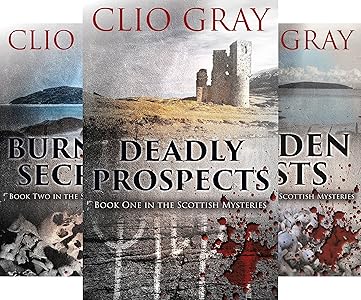
Book One: The Broro Murders (aka: Deadly Prospects) 
Deadly Prospects: A gripping historical thriller with a brilliant twist (Scottish Mysteries Book 1) by [Gray, Clio]1869, Sutherland, Scotland, and the Kildonan Gold Rush is in full swing. And then one of the panners is murdered, and strange scratchings left on stones where he is found. Brogar Finn and Sholto McKay are on hand to investigate the extent of the Gold Rush, and it falls to them to solve this murder, and the others that soon follow. 

Historical Background: 
Sutherland: isolated, remote, with rugged mountains, steep cliffs and deep fjords, dates from viking times. This was the home of the powerful and warlike Clan Mackay, and was considered relatively poor compared to rest of Scotland, with the majority of its people eking out a living from fishing. 

Sutherland is perhaps best known for the Highland Clearances, the eviction of tenants from their homes and/or associated farmland in the 18th and 19th centuries century by the landowners. Typically, this was to make way for large sheep farms (see above). The Sutherland Estate (consisting of about two thirds of the county) had the largest scale clearances that occurred in the Highlands, much of this being carried out in 1812, 1814 and 1819-20. In this last period (the largest of the three listed), 1,068 families were evicted: representing an estimated 5,400 people. This population was provided with resettlement in coastal areas, with employment available in fishing or other industries. However, many instead moved to farms in Caithness or left Scotland to emigrate to Canada, the US or Australia.

The Brora Mine was indeed owned by the Dukes of Sutherland up to 1873. Although the area was already being mined, this particular colliery came into existence (c.1810) as a result of a partnership between William Hughes, a mining engineer and William Young, lawyer and a sub factor of the Sutherland Estate (who became infamous for his part in the Clearances under Elizabeth, Countess & Duchess of Sutherland d.1839). Work continued in 1814 and 1815 not only on the mine but on the surrounding infrastructure, including a distillery, the development of a harbour and a railway to take the coal down to the sea. It was, however, during this period, financial challenges, mismanagement and accidents beset the mine before a survey by mining engineer, William Bald, reported favourably about the coal. Despite some misgivings the Sutherland family continued to back Young financially even though expenditure was vastly exceeding estimates. It all soon fell apart. The salt tax was abolished in 1823; its production then became unremunerative, and as coal was not in much demand among a people who were accustomed to, and could easily get, plenty of peat, the Brora works, after languishing for nearly five years with the 2nd Duke unwilling to sanction further expenses, were closed in 1828.

However, in 1872, the 3rd Duke of Sutherland re-opened Brora Colliery, and for a number of years had it under estate management. Queen Victoria visited the mine just after its reopening, travelling on the newly completed railway pulled by a locomotive named “Florence”. The colliery was managed by M.Crowe in 1893 before being leased to a Mr John Melville (c.1896). From this point, coal was mined for manufacturing purposes - specifically salt - and was eventually abandoned in 1975. It was the only Jurassic coal mine in Scotland and was never taken into state ownership. 

The Kildonan Gold Rush was a gold rush that occurred in the Strath of Kildonan, Sutherland, in the Highlands of Scotland in 1869. Gold was first discovered in the area in 1818 when a solitary nugget of gold weighing about ten pennyweights was found in the River Helmsdale. It is claimed a ring was made out of this and is in the possession of the Sutherland family. But when public interest was sparked following a newspaper announcement in 1868, a gold rush started. 

The credit for the discovery goes to Robert Nelson Gilchrist, a native of Kildonan, who had spent 17 years in the goldfields of Australia. On his return home, he was given the permission by the Duke of Sutherland to pan the gravels of the Helmsdale River. Many of the prospectors were novices but a hard core of miners from Australia and America helped to provide some much-needed expertise in gold recovery. In April 1869, however, the Duke of Sutherland introduced a system of licenses which cost one pound per month for each claim measuring 40 square feet. In addition to this, the prospectors were expected to pay a royalty of 10% on all gold found; not surprisingly, much gold was never declared but was used in barter for food, tools and accommodation. Two small 'towns' had come into being. Baille an Or - a settlement of huts (shanty town) catering for over 600 prospectors - was established by the banks of the Kildonan Burn, and Carn na Buth (meaning Hill of the Tents) served the workers on the Suisgill Burn. Very soon a 'saloon' was added to the Town of Gold (Baille an Or) and provided meals and accommodation for the mining fraternity.

However, the falling price of gold coupled with diminishing levels of finds and better opportunities in the local herring fishery, meant numbers fell to around 50 by the autumn. The Duke was losing potential income from salmon fishermen and deer stalkers, so in December he announced that “all exploration for gold would cease with effect from 1 January 1870"; despite this, the lure of gold tempted several opportunists over the following years.


Book Two: Burning Secrets 
Burning Secrets: A gripping historical mystery (Scottish Mysteries Book 2) by [Gray, Clio]1869, Strontian, Scotland, a village on Ardnamurchan Peninsula, is inhabited by mining folk and crofters, eking out a living from the unforgiving land and turning a blind eye to the smugglers who plague the coast. But one man sets himself apart from the rest – Gustav Wengler, the owner of the mine and an eccentric mathematician, who isolates himself on Havengore Island with a collection of unexplained white monuments. His assistant Archie Louden acts as his only envoy to the outer world; however Archie never makes it home from an important mission to Copenhagen. 

Historical background: 
In 1830 sources write that "The village of Strontian is very pleasantly situated, directly at the head of Loch Sunart, the hills adjoining to which are crowned with beautiful and very thriving plantations. The Loch itself is here extremely picturesque ... In a neighbourhood civilized and populous it would speedily become a favourite retreat." 

In the 1830s, residents from Strontian and the surrounding area were among the first to use the "Bounty Scheme" to emigrate to Australia. The Brilliant, a Canadian-built ship, sailed from Tobermory to New South Wales in 1837 with 322 passengers, 105 of whom were from Ardnamurchan and Strontian. The Bounty Scheme, which ran from 1835 to 1841, was proposed by Edward Gibbon Wakefield as a way for Australian settlers to subsidise the emigration of skilled tradespeople from Britain. 

In the hills to the north of Strontian, lead was mined in the 18th century and in these mines the mineral strontianite was discovered, from which the element strontium was first isolated. The history of mining in the Strontian area dates to 1722. The first large-scale application of strontium was in the production of sugar from sugar beet. Although a crystallisation process using strontium hydroxide was patented by Augustin-Pierre Dubrunfaut in 1849, the large-scale introduction came with the improvement of the process in the early 1870s. The Strontian mine was abandoned by June 1889.


Book Three: Hidden Pasts 
Hidden Pasts: A gripping historical thriller (Scottish Mysteries Book 3) by [Gray, Clio]Hestan Island, marooned in the Solway Firth, is tethered to the mainland at low tide by a causeway called The Rack; Hestan was home to two men quietly living out their lives, until a boy is almost crushed to death in their tiny copper mine, when their shared past begins to unravel. Over at Balcary House, Brogar Finn and Sholto McKay arrive, and soon become involved in the affairs on Hestan, which in turn leads them back through the bloody wars of Crimea and the lands of the Tartars. 

Historical Background: 
The isle of Hestan lies at the mouth of Auchencairn Bay in the region of Dumfries and Galloway in the former county of Kirkcudbrightshire. A lighthouse was built on the eastern side of the island by Alan Stevenson in 1850, with a small cottage of the light-keeper. Other notable buildings in the are include Balcary Tower, built c. 1860, for the french mistress one one Colonel Johnstone when he was Laird of Auchencairn House, which itself was built around this time for Ivie Mackie, Lord Mayor of Manchester (1857 - 1860) - though I can find very little on any of these real-life characters! 

At certain conditions of low tide the island is accessible on foot as there is a natural causeway of shingle and mussels from Almorness Point to the northern tip of Hestan (known as The Rack). The island can also be reached on foot from Rockcliffe during the time of spring tides, but requires wading knee deep across the lowest parts of the river Urr out on the mudflats. 

At the southern tip of the island are the so-called “Daft Ann’s Steps”, a series of rocky outcrops that jut out into the sea and are permanently submerged. Apparently they take their name from a girl who lived in the nearby village of Auchencairn. She drowned while attempting to reach the mainland from the south end of the island via the “steps”, instead of using the longer but safer approach from the north. 

In the 18th century the island was used as a centre of smuggling activity, with goods being stored in the caves on the south west of the island where there was reputed to have been shelves cut into the rock. Balcary House, on the opposite shore, now Balcary Bay Hotel, was used by a firm of smugglers - the Mull of Galloway Smuggling Company (established by Messrs Thomas Clark, Hugh Crain and Matthew Quirk, and Englishman Richard Barton). These smugglers used its cellars to conceal their contraband (mainly salt) and was said to have been large enough to house 200 horses!. One of the more colourful local characters of this period was Johnnie Girr and the Stewartry of Kirkcudbright was the birthplace of one John Paul Jones, whose friends and enemies alike would accuse him of piracy!.

As Walter Scott observed: “Smuggling was almost universal in Scotland for people unaccustomed to imposts and regarding them as an unjust aggression upon their ancient liberties; made no scruples to elude them where it was possible to do so.” Solway Firth and Galloway is said to have provided some of the most active smuggling routes in the country, with the proximity to the English Border making it the stop-off of choice for those shifting illegal goods. Much of the contraband was stored on the Isle of Man - which was independent during the 18th Century - and brought in fast moving smuggling fleets to the Scottish mainland. The poet Robert Burns was amongst those trying to halt the free traders in the area after being appointed an excise man at Dumfries in 1791.

Now the mining theme for this outing is copper. Hestan has had copper mines on the eastern side of the island since the 1840s, though this could hardly be considered as a large-scale operation as the island itself measures approximately 460 by 270 metres. The copper mined from Hestan was shipped to Swansea.


The stories in Clio Gray's "Scottish Mysteries" are spread across both the Scandinavian world and northern Scotland. For centuries there were political links across the North Sea. The first Viking raid on Iona is thought to have taken part in 794, and much of the Hebrides and Caithness would come under Norse rule. Orkney and Shetland continued to be earldoms under Norway until 1468. This settlement resulted in the Scandinavian-derived Norn language being spoken on Orkney and Shetland until the 18th Century, and influencing the Shetlandic and Orcadian dialects to this day.

As RM Ballantyne in Erling the Bold (1869) says: "Yes, there is perhaps more of Norse blood in your veins than you wot of, reader, whether you be English or Scotch; for those sturdy sea rovers invaded our lands from north, south, east, and west many a time in days gone by, and held it in possession for centuries at a time, leaving a lasting and beneficial impress on our customs and characters. We have good reason to regard their memory with respect and gratitude, despite their faults and sins, for much of what is good and true in our laws and social customs, much manly and vigorous in the British Constitution, of our intense love of freedom and fairplay, are pith, pluck, enterprise, and sense of justice that dwelt in the breasts of the rugged old Sea-kings of Norway!"

Each of the books feature a mining theme: coal and gold, strontium, copper; as well as links to events in the past. As we are taken on a journey over the northern parts of Scotland, what I appreciated in the all the books was the location map - for whilst I was familiar with a few of the place names, the maps help put things into perspective. 

The author makes use of the chapters to introduce characters that form part of the narrative - whether fleetingly or on a more permanent basis - so the setting of each scene is crafted before things begin to take off. I especially enjoyed the characters of Brogar Finn and Sholto McKay, trouble-shooters for the Pan-European Mining Company, who make a nice change from your standard fictional amateur investigator.

With each book, Gray tempts us - the reader - with a story peppered with well researched historical fact and a carefully woven plot, that like the dangerous quicksand of the Solway Firth mudflats, can suck the reader in unawares, escape being nigh on impossible.


further reading:
Scottish Mining website
Smugglers Britain
Scandinavian Scotland


Thursday, October 31, 2019

Review: Dark Queen Waiting by Paul Doherty

Dark Queen Waiting (Margaret Beaufort Mystery #2)Synopsis:  October, 1471. Edward IV sits on the English throne; the House of York reigns supreme. With her young son, Henry Tudor, in exile in France, Margaret Beaufort, Countess of Richmond, shelters deep in the shadows, secretly plotting for the day when Henry can be crowned the rightful king.  But as her supporters are picked off one by one, it becomes clear that a traitor lurks within Margaret’s household. Margaret orders her sharp-witted clerk, Christopher Urswicke, to find out who has betrayed her. If he is to protect Margaret’s remaining supporters from suffering a similar fate, Urswicke must solve a baffling mystery where nothing is as it first appears.


Historical mystery fiction set in the time of the wars of the Roses. This time, from the POV of Margaret Beaufort, mother of the future Henry VII - which makes a nice change. Usually we read only from the Yorkist side wherein the Lancastrians are often portrayed as the villains (being a bit of a Yorkist myself - and so they should!). 

At this particular point of history, Margaret is married to the ailing Sir Henry Stafford (her third husband), the battle of Tewkesbury (May 1471) witnessed the death of Prince Edward, son of Henry VI and many leading Lancastrian nobles (including Henry VI himself as a consequence), and cemented the position of the House of York upon the throne of England. Margaret's son Henry Tudor has fled abroad in exile, and Margaret is still viewed with great suspicion by the Yorkists despite outwardly giving no signs of rebellion or treason. But all the while, she sits quietly plotting the the triumphant return of her son and the shining hope of the Lancastrian cause.

However, this story was slow going and again characters pop in who you are never too sure are there simply to fill the page or are actually relevant to the story. Another annoying thing is the repetition of story-telling, first by one character and then another all in the space of a few pages.

I lost interest to be quite honest, and skipped through to the end - where I finally found something of interest - the character of Christopher Urswicke - or as Doherty calls him - "the founder of the British Secret Service". Now had that been at the start ....... 

I gave this two stars on Goodreads - the second star is because of this last remark which has sent me off on the trail of Urswicke. Obviously, Doherty plans many more in this series and intends to flesh out the character of Urwiske, but as I have no intention of continuing with the series, here's a little about the man himself - Urswicke that is ...


Who Was Christopher Urswicke?
Christopher Urswicke (1448 – 1522) was a priest and confessor of Margaret Beaufort. He was Rector of Puttenham, Hertfordshire, and later Dean of Windsor. Urswicke is thought to have acted as a go-between in the plotting to place her son Henry VII of England on the throne (c.1483 - 1485). This in itself is suggestive of a protagonist in medieval mystery.

There is very little known of the early activities of Christopher Urswicke. He often said to have been the son of Sir Thomas, Recorder of London and Chief baron of the Exchequer, who during the various battles of the wars of the roses ".. made himself conspicuous by his tact and cunning in aiding the cause of the Yorkist faction.." (and this is the path Doherty takes). However, from the looks of things, he was actually the son of one John Urswicke, a lay brother of Furness Abbey. He was educated at Cambridge and ordained (1468). Sometime following this, or even before, he came to the attention of Margaret Beaufort and her son Henry Tudor, most probably through the Stanleys. Even this introduction is shrouded in mystery as Margaret will not take Thomas Stanley as her fourth husband until 1472!

These are the events that have preceded and have taken us up to our current storyline.

I will go out on a limb here and suggest Urswicke's appointment as confessor to Margaret did not occur until after this time. There are references to his being in Rome in 1480 / 1481 and then coming to the attention of Margaret who became his patron for the remainder of her life; she presented him in 1482 to his first living - Puttenham, Huntingdonshire - and made him her chaplain and confessor. It has been suggested that the family had a long association with the Stanleys and / or that Dr Lewis Caerleon, Margaret's physician may have been responsible for the introduction. Because she sought to overthrow Richard III in favor of her exiled son, Margaret needed able and discreet servants; accordingly, she took Urswicke into her household as her confessor and secretary.

Margaret apparently involved Urswicke in the negotiations between herself and John Morton, then bishop of Ely, designed to lead to the marriage of her son, the future Henry VII to Elizabeth of York (1484). After helping save Henry's life, Having helped save the earl’s life, Urswicke became his confessor, advisor, and confidential agent. Urswicke remained with Henry, and was with him in Wales when Henry was gathering troops against Richard III.

Urswicke flourished under Hnery VII and was rewarded with the prebend of St Stephen's and later to the influential position of king's clerk and almoner. He was subsequently granted other benefices, offices, and prebends. Urswicke was also involved with Roderigo de Puebla in the negotiating the Treaty of Medina del Campo that was signed on 27th March 1489. It established a common policy towards France, reduced tariffs between the two countries and agreed a marriage contract between Prince Arthur and Catherine of Aragon and also established a dowry for Catherine of 200,000 crowns.

Urswicke represented Henry VII in Rome in 1493 and met with Emperor Maximilian I in 1496. Later that year he was appointed Dean of Windsor. Urswicke was with Henry when he was poor health in the early months of 1509. 

Urswicke began to slowly retire from life at court by the early 1500s and dedicated most of his time to independent projects, such as the rebuilding of St. Augustine's, where he would ultimately die. Amongst Urswicke's friends were the well-known humanists Thomas More and Erasmus, and he supplied valuable information on Richard III to More and Polydore Virgil, both of whom wrote about the former king. 

Christopher Urswicke was all but erased from the text of Vergil's Anglica historia sometime after 1513. Evidence of his part in the dissemination of literature that Henry VIII's court (and court historian) could have considered subversive may account for Urswicke's disappearance as well as illustrate some clerical reactions to early Tudor anticlerical sentiment.

All in all, Urswicke remained a loyal servant to both Henry VII and his son and successor, Henry VIII, until the day he died (21.03.1522).


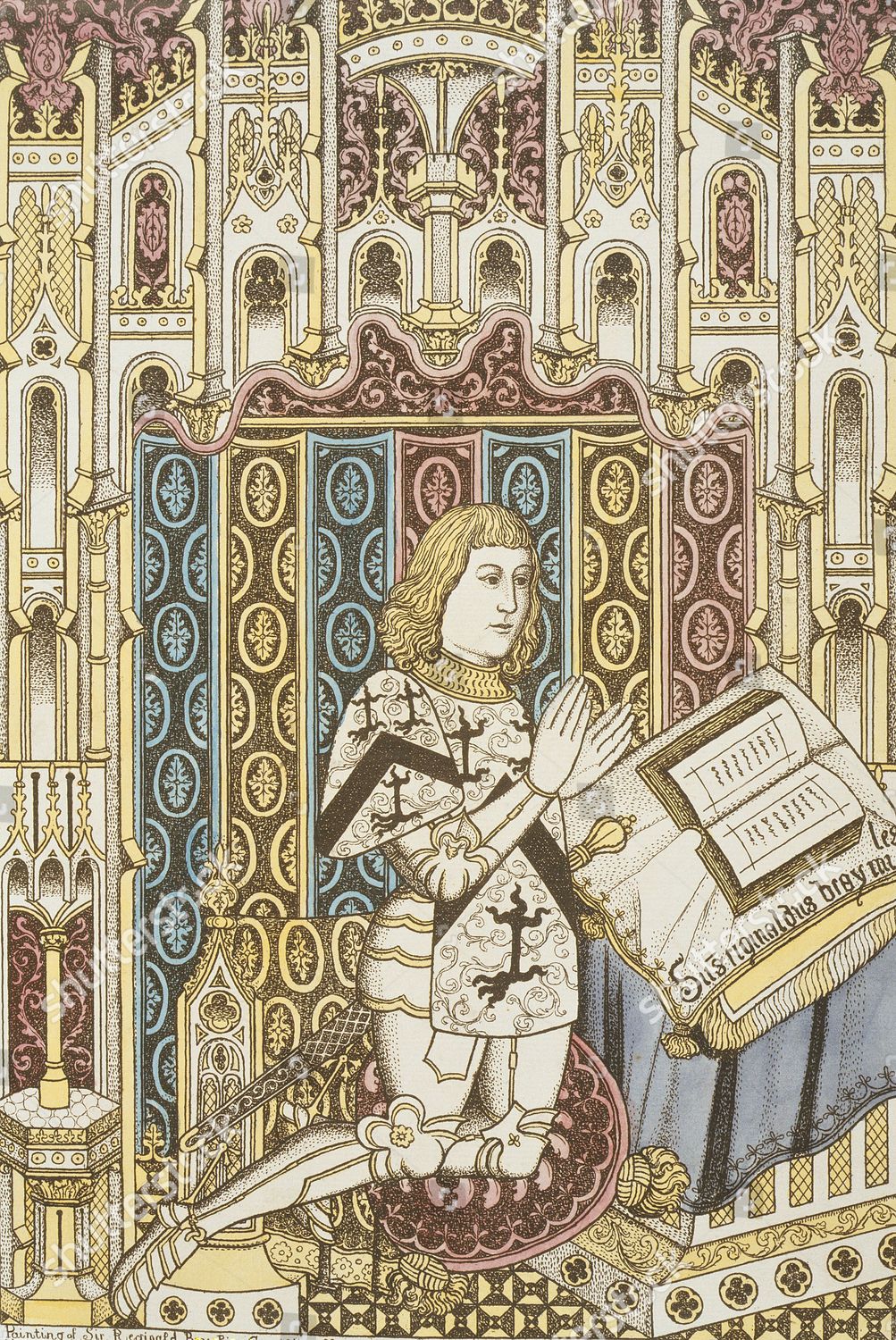
Who was Reginald Bray..?
Reginald Bray (1440 - 1503), Urswicke's contemporary in Margaret Beaufort's household, played a vital role in organizing Buckingham's rebellion against Richard III during the last phase of the civil wars (1483–1487) and later became one of the most active and trusted ministers of Henry VII.

Image result for reginald brayBray began his career as receiver-general for Sir Henry Stafford, second husband of Margaret Beaufort, mother of the future Henry VII. After Stafford’s death in 1471, Bray continued to serve Lady Margaret as steward. In 1483, Bray acted as go-between for Margaret and John Morton, bishop of Ely, who was then engaged in drawing his jailer, Henry Stafford, duke of Buckingham, into the conspiracy being formed to dethrone Richard III in favor of Margaret’s son, Henry Tudor, earl of Richmond. Bray also raised much-needed funds for Richmond and won several key gentlemen to the earl’s cause, including Giles Daubeney and Richard Guildford.

After the failure of Buckingham’s Rebellion in October 1483, Bray was pardoned by Richard III, but continued to support Henry Tudorand may have gone into exile with him in France. Knighted after the Battle of Bosworth in 1485, Bray was quickly named chancellor of the Duchy of Lancaster and knight of the body. Appointed a member of the Council, Bray held various financial and administrative positions, sat in numerous Parliaments, and served on over 100 commissions. Bray’s record of loyal service to Margaret Beaufort made him a member of Henry VII’s inner circle of advisors, especially in matters of finance. Bray was responsible for the financial provisions that made possible construction of Henry VII’s chapel at Westminster and his renovations of St. George’s chapel at Windsor. He would be created a Knight of the Garter. Bray died in August 1503.


further reading: 
Urswicke also features in Robert Farrington's Henry Morane Series


Saturday, April 27, 2019

Review: Black Death by MJ Trow

Black Death
Synopsis:  September, 1592. “Kit, I know we have never been friends, but you are the only man in London to whom I can write. Someone is trying to kill me”.

Christopher Marlowe had never liked Robert Greene when he was alive. But when the former Cambridge scholar is found dead in a cheap London boarding house, shortly after sending Kit a desperate letter, Marlowe feels duty bound to find out who killed him – and why.

What secrets did Robert Greene take with him to the grave? And why is the Queen’s spymaster, Sir Robert Cecil, taking such a keen interest in the case? As plague stalks the streets of London and the stage manager of the Rose Theatre disappears without trace just days before the opening of Marlowe’s new play, the playwright-sleuth finds himself in the midst of a baffling murder investigation – where nothing is as it first appears.


Another outing in Elizabethan England has Kit Marlowe investigating the death of Robert Greene, one of the first professional writers of the day, and a contemporary of both Marlowe and Shaxsper - the man who referred to the Bard of Avond as an "upstart crow".

Kit receives a message from Greene, no friend of our Kit, asking Marlowe to come to his aid - instead Greene is found dead in mysterious circumstances. In reality, around this time, Greene wrote exposés on the Elizabethan underworld, such as "A Notable Discovery of Coosnage" (1591) and the successful and amusing "A disputation betweene a hee conny-catcher and a shee conny-catcher" (1592).

Against this we have the appearance of the magus Simon Foreman, currently favourite of Elizabeth I, sidelining Dr John Dee, and the disappearance of steadfast Tom Sledd. But London is not only being stalked by a killer but also the Plague, resulting in a closure of the theatres, leaving Kit ample time to investigate.

Marlowe is as witty and irascible as ever; all the usual suspects are present; and red herrings abound.


Sunday, April 14, 2019

Review: The Antiquarian - The Art Restorer

Did you ever have that feeling that once you write a review of a book you have just savoured that the euphoric feeling you have just experienced would disappear as soon as the review is written. So you hold off for as long as possible just to hold onto that feeling - this is one of those instances.

Five years ago I read both The Antiquarian and its sequel, The Art Restorer - both stories still vivid in my mind today, but I just had that feeling that if I put pen to paper (figuratively speaking), than I would lose that memory. But the time has come.

The Antiquarian:
A gripping historical thriller in which the search for a mysterious and powerful object hidden in the heart of Barcelona leads to ambition, desire, love—and murder. This story is supposedly based on real events though the author gives us no clue - which is disappointing as I love to follow up with my own research to see how the two parallel.

16146587We meet a circle of antiquarians - Artur Aiquader, Samuel Horowitz, Enric Torner, Guillem Carelus - who collect historical manuscripts. In this instance, Artur comes into possession of the manuscripts dating back to the 14th century belonging to the Casadevall family with links back to a possible hidden treasure. However, Artur is not ready to share what he has found, and he is soon found murdered, obviously at the hands of one who is known to him. A note from Artur to his adoptive son, Enrique sets off the investigation, not only into Artur's death, but also into the mystery of the manuscript, as it is slowed being translated and its contents revealed, transporting the reader back to 14th century Barcelona. 

In the 14th century, Europe had become overpopulated, political frontiers had ceased to expand and internal colonization was coming to an end, but population levels remained high. Europe was experiencing a period of climate change which resulted in famine and pestilence, economies took a hit, prices of basic food stuffs rose, and Barcelona, like many other cities, was struck by several outbreaks of the plague.

Social upheaval followed the widespread deaths. Whole families died without heirs, leaving their farms abandoned, and looters and nobles were quick to take advantage; the latter seizing any property unclaimed after 30 days. The result of this abuse and the increased value of labour was a series of peasant uprisings which continued for many years, part of a long struggle of working people against the upper classes.

Turning on others, especially marginal members of society, was a common response during the trauma of the Black Death. Jews, especially, were attacked and killed throughout Europe - and Barcelona was no exception. The violence committed against Jews in the city led to the end of the Jewish neighbourhood, El Call, and foreshadowed greater and more intensified persecutions of Jews, including the Inquisition. 

Enrique, with the help of Bety, investigate who within Artur's inner circle could have motive. And there is the shadowy figure of the mysterious Frenchman. Against this historical backdrop, that the last few climatic chapters finally enlighten us, and draws this modern day story to its conclusion.


The Art Restorer:
This sequel sees novelist Enrique Alonso return to Barcelona to attend the reopening of the San Telmo Museum and to catch up with his ex-wife, Bety, now the PR manager. However, it is when art restorer Craig Bruckner is found dead, that Bety suspects foul play and enlists the aid of Enrique to find out what really happened.

22611387Bruckner's death, and his focus on the works and life of the artist Sert, become the basis for Enriques new novel (set in the 1940s). The past comes back to haunt Enrique is the murder of his adoptive father Artur three years prior still casts a long shadow.

Josep Maria Sert i Badia was a catalan artist, who after studying in Rome, moved to Paris (1899). Sert was commissioned to paint the interior of the Vic Cathedral in the Province of Barcelona, Catalonia in murals (1900), which took him more than 30 years to complete. After this, he also undertook commissions for the Rockerfeller family in the United States (1930s). He was linked with two notable women - Misia Godebska (d.1950) and Isabelle Roussadana Mdivani (d.1938) - who were prominent in the Parisian cultural scene (alog=ng with the likes of Chanel, Cartier, Cocteau, Diaghilev). 

Enrique decided to follow in Bruckners footsteps to unravel the mystery of Sert and discover who killed the art restorer and why. The mystery hinges on events in the past, this time, Paris during WW2 when the painter brokered the release of a girl from a concentration camp with a Nazi official - the payment being made in diamonds.

What is glaringly omitted from what little I could find on Sert online, was his life in the 1940s in Paris. Was he in Paris during the war or back in Barcelona where he died (1945).

Essentially this is a well crafted novel with three stories running parallel - the main story; the story of the fictional novelsist; and the backstory to it all, the life of Sert.


Saturday, December 1, 2018

Review: The Queen's Progress by MJ Trow

Synopsis:
May, 1591. When Queen Elizabeth decides to embark on a Royal Progress, visiting some of the grandest homes in England, her new spymaster, Sir Robert Cecil, sends Kit Marlowe on ahead, to ensure all goes smoothly. But Marlowe’s reconnaissance mission is dogged by disaster: at Farnham Hall, a body is hurled from the battlements; at Cowdray Castle, a mock tournament ends in near tragedy; at Petworth, a body is discovered in the master bedroom, shot dead.

By the time he reaches Chichester, Marlowe fears the worst. Are the incidents linked? Is there a conspiracy to sabotage the Queen’s Progress? Who is pulling the strings – and why? To uncover the truth, Marlowe must come up with a fiendishly clever plan.

So firstly, the scene for this latest episode in the Kit Marlowe series is real.  Elizabeth I did progress through Sussex, Surrey and Hampshire in August and September 1591.  As was the custom of the times, the "harbingers" were sent ahead to scout out locations, tighten security, check the accommodation (and kick out the hosting family if necessary), and ensure suitable "entertainments" were arranged.  To be selected to be a host to Glorianna was an honour - but there was a downside as well - there was usually great upheaval for the hosts and it was a huge expense for the family - it wasn't funded by the monarch and some families bankrupted themselves!.  For example, at Elvetham, such entertainments included: tennis, an opera and fireworks performed from the island in the great pond as seen above.

In this episode, there are rumblings of rebellion - nothing new in Tudor England.  The previous decade played witness to a series of plots involving Spain and Mary Queen of Scots.  Unfortunately the year prior, Elizabeth lost her spymaster, Sir Francis Walsingham, and in his stead was Sir Robert Cecil (son of Lord Burghley, Elizabeth's Prime Minister).

So, covertly employed as spies, but overtly as harbinger's of the Queen's progress, Kit Marlowe and Thom Sledd (his faithful stage manager), head out of London for Middleham.  A couple of suspicious deaths puts a proverbial spanner in the works - and Kit investigates.  Along the way we are introduced to a veritable cast of questionable characters including Nicholas Faunt, another of Walsingham's former spies, and the ever present busy-body and budding playwright, Will Shaxsper.
"... the rat, the cat and Lovel our dog, all rule England under a hog ..."
Well written as always, humourous, subtle, action-aplenty, treason, plots, personal and political jousting.  A great story that has a rather good twist at the end.

Further Reading:
The Portable Queen Elizabeth I and the Politics of Ceremony by Mary Hill Cole

The Mail Online - Was The Virgin Queen An Imposter?

Sunday, September 9, 2018

Review - Slave Queen by HB Moore

Slave Queen (An Omar Zagouri Thriller)
This is my first Omar Zagouri book (though the third in the series).

The premise: a long forgotten Ottoman bloodline is seeking to re-establish itself in modern day Turkey. We have all the elements of a good mystery / thriller - archaeological mystery; black market smugglers; mysterious villain bankrolling the whole affair; a love interest; a conspiracy; the nemesis.

Current descendants of one branch are seeking to eliminate any of those that would be rivals. The links go back to the 16th Century Constantinople - the time of Suleyman the Magnificent and his queen Roxelana. This actual period in Ottoman history was wrought with internal intrigue as a mere concubine rose up in the harem to become the most influential woman at court. But Roxelana's rise was not an easy one and many enemies were made along the way, including the offspring of his usurped wife and concubines.  Here fact is certainly just as interesting as the fiction!

The action takes place - as mentioned - in both modern-day Turkey, and in the historical past, as one by one, rivals are eliminated. The coup de grace in the final chapters reveals all when the modern day players are brought together.


See all titles in Omar Zagouri series here @ Goodreads and @ HB Moore's blog


Sunday, June 17, 2018

Review: The Murder Pit by Mick Finlay

The Murder Pit (An Arrowood Mystery)
London 1896 - Barnett and Arrowood are detectives whom we first met the year before in Arrowood. In this installment, they are searching for a missing bride

But Arrowood and Barnett are no ordinary detectives - they are literally a second rate version of Holmes and Watson, whom Arrowood absolutely and most vocally, despises. These two take on the cases that Holmes won't touch (those of the common folk), but for them there is no glorious write up when the cases are solved, no public acclaim, no feting from royalty, and he is tired of Holmes getting the credit for solving his cases.

Arrowood is the anti-hero - the poor mans' Holmes - his counternance is not lean and agile, but overweight and lumpy.  He is at times thoroughly unlikeable and yet likeable, and sees himself as a "real" detective, rather than the show-pony Holmes. But you can't help feeling that anyone would appear second rate when Holmes is in his ascendancy, and Holmes does cast a very long shadow.  The character of Arrowood is, I guess, more human - he fits is with the gritty London backdrop; he is a fallible, obnoxious, working class man.

Having said that, our narrator Barnett (the trusty side-kick ala Watson), takes us through the case at hand - the search for the missing bride, Bridie, who is estranged from her parents - how hard can it be, surely back home in time for tea. However, just when you think there is resolution the story takes off again. Constant plot twists and turns keep you guessing to the end.

Note: that whilst this is fiction, it does paint a disturbing account of the treatment of those society had labelled "idiot", "imbecile" and "lunatic".

Extra Note: we could be seeing the likes of Arrowood and Barnett some time soon .... with a TV adaptation

read more here 
@ The Lit Bitch (review of Arrowood)
@ CRA (diary of a debut author)


Saturday, June 2, 2018

Who shot Michael Collins?

The Great Cover-Up: The Truth About the Death of Michael CollinsWho shot Michael Collins? That is a question that can never be answered, but will forever be asked. Author Gerard Murphy admits as much at the beginning of The Great Cover Up: The Truth about the Death of Michael Collins. He then goes on to deliver a forensically persuasive argument in support of his case that the death of the nation's future leader was a big cover-up.


Why were both sides of the Civil War divide so evasive when it came to the death of Michael Collins? Why were they still trying to effect cover-ups as late as the 1960s?

Determined to find the truth despite the trails of deception left by many of the key players, Gerard Murphy, a scientist, looked in detail at the evidence. Previous researchers have tended to concentrate on the reminiscences of survivors. Murphy instead focuses on information that appeared in the immediate wake of the ambush, before attempts could be made to conceal the truth. He also examines newly released material, and has carried out a forensic analysis of the ambush site based on photographic evidence of the aftermath recently discovered in a Dublin attic.

These investigations have unearthed significant new evidence, overlooked for almost a century, that seriously questions the version of events currently accepted by historians.

Sunday, November 12, 2017

Review: The Sun King Conspiracy

Paris, 1661. Cardinal Mazarin, who has been the prime minister of the country for twenty years, has only a few weeks to live. Between Mazarin's closest confidant Colbert and Finance Minister Fouquet, a fierce battle ensues over his successor. With the help of the beautiful Louise de la Vallière, for whom the King is also aflame, Gabriel tries to reveal the secret that has been guarded for centuries. The fate of France and the Sun King depends on it.

What we have in "The Sun King Conspiracy" by Yves Jego and Denis Lépée, is a novel of mystery and intrigue set in the court of Louis XIV in 1661 (which was one of the original titles of the book - also published as The Sun King Rises).  There is the usual cast of characters: Moliere, Mazarin, Fouquet, the Mancini Sisters, Colbert, d'Artagnan, who cross the stage as the story unfolds.

A secret society will stop at nothing to obtain a secret document held by the dying Cardinal Jules Mazarin, and to this end they employ one Gabriel de Pontbriand, an actor in Moliere's troupe, to retrieve the document. But now, Gabriel has become a target as those who employed him now seek to recover this mysterious document. Gabriel finds himself under the protection of Nicholas Fouquet, little realising Fouquet is not what he appears. A meeting with his father, and the secret is partly revealed (hence another alternate title of this book - The Fifth Gospel).

It helped that I was somewhat familiar with this period in history, so the cast was not unknown. The pace was certainly maintained and my interest did not wain, despite the length of the novel. The fact that both authors are politicians may have enhanced the heightened elements of political courtly intrigue that feature so prominently at the French court at this time - a veritable hornets nest.  

Will there be a sequel ..... the reader was certainly left with questions unanswered so I hope so.

See review @ Euro Crime

Tuesday, May 10, 2016

Mysterious 'Man in the Iron Mask' Revealed, 350 Years Later


A 350-year-old French mystery has been unmasked: In his new book, Paul Sonnino, a professor of history at the University of California, Santa Barbara, claims he has uncovered the real identity of the mysterious Man in the Iron Mask.

In "The Search for the Man in the Iron Mask: A Historical Detective Story" (Rowman & Littlefield, 2016), Sonnino leads the reader through historical records, correspondence regarding the prisoner and other aspects of his investigation.