Showing posts with label irish history. Show all posts

Monday, February 19, 2024

Review: Women of the Irish Rising by Michael Hogan

Synopsis: This is the story of the women who put their lives on the line for Irish freedom. They were not only the nurses, cooks, and couriers, but also gunrunners, sharpshooters, and organizers. Many who barely received mention in mainstream histories are fully revealed here both in their own words and by those who witnessed their incredible courage and leadership.

Over 250 women took part in the Irish Rising, more than 70 were imprisoned, and one was sentenced to death by the British. The struggle was initially betrayed by a conservative government which compromised their rights to equality, but women were finally vindicated in recent years.

Now the fight for distributive justice and the unity of the entire nation, original goals of the Easter Rising, have passed to the present generation.

~ ~ ~

This is exactly what it sets out to be - an easy to follow account of the women who were participants - combatants, auxiliaries, medics - in the events of the East Rising in Ireland in 1916. Hogan links these women directly with the events of the Rising as they played out. These women were active in their roles not just voices of support. And it should be noted that out of all the male leaders, it was only De Valera who refused to have women in his contingent.

The Easter Rising was an Irish republican insurrection against British government in Ireland, which began on Easter Monday, April 24, 1916, in Dublin. The uprising was planned to be nationwide in scope, but a series of mishaps led to its being confined to Dublin alone - the British had discovered the plans, leaders were arrested and planned action was called off. Following a forces surrender, Pearse and 14 other leaders of the rebellion were court-martialed and executed by British authorities in the weeks that followed. Though the uprising itself had been unpopular with most of the Irish people, these executions excited a wave of revulsion against the British authorities and turned the dead republican leaders into martyred heroes.

Of the 250 or so women who participated, 79 received sentences of imprisonment - and some of deportation.  Only one - Constance Markiewicz - received a court marital and death penalty (later commuted to imprisonment). The first fatality of the Irish Rising was a nurse - Margaret Keogh. And it was nurse Elizabeth O'Farrell who, under constant fire from the British, delivered the order to surrender to the Volunteers.

Of the women included by Hogan, some of the roles consisted of: gun-running, financial support, medical support, communications, military combatants, and training. The women in the 1916 Rising represented a cross-section of Irish society - single and married, from different religious denominations and social strata, and they included an actress, nurses, a doctor, a noblewoman, shop-assistants, seamstresses, feminists and pacifists.

The majority of the women were supporters and / or actively involved in the suffrage movement and of Cumann na mBan (Women's Guard), or were themselves members of the Irish Republican Brotherhood or the Irish Civilian Army.

Many documented their experiences during the Rising and beyond, and continued to be active in both the womens' suffrage movement and the struggle for a free Ireland. Notwithstanding their most active roles in the Rising, womens' rights were largely forgotten (despite promises to the contrary contained in the Proclamation). Their roles were severely restricted under Eamon de Valera (who as noted above, refused to have them in his contingent).

These women were deserving of more than just a mere footnote in the history books, and Hogan concludes with a further discussion on womens' rights, and the meaning of the Rising and the role of women which was - and still is - only imperfectly understood.

A valuable resource for further study and research for those with a deep interest in their particular period of history. Highly recommended reading - and a great addition to my own personal library.


Tuesday, May 25, 2021

Review: The Irish Assassins by Julie Kavanagh

Synopsis: One sunlit evening, May 6, 1882, Lord Frederick Cavendish and Thomas Burke, Chief Secretary and Undersecretary for Ireland, were ambushed and stabbed to death while strolling through Phoenix Park in Dublin. The murders were funded by American supporters of Irish independence and carried out by the Invincibles, a militant faction of republicans armed with specially made surgeon's blades. They put an end to the new spirit of goodwill that had been burgeoning between British Prime Minister William Gladstone and Ireland's leader Charles Stewart Parnell as the men forged a secret pact to achieve peace and independence in Ireland--with the newly appointed Cavendish, Gladstone's protege, to play an instrumental role in helping to do so.

In a story that spans Donegal, Dublin, London, Paris, New York, Cannes, and Cape Town, Julie Kavanagh thrillingly traces the crucial events that came before and after the murders. From the adulterous affair that caused Parnell's downfall; to Queen Victoria's prurient obsession with the assassinations; to the investigation spearheaded by Superintendent John Mallon, also known as the "Irish Sherlock Holmes," culminating in the eventual betrayal and clandestine escape of leading Invincible James Carey and his murder on the high seas, The Irish Assassins brings us intimately into this fascinating story that shaped Irish politics and engulfed an Empire.


"Monto (Take Her Up To Monto)"
When Carey told on Skin-the-goat,
O'Donnell caught him on the boat
He wished he'd never been afloat, the filthy skite.
Twasn't very sensible
To tell on the Invincibles
They stood up for their principles,
day and night by going up to Monto Monto......"
(Irish folk song)


Irish politics is like one of those multi-games of chess you see in a New York park scene - the master playing against multiple opponents. It is neither straight forward or insular - there are too many players, too many agendas, too many external forces and influences, and most of the time, the Irish themselves factor little into the private agendas of the dominant personalities.

I am very au fait with both Irish history and politics - and had in the course of my reading, come across the Phoenix Park assassination of Cavendish by the Invincibles so was looking forward to an new analysis of events.  Unfortunately, I was sadly disappointed - and considered this a labourious and unrewarding reading experience.

This book attempts to cover off a lot of history leading up to the assassination. Kavanagh introduces many characters - some I personally consider not necessarily pertinent; and the side trip to Gweedore to "provide context" was, to be perfectly blunt, a waste of paper.

I believe that in order to construct a story around a single event, the author has cast a wide focus - too wide in my opinion; the narrative needed to be more linear. As such, I feel this failed to provide enough focus on the actual assassination, perpetrators and consequences early enough - it took just too long to get to the point. It was convoluted, lacking in structure and direction -  there was too much attention centred on individuals and events that had no relevance. I mean, the author's note says the tome was styled like " .... the shifting episodic structure of today's television dramas ..." - if this was an attempt to make the subject more palatable for the general reading public, then it missed the mark completely.  Sounds like the author is trivialising her subject matter.

Furthermore, the author's note as to the intent behind writing this book should have been placed at the front of the book rather than stuck at the back - it may have provided a slightly clearer idea of what the author was trying to achieve rather than leaving the reader slightly bewildered. The reader who picks this up is looking for more than a dry history lesson - they already have enough background knowledge - they are looking for a more narrow focus on a particular event. Any reader attempting this tome should come well prepared and have read some cursory editions of Irish history and politics beforehand, for without this,  defeat will come faster than a politicians promise on election day.


Had some editor attacked this with the proverbial red pen (or hatchet) and suggested a much more abridged - or even structured - version, this may have made for a more enjoyable (if that's appropriate) read. As mentioned there were just too many side issues which distracted and detracted from a more linear narrative - they were unnecessary and not overly relevant, and certainly should have been left on the cutting room floor.  Trying to literally stuff all the research into the single tome shows a distinct lack of understanding of the topic at hand and an inability to prioritise information- as the adage goes - sometimes less is more.  The topics just needed to be compartmentalised a little more effectively and efficiently.  Having said that, neither of Kavanagh's predecessors - Tom Corfe and Senan Molony - managed to provide a decent narrative on the subject.

Reading this as a kindle version made it much easier to put aside - with a physical copy, I would have just skipped through to the pertinent narrative and have had done with this in less than a day.  

read more here:


Saturday, December 12, 2020

New book tells the story of a hardworking people in West Offaly

From the Offaly Express:
Veteran writer and local historian Brendan Ryan has just received the copies of his 12th book from the printers.  The book is called "On Gallen Green - The Story of a West Offaly Townland".

Brendan says the book had a modest beginning but then ballooned. "I started by writing an article on a townland that straddles both Ferbane and Cloghan parishes, for Offaly Heritage, but it grew legs and ended as a more than 200 page book." 

Brendan has written several very popular local history books over the last 35 years.  His first book was "The Green Fields - A History of Ferbane GAA", which was massively popular. His next book, printed in 1991, shone a light on the life and poetry of local man John M Doyle. The book was called "Where the Brosna Flows". In 1994 he published "A Land by the River of God - A History of Ferbane Parish". Last year he co-authored a book about Shannonbridge.

"On Gallen Green" is the story of a small townland (Gallen) in West Offaly, a townland that straddles two parishes, Cloghan and Ferbane. For the past three hundred years its economy was based on a thriving brickmaking industry, a labour-intensive enterprise, probably brought to the area by Cromwellian soldiers. The Grand Canal forms a focal point in the social life of the community.  "It is the story of a hard-working people," says Brendan, "a people who also know how to enjoy their recreations of football, dancing, music, singing and games."

Gallen has a Community School and the artifacts of a Celtic monastery and of a medieval Augustinian Priory. The book tells many interesting stories including how the Lord Lieutenant in Dublin Castle happened to send a silver snuff box to the parish priest of Ferbane in 1831; how two successive clerks of the Petty Sessions for King's County happened to live in Gallen View; and the times when the travelling theatres put on their shows in two local Gallen halls.

Brendan grew up in Dublin's north inner city. After graduating from UCG he taught for many years in Ferbane parish. Brendan is married to Cecilia MacNerney from Dromard, Longford and they have seven children.

A limited number of signed hardback copies of 'On Gallen Green' will be available, priced €20, in O’Callaghan’s Centra, Ferbane; Ferbane Post Office; Spar, Ferbane; Spar Express, Cloghan; and Offaly History Shop, Bury Quay, Tullamore. 

Copies of the book can also be ordered from the author at brendanryan@yahoo.com.

Saturday, June 27, 2020

Review: The Irish War of Independence and Civil War edited by John Gibney

The Irish War of Independence and Civil War
Synopsis: In the aftermath of the First World War, a political revolution took place in what was then the United Kingdom. Such upheavals were common in postwar Europe, as new states came into being and new borders were forged. What made the revolution in the UK distinctive is that it took place within one of the victor powers, rather than any of their defeated enemies.

In the years after the Easter Rising of 1916 in Ireland, a new independence movement had emerged, and in 1918-19 the political party Sinn Fein and its paramilitary partner, the Irish Republican Army, began a political struggle and an armed uprising against British rule.

By 1922 the United Kingdom has lost a very substantial portion of its territory, as the Irish Free State came into being amidst a brutal Civil War. At the same time Ireland was partitioned and a new, unionist government was established in what was now Northern Ireland. These were outcomes that nobody could have predicted before 1914. In The Irish War of Independence and Civil War, experts on the subject explore the experience and consequences of the latter phases of the Irish revolution from a wide range of perspectives.


Despite the number of pages, this was a lengthy read for me as the subject matter explored some very singular events and subjects that are an extension of the Irish Civil War of the 1920s.

This is niche content covering off specialised areas within the remit of Irish history. If you have no background in this subject matter, you will find it hard going as the authors of this collection of essays assume a prior and intimate knowledge.

Gibney notes that "... experts on the subject explore the experience and consequences of the latter phases of the Irish revolution from a wide range of perspectives ..." and topics covered range from a look at the files of the RIC collated within Dublin Castle; the Black and Tans; flirtations with Bolshevism and Fascism; the murder of the Mayor of Cork and the burning of Cork City from the perspective of the Fire Brigade; the use and fate of informers; social issues like the postal strike, the moratorium of public amusements as a form of protest, and a cricket match; before finishing off with a look at the women of Cumann na MBan.

For those for whom this is a particular area of study, this will make a nice addition to your required reading.

Monday, April 13, 2020

Say Nothing by Patrick Radden Keefe

Say Nothing (Patrick Radden Keefe).pngThis meticulously reported book begins with a longstanding mystery: Who abducted Jean McConville, and why? In December 1972, a group of masked men and women dragged McConville, a 38-year-old mother of 10 who had recently been widowed, from her Belfast home. “Say Nothing” investigates what happened to McConville, while also telling the broader story of the Troubles.

“This sensitive and judicious book raises some troubling, and perhaps unanswerable, questions” about how to move forward from an anguished past, our critic Jennifer Szalai writes. “Keefe’s narrative is an architectural feat, expertly constructed out of complex and contentious material, arranged and balanced just so.”


Jean McConville was a protestant woman who married a catholic British soldier and lived in the heartland of separatist Belfast.  A mother of ten children, she was widowed in early 1972 - by the end of the year she would be dead.

Ex-soldiers face new inquiry into deaths during Troubles | News ...
The Troubles in Ireland were primarily political and nationalistic, fueled by historical events, with an ethnic or sectarian dimension, although it was not a religious conflict. Following the "Bloody Sunday" shootings in Derry in January 1972, the Provisional IRA ramped up their own armed campaign in reaction to the ongoing violence. This culminated in a ferocious bombing campaign in July 1972. The IRA (as well as other Irish republican and loyalist paramilitary groups) had a policy of killing informers within its own ranks; however, from the start of the conflict the term informer was also used for civilians who were suspected of providing information on paramilitary organisations to the security forces. 

Murder of Jean McConville - Alchetron, the free social encyclopedia
Jean McConville
One night, in December 1972, Jean was kidnapped and murdered by the Provisional Irish Republican Army (IRA) and illicitly buried in County Louth in the Republic of Ireland in 1972 after being accused by the IRA of passing information to British forces (of which there was no actual proof). The Royal Ulster Constabulary (RUC) did not begin to investigate the disappearance properly until 1995, and her body was only discovered by chance in 2003. A formal investigation was launched in 2006 with arrests following in 2014, though suspects would be released due to insufficient evidence.

This crime is notorious due to the fact the Jean was a widowed mother of ten, her body was hidden when the bodies of informers were usually left in public as a warning, and due to the lack of any immediate follow up with regards to finding her.

Keefe said he began researching and writing the book after reading the obituary for Dolours Price in 2013. Dolours was an active member of the Provisional Irish Republican Army (IRA), and in a series of interviews conducted by Boston College (and for a forthcoming film "I, Dolours), she confessed to her participation in the murder and disappearance of Jean McConville.


Saturday, November 2, 2019

Review: the Caribbean Irish by Miki Garcia

48541222Synopsis: The Caribbean Irish explores the little known fact that the Irish were amongst the earliest settlers in the Caribbean. They became colonisers, planters and merchants living in the British West Indies between 1620 and 1800 but the majority of them arrived as indentured servants. This book explores their lives and poses the question, were they really slaves? As African slaves started arriving en masse and taking over servants' tasks, the role of the Irish gradually diminished. But the legacy of the Caribbean Irish still lives on. 


This, for me, was a fascinating read as much of what I have read in the past relating to Irish history has been focused on the country itself. It was no news to me that a great many Irish left their homeland following war and the Famine, whether voluntarily or not - my own family arrived in Australia in less than auspicious circumstances. And it is only lately, in this last decade, that I have begun specifically exploring the full extent of the reach of Irish migration to Spain, South America, and now the Caribbean - places, except for Spain, that I was unfamiliar with. So, in addition to the recently read Paisanos: The Forgotten Irish Who Changed the Face of Latin America by Tim Fanning, I will add this tome by Miki Garcia, as a must read.

Garcia begins the story of the Irish in the Caribbean from the 17th Century, when Ireland like England was under the Cromwellian thrall following the Royalist defeat in the English Civil War. She refers to Ireland as " ... a prisoner of geography .." and for all intents and purposes, this is where it all began - with Irish prisoners, whether of war or circumstance. In an effort to clear out the prisons of the destitute, the political and criminal elements, the workhouses, transportation seemed the solution. Under the Act of Settlement of Ireland 1652, what could only be described as ethnic cleansing began in earnest. Transportation agents were employed to ensure that quotas were met and the means in which they succeeded was often overlooked - children were kidnapped, men were press-ganged, women were lied to, promises were made, people with no visible means of support, including widows and wives of serving soldiers, were swept up and shipped off. Some paid their way while others opted to work off the costs (a bit like today's human trafficking schemes). There are no actual numbers to quantify how many people ended up in the Caribbean - there were no official records kept by the less than scrupulous transportation agents; many people were misidentified (labelled English rather than Irish - or vice versa) - AND, to top it all off, this wasn't just an English thing - the Dutch, the French and the Spanish were all involved in the shipment of Irish to the Caribbean!

Related image

So where does this leave us now - firstly with those that came voluntarily - soldiers, explorers, adventurers, government officials and their families, traders and merchants. All of these folk needed servants - and here is where the bulk of the Irish come into it - as "indentured servants" - refer above as to how they arrived, though many in government considered it "... a measure beneficial to Ireland ..."

For the most part, Garcia enlightens us about the system of the indentured servant. Upon arriving, many Irish were "sold" as servants for a specific period - usually seven years. They were treated not much better than actual slaves but more on this later. Families were often separated, they were still the victims of humiliation and discrimination, the subjects of anti-Irish laws which also restricted their travel; they were the subjects of vigorous scrutiny with the government always fearing some sort of rebellion. After their period of employment was over, these servants were freed and they were usually paid in goods (their lives equivalent to pounds of tobacco, sugar or cotton). There was no guarantee of employment afterwards (only if you were skilled labour), and often they were then farmed out again (as indentured servants) to other colonies.

Garcia talks about the main industries in the Caribbean - tobacco, sugar and cotton, and on which islands they were prevalent. And this is an important component of the Irish history in the Caribbean as the introduction of slaves from Africa changed things for them on a considerable scale.

The production of sugar coincided with an increase in the African slave trade but it was not the starting point as this was already in existence across the Caribbean (though not to the extent as is commonly thought). As a result of this increase, the need for Irish servants decreased; their treatment and punishments worsened as slaves were considered to be a more valuable commodity - retained for the duration of their life rather than for a set period of employment - so no effort was spared to make the lives of the Irish any easier - their standard of living decreased to the point where I guess many might have wondered whether the grass was actually greener.
So, across how many islands in the Caribbean were the Irish spread - Garcia gives us a summary so that we don't have to do the leg-work ourselves - and it turns out to be quite a lot!

But back to the main topic - how the Irish slave myth was made. And it all boils down to terminology. The Irish in the Caribbean were not there as slaves. They arrived under the heading of one of four groups: willing and volunteers; involuntary; child labour; enforced (ie: prisoners). The last three groups were "sold" on arrival, though could not freely specify the length of their contract, whilst the last group were considered servants for life - without indenture. Observance of their treatment could be construed by some as giving rise to the myth of slavery. Garcia explains the terminology for us: an indentured servant was contracted for a period of years and then were given their freedom. A slave was the personal property of another - for life - and by default, so too were their descendants. The slave codes of the late 1600s were set up to differentiate between the two.

As a side note, the slave trade in the Caribbean ended in 1834. Large scale migration ended c.1841, and though the Irish were still encouraged to migrate, numbers were much smaller.

For me, this was a valuable insight into the Irish diaspora as well as the history of the British West Indies. As this was not really my field of expertise, I had no idea that Europeans supplanted the native Amerindian populations; that the Irish were transported in their hundreds of thousands (willingly or not) before the introduction of African slaves; and that once there, there was frequent cross migration between the islands and the Amazon basin.

Garcia's narrative style makes it easy to follow this tangled web, At times it feels as if you are sitting across from her having a conversation. It is easy, after reading this, to understand how the Irish slave myth arose and it is a topic well worth exploring further. Garcia's book will start you on your journey.


so in the words of the Beach Boys' song, Kokomo
Aruba, Jamaica, ooh I want to take ya,
Bermuda, Bahama, come on pretty mama
Key Largo, Montego, baby why don't we go, Jamaica .....

further reading:
To Hell or Barbados: The ethnic cleansing of Ireland by Sean O'Callaghan
White Cargo: The Forgotten History of Britain's White Slaves in America by Don Jordan, Michael Walsh
If the Irish Ran the World: Montserrat, 1630-1730 by Donald H. Akenson
Ireland, Slavery and Anti-Slavery: 1612-1865 by N. Rodgers
How the Irish Became White by Noel Ignatiev
To Shed a Tear: A Story of Irish Slavery in the British West Indies by Lawrence R. Kelleher


Tuesday, October 1, 2019

Governing Hibernia by K. Theodore Hoppen

Cover for 

Governing Hibernia


The Anglo-Irish Union of 1800 which established the United Kingdom of Great Britain and Ireland made British ministers in London more directly responsible for Irish affairs than had previously been the case. The Act did not, however, provide for full integration, and left in existence a separate administration in Dublin under a Viceroy and a Chief Secretary. This created tensions that were never resolved. The relationship that ensued has generally been interpreted in terms of 'colonialism' or 'post-colonialism', concepts not without their problems in relation to a country so geographically close to Britain and, indeed, so closely connected constitutionally.


Governing Hibernia seeks to examine the Union relationship from a new and different perspective. In particular it argues that London's policies towards Ireland in the period between the Union and the Anglo-Irish Treaty of 1921 oscillated sharply. At times, the policies were based on a view of an Ireland so distant, different, and violent that (regardless of promises made in 1800) its government demanded peculiarly Hibernian policies of a coercive kind (c. 1800-1830); at others, they were based on the premise that stability was best achieved by a broadly assimilationist approach — in effect attempting to make Ireland more like Britain (c. 1830-1868); and finally they made a return to policies of differentiation though in less coercive ways than had been the case in the decades immediately after the Union (c. 1868-1921). The outcome of this last policy of differentiation was a disposition, ultimately common to both of the main British political parties, to grant greater measures of devolution and ultimately independence, a development finally rendered viable by the implementation of Irish partition in 1921/2.


Monday, September 30, 2019

Ex-IRA man's novel adds to intrigue over Northern Bank heist

From The Guardian

On 19 December 2004, masked raiders took £26.5m in cash from the vaults of Belfast’s Northern Bank, loaded it on to a truck and vanished into the night.

It was one of the most audacious heists in British criminal history, and it left an enduring riddle: did the IRA do it? Police on both sides of the Irish border suspected so, but the group denied any involvement. The robbers have not been caught and the investigation remains open.

Now a former IRA volunteer and convicted bank robber, Ricky O’Rawe, has added to the intrigue by writing a novel with echoes of the raid.

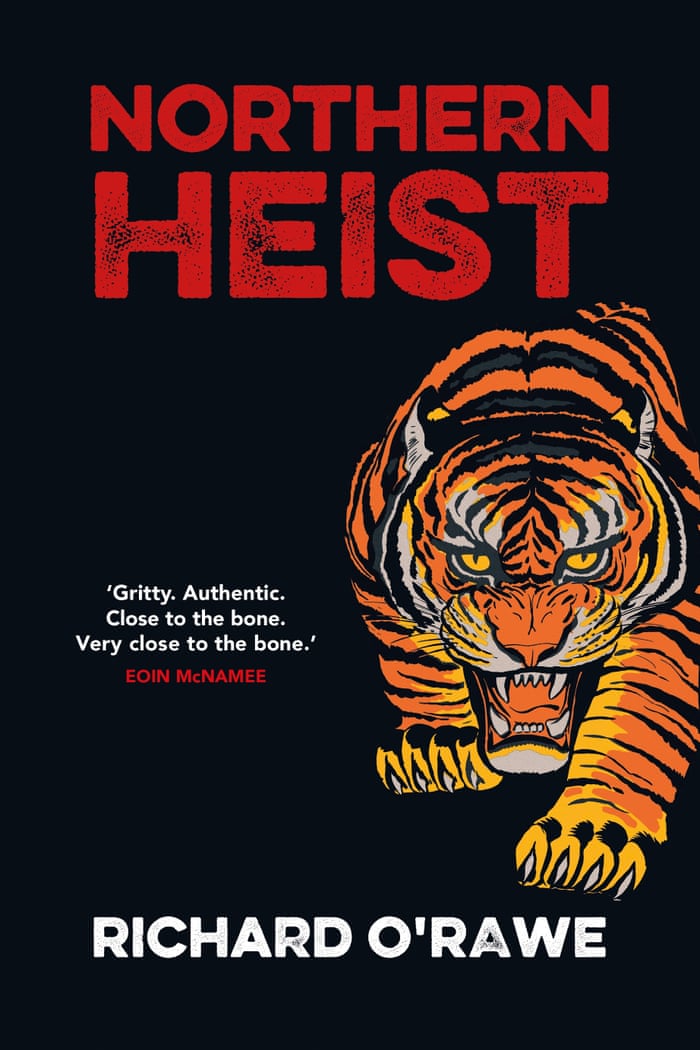
Northern Heist, published September 2018, is a rollicking, colourful account of the preparation and execution of a very similar robbery. The fictional one is committed by a Belfast criminal gang headed by a character named James “Ructions” O’Hare, a professional thief. The IRA is not involved in the robbery but demands a cut of the proceeds, leading to twists and double-crosses.


read more here @ The Guardian

Sunday, September 8, 2019

Battles for the Three Kingdoms - Ireland

Battles for the Three Kingdoms: The Campaigns for England, Scotland and Ireland - 1689-92 by John Barratt

The Battle of the Boyne in 1690 was the culmination of the ferocious struggle between two kings, James II and William III. This book makes use of research and sources, including eyewitness accounts, to analyse the opposing forces, their strategy, tactics and conduct of the war and the reasons for its eventual outcome.


The Siege of Derry 1689 by Richard Doherty
James II's army laid siege to the city of Derry for 105 days, during which half the city's population died. This is a military study of one of the most iconic episodes in Irish history, based on contemporary accounts, official records of the day, and published works on the siege. With an understanding of seventeenth-century warfare, especially siegecraft, the author probes many of the myths that have grown up around the siege and sets it in its proper context. Its ramifications for the consequent history of Ireland cannot be over emphasised.


The Battle of Aughrim 1691 by Michael McNally
With over 60,000 combatants, the Battle of the Boyne, which took place on 1 July 1690 was the largest battle ever fought on Irish soil, and has long been regarded as the pivotal event of the Williamite War. But despite the Boyne's celebrated place in Irish protestant folklore, the critical engagement of the campaign was to take place the following year outside the village of Aughrim, in County Galway. Here the outnumbered and outgunned Jacobites, their backs to the wall, faced the Williamite army in a battle that was to decide the course of Irish, and indeed European history. In the first major history of the battle in forty years, Michael McNally brings vividly to life the personalities and events of the bloodiest day in Irish history. Placing the battle firmly in the context of the wider campaign, and of early modern European power politics, he uses evocative eyewitness testimony to reconstruct the events of that fateful encounter, and reveal just how close to defeat the Williamites came.

Books: Irish - Australian History

Some titles from The History Press focusing on the transportation of the Irish to Australia in the 18th & 19th Centuries.


Mutiny or Murder?: The Bloodsoaked Voyage of the Chapman Convict Ship by Conor Reidy
On 15 March 1817 the convict ship the Chapman departed from Cork with 200 male prisoners on board. When it dropped anchor off Sydney Cove four months later, its prison doors opened to reveal 160 gaunt and brutalised men. Twelve were dead and twenty-eight lay wounded in the hospital below deck.
As officials pieced together the horrors of the voyage many questions arose. Why did Michael Collins claim that his fellow convicts conspired to take the ship? Why was Captain Drake unable to rein in the violent and sadistic Third Mate Baxter? Was there really an attempted mutiny on the Chapman? Or was this cold-blooded murder?

Using daily journals from the crew, detailed testimony from several convicts and official colonial government correspondence, this book unravels what happened during those four months at sea. Tarnished by intrigue, suspicion and mutual hatred, this is the story of one of the darkest episodes in the history of penal transportation between Ireland and Australia.


Van Diemen's Women: A History Of Transportation To Tasmania by Joan Kavanagh & Dianne Snowden 
On 2 September 1845, the convict ship Tasmania left Kingstown Harbour for Van Diemen’s Land with 138 female convicts and their 35 children. On 3 December, the ship arrived into Hobart Town. While this book looks at the lives of all the women aboard, it focuses on two women in particular: Eliza Davis, who was transported from Wicklow Gaol for life for infanticide, having had her sentence commuted from death, and Margaret Butler, sentenced to seven years’ transportation for stealing potatoes in Carlow.

Using original records, this study reveals the reality of transportation, together with the legacy left by these women in Tasmania and beyond, and shows that perhaps, for some, this Draconian punishment was, in fact, a life-saving measure.


Undaunted by John Wright
Undaunted is a collection of true stories about Irish men and women who travelled to Australia in search of a better life and battled against the odds in a remote and harsh world. From 1788 when the first convict ships landed to the mid-20th century, these true stories about settlers, convicts and their descendants highlight the best and worst of human behaviour in the kinds of dilemma that faced newcomers. This book tells the story of the Irish contribution to this struggle.

Saturday, August 10, 2019

Alice Kyteler: The Kilkenny 'witch' condemned for sorcery

From The Journal

Her KindThe search for witches wasn’t confined to Salem – here in Ireland we had our own witch trial, when Kilkenny’s Dame Alice Kyteler was accused of sorcery. Now a book by Irish author Niamh Boyce takes a fictionalised look at Kyteler’s trial, through the experiences of the woman who died instead of her.

In 1324, Petronella de Meath, Kyteler’s maid, was flogged and burned at the stake. It was Dame Alice Kyteler who was the person who had been condemned for witchcraft (the first person in Ireland to be condemned for this), but Petronella died in her stead.

The story of Alice Kyteler and Petronella has been turned into a novel, written by Boyce, author of the novel The Herbalist. Called Her Kind, it took four years to write, and was a real labour of love for Boyce, as she told The Journal.

read more here @ The Journal

Meath author’s historical fantasy imagines Black Death aftermath

From Irish Examiner
For his debut novel, Meath author Oisín Fagan stepped back in time to imagine the aftermath of the Black Death in Ireland. It could be the next Game of Thrones, writes Ed Power.

Life is full of surprises, as author Oisín Fagan discovered upon submitting his first novel for publication. “I honestly never thought they’d let the book be called Nobber,” he says with a low-key chuckle. “The name came first. It’s such a fantastic name.”

Nobber is set in the aftermath of the Black Death, which in the 14th century hacked a trail of devastation through Ireland. It’s an uproarious mash-up that may variously remind you of Game of Thrones, Ridley Scott’s Alien, Quentin Tarantino, John B Keane, and Horrible Histories.

read more here @ Irish Examiner and also @ Irish Times

Sunday, March 24, 2019

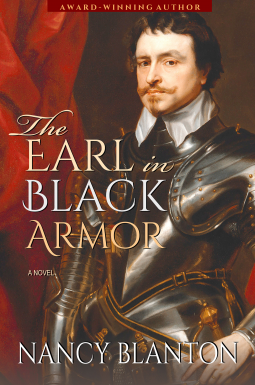
Review: The Earl in Black Armour by Nancy Blanton

IRELAND, 1635: England had recently completed a military conquest, which was further complicated by the official policy of plantations. The early decades of the seventeenth century saw a large number of native Irish landholders (particularly in Ulster) being replaced by New English and Scottish protestant settlers, who totally dominated the colonial administration in the kingdom. They viewed their catholic neighbours with distrust and disdain, and actively discriminated against them.


Most of the Irish upper classes, however, were not ideologically opposed to the sovereignty of the King of England over Ireland, but wanted to be full subjects of the triple Stuart monarchy and maintain their pre-eminent position in Irish society. This was prevented by their religious dissidence and the threat posed to them by the extension of the Plantations. The Protestant settler-dominated Government of Ireland tried to confiscate more land from the native landowners by questioning their medieval land titles and as punishment for non-attendance at Protestant services. In response, Irish Catholics appealed directly to the King, first to James I and then Charles I, for full rights as subjects and toleration of their religion: a program known as The Graces. On several occasions, the Monarchs appeared to have reached an agreement with them, granting their demands in return for raising taxes. However, Irish Catholics were disappointed when, on paying the increased levies, the King postponed the implementation of their demands. What was more, by the late 1630s, Thomas Wentworth, Charles' representative in Ireland, was proposing further widespread confiscations of native land to break the power of the Irish Catholic upper classes. It is likely that this would eventually have provoked armed resistance from Irish Catholics at some point, but the actual rebellion was sparked by a political crisis in Scotland and England that led to civil war in the three Kingdoms.

Richard Burke, 4th Earl of Clanricarde, was an Irish nobleman and politician, in addition to being one of the leading landowners in Ireland. His power and influence in Connaught was the source of increasing animosity between himself and the acquisitive Dublin government, who decided to use the method of empanelling juries to "find" defective titles, in order to recover the lands in question for the English Crown. And yet, as Viscount of St Albans, Burke had official immunity from these recusancy proceedings. 

Thomas Wentworth, 1st Earl of Stafford, whose tenure as Lord Deputy of Ireland would have long and damaging consequences (It is likely that this would eventually have provoked armed resistance from Irish Catholics at some point, but the actual rebellion was sparked by a political crisis in Scotland and England that led to civil war ), was not above using a method of bullying and curated jury selection in his persecution of Catholics as he made his way through the west coast of Ireland in his quest to secure lands for the Plantations.

It is against this backdrop that the opening scenes are played out - a jury in Galway refuses to find the King's title (prerogative) to land under the Sovereignty Act of 1633:
Oure Soverane Lord With advyse consent and assent of the whole estaites acknowledging his Majesties Soveraigne authoritie princelie power royall prerogative and priuiledge of his crowne over all estaites persones and causes quhatsumevir within this kingdome Ratifies and approues the act of parliament maid in the yeir 1606 Anent the kings royall prerogative And perpetuallie Confirmes the same for his hienes his airs and successors Als amplie absolutelie and frielie in all respectis as ever any of his Majesties royall progenitors did possess and exercise the same . . .
The jury subsequently find themselves imprisoned in Dublin castle (Aug 1635) and a substantial fine (or ransom) is imposed on Ulick Burke, who has now succeeded to the lands of Clanricarde upon the untimely death of his father, for their release. 

" .... can it be imagined that a stranger should come to this county of Galway and think to compass his ends ..."  (Ulick Burke, 1st Marquess of Clanricarde, 1642)

Meanwhile, Faolán Burke is sent to Dublin to spy on Thomas Wentworth, with two aims: to free the imprisoned jurors and to discover any dark deeds that could force King Charles to recall Wentworth to England. This shouldn't be too hard as Wentworth was collecting enemies through not upholding the promises to return lands back to the landowners in return for their full support. In politics, however, nothing is ever quite that simple. The story of Thomas Wentworth is played out through the eyes of Faolin Burke, who is now in his service and travels freely with Wentworth throughout England and Ireland, and is there to act witness.

The view of Charles I during this period is not that of a benevolent and popular figure - here he is portrayed as a tyrant, who has crippled his subjects with taxes and forcing them to war. In London and elsewhere, bloody riots and fires result in the King's termination of Parliament - chaos and arrest soon follow.

Wentworth laments "... never came a man to so lost a business ..." and yet he still continues with his unpopular policies in his service of the King ".... I am but a servant. I must stand by my beliefs .."

Without delving further and revealing all, this is a well researched and crafted tale, which keeps the reader wondering just how far into Wentworth's career the author is taking them. This is one in a series, though can be read as a stand alone novel. It is long as there is much to encapsulate, and a knowledge of the period is recommended.


Further reading:
A New History of Ireland: Volume III: Early Modern Ireland 1534-1691 by T. W. Moody, F. X. Martin, F. J. Byrne
Contested Island: Ireland 1460-1630: Ireland 1460-1630 by SJ Connolly
Divided Kingdom: Ireland 1630-1800 by S. J. Connolly
The Political World of Thomas Wentworth, Earl of Strafford, 1621-1641 edited by J. F. Merritt
Thomas Wentworth: First Earl of Strafford, 1593-1641 : a Revaluation by Cicely Veronica Wedgwood
Thine is the kingdom: the trial for treason of Thomas Wentworth, Earl of Strafford, First Minister to King Charles I and last hope of the English Crown by John H. Timmis
Strafford in Ireland 1633-1641: A Study in Absolutism by Hugh F. Kearney


Further reading online:
The Earl of Strafforde's Letters and Dispatches: Volume 1 by Thomas Wentworth Earl of Strafford
The Last Speeches of Thomas Wentworth, Late Earle of Strafford, and Deputy of Ireland: The One in the Tovver, the Other on the Scaffold on Tower-Hill, May the Twelfth 1641 : Together with His Deportment Before and at the End of His Execution
Two Speeches Made by Sr. Thomas Wentworth Now Earle of Strafford, in the Parliament Holden at VVestminster, 1628: The One Concerning the Liberty of the Subject : the Other the Priviledge of the Houses of Parliament

Friday, December 28, 2018

My Life in the IRA by Mick Ryan

Review by Frank MacGabhann for the Irish Times


Image result for My Life in the IRA - The Border CampaignIf anyone believes that the IRA’s “Border campaign” of 1956 - 1962 was heroic, this is a must-read book. As Pádraig Yeates puts it in his perceptive introduction, this is a story of “suffering, hardship, frustration and constant disappointment”. He could have added rain, mud and freezing cold. Mick Ryan, from East Wall in Dublin left school at the age of 13 and joined the IRA at 18 just in time to participate in the Border campaign. Like many a young man of his generation, he dreamed of being in the GPO in 1916 with Pearse and Connolly and believed that their sacrifice, along with that of Tone, Emmett, Mitchell and others sustained his own. A vivid story-teller, Ryan describes in detail the tragicomic attacks with hopelessly antiquated weapons mounted against the northern state, punctuated by grateful stays at nationalist safe houses, with people gladly sharing what little food they had, sometimes only bread and tea. The book is also a poignant social history of Ireland in the 1940s and 1950s. 

see also synopsis @ Mercier Press
see book launch @ Youtube

Tuesday, December 25, 2018

Cathal Brugha and the plot to kill British ministers in House of Commons

Front CoverBorn to a Catholic mother and Protestant father in Dublin in 1874, Charles William St John Burgess's decision to join the Gaelic League in 1899 had a transformative effect on his life.

Although the wounds Brugha sustained during Easter week meant he was to walk with a limp for the rest of his life (he was killed during the Civil War), by the time of the conscription crisis of 1918 he was sufficiently recovered to head a team of IRA assassins to London. They planned to shoot the British government if they announced that they were going to begin conscripting Irishmen.

The cabinet assassination plan is rarely mentioned by historians; source material relating to it can be found in the Bureau of Military History archive, established to record the experiences of those who played a role in the events which brought about independence in the south.

He was killed in fighting in O’Connell Street during the civil war in July, 1922.

read more here
@ Independent (Ireland) - Cathal Brugha: A Very Complex Patriot
@ Ancient Order of Hibernians - Cathal Brugha
@ Easter 1916 - Cathal Brugha
@ Wikipedia - Cathal Brugha


New book looks at history of Omey Island


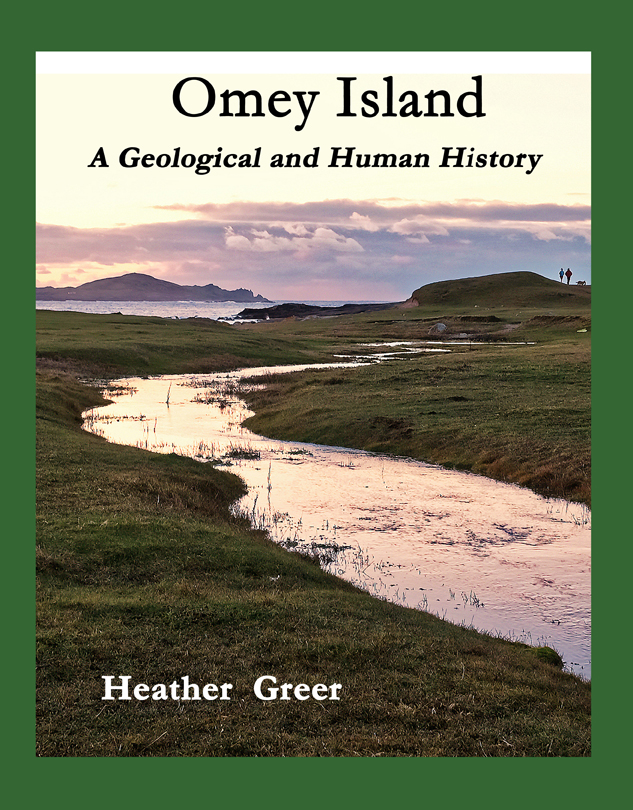
In her new book on Omey, Dr Heather Greer explores the origins of Omey as an island – its native rock types, dominated by the 422 million years old Omey granite (among the oldest in Connemara) and by much older Dalradian psammite rock peppering the west and south of the island, dating from around 750 million years ago.

Omey Island: A Geological and Human History has been a real labour of love for Heather for the past six or seven years and more.

The book is the result of a vast amount of research – going through the old annals; historical works on the area; PhD and other academic papers addressing aspects of Omey; and discussions and conversations with scholars and with local people originating from Omey (and their descendants in Ireland or the US).


read more here @ Connacht Tribune

Friday, December 14, 2018

Grace O’Malley: pirate, matriarch, 16th-century feminist

From the Irish Times:

Biographer Anne Chambers writes about her 40-year journey with The Pirate Queen

Since first published in 1979, the endurance and popularity of this biography reflects the sheer magnetism of its subject. Grace O’Malley (Granuaile) continues to enthral, inspire and capture the imagination of new generations of devotees worldwide as she undoubtedly initially captured mine.

Over the past 40 years my own journey in her company has led me to many places, from the old pirate city of Port Royal in Jamaica, the hallowed halls of Harvard University, from Greenwich to Galway and many places in between and introduced me to many people whose own lives and careers have been inspired and shaped by this extraordinary woman.


Sunday, November 25, 2018

Review: Paisanos by Tim Fanning

A review of "Paisanos: the Irish and the Liberation of Latin America" by Tim Fanning could literally be a book in itself. The subject matter to hand it is so vast that to encompass it all in detail would invite a series of books not just one tome. Fanning attempts to give readers a broader focus, highlighting the important events and leaders, whilst covering the Spanish colonies in central and southern America during the early 19th Century, and the significant role the Irish played in the independence movement.  And he has managed to convincingly do so.


We begin the the Irish exiles of the 16th and 17th Centuries - the Wild Geese - who settled in Spain and France (not to be confused with the Flight of the Earls in 1607 - which I guess could be the precursor to the flight of the geese). The battle of Kinsale, 1601, fought during the Nine Years War of 1594-1603, marked a turning point in Irish history. The political power of the Gaelic nobility was broken, royal (English) authority in the kingdom was enhanced, though Ireland still remained strategically important for other European powers, especially Spain and, later, France. Thus, when political, social and religious changes at home caused many Irish to migrate, temporarily or permanently, they headed for Habsburg and Bourbon territories. 

At first, the role was one of support for Spanish rule in its fledgeling colonies. Irish migration to the Spanish empire, from 17th-century Hapsburg Spain to 18th-century Bourbon Spain, from Europe to the new World, from Madrid, Brussels or Cadiz to Havana, Lima and Chile was complex. Even though Ireland did not form part of this empire, the contribution of Irishmen and Irishwomen to this multinational empire was remarkable. 

Through army careers and the concession of nobility titles, Spanish kings placed the Irish exiled lords and gentry in an advantageous position on a par with the nobility in the early modern Spanish world. Imposition of orthodox Catholicism within the Spanish realms implied the social inclusion of certain ‘nations’ such as the Irish and the exclusion/repression of other groups who were not assimilatable into that society – Jews, Moriscos and Gypsies. Not all Irish migrants were soldiers, nor were they all men; not all obtained honours and integration and; even for the Irish nobility, assimilation could be difficult. 

Having said that, the Irish did play a key role in the military, religious, mercantile and commercial, and literary life, especially in the 18th Century where "... it was possible for an Irishman from a humble background to succeed in the New World against the odds...". The adaptability of the Irish, driven both by financial need and a healthy spirit of adventure, supported Spanish colonial activities as well as later providing a foil against them.

And it was in the second phase that the relationship between Ireland and Latin America, drawing upon a shared history of struggle against colonialism, developed into support for the independence movements. And there were times when Irishmen (and women) fought on both sides, against each other. 

Never has lasting political change occurred so rapidly over such a large area as in Latin America in the sixteen years from 1809. Moreover this sudden transformation was entirely unforeseen. These regions lived without major upheaval for three centuries under authoritarian Spanish rule, until the recent ideals of the American and French revolutions have led some to dream of change. In other parts of South America, the Irish were playing key roles in the independence of the likes of the viceroyalties New Spain (the West Indies and the mainland down to Panama and Gutalmala); New Granada (Panama, Colombia, Venezuela and Ecuador); New Peru (Peru, most of Chile and western Bolivia); and lastly, La Plata (eastern Bolivia, Paraguay, Uruguay, Argentina and the southern tip of Chile). Even then, their role did not necessarily stop there as these new nations often imploded with civil wars of their own.

And it is here that we are introduced to the famous San Patricios, Irishmen who fought against America during the Mexican-American War of 1846-1848. In the wake of the famine in Ireland, thousands emigrated to America, and an Irish Brigade was raised to support the US encroachment into Mexico. One can only speculate on why the troops deserted prior to the war beginning; however they went on to play an important role, making their last stand at the battle for Mexico City in 1581 where today they are still remembered as heroes.

The final part of the story is the integration and settlement of those Irish - a wrap up of  how and where they ended up, and the fate of their descendants - did they remain or return to Ireland's green pastures to embark on a new wave of revolution in the 20th century.

I found this to be a compelling history if the Irish diaspora in Latin America. And there is plenty contained within to encourage a more indepth study of this period. I was not wholly conversant with this particular part of Irish history - and often wondered what happened to those other "Wild Geese" - though I was familiar with the fate of the Irish who migrated to both the USA and Australia and their contributions. My mind boggled at the vast resources available online for the enthusiast to delve further (so much further) into this topic. This is a worthy addition to any library whose focus is Irish history - I know it will find a place in mine.


Further reading:


Saturday, November 3, 2018

The End of Outrage by Breandan Mac Suibhne


Cover for 

The End of Outrage


From the time that the blight first came on the potatoes in Ireland in 1845, armed and masked men dubbed Molly Maguires had been raiding the houses of people deemed to be taking advantage of the rural poor. On some occasions, they represented themselves as "Molly's Sons," sent by their mother, to carry out justice; on others, a man attired as a woman, introducing "herself" as Molly Maguire, demanding redress for wrongs inflicted on her children. The raiders might stipulate the maximum price at which provisions were to be sold, warn against the eviction of tenants, or demand that an evicted family be reinstated to their holding. People who refused to meet their demands were often viciously beaten and, in some instances, killed-offences that the Constabulary classified as "outrages." Catholic clergymen regularly denounced the Mollies and in 1853, the district was proclaimed under the Crime and Outrage (Ireland) Act. Yet the "outrages" continued.


Central to The End of Outrage, the Irish Times Irish Nonfiction Book of the Year for 2017, is the story of a schoolmaster, Patrick McGlynn, who turned informer on the Molly Maguires, the nationalist secret society, in 1856. The following year Dublin Castle sent McGlynn to Australia– and, there, after 1862, the author Breandán Mac Suibhne lost sight of him. Now, with Jonathan Wooding, a historian and a direct descendant of the informer, he picks up the trail.

The Martin McGuinness I Knew by Jude Collins

Martin McGuinness: The Man I Knew
In 'Martin McGuinness, The Man I Knew', Jude Collins offers the reader a range of perspectives on a man who helped shape Ireland's recent history. Those who knew Martin McGuinness during his life talk frankly about him, what he did and said, what sort of man he was. Eileen Paisley speaks of the influence she believes her husband, Ian, had on him; former Assistant Chief Constable Peter Sheridan recounts how the Derry IRA targeted him as a Catholic RUC policeman; peace talks chairman Senator George Mitchell comments on the role he played in talks that led to the Good Friday Agreement; and Sinn Féin President Gerry Adams remembers the man who for so many years was his closest colleague. 


see also