Showing posts with label notorious women. Show all posts

Saturday, February 8, 2025

Review: A Poisoner's Tale by Cathryn Kemp

Synopsis: The legendary figure of notorious seventeenth-century Italian poisoner Giulia Tofana, thought to be the first female serial killer in history, is brought to life in this feminist retelling.

Palermo 1632: Giulia is thirteen when she learns her mother greatest secret: Teofania makes an undetectable, slow-acting, lethal poison—Acqua Tofana—which she uses to free the broken and abused women of Palermo. Now Teofania wants to pass her recipe on to her daughter, and Giulia soon realizes that in a time when women have no voice, justice is sometimes best served in a cup of wine or broth.

Rome, 1656: Years later, within the alleys and shadows of the Eternal City, Giulia forms her own circle of female poisoners, who work together under the guise of an apothecary shop to sell poison to women in need.

But even in a time of plague, when death looms over the city, it doesn’t go unnoticed that the men of Rome are starting to fall like flies. And with the newly elected pope determined to rid the city of witches and heretics, Giulia is more vulnerable than ever. How far is she willing to go to continue her mother’s legacy?

Weaving together the stories of the women Giulia helped, the men she killed, and those who wanted her dead, this is a tale of magic, secrets, vengeance, and sin in the back streets of Rome—and, ultimately, a fight for power.

~ ~ ~

This is a fictional account of 17th century poisoner, Guila Teofania, whose mother was a former courtesan and whose step-father was an abusive, predatory man with links to the Inquisition. Guila sold a poison called Aqua Tofana (supposedly invented by Thofania d'Adamo, who may have been Giulia's mother) to women who wanted to murder their abusive husbands.

The story is narrated in the first person by Guila and then as the tale progresses, alternates with that of Fabio Chigi, Pope Alexander VII (although I found this to be unnecessary, he could have, like the character of Bracchi, remained in the third person narrative).

Whilst the historical Guila Tofana's life and that of her (step)daughter and women's circle is shrouded in mystery, Kemp combines the myths and truths to weave a narrative that is at times compelling and frustrating. 

By frustrating I mean the characters, who despite being on the radar of the Inquisition - and especially Inquisitor Stefano Bracchi - do nothing to conceal their activities and in fact draw further attention to themselves - which for me boils down to stupidity or egotism (author's prerogative and the reader is the proverbial fly on the wall).

The tale is well constructed - whatever the reality - and the reader will get a sense of life in Renaissance Italy.  Life for the majority of women was beyond their control - they were ruled by their fathers, their husbands, their male relative and the Church.

Modern readers may have a hard time understanding the motives behind the many women that sought out the poisoners.  In the book "The Black Widows of the Eternal City: The True Story of Rome's Most Infamous Poisoners", by Graig Monson, therein lies the story of Girolama Spana, the alleged daughter of Guila. One of the women to utilise the services of the poisoners - Caterina Nucci - is brought before the Inquisition for questioning after two husband's met similar fates:


Women who sought out their own destiny were often treated with suspicion and branded as witches, and Kemp's book gives the reader a first hand glance at this. There is all the drama of the chase and hunt for these women by Bracchi, and the very real threat of the Inquisition and exposure and death.

For a debut novel, this is quite good - and I did enjoy reading this tale of a group of notorious female poisoners!


Wednesday, January 1, 2025

Review: The Most Maligned Women In History by Samantha Morris

Synopsis: Examines the lives and legacies of historically vilified women, questioning the truth behind accusations of witchcraft, treason, and murder.

Throughout history women, from the lowliest of the working classes to the highest echelons of society have been accused of crimes ranging from witchcraft and vampirism to treason and mass murder. Such accusations stuck particularly when it came to women who held power – the names that we most associate with maligned women today include those that we will all have heard of. The infamy of women such as Lucrezia Borgia and Elizabeth Bathory have come down to us throughout the centuries and even in the modern world, many women are needlessly and falsely vilified. 

But just how true were these accusations? The Most Maligned Women in History takes a look at the lives of a number of women whose crimes have been seen as some of the most heinous, just how true the rumours were and whether their reputations are deserved.

~ ~ ~

Morris' book revisits the myth of the wickedness of the eleven (11) women featured and this is then put into context with both the time and the original authors (ie: those with an axe to grind).

For me personally, it was a pretty basic tome with no real arguments - the "usual suspects" are covered off (ie: Lucrezia Borgia, Elizabeth Bathory, Empress Wu, Anne Boleyn, etc) - there was no-one new for me here. At times, the "vindication" consisted of a mere paragraph or two, which I found disappointing - this would have been the perfect opportunity for a more in-depth exploration of the "tarring and feathering" of our ladies.

I would suggest this would be a "starter" tome for someone interested in furthering their study / knowledge of historical women; however, much can already be found quite readily on the internet without too much effort.


Sunday, December 22, 2024

Review: Broadway Butterfly by Anthony M DeStefano

Synopsis: The definitive book on one of the most notorious murders in Jazz Age New York history, that of Vivian Gordon, the high-end escort, con artist, and blackmailer connected to gangsters like “Legs” Diamond and Arnold Rothstein, whose death exposed the dark underbelly of police corruption throughout the city—from the Pulitzer Prize and Emmy Award-winning investigative journalist who is one of the foremost Mafia experts writing today. 

Like so many other pretty butterflies, Indiana-born Vivian Gordon fluttered to New York in 1920 looking for fame and fortune. Before long, the flame-haired chorus girl parlayed her youth, beauty, and ambition into more profitable means as a tough and glamorous symbol of Prohibition-era excess. She was a speakeasy owner, blackmailer, high-end escort, extortionist, racketeer, and con woman. But given her dangerously intimate associations—from ruthless underworld gangsters to corrupt high-ranking city officials—Vivian was also a woman who knew too much and who rightfully feared for her life. On February 26, 1931, Vivian’s bludgeoned and garroted body was found dumped in Van Cortland Park in the Bronx. 

Now, in the first in-depth biography of its kind, Pulitzer Prize and Emmy Award-winning journalist Anthony M. DeStefano unravels her tumultuous life and the headline-making murder that became an obsession for many, including then-Governor Franklin Delano Roosevelt. The evidence Vivian left behind was a diary with more than three-hundred names implicating powerful officials, philanthropists, businessmen, and every major gangland figure in collusion and corruption. The investigation eventually resulted in the career-ending investigation of James “Jimmy” Walker, disgraced mayor of New York City. Ultimately, Broadway Butterfly finally finds a place in history for Vivian, a woman with a rare legacy in gangster lore, whose demise was as tragically inevitable as the brutality of the city’s demimonde during Prohibition.

~ ~ ~

More of a case of the author providing a central figure around which to delve into the history of the period rather than the other way around. Jazz Age New York is the star and Vivian Gordon is the understudy.

However, it is a highly compelling look at the huge amount of graft and corruption taking place in all levels of government, as well as an insight into some of the legendary characters of the period - gangsters, cops, politician and madams. The reader will not be failed to be entertained.

Nice wrap up at the end with a chapter dedicated to what happened to those key players mentioned in the book.


Monday, December 25, 2023

Review: The Pirate's Wife by Daphne Palmer Geanacopoulos

Synopsis: The dramatic and deliciously swashbuckling story of Sarah Kidd, the wife of the famous pirate Captain Kidd, charting her transformation from New York socialite to international outlaw during the Golden Age of Piracy. Captain Kidd was one of the most notorious pirates to ever prowl the seas. But few know that Kidd had an accomplice, a behind-the-scenes player who enabled his plundering and helped him outpace his enemies.

That accomplice was his wife, Sarah Kidd, a well-to-do woman whose extraordinary life is a lesson in reinvention and resourcefulness. Twice widowed by twenty-one and operating within the strictures of polite society in seventeenth- and eighteenth-century New York, Sarah secretly aided and abetted her husband, fighting alongside him against his accusers. More remarkable still was that Sarah not only survived the tragedy wrought by her infamous husband’s deeds, but went on to live a successful and productive life as one of New York’s most prominent citizens.

Marshaling in newly discovered primary-source documents from archives in London, New York and Boston, historian and journalist Daphne Palmer Geanacopoulos reconstructs the extraordinary life of Sarah Kidd, uncovering a rare example of the kind of life that pirate wives lived during the Golden Age of Piracy. A compelling tale of love, treasure, motherhood and survival, this landmark work of narrative nonfiction weaves together the personal and the epic in a sweeping historical story of romance and adventure.

~ ~ ~

I will preface my review by saying that I actually thought it was an historical fiction account of Sarah Kidd dressed up as a biography, not an actual biography.

It was an interesting read to get to "know" Sarah Kidd - details of her life before, during and after Kidd will be of interest. And hers is a story of survival and of a woman stepping beyond the social norms of her day to carve out her own destiny.

Having said that, there was much that could have been left out, including the almost mind-numbing account of Kidd's return, arrest and trial, which felt like it took up half the book due to the excessive amount of detail. I get that, based upon her surname, her time with the notorious pirate would be the drawcard - I mean, who would read a biography of some woman named Sarah: Cox, Oort or Rousby (her other married names)?

For me, as I mentioned, I thought it was a work of fiction - that just how it read. And maybe, it might have worked better as such.

Sunday, July 2, 2023

Review: Messalina by Honor Cargill-Martin

Synopsis: This is the story of Messalina – third wife of Emperor Claudius and one of the most notorious women to have inhabited the Roman world.

The scandalous image of the Empress Messalina as a ruthless and sexually insatiable schemer, derived from the work of Roman historians such as Tacitus and Suetonius, has taken deep root in the Western imagination. The stories they told about her included nightly visits to a brothel and a twenty-four-hour sex competition with a prostitute. Tales like these have defined the empress's legacy, but her real story is much more complex.

In her new life of Messalina, the classicist Honor Cargill-Martin reappraises one of the most slandered and underestimated female figures of ancient history. Looking beyond the salacious anecdotes, she finds a woman battling to assert her position in the overwhelmingly male world of imperial Roman politics – and succeeding. Intelligent, passionate, and ruthless when she needed to be, Messalina's story encapsulates the cut-throat political manoeuvring and unimaginable luxury of the Julio-Claudian dynasty in its heyday.

Cargill-Martin sets out not to 'salvage' Messalina's reputation, but to look at her life in the context of her time. Above all, she seeks to reclaim the humanity of a life story previously circumscribed by currents of high politics and patriarchy.

~ ~ ~

Messalina - a name synonomous with notoriety, debauchery, and murder - a woman who - for many - was the epitome of all that was wrong with the Roman Empire. And like Jezebel and Eve, her reputation will be forever darkened, with no hope of redemption.

With her tome on Messalina, author Cargill-Martin has three main intents: she wants the reader to look at Messalina in the overall context of the period and her husband Claudius' reign; she seeks to address and examine Messalina's role; and she wants the explain to the reader the bias of the contemporary sources.

A quick google search will bring up a font of information on Messalina. For instance, Encyclopedia Britannica answers the question "what was Messalina famous for?" as:
Messalina Valeria, Messalina also spelled Messallina, (born before ad 20—died 48), third wife of the Roman emperor Claudius, notorious for licentious behaviour and instigating murderous court intrigues.
Whilst Encyclopedia dot com describes her as thus:
Roman empress, notorious for deviously influencing political affairs and for sexual indiscretions, who was executed for an alleged involvement in a plot to overthrow her husband Emperor Claudius.
Even good old Wikpedia uses language such as:
Messalina enters history with a reputation as ruthless, predatory and sexually insatiable ....
To give Wiki its due, it does at least list the original sources at the bottom of the article for those interested.

Messalin'a reputation - whether deserved or not - has already been decided for us, the reader, her behaviour spread out before us in great detail (akin to her legs in her competition with Rome's leading prostitute) by those writing her story. My questions is - did any of these contemporary (male) writers look at her behaviour in any form of context - or like today, did the downfall of the great and powerful make such good fodder for scandal?

Statue de Messaline par Eugène Cyrille Brunet


Lets be clear from the outset - Messalina is not a feminist role model - there is quite literally, too much sex and murder for her even to be considered as such. Does her reputation need rehabilitating or understanding? Quite possibly the latter. So who in fact was Messalina and what should her legacy look like?.

Cargill-Martin begins with the most obvious - Messalina's name and reputation, her vilification by a misogynistic and hypocritical patriarchy, who following her death, set about bastardising and destroying her history. Cargill-Martin then introduces us to the chroniclers both Greek and Latin - the ones who will tell her story - or at least their version of her story. We know history is written by the victors and written for a specific audience and patron - it was no different in the Classical period. Much of what was written about her was at a period of time when there was great hostility to the Claudio-Julian line. Most relied on second hand accounts, gossip and hearsay, filling in the blanks with fiction to make their tales more popular.

Then we begin ... with the end - the events leading to Messalina's eventual downfall in 48AD before we are catapulted back to Messalina's beginnings, of which very little is known prior to her marriage to Emperor Claudius in 38AD, aged 18 or 20 years old. And thus it is to her family and their position in Roman society that we must first look for clues and anecdotes relating to her childhood. What we do know is that for Roman women and girls, family defined their status and identity. A look at the reign of Emperor Tiberius and the notorious Sejanus follow. I recommended "I Claudius" by Robert Graves if you want a more "user friendly" version of this period, or check it out on YouTube. I remember watching this as a child - so much of an impact it made that I remember it still to this day - and as I was reading Cargill-Martin's book, it was the images and the actors from this series that populated my imagination.

The debauchery that was prevalent in the Roman Imperial Court did not begin nor end with Messalina. She was born into it, grew up within it, learned to survive it, and learned to use it. Cargill-Martin revisits the court of Caligula - "... a court built upon conspicuous consumption and sexual depravity ..." and demonstrates his arbitrary and immediate power over the life and death of his subjects, regardless of status and position. Caligula's reign fostered an atmosphere of fear, intrigue, paranoia, and murderous ambition. This was the court Messalina was forced to navigate as a young bride - her marriage to Claudius did not preclude any favouritism or guarantees of personal safety. So we the reader must see how this court, this reign, may have coloured Messalina's view of power and politics from any early period.

With the assassination of Caligula in 41AD - Claudius is now Roman Emperor. Previously, the likes of Livia and Octavia set the example of the role of women in public life. But now Messalina becomes active in both shaping and promoting the image of her husband's principate, whilst cultivating allies and rooting out and eliminating any threat to her, her children or to Claudius. Like his predecessors, Claudius' reign was born out of intrigue and violence, and relied upon both to maintain its stability.

Many commentators like to criticise Claudius for being in thrall to Messalina. But lets look at this somewhat objectively, Claudius was no catch - he is often described as having a limp and being slight deafness due to sickness at a young age, and he was ostracized by his family and excluded from public office. He was a scholarly hermit getting by - out of sight, out of mind. Messalina was a young, and we may assume, vibrant Roman girl, who entered into an arranged marriage with a dribbling man old enough to be her father. I am sure Claudius couldn't believe his luck!

Anyway, it wasn't just Messalina who held Claudius' attention - he was guided by his self-made men: Callistus, Pallas and Narcissus. These men were also out for power and maintaining that power by whatever means. What role models for the young Messalina! And as mentioned above, Livia was held up to be the epitome of Roman matronhood, a rle-model for an impressionable young girl - and with much hindsight, we all know about Livia!

Following a short-lived rebellion in 42AD, purges of enemies of the regime began - "justice was decidedly bloody" - even though many were starting to fear her power, can this all be attributed to Messalina, I think not. It was around this time that Cargill-Martin notes that Messalina was feeling confident in her position - she had healthy heirs, her rivals were dead or banished, and her position as wife of the Emperor was exalted. And personally, I think it all began to go to her head, and her cycle of self-destruction began from this point onwards.

Cargill-Martin reviews the Roman Laws around adultery and the alleged lovers of Messalina. To play devil's advocate here, one could suppose that so confident in her position was she, that Messalina used adultery as a political tool - a means of creating her own court faction, separate from Claudius' made-men. What is most curious is that around 47AD, Claudius assumes the role of censor - a role tasked with the maintenance of public morality! It has often been asked whether Claudius was aware of or encouraged his wife's immorality. I guess this is an answer only Claudius himself is privy too. I personally, find it hard to believe that he did not and that - at the time - it suited him to turn a blind eye. Messalina was an instrument in coalescing support for and removing enemies of his vulnerable regime - and she would always provide - when the time came - a more than adequate scape-goat.

Cargill-Martin now takes us back to the events leading up to Messalin'a fall. Her adultery is more brazen; the Senate turns on her agents and supporters; her instigation of the murder of one of their own has turned Rome's freeman against her; and then the is the "marriage" ceremony with Silas / Silius.


The historian Tacitus (Tacitus, Annals, 11.26) thus writes:
I know it will seem incredible that, in a city as watchful as Rome, anyone could have felt so safe. Far more so, that on a specified day, with witnesses in attendance, a consul designate and the emperor’s wife should have met for the avowed purpose of legitimate marriage. That the woman should have listened to the words of the auspices, assumed the veil, performed sacrificed to the Heavens. That both should have dined with the guests, have kissed and embraced, and finally have spent the night in the licence of wedlock. But I have added no touch of fantasy: all that I record shall be the oral or written evidence of my seniors.
In what context was this "marriage" performed - as some Bacchanal ritual or a slap in the face to Claudius, was it to gratify her sexual needs or cement an alliance for the protection of herself and her son following Claudius' (eventual) death. Whatever the reason, Claudius had finally had enough - retribution and punishment were swift. Messalina was dispatched.

The Senate then agreed to remove all traces of her existence through a practice we now refer to as damnatio memoriae. Messalina's name was chiseled out of all official inscriptions; coins that bore her name and image were defaced; and many of her portraits were mutilated and vandalized until her likeness became as unrecognizable as her reputation.

Following the death of Messalina, Claudius remarries - this time, his niece Agrippina, mother of Nero. Here Cargill-Martin talks about reputation, and the obvious comparisons between Agrippina and Messalina that written about. Cargill-Martin covers off the period following the death of Claudius in 54AD, the rise of Nero, the assassination of Messalina's son, Britannicus in 55AD, and the fates of the other main players in Messalina's story. The final part of the book looks at the personification of Messalina - the ancient femme fatale, the woman who embodied carnal desire, and her representation by later artists, writers, composers and film-makers.

Messalina is the perfect case study both of the perils of Roman womanhood and of the peculiar sensuous and paranoid world of Rome's first dynasty.

I cannot recommend this book enough if you - the reader - would like to draw aside the curtain and look inside the world that this woman was born into, lived and died in. Look at her life in the  context of this before judging her actions too puritanically. Could you have survived in such an environment and come out smelling like roses?


Read more


Sunday, May 9, 2021

Out of the Shadows by Emily Midorikawa

Out of the Shadows: Six Visionary Victorian Women in Search of a Public Voice by Emily Midorikawa
Queen Victoria’s reign was an era of breathtaking social change, but it did little to create a platform for women to express themselves. Not so within the social sphere of the sĂ©ance – a mysterious, lamp-lit world on both sides of the Atlantic, in which women who craved a public voice could hold their own.

Out of the Shadows tells the stories of the enterprising women whose supposedly clairvoyant gifts granted them fame, fortune, and, most important, influence, as they crossed rigid boundaries of gender and class as easily as they passed between the realms of the living and the dead. The Fox sisters inspired some of the era’s best-known political activists and set off a transatlantic sĂ©ance craze. While in the throes of a trance, Emma Hardinge Britten delivered powerful speeches to crowds of thousands. Victoria Woodhull claimed guidance from the spirit world as she took on the millionaires of Wall Street before becoming America’s first female presidential candidate. And Georgina Weldon narrowly escaped the asylum before becoming a celebrity campaigner against archaic lunacy laws.

Drawing on diaries, letters, rarely seen memoirs and texts, Emily Midorikawa illuminates a radical history of female influence that has been confined to the dark until now.


“Midorikawa breathes life into these long-ago women in ways that make them feel contemporary despite their extraordinary circumstances and distance in time . . . By the book’s end, it no longer matters whether you believe these six remarkable spirit mediums were hoaxes or not; you’ll certainly believe in them. —BookPage (starred review)

Join Emily Midorikawa on 5/16 for the virtual launch reading at Brookline Booksmith

Tuesday, December 8, 2020

Review: Hermine: An Empress In Exile by Moniek Bloks

Hermine: An Empress in Exile: The Untold Story of the Kaiser's Second Wife
Synopsis: Hermine Reuss of Greiz is perhaps better known as the second wife of the Kaiser (Emperor Wilhelm II of Germany) whom she married shortly after the death of his first wife Auguste Viktoria and while he was in exile in the Netherlands. She was by then a widow herself with young children. She was known to be ambitious about wanting to return to power, and her husband insisted on her being called 'Empress'. To achieve her goal, she turned to the most powerful man in Germany at the time, Adolf Hitler. Unfortunately, her dream was not realised as Hitler refused to restore the monarchy and with the death of Wilhelm in 1941, Hermine was forced to return to her first husband's lands. She was arrested shortly after the end of the Second World War and would die under mysterious circumstances while under house arrest by the Red Army. 


This was a nice little introductory biography of a woman posibly not known to many.  Despite my love of seeking out the "lost" women of history, for me, this was someone not on my radar - more so as my purview lies within the ancient and medieval period. As such, I found myself not overly engaged - as I mentioned, this was just out of my remit.

What I did do was find myself comparing Hermine with Wallace Simpson - both married to royal men who were directly descended from Queen Victoria, and both gained notoriety for their support of Herr Hitler.

Not having read anything else on Hermine with which to compare this to, I still found it to be an informative and not overly complicated biography nonetheless. 

Wednesday, April 1, 2020

Review: The Merry Mistress by Philip Lindsay


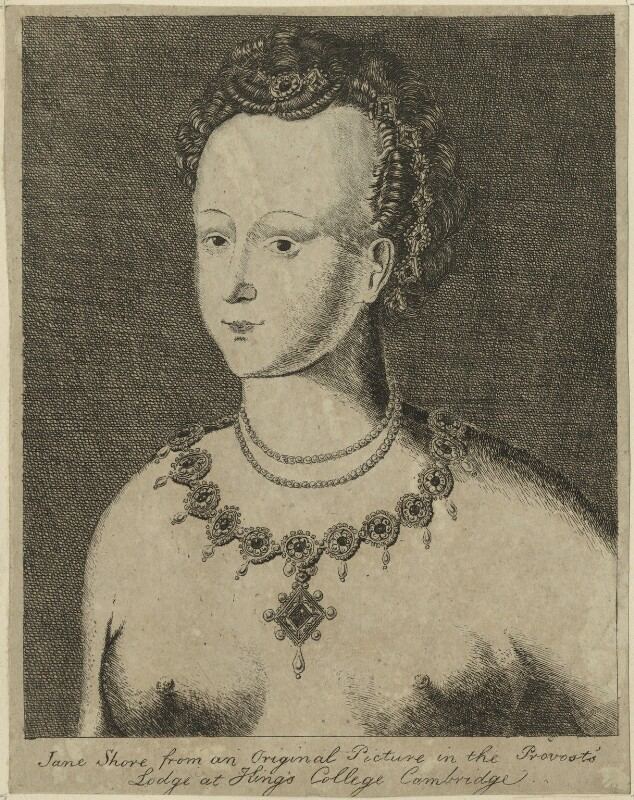
28247981. sy475 Synopsis: England, 1483: Unloved and publicly disgraced, an adulteress walks the streets of London to Ludgate prison. Her feet are bare; in her hands she carries a penitential candle. Her name is Jane Shore.

Philip Lindsay recounts Jane’s story – from her marriage as a child of fourteen to William Shore to her life at court as one of Edward IV’s lovers – with a masterful knowledge of this troubled period in history.

Through wars and betrayal, secrecy and discovery, he weaves a compelling tale of a child thrust into the life of a woman, pulling in the reader until they are entirely submerged in her tale of woe and wonder.

For Jane Shore was a woman like no other, unafraid of danger and cunning enough to work herself from the position of a simple mercer’s wife to one of the Queen’s most trusted ladies in waiting – and even into the heart of the King.


This re-telling of Jane Shore's story dates from the 1950s, and opens with Jane as she performs her "walk of shame" in her kirtle through the streets with a taper in her hand, and attracting a lot of male attention along the way. Following her penance, Jane is confined to Ludgate Prison where she reflects on her life and takes us back to where it all began. 

Jane Shore NPG D24096 Jane Shore Portrait National Portrait Gallery
From humble beginnings as Elizabeth Lambert, daughter of a prosperous merchant, her early association with William Hastings, her marriage to William Shore (often referred to as a goldsmith), and through to the annulment of her marriage, Jane narrates her own story.

Jane was one of the many mistresses of King Edward IV of England, and one of three whom he described as "the merriest, the wiliest, and the holiest harlots" in his realm. He was said devoted to her and did not discard her as he had done with so many others; however, she was also said not "showered with gifts" as other were. Jane, far from being solely devoted to Edward,was also the mistress of other noblemen, including Edward's stepson, Thomas Grey, 1st Marquess of Dorset, and William Hastings, 1st Baron Hastings, his close friend and adviser.

Jane Shore: The 15th Century Royal Mistress Forced to Walk ...
Following the death of Edward IV, Jane was said to have brokered an alliance between Hastings and the Woodvilles. However, upon the accession of Richard as King, she is accused conspiracy, required to do public penance and imprisoned. Whilst in prison, her gaoler John Russell become so enamoured, that he petitioned the King to marry her. She lived the rest of her life in comfortable anonymity.

Lindsay's novel contains much detail, focuses more on her relationships, is slightly dated by today's standards, though is still quite a readable tome on a woman at the periphery of the Wars of the Roses.


further reading:
A Merry Mistress by Judith Saxton
The Tragedy of Jane Shore by Nicholas Rowe
The Unfortunate Concubine, Or, History of Jane Shore, Mistress to Edward IV. King of England by S. King
The Witchery of Jane Shore, the Rose of London: the romance of a royal mistress by Charles John Samuel Thompson
The Life and Character of Jane shore by George Sewell
Re-Presenting 'Jane' Shore: Harlot and Heroine by Maria M Scott
The Intrigues of Jane Shore: A Tragedy, Or, the Fate of Unlawful Love by J. Read
The Mysterious Mistress: The Life and Legend of Jane Shore by Margaret Crosland
Royal Mistress: A Novel by Anne Easter Smith
The Fair Penitent and Jane Shore by Nicholas Rowe
The Life and Death of Jane Shore by E. Petch
Mistress to the Crown by Isolde Martyn
The Goldsmith's Wife by Jean Plaidy
Figures in Silk by Vanorra Bennett


Saturday, February 22, 2020

Review: The Emperor's Assassin by Autumn Bardot

Synopsis: History paints her as the first female serial killer…
The Emperor's AssassinLocusta is the daughter of a winemaker in the Roman province of Gaul. She enjoys the indulged childhood of the elite, her concerns only about the day’s amusements. She rides gentle ponies, attends parties, reads Ovid, and learns the herbal arts from her servant. But the day after meeting her betrothed, Locusta discovers the consequences of possessing such dangerous knowledge.

Ordered to leave her pastoral life, Locusta is thrust into a world of intrigue, scandal, and murder—where treason lurks behind every corner and defying an emperor means death. Locusta’s life changes forever when a young Emperor Nero requires her herbal expertise. And commands her to be his personal poisoner. Caught in an imperial web, Locusta must embrace her profession or die.


Who was this ancient roman series killer and how did some become the "personal poisoner" of Emperor Nero? That hooked me in from the beginning. Whilst familiar with all the usual suspects of the early Roman period, Locusta was not one that came to mind quite readily and I was intrigued to read more, even if only from a fictional account.

Bardot uses the first person narrative to recount Locusta's story - in her own words so to speak. We begin with a naive provincial girl who learns the hard way that her own idyllic life is not truly reflective of the Roman Empire as a whole. From the loss of innocence grows the worldly wisdom as she uses her skills in herbal knowledge to recreate a life for herself. It is only when sent to Rome where the ".. decadent world of the the Roman elite was laid wide open .." that this naivety is really drummed home. The use of the maid Priscilla as a " entree " into or teacher of, these dark arts, creates a sort of empathy with Locusta as if this was not all of her own doing but as a direct result of her personal circumstance .... she readily recounts that " .. my first ethics lesson in poisoning ... confess to noone ..".

So, for those not familiar with the " ... poisoned filled world ... " of the scandalous Roman Empire where ".. the wicked hold hands like old friends.." under the reigns of Caligula and Nero, it is from the great writers of the period that we are first introduced to the poisoner, Locusta. 

Suetonius in his Life of Nero :


From Tacitus' Annals:


From Cassius Dio's Roman History:


From Juvenal's Satires:


There is no doubt that these pages from the early Roman writers inspired Bardot to give life to this mysterious woman. After being sent to Rome and coming to the attention of a number of noble women, it is when she is introduced to the Empress Agrippina that Locusta's life as a poisoner begins. As Emperor Nero avails himself of her talents, she is well rewarded with property, money and gifts; though finds herself at his beck and call to perform those deeds he would prefer kept well hidden. She consoles herself with the thought that to reject Nero would be to sign her own death warrant, and so she does what she can to ensure her own survival.

The introduction of the character of the centurion Marcus earlier in the piece provides another component to the Locusta story, and one that plays out in the final chapters of both this book and her (fictional) life.

The life and death of Locusta is shrouded in mystery and fueled by chinese whispers with each re-telling. There are many legends of her graphic and barbarous death following the death of her patron, Nero, from being raped to death by a specially trained giraffe to being torn apart by wild animals in the arena as befits a notorious sorceress. It is presumed that she perished shortly after Galba succeeded.

Bardot provides us with an entertaining story that more than adequately fits in with what I call the "rehabilitation genre" - whereby - mostly - historical women with a less than pristine pasts are given a dusting off and are having their stories told from a slightly different perspective (history being written by the victors, etc etc). It is an enthralling tale, and the reader certainly finds empathy with the character of Locusta, which is the ultimate aim of the author. It is also a tale of the cesspit that was ancient Rome - the salacious scandals, the sex and violence, the notoriety of its citizens, murder, greed, envy, social position.

If you are looking for a "new" historical heroine, then you have found her in Locusta.


Saturday, September 21, 2019

The Real Traviata: The Song of Marie Duplessis by René Weis

The Real Traviata is the rags-to-riches story of a tragic young woman whose life inspired one of the most famous operas of all time, Verdi's masterpiece La traviata, as well as one of the most scandalous and successful French novels of the nineteenth century, La Dame aux Camelias, by Alexandre Dumas fils.


The woman at the centre of the story, Marie Duplessis, escaped from her life as an abused teenage girl in provincial Normandy, rising in an amazingly short space of time to the apex of fashionable life in nineteenth century Paris, where she was considered the queen of the Parisian courtesans. Her life was painfully short, but by sheer willpower, intelligence, talent, and stunning looks she attained such prominence in the French capital that ministers of the government and even members of the French royal family fell under her spell.

In the 1840s, she commanded the kind of 'paparazzi' attention that today we associate only with major royalty or the biggest Hollywood stars. Aside from the younger Dumas, her conquests included a host of writers and artists, including the greatest pianist of the century, Franz Liszt, with whom she once hoped to elope. When she died Theophile Gautier, one of the most important Parisian writers of the day, penned an obituary fit for a princess. Indeed, he boldly claimed that she had been a princess, notwithstanding her peasant origin and her distinctly demi-monde existence.

And although now largely forgotten, in the years immediately after her death, Marie's legend if anything grew in stature, with her immortalization in Verdi's La traviata, an opera in which the great Romantic composer tried to capture her essence in some of the most heart-wrenching and lyrical music ever composed.

The Girl Who Loved Camelliasread more 

Saturday, August 10, 2019

Alice Kyteler: The Kilkenny 'witch' condemned for sorcery

From The Journal

Her KindThe search for witches wasn’t confined to Salem – here in Ireland we had our own witch trial, when Kilkenny’s Dame Alice Kyteler was accused of sorcery. Now a book by Irish author Niamh Boyce takes a fictionalised look at Kyteler’s trial, through the experiences of the woman who died instead of her.

In 1324, Petronella de Meath, Kyteler’s maid, was flogged and burned at the stake. It was Dame Alice Kyteler who was the person who had been condemned for witchcraft (the first person in Ireland to be condemned for this), but Petronella died in her stead.

The story of Alice Kyteler and Petronella has been turned into a novel, written by Boyce, author of the novel The Herbalist. Called Her Kind, it took four years to write, and was a real labour of love for Boyce, as she told The Journal.

read more here @ The Journal

Monday, June 10, 2019

Three Sisters in Black: The Bizarre True Case of the Bathtub Tragedy by Norman Zierold

Three Sisters in Black: The Bizarre True Case of the Bathtub Tragedy by [Zierold, Norman]In 1909, a bathtub drowning became one of the most famous and bizarre criminal cases in American history.


On November 29, 1909, police were called to a ramshackle home in East Orange, New Jersey, where they found the emaciated body of twenty-four-year-old Oceana “Ocey” Snead facedown in the bathtub—dead of an apparent suicide by drowning. There was even a note left behind.

But it would not take authorities long to discover that Ocey’s death was no suicide. And Ocey’s own mother and two aunts were far from the sorrowful caretakers they appeared to be.

In fact, behind the veils of their strange black mourning clothes, they were monsters, having tormented Ocey almost since birth in a sick pattern of both physical and mental abuse, after a lifetime of which the women planned to cash in on poor Ocey’s sad and inevitable death.


read more here

Saturday, May 19, 2018

See What I Have Done by Sarah Schmidt


32508637Lizzie Borden's grizzly tale is hardly the obvious story for a librarian from regional Victoria to retell as a debut novel - but Sarah Schmidt makes a suitably chilling job of rendering the last days of Andrew Borden and his wife Abby.

Covering the period leading up to the murders and the weeks that follow, the story is narrated from four different points of view. Volatile and spoilt Lizzie veers from sweet compliance to shrieking tyrant and is the prime suspect; sister Emma away from the house at the time of the murder has plenty of reasons to be jealous of her sister; the housemaid Bridget is unnerved by the residents of the Borden house and wants to leave but Mrs Borden has found her savings and is withholding them from her. Benjamin is a thug hired to frighten Mr Borden, with Lizzie's doting uncle paying the fee. The household is plagued by unease, vermin, illness and bad feeling.


read about Lizzie Borden here               
@ Wikipedia - Lizzie Borden
@ Famous Trials
@ Smithsonian Magazine
@ All Things Interesting
@ The Telegraph
@ American Heritage
read more reviews here
@ The Guardian
@ The New York Times
@ The Australian
@ Sydney Morning Herald


Tuesday, December 26, 2017

Review - A Dangerous Woman by Susan Ronald

"never allow the facts to get in the way of a good story"


The title says it all: American beauty, noted philanthropist, Nazi collaborator. "A Dangerous Woman" by Susan Ronald is a compelling, well written tale of a vain, money-grasping woman, who constantly re-invented herself to suit the moment. Author Susan Ronald does well with the material at hand to unpick the intricately woven pieces of Florence's life as there is still much documentation that is kept under lock and key, and thus inaccessible to the author.

Susan Ronald describes this elusive woman as one who "craved significance", had an insatiable "lust for phenomenal wealth", and a seemingly bottomless desire "be be loved". Ronald says that these three elements were "the driving forces behind who she was and what she did".

Indeed, much of Florence's earlier life was devoted to being the centre of attention, and acquiring wealth, through means honourable and not so honourable. After failing to gain access into the influential French Salons and a stint as a Ziegfeld Girl, it was finally with her marriage to millionaire Frank Gould that the couple were able to build their "entertainment empire" on the French Riviera and in Monaco, and give to Florence what she craved most - wealth.

And it was through a steady stream on influential lovers during the German occupation of France that Florence was able to maintain her position; she carried on as if the 'war and occupation were inconveniences to be overcome". It was her unparalleled freedom to move throughout France during the occupation that was to later give rise to rumour, scandal, and charges of collaboration and treason. Much post-WWII scandal had no affect on her later philanthropic activities as a major donor to the Metropolitan Museum.  Upon her death, the bulk of her estate was sold and the proceeds (totaling approx. $64 million), given to the Florence Gould Foundation.

As one reviewer noted, maybe money can buy happiness.

reviewed @ Goodreads, and more reviews here
@ Kirkus Review
@ Macmillan Publishers
@ Publisher Weekly

More about Florence Gould here
@ Boston Globe
@ New York Times - Obituary
@ The Forward


Sunday, December 24, 2017

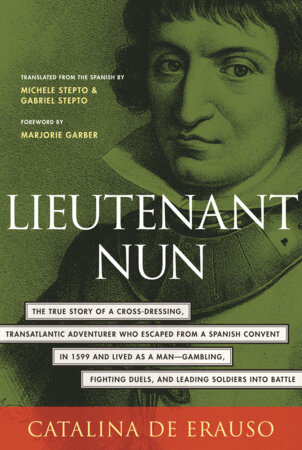
Lieutenant Nun by Catalina De Erauso

From Penguin Random House:
Lieutenant Nun by Catalina De ErausoOne of the earliest known autobiographies by a woman, this is the extraordinary tale of Catalina de Erauso, who in 1599 escaped from a Basque convent dressed as a man and went on to live one of the most wildly fantastic lives of any woman in history. A soldier in the Spanish army, she traveled to Peru and Chile, became a gambler, and even mistakenly killed her own brother in a duel. During her lifetime she emerged as the adored folkloric hero of the Spanish-speaking world. This delightful translation of Catalina’s own work introduces a new audience to her audacious escapades.


Saturday, December 16, 2017

Hannah Jewell’s 100 Nasty Women of History


Review by Jodie Sloan at Arts on the AU Review:
Join The Washington Post’s pop culture editor Hannah Jewell as she plucks (almost) forgotten women from the historical cutting room floor. From artists to investigative reporters, scientists to queens, political firebrands to murderers, there’s no such thing as the delicate fairer sex here.

From Wonderful ancient weirdos and Women who punched Nazis (metaphorically but also not) to Women who fought empires and racists and Women who knew how to have a good-ass time these 100 (well, technically 104) women are diverse group, a potent and inspiring mix of eras, escapades, and ethnicities.


read more here @ Arts on the AU Review


Friday, December 1, 2017

The Swashbuckling History of Women Pirates


Few historical figures ensnare the imagination in the same way as pirates do. The rum, the talking parrots, the hats and cloaks and treasure—all make for dramatic, theatrical tales. But Duncombe’s book does more than revel in the mystery and infamy of lady pirates: It contextualizes them, providing history and background on the societies they came from. Whether it’s the Moroccan pirate queen Sayyida al-Hurra (who terrorized the Mediterranean during the mid-16th-century) or Queen Elizabeth I’s woman sea dog, Lady Mary Killigrew, Duncombe separates the myths from the facts and considers the charm of a little-understood group of women.

read more here @ The Smithsonian as Lorraine Boissoneault interviews Laura Sook Duncombe about her her new book Pirate Women: The Princesses, Prostitutes, and Privateers Who Ruled the Seven Seas.

Sunday, June 4, 2017

Lucinda Sly : A Woman Hanged by Maidhc Dainin O Se

The novel tells the story of Lucinda Singleton, a widow who married a well-to-do farmer named Walter Sly. Suffering at the hands of her abusive husband a drunkard and a brute she conspires with her lover, John Dempsey, to murder him. Capturing the sentiment in Carlow at that time, the lovers were hanged side by side in public outside Carlow Gaol on 30 March, 1835 (sometimes noted as 13th March 1835).

It is unclear when the attraction between Lucinda - whose age varies in the telling from 56 to 60 - and John (variously 26 - 30 years old) began. It is thought that John may have stepped between Lucinda and her violent, alcoholic husband, and the relationship developed from there; or that John was attracted by the wealth of Lucinda's husband (a well-off farmer and horse dealer). What is fact is that a sexual relationship did evolve. Their plan was simple - to kill Walter, sell the farm, then move to America. However, Sly caught onto the two lovers and threatened to kill them both himself - Lucinda and John decided to act first.

Sly and Dempsey were charged with the murder of Walter Sly at The Ridge, Old Leighlin on the morning of 9th November 1834.  In court, Lucinda claimed that Walter was shot in the head after returning from a fair in Carlow town, having had an amount to drink. In evidence, she said that three shots were fired, two hitting Walter, while one shot hit the front door in what she felt was a warning to stay inside. The victim’s watch and money were missing. As other witnesses were called, it soon became apparent that the relationship between Lucinda and John Dempsey was more than just a servant and mistress. In fact, he was her lover. And a neighbour, who called on the night of Walter’s death but was not admitted to the house, claimed he saw Dempsey inside with a revolver on the table.

The jury found both Dempsey and Sly guilty of Walter’s murder and sentenced to hang.  Just prior to their hanging, they admitted the murder, with Dempsey stating he killed Sly with a blow to the head from a hatchet as he dozed at the fire. He was then taken outside and shot in the head. The crime was the cause cĂ©lèbre of the day - it was said that a crowd of 10,000 people filled the streets of Carlow to see the public hanging of Lucinda Sly and John Dempsey. It was to be the last such hanging of a woman in the town.


read more here @ Irish Criminology


Saturday, April 1, 2017

Viking Women: Not as Different as You Might Think - Medievalists.net

Heather Day Gilbert talks about her book God's Daughter at Medievalist dot net
My novel, God’s Daughter, tells the story of Gudrid Thorbjarnardottir. I know you Viking-o-philes know exactly who I’m talking about, but I’ll elaborate a bit. She’s the first documented European woman to have a baby on North American shores. She traveled here with her sailor husband, Thorfinn Karlsefni (“Finn” in my novel). She was a Christian. She was wise and beautiful. And she was the ward of Eirik the Red.
I wanted to base my novel as closely as possible on the Icelandic Sagas. Even though the sagas are sparse, you get a really good feel for the Viking women who lived around AD 1000.
I hope my story, told from Gudrid’s point-of-view, shows Viking women in a whole new light. Forget horned helmets and funky braids. Viking women weren’t that different from us. And they’re worth learning more about.
You can read more on Gudrid Thorbjarnardottir here at:
- Murder Is Everywhere
- The Ages of Exploration
- Travelling feminist (Penguin Unearthed)
- Hurstwic
- Discoveries of the Americas
- Wikipedia