Showing posts with label renaissance italy. Show all posts

Saturday, February 8, 2025

Review: A Poisoner's Tale by Cathryn Kemp

Synopsis: The legendary figure of notorious seventeenth-century Italian poisoner Giulia Tofana, thought to be the first female serial killer in history, is brought to life in this feminist retelling.

Palermo 1632: Giulia is thirteen when she learns her mother greatest secret: Teofania makes an undetectable, slow-acting, lethal poison—Acqua Tofana—which she uses to free the broken and abused women of Palermo. Now Teofania wants to pass her recipe on to her daughter, and Giulia soon realizes that in a time when women have no voice, justice is sometimes best served in a cup of wine or broth.

Rome, 1656: Years later, within the alleys and shadows of the Eternal City, Giulia forms her own circle of female poisoners, who work together under the guise of an apothecary shop to sell poison to women in need.

But even in a time of plague, when death looms over the city, it doesn’t go unnoticed that the men of Rome are starting to fall like flies. And with the newly elected pope determined to rid the city of witches and heretics, Giulia is more vulnerable than ever. How far is she willing to go to continue her mother’s legacy?

Weaving together the stories of the women Giulia helped, the men she killed, and those who wanted her dead, this is a tale of magic, secrets, vengeance, and sin in the back streets of Rome—and, ultimately, a fight for power.

~ ~ ~

This is a fictional account of 17th century poisoner, Guila Teofania, whose mother was a former courtesan and whose step-father was an abusive, predatory man with links to the Inquisition. Guila sold a poison called Aqua Tofana (supposedly invented by Thofania d'Adamo, who may have been Giulia's mother) to women who wanted to murder their abusive husbands.

The story is narrated in the first person by Guila and then as the tale progresses, alternates with that of Fabio Chigi, Pope Alexander VII (although I found this to be unnecessary, he could have, like the character of Bracchi, remained in the third person narrative).

Whilst the historical Guila Tofana's life and that of her (step)daughter and women's circle is shrouded in mystery, Kemp combines the myths and truths to weave a narrative that is at times compelling and frustrating. 

By frustrating I mean the characters, who despite being on the radar of the Inquisition - and especially Inquisitor Stefano Bracchi - do nothing to conceal their activities and in fact draw further attention to themselves - which for me boils down to stupidity or egotism (author's prerogative and the reader is the proverbial fly on the wall).

The tale is well constructed - whatever the reality - and the reader will get a sense of life in Renaissance Italy.  Life for the majority of women was beyond their control - they were ruled by their fathers, their husbands, their male relative and the Church.

Modern readers may have a hard time understanding the motives behind the many women that sought out the poisoners.  In the book "The Black Widows of the Eternal City: The True Story of Rome's Most Infamous Poisoners", by Graig Monson, therein lies the story of Girolama Spana, the alleged daughter of Guila. One of the women to utilise the services of the poisoners - Caterina Nucci - is brought before the Inquisition for questioning after two husband's met similar fates:


Women who sought out their own destiny were often treated with suspicion and branded as witches, and Kemp's book gives the reader a first hand glance at this. There is all the drama of the chase and hunt for these women by Bracchi, and the very real threat of the Inquisition and exposure and death.

For a debut novel, this is quite good - and I did enjoy reading this tale of a group of notorious female poisoners!


Monday, May 6, 2024

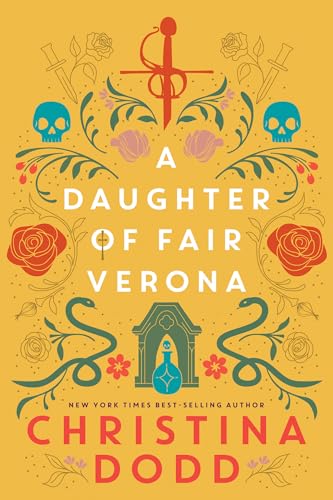
A Daughter of Fair Verona by Christina Dodd

Synopsis: Once upon a time a young couple met and fell in love. You probably know that story, and how it ended ( badly). Only here’s the That’s not how it ended at all.

Romeo and Juliet are alive and well and the parents of seven kids. I’m the oldest, with the emphasis on ‘old’—a certified spinster at twenty, and happy to stay that way. It’s not easy to keep your taste for romance with parents like mine. Picture it—constant monologues, passionate declarations, fighting, making up, making out . . . it’s exhausting.

Each time they’ve presented me with a betrothal, I’ve set out to find the groom-to-be a more suitable bride. After all, someone sensible needs to stay home and manage this household. But their latest match, Duke Stephano, isn’t so easy to palm off on anyone else. The debaucher has had three previous wives—all of whom met unfortunate ends. Conscience forbids me from consigning another woman to that fate. As it turns out, I don’t have to . . .

At our betrothal ball—where, quite by accident, I meet a beautiful young man who makes me wonder if perhaps there is something to love at first sight—I stumble upon Duke Stephano with a dagger in his chest. But who killed him? His late wives’ families, his relatives, his mistress, his servants—half of Verona had motive. And when everyone around the Duke begins dying, disappearing, or descending into madness, I know I must uncover the killer . . . before death lies on me like an untimely frost.

Knives Out meets Bridgerton in Fair Verona, as New York Times bestselling author Christina Dodd kicks off a frothy, irreverent, witty new series with an irresistible premise—Romeo and Juliet’s daughter as a clever, rebellious, fiercely independent young woman in fair Verona—told from the delightfully engaging point of view of the captivating Rosie Montague herself…

~ ~ ~

I loved this rom-com set in the time of Shakespeare's "Romeo and Juliet" - Verona in the early Renaissance period. Our narrator and heroine is Rosie Montague - daughter of said Romeo and Juliet - who now finds herself in yet another unenviable position - yet another betrothal of marriage - and one she cannot (and will not) foister on an unsuspecting potential bride (Rosie is in the habit of playing matching maker for any potential or impending suitors put forward by her parents). This suitor is suitably unsuitable ....

"... he had said he wanted me for power and revenge -power over me, I assume, but revenge? on whom? ..."

On the day of the official betrothal, Rosie suddenly finds herself enamoured by another (a gate-crasher); her betrothed - Duke Leir Stephano - cruelly murdered; and herself the prime suspect. But Rosie is no ordinary fair maid - she is intelligent, independent, obstinate, and determined to find out who killed her betrothed if only to clear her name .. not so easy when the body count is rising.

This is a very enjoyable read - the chapters are short and concise, filled with compelling and humourous dialogue, narrated by a self-deprecating heroine, peppered with themes found in many a Shakespearean tome - jealousy, greed, envy, revenge, hatred, love and ... mean girls!

I believe this to be the first in a new series - so am eagerly awaiting what fate - and author Dodd - have in store for Rosie Montague.

For the reader worried that author Dodd has taken liberties with two of Shakespeare's own characters, fear not, the Bard himself was an habitual "borrower" of other peoples' stories. A keen reader may discern that in this instance, the Bard borrowed from a poem by Arthur Brooke who himself borrowed the plot from a story by Matteo Bandello.

Sunday, February 7, 2021

Review: The Bookseller of Florence by Ross King

Synopsis: The Renaissance in Florence conjures images of beautiful frescoes and elegant buildings--the dazzling handiwork of the city's skilled artists and architects. But equally important for the centuries to follow were geniuses of a different sort: Florence's manuscript hunters, scribes, scholars, and booksellers, who blew the dust off a thousand years of history and, through the discovery and diffusion of ancient knowledge, imagined a new and enlightened world. 

At the heart of this activity, which bestselling author Ross King relates in his exhilarating new book, was a remarkable man: Vespasiano da Bisticci. Born in 1422, he became what a friend called "the king of the world's booksellers." At a time when all books were made by hand, over four decades Vespasiano produced and sold many hundreds of volumes from his bookshop, which also became a gathering spot for debate and discussion. Besides repositories of ancient wisdom by the likes of Plato, Aristotle, and Quintilian, his books were works of art in their own right, copied by talented scribes and illuminated by the finest miniaturists. His clients included a roll-call of popes, kings, and princes across Europe who wished to burnish their reputations by founding magnificent libraries.

Vespasiano reached the summit of his powers as Europe's most prolific merchant of knowledge when a new invention appeared: the printed book. By 1480, the king of the world's booksellers was swept away by this epic technological disruption, whereby cheaply produced books reached readers who never could have afforded one of Vespasiano's elegant manuscripts.

A thrilling chronicle of intellectual ferment set against the dramatic political and religious turmoil of the era, Ross King's brilliant The Bookseller of Florence is also an ode to books and bookmaking that charts the world-changing shift from script to print through the life of an extraordinary man long lost to history--one of the true titans of the Renaissance.


A love of renaissance Florence, books, and a curiosity about Vespasiano, drew me to King's book. How did - for all intents and purposes - a barely educated young man, become one of the most prolific of collectors and sellers of illuminated manuscripts in Florence. King takes us on a personal journey of one man, who strove to educate himself, and through this discover the value and importance of both the gathering and the disseminating of knowledge. He was also a keen observer of the history of both his city and of the times, his notes, lost for some time, were  rediscovered and printed, no doubt on that infernal machine that was the bane of his existence - the printing press.

But this is also a look at art, literature and learning, writing and its presentation; his customers, patrons, and the characters of the age.

King, a renowned expert in art and the Italian Renaissance, provides a fascinating glimpse of a man - born in the right place, at the right time, open to experience an "extraordinary efflorescence of culture". For me, a newly found kinship with a fellow collector.

Wednesday, September 23, 2020

Review: Cesare & Lucrezia Borgia by Samantha Morris

Cesare and Lucrezia Borgia: Brother and Sister of History's Most Vilified Family
Synopsis: Myths and rumour have shrouded the Borgia family for centuries - tales of incest, intrigue and murder have been told of them since they themselves walked the hallways of the Apostolic Palace. In particular, vicious rumour and slanderous tales have stuck to the names of two members of the infamous Borgia family - Cesare and Lucrezia, brother and sister of history's most notorious family. But how much of it is true, and how much of it is simply rumour aimed to blacken the name of the Borgia family?

In the first ever biography solely on the Borgia siblings, Samantha Morris tells the true story of these two fascinating individuals from their early lives, through their years living amongst the halls of the Vatican in Rome until their ultimate untimely deaths. Cesare and Lucrezia Borgia begins in the bustling metropolis of Rome with the siblings ultimately being used in the dynastic plans of their father, a man who would become Pope, and takes the reader through the separate, yet fascinatingly intertwined, lives of the notorious siblings. One tale, that of Cesare, ends on the battlefield of Navarre, whilst the other ends in the ducal court of Ferrara. Both Cesare and Lucrezia led lives full of intrigue and danger, lives which would attract the worst sort of rumour begun by their enemies.

Drawing on both primary and secondary sources Morris brings the true story of the Borgia siblings, so often made out to be evil incarnate in other forms of media, to audiences both new to the history of the Italian Renaissance and old.


A fine edition to add to the many books tackling these infamous siblings - in both fact and fiction - see my 2011 blog post - A Bundle of Borgias.

Morris make a poignant remark: "... now, as throughout history, people love a good gossip ...", and like us today, they "... want stories that both disgust them and draw them in ...". In their own time, Cesare and Lucrezia are the equivalent of today's Kardashians or Osbornes. 

Delving into the family history from its Spanish roots, Morris provides the reader with a concise background of the family including Rodrigo's rise to the Papal throne up until the siblings draw final breath. But the focus here is on the two siblings - Cesare and Lucrezia - as opposed to a complete history of all Borgias. In this easy to read and well presented tome, all the main events are covered off - we are not bogged down in unnecessary detail so readers new to this topic will have no trouble at all keeping pace. For me, I love the Borgias, so much of this was well worn and familiar ground.

Gossip and hearsay were the weapons of the day that were used to destroy reputation - not only powerful, but also long lasting that like a series of chinese whispers, people begin to accept them as truths using that old adage "no smoke without fire" to justify such. And we are more than accustomed to history being written by the victors -as poor old Richard III can attest.

It is easy to forget that what is unseemly to our modern view and sensibilities was very much the norm - here, family is so important, that it is not strange at all to discover that Cesare and Lucrezia were close - afterall, it was the Borgias against the world - who else would they turn to and trust but one of their own.

Morris finishes by taking the reader through the various modern day adaptions of the Borgia story - from film and television, to game and books. Having just taken possession of yet another book on the Borgias (Paul Strathern's The Borgias), Morris' book will also find a home on my "Borgia" shelf in my personal library. 


Monday, April 6, 2020

The Beauty and the Terror by Catherine Fletcher

From The Guardian
The Renaissance in Italy was an era of terror and oppression more than beauty – but is its great art complicit in injustice? Should we rethink the Mona Lisa’s smile?

The historian Catherine Fletcher has a well-deserved reputation as a specialist in 16th-century skulduggery and intrigue. In Our Man in Rome (2012) her subject was Gregorio Casali, a wily Italian fixer who served as Henry VIII’s ambassador at the papal court during the crisis of the king’s divorce from Catherine of Aragon. In The Black Prince of Florence (2017) she recounted the brief and lurid career of Alessandro de’ Medici, the illegitimate son of a Medici duke and a Moorish maidservant, who jockeyed to power as the first hereditary ruler of Florence, married a daughter of the Holy Roman Emperor, and was murdered in the course of an adulterous liaison at the age of 26.

These are lively, well-researched books built round an interestingly dodgy central character. 

Her latest offering, The Beauty and the Terror, has a much larger canvas, covering a whole sweep of 16th-century Italian political and cultural history. She begins in the 1490s – an exciting but deeply turbulent decade: the “discovery” of the Americas by Christopher Columbus and Amerigo Vespucci, the French invasion of Lombardy, Girolamo Savonarola’s “bonfire of the vanities” in Florence, Leonardo da Vinci’s painting of The Last Supper in Milan, the election of the libertine Borgia pope, Alexander VI.

read more here @ The Guardian

Sunday, March 29, 2020

Books Medieval Italy & Sicily

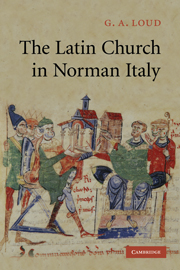
The Latin Church in Norman Italy by G. A. Loud
The Latin Church in Norman Italy
First published in 2007, this was the first significant study of the incorporation of the Church in southern Italy into the mainstream of Latin Christianity during the eleventh and twelfth centuries. Professor G. A. Loud examines the relationship between Norman rulers, south Italian churchmen and the external influence of the new 'papal monarchy'. He discusses the impact of the creation of the new kingdom of Sicily in 1130; the tensions that arose from the papal schism of that era; and the religious policy and patronage of the new monarchs. He also explores the internal structures of the Church, both secular and monastic, and the extent and process of Latinisation within the Graecophone areas of the mainland and on the island of Sicily, where at the time of the Norman conquest the majority of the population was Muslim. This is a major contribution to the political, religious and cultural history of the Central Middle Ages.


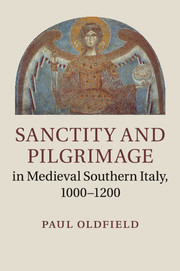
Sanctity and Pilgrimage in Medieval Southern Italy, 1000–1200 by Paul Oldfield
Sanctity and Pilgrimage in Medieval Southern Italy, 1000–1200Southern Italy's strategic location at the crossroads of the Mediterranean gave it a unique position as a frontier for the major religious faiths of the medieval world, where Latin Christian, Greek Christian and Muslim communities coexisted. In this study, the first to offer a comprehensive analysis of sanctity and pilgrimage in southern Italy between 1000 and 1200, Paul Oldfield presents a fascinating picture of a politically and culturally fragmented land which, as well as hosting its own important relics as important pilgrimage centres, was a transit point for pilgrims and commercial traffic. Drawing on a diverse range of sources from hagiographical material to calendars, martyrologies, charters and pilgrim travel guides, the book examines how sanctity functioned at this key cultural crossroads and, by integrating the analysis of sanctity with that of pilgrimage, offers important new insights into society, cross-cultural interaction and faith in the region and across the medieval world.


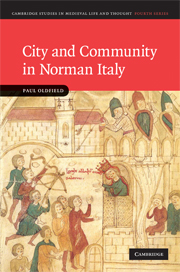
City and Community in Norman Italy by Paul Oldfield
City and Community in Norman ItalyThis study of urban society in twelfth-century mainland Norman Italy examines the self-governing role of urban communities and explores their social ordering, identities and communal activities. Drawing on charters, chronicles, annals and other sources, Paul Oldfield uncovers notable continuities in a range of cities across southern Italy throughout a period of regime change and disruption. Unlike traditional interpretations which suggest that the Normans, and the creation of a monarchy in 1130, stifled urban development, this book suggests that south Italian urban communities were still able to enjoy a level of autonomy under the Norman monarchy. By emphasising the fluidity of the social structures and groups found in these cities, alongside the influential role of both the Church and civic consciousness, the author sheds light on the multi-layered complexity of the urban communities of Norman Italy and provides a more balanced comparison with the cities of northern Italy.


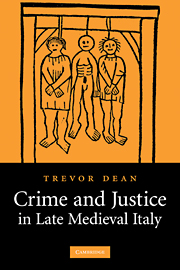
Crime and Justice in Late Medieval Italy by Trevor Dean
Crime and Justice in Late Medieval ItalyIn this important study, Trevor Dean examines the history of crime and criminal justice in Italy from the mid-thirteenth to the end of the fifteenth century. The book contains studies of the most frequent types of prosecuted crime such as violence, theft and insult, along with the rarely prosecuted sorcery and sex crimes. Drawing on a diverse and innovative range of sources, including legislation, legal opinions, prosecutions, chronicles and works of fiction, Dean demonstrates how knowledge of the history of criminal justice can illuminate our wider understanding of the Middle Ages. Issues and instruments of criminal justice reflected the structure and operation of state power; they were an essential element in the evolution of cities and they provided raw material for fictions. Furthermore, the study of judicial records provides insight into a wide range of social situations, from domestic violence to the oppression of ethnic minorities.


The Decline and Fall of Medieval Sicily: Politics, Religion, and Economy in the Reign of Frederick III, 1296–1337 by Clifford R. Backman
The Decline and Fall of Medieval SicilyThis 1995 book is a detailed study of Sicilian life in the reign of Frederick III (1296–1337), a period which saw Sicily reduced from a bustling and prosperous Mediterranean emporium to a poor backwater torn apart by violence. The relative economic and social backwardness of Sicily within modern Italy has attracted considerable scholarly attention. Attempts to explain its ingrained poverty and civil strife usually blame either the legacy of two thousand years of colonisation by rapacious foreigners or the inherent weaknesses in the island itself and its people. More recently a model of 'economic dualism' has pointed to basic structural flaws in the economic relations that were established between the island and its continental trading partners from the twelfth century onwards. This book, by focusing on Frederick III's crucial reign, argues that there were many more things 'wrong' with Sicilian life than just the shape of its overseas trade relations.


An Island for Itself: Economic Development and Social Change in Late Medieval Sicily by Stephan R. Epstein
An Island for ItselfThis study of late medieval Sicily develops a critique of theories of dependence through trade, and a new interpretation of the late medieval economy. It thus addresses current debates on the origins of modern Italian economic dualism, and on the transition from feudalism to capitalism in early modern Europe. Dr Epstein argues that economic development during this period was shaped largely by regional political and institutional structures which regulated access to markets. Following the Black Death, many institutional and social constraints on commercialization were relaxed throughout western Europe as a result of social conflict and demographic change. Peasants became more commercialized; economic growth occurred through regional integration and specialization. The Sicilian economy also expanded and became increasingly export-oriented. although only a small proportion of its output was shipped abroad before 1500. Late medieval Sicily is thus shown to have been neither underdeveloped nor dependent on foreign manufactures and trade.


Land and Power in Late Medieval Ferrara: The Rule of the Este, 1350-1450 by Trevor Dean
Land and Power in Late Medieval FerraraAmong the many states of late medieval Italy, one stands out for its unfamiliarity to an English audience and for its neglect in historical research: that of the Este family, lords (later Dukes) of the cities of Ferrara, Modena and Reggio in northern Italy. This book is the first modern attempt to provide a detailed analysis of the political structure of this state based on archive sources. Much of the book is concerned with the ways by which the Este used their vast landed resources in and around Ferrara to build up and reinforce their personal political authority both within and outside their dominions. Among the major themes examined are the continuing presence of political feudalism in the relations between the Este and their supporters, the place of the court in Ferrarese noble society, and the violent imposition of Este authority over the powerful nobles of the Apennine hills.


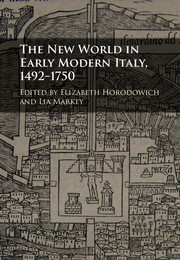
The New World in Early Modern Italy, 1492–1750 eds: Elizabeth Horodowich and Lia Markey
The New World in Early Modern Italy, 1492–1750Italians became fascinated by the New World in the early modern period. While Atlantic World scholarship has traditionally tended to focus on the acts of conquest and the politics of colonialism, these essays consider the reception of ideas, images and goods from the Americas in the non-colonial states of Italy. Italians began to venerate images of the Peruvian Virgin of Copacabana, plant tomatoes, potatoes, and maize, and publish costume books showcasing the clothing of the kings and queens of Florida, revealing the powerful hold that the Americas had on the Italian imagination. By considering a variety of cases illuminating the presence of the Americas in Italy, this volume demonstrates how early modern Italian culture developed as much from multicultural contact - with Mexico, Peru, Brazil, and the Caribbean - as it did from the rediscovery of classical antiquity.


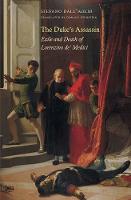
The Duke's Assassin: Exile and Death of Lorenzino de' Medici by Stefano Dall'Aglio and Donald Weinstein
"The Duke's Assassin" by Stefano Dall'AglioStefano Dall’Aglio sheds new light on the notorious Florentine Lorenzino de’ Medici (also known as Lorenzaccio) and on two of the most infamous assassinations of Italian Renaissance history. In 1537 Lorenzino changed the course of history by murdering Alessandro de’ Medici, first duke of Florence, and paving the way for the accession of the new duke, Cosimo I. In 1548 Lorenzino was killed in Venice in revenge for the assassination he had committed. Basing his work on extensive research in the historical archives of Florence and Simancas, Dall’Aglio reconstructs the events surrounding these murders and involving the Medici, their loyalists, the Florentine republican exiles, and some of the most powerful sovereigns of the time. The first publication in a century, and the first work in English, to examine the life of Lorenzino de’ Medici, this fascinating revisionist history is as gripping as a detective novel, as Dall’Aglio unravels a 500-year-old mystery, revealing that behind the bloody death of the duke’s assassin there was the Emperor Charles V.


Markets and Marketplaces in Medieval Italy, c. 1100 to c. 1440 by Dennis Romano
"Markets and Marketplaces in Medieval Italy, c. 1100 to c. 1440" by Dennis RomanoCathedrals and civic palaces stand to this day as symbols of the dynamism and creativity of the city-states that flourished in Italy during the Middle Ages. Markets and Marketplaces in Medieval Italy argues that the bustling yet impermanent sites of markets played an equally significant role, not only in the economic life of the Italian communes, but in their political, social, and cultural life as well. Drawing on a range of evidence from cities and towns across northern and central Italy, Dennis Romano explores the significance of the marketplace as the symbolic embodiment of the common good; its regulation and organization; the ethics of economic exchange; and how governments and guilds sought to promote market values. With a special focus on the spatial, architectural, and artistic elements of the marketplace, Romano adds new dimensions to our understanding of the evolution of the market economy and the origins of commercial capitalism and Renaissance individualism.

Sunday, September 29, 2019

Renaissance Mass Murder by Stephen D. Bowd

Renaissance Mass Murder explores the devastating impact of war on the men and women of the Renaissance. In contrast to the picture of balance and harmony usually associated with the Renaissance, it uncovers in forensic detail a world in which sacks of Italian cities and massacres of civilians at the hands of French, German, Spanish, Swiss, and Italian troops were regular occurrences.


Cover for 

Renaissance Mass Murder


The arguments presented are based on a wealth of evidence - histories and chronicles, poetry and paintings, sculpture and other objects - which together provide a new and startling history of sixteenth-century Italy and a social history of the Italian Wars. It outlines how massacres happened, how princes, soldiers, lawyers, and writers justified and explained such events, and how they were represented in contemporary culture.

On this basis, Renaissance Mass Murder reconstructs the terrifying individual experiences of civilians in the face of war and in doing so offers a story of human tragedy which redresses the balance of the history of the Italian Wars, and of Renaissance warfare, in favour of the civilian and away from the din of battle. This volume also places mass murder in a broader historical context and challenges claims that such violence was unusual or in decline in early modern Europe. Finally, it shows that women often suffered disproportionately from this violence and that immunity for them, as for their children, was often partially developed or poorly respected.


Friday, September 27, 2019

The Viper of Milan by Marjorie Bowen

The Viper of Milan by [Bowen, Marjorie]1360, Lombardy, Italy. The tyrant Gian Galeazzo Visconti, Duke of Milan ruthlessly employs treachery and murder to maintain his power in a court steeped in intrigue. As his armies overrun Northern Italy, it seems that nothing and no one can stem the tide of his conquests... With the possible exception of one man: the dispossessed Duke of Verona, Mastino della Scala.


Whilst the Duke of Milan displays unbelievable cruelty and black-heartedness, he also has a genius for evil, patience and beauty. Battling him, the Duke of Verona struggles to contain his anger. But will Verona tarnish his morality and turn from honesty in the fight for power?

The Viper of Milan takes us to the colourful and violent world of fourteenth-century Italy where success seems to be doomed and the pendulum of power can swing both ways.

Thursday, September 26, 2019

Murder in Mind by Amelia Pasch

Murder in Mind by [Pasch, Amelia]Florence, 1497. An assassin threatens the life of the city's political leader.


Out of desperation - and hope - the Duke of Lorraine sends for his young widowed cousin and spy, Isabella, to unmask and stop the killer. Will the beautiful and resourceful spy be a victim of entrapment herself however, as she falls for the charms of the enigmatic Vittorio? Is he a potential enemy, or potential husband? How much is Isabella willing to sacrifice to complete her mission?

Saturday, August 17, 2019

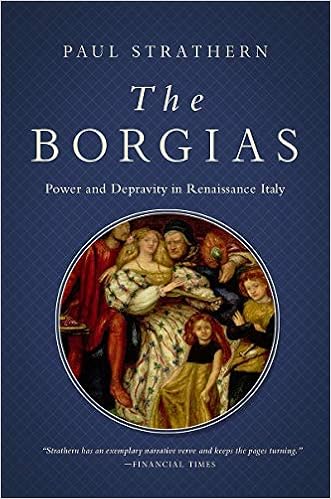
The Borgias by Paul Strathern

The Borgia family have become a byword for evil. Corruption, incest, ruthless megalomania, avarice and vicious cruelty―all have been associated with their name. And yet, paradoxically, this family lived when the Renaissance was coming into its full flowering in Italy. Examples of infamy flourished alongside some of the finest art produced in western history. 


This is but one of several paradoxes associated with the Borgia family. For the family which produced corrupt popes, depraved princes and poisoners, would also produce a saint. These paradoxes which so characterize the Borgias have seldom been examined in great detail. Previously history has tended to condemn, or attempt in part to exonerate, this remarkable family. Yet in order to understand the Borgias, much more is needed than evidence for and against. The Borgias must be related to their time, together with the world which enabled them to flourish. Within this context the Renaissance itself takes on a very different aspect. Was the corruption part of the creation, or vice versa? Would one have been possible without the other? 


One of the author’s great strengths has always been his ability to keep the many assorted players from confusing readers, and that holds true in his latest.  Strathern’s smooth narrative and comprehensive insight bring the Borgias to life for scholars and amateurs alike.

Saturday, November 24, 2018

The Free Port of Livorno by Corey Tazzara


In the twilight of the Renaissance, the grand duke of Tuscany--a scion of the fabled Medici family of bankers--invited foreign merchants, artisans, and ship captains to settle in his port city of Livorno. The town quickly became one of the most bustling port cities in the Mediterranean, presenting a rich tableau of officials, merchants, mariners, and slaves. Nobody could have predicted in 1600 that their activities would contribute a chapter in the history of free trade. Yet by the late seventeenth century, the grand duke's invitation had evolved into a general program of hospitality towards foreign visitors, the liberal treatment of goods, and a model for the elimination of customs duties. Livorno was the earliest and most successful example of a free port in Europe. The story of Livorno shows the seeds of liberalism emerging, not from the studies of philosophers such as Adam Smith, but out of the nexus between commerce, politics, and identity in the early modern Mediterranean.

read more here @ OUP Blog


Sunday, July 8, 2018

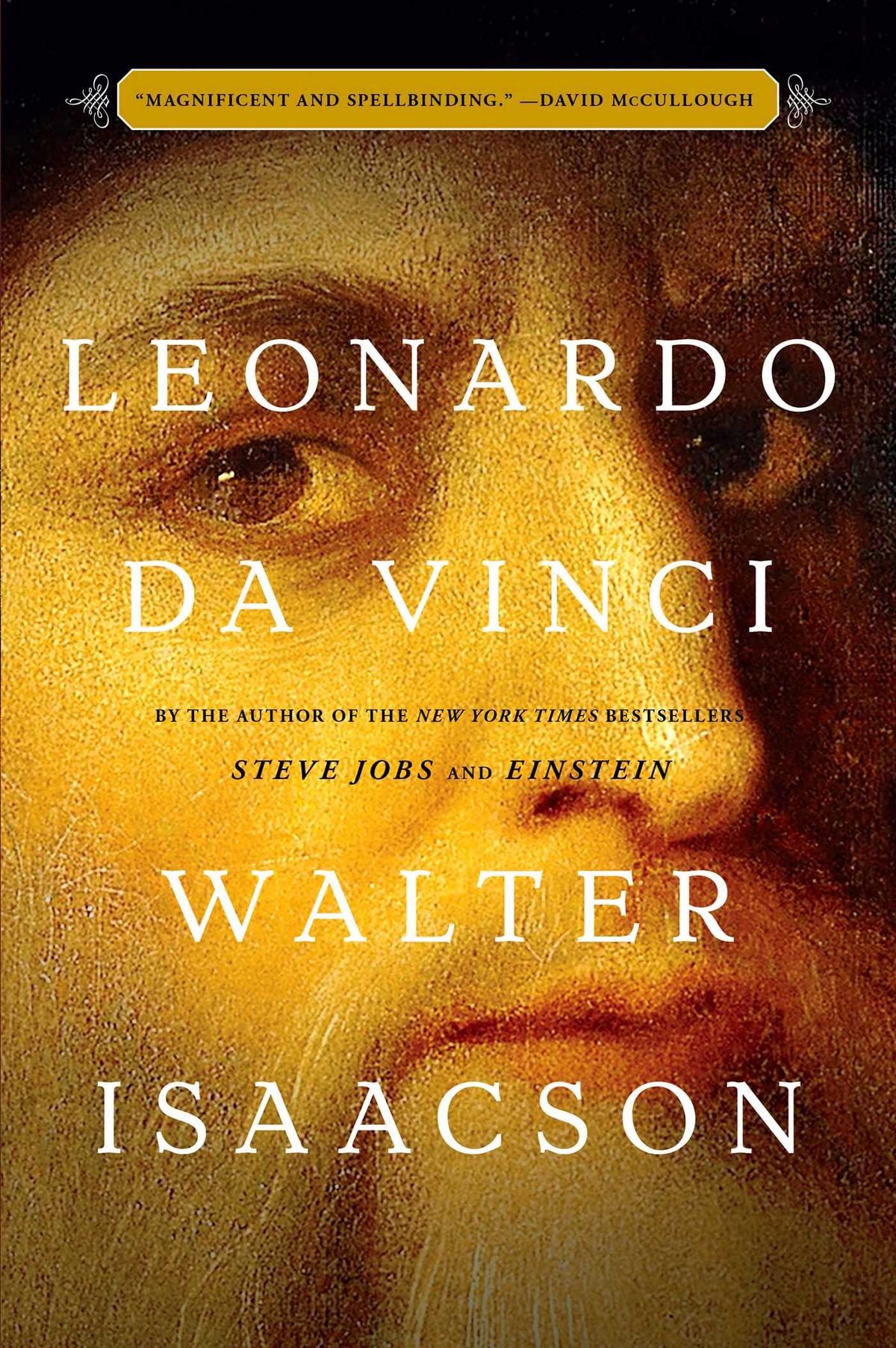
Leonardo da Vinci by Walter Isaacson

From WSHU:

Leonardo exemplified creativity at its most passionate and multidisciplinary, and always with a sense of wonder. He is, says Isaacson, the “ultimate example” of the main theme of his previous biographies [Steve Jobs, Albert Einstein]– “how the ability to make connections across disciplines – arts and the sciences, humanities and technology” – is a key to innovation, imagination, and genius.” 

But what prompted Isaacson to add his name to the already rich store of writing about Leonardo, generously credited here? The answer would seem to be twofold: new information due to advances in analysis and interpretation of Leonardo’s writings and art, and new translations, especially of the Notebooks, over 7,000 pages of doodles and scribbles that constitute “the greatest record of curiosity ever created.”

read more reviews here


Tuesday, December 26, 2017

Too Many Books? We cannot not surround ourselves with book

“Now, surrounded by so many books, we lead indulgent and shameful lives. So what is the use of learning?”


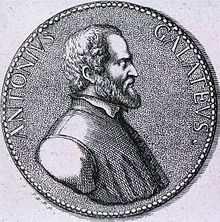
This is the heartfelt cry of Antonio De Ferrariis, known as Galateo (1448-1517), a true Renaissance man, who died 500 years ago last month and whose memory has recently been celebrated in his native Salento, the beautiful and fascinating heel of Italy. 

His outcry about the pointlessness of learning dates from the very same year (1513) as Machiavelli’s Prince and the famous letter in which Machiavelli (1469-1527) describes his greatest pleasure as “seeking nourishment” in “the ancient courts of ancient men”, or in other words as “talking with books”, as Petrarch (1304-74), the so-called father of the Renaissance, had put it many years before. 

read more here @ Irish Times

review of ‘Galateo,’ by Giovanni Della Casa @ New York Times


Thursday, May 18, 2017

A Corresponding Renaissance

Author Lisa Kaborycha talks about her book "A Corresponding Renaissance: Letters Written by Italian Women, 1375-1650" at Oxford University Press Blog.

Writing letters was a quintessential part of everyday life in the Renaissance. The ability to write elegant, expressive, persuasive letters was a highly-prized skill. Beyond a practical necessity, letter writing was considered a high art. The Renaissance art of epistolarity, specifically the humanist penchant for modeling personal letters after those of Cicero, has been well documented. Less examined is what it meant for Renaissance individuals to publish their personal letters for all to read.  Renaissance women participated in this publishing phenomenon, demonstrating a willingness to share their innermost thoughts and to expose intimate details of their lives to the broader reading public. 


read rest of article her @ OUP Blog - Italian Women & 16th Century Social Media


The Fellowship of the Book: Manutius & Bembo

The figure of Aldus Manutius, the “Michelangelo of the Book,” is inseparable from the city where he produced his most important innovations: Venice, the principal printing centre of the Renaissance. 


Aldus’ most notable relationship with Venice, though, emerges through his fellowship with the intellectual and polygraph Pietro Bembo. Whereas Manutius revolutionized printing and reading, Bembo revolutionized the Italian literary language and canon. 

Manutius and Bembo’s partnership was particularly successful mainly because it benefited both sides equally. Bembo owed Manutius his first steps in the literary arena, since Aldus published his first texts – the scientific treatise De Aetna and the dialogue Gli Asolani– and entrusted Bembo with the critical edition of Dante’s and Petrarch’s immortal masterpieces. For the De Aetna, Manutius decided to use a new italic typeface, and commissioned it to his trusted punchcutter Francesco Griffo: in 1495-96, thus, the Bembo typeface was born. 

read entire article - The Fellowship of the Book by Elisa Mondolo here @ SFU Library Special Collections & Rare Books

Monday, August 25, 2014

Autumn Additions

Well, it is autumn in the land down under, and the order for August has been submitted - albeit rather late in the season.  So here is the bag of bargains heading south over the next week or so:


The Northern Crusades by Eric Christiansen
The 'Northern Crusades', inspired by the Pope's call for a Holy War, are less celebrated than those in the Middle East, but they were also more successful: vast new territories became and remain Christian, such as Finland, Estonia and Prussia. Newly revised in the light of the recent developments in Baltic and Northern medieval research, this authoritative overview provides a balanced and compelling account of a tumultuous era. 

Duchessina: A Novel of Catherine de Medici by Carolyn Meyer
Young Catherine de' Medici is the sole heiress to the entire fortune of the wealthy Medici family, but her life is far from luxurious. This novel chronicles the life of a young woman who becomes one of France's most powerful queens. Includes a family tree.

Fideles Crusis: Papacy, the West & the Recovery if the Holy Land 1274 - 1314 by Sylvia Schlein
Schein challenges the view that the fall of Acre in 1291 was a watershed dividing the "classical age" of the crusade from the late Middle Ages, when the ideal had become sterile, the obsessive dream of a handful of individuals. She shows instead that the desire to recover the Holy Land remained powerful and pervasive, and was an important consideration in the policy-making of European rulers.

Princesses of Wales by Deborah Fisher
This exciting new Pocket Guide offers an in-depth discussion of the developing role of Princess of Wales, through an account of the lives of those who have held the title. 

Blood & Beauty: The Borgias by Sarah Dunant
Stripping away the myths around the Borgias, "Blood & Beauty" is a majestic novel that breathes life into this astonishing family and celebrates the raw power of history itself: compelling, complex and relentless. 

The Borgias by Michael Mallett
Fact is deftly sorted from fiction in this description of the incredible rise of the Borgias from obscurity to the very center of the Renaissance.

Lucrezia Borgia by John Faunce
“A fascinating story, rich in detail. In every case, Faunce portrays [Lucrezia] believably, with wit and sensitivity.”--Library Journal Hundreds of years after her death, Lucrezia Borgia remains one of the most enigmatic and notorious women of history.

Margeret of York, the Diabolical Duchess: The Woman Who Tried To Overthrow The Tudors by Christine Weightman
The amazing life of Margaret of York, the woman who tried to overthrow the Tudors.

Anne Neville, Richard III's Tragic Queen: The Real Story of the Kingmaker's Daughter by Amy Licence
Amy Licence reassesses the longstanding myths about Anne's role, her health and her marriages, to present a new view of the Kingmaker's daughter.

Lucrezia Borgia: The Life of the Pope's Daughter in the Renaissance by Maike Vogt-Luerssen (trans: Dr Holger M Luerssen)
This biography will reveal the true Lucrezia Borgia. It is an unfortunate reality that many descriptions of the life of the Pope's daughter and her family are based on malicious rumours by her opponents and sensationalist historians of the 16th century.

The Borgias: History'a Most Notorious Dynasty by Mary Hollingsworth
Mary Hollingsworth's account of the dynasty's dramatic rise from its Spanish roots to the heights of Renaissance society forms a compelling tale of brutality, incest, unparalleled corruption and extortionate greed.


Owain Gwynedd: Prince of the Welsh by Roger Turvey
A study of the life and career of Owain Gwynedd (c. 1100-70), who played a dominant role in the history of Wales before her conquest. He was king of Gwynedd from 1137 until his death, and was the first to be styled Prince of Wales. He was considered the most successful of all the north Welsh princes prior to his grandson Llywelyn the Great.

Daughter of Heaven: the True Story of the Only Woman to Become Emperor of China by Nigel Cawthorne
In this sensational true story, bestselling author Nigel Cawthorne reveals the dark and dramatic story of the only woman ever to rule China, Wu Chao: concubine, manipulator, politician, murderer, Emperor. From her instruction in the art of love by palace officials, to her eventual sticky end, this book opens a window into the colourful world of Tang Dynasty in China - a world of sex and of power. 

On the Trail of the Real Macbeth, King of Alba by Cameron Taylor & Alistair Murray
Travel what is now Scotland with a touring itinerary as you follow "On the Trail of the Real Macbeth, King of Alba".


A rather interesting collection of known and lesser known titles - all reasonably priced (lets face it - cheap!) which is why they have found their way into the Library.


Monday, October 14, 2013

Review: The Enigmatic Caravaggio

I have just finished reading Matt Rees' "A Name In Blood" - a historical novel on the life of Caravaggio - I would hesitate to call it a biography though it certainly is a retelling of his life.


Alessio Boni as Caravaggio 
Most people with an interest in renaissance art and artists would be familiar with this notorious and yet enigmatic artist, his famous works, and his untimely and mysterious death. Just recently I had watched a two part series on Caravaggio starring Alessio Boni on SBS - and this is what drew me to Rees' book - I was searching for answers as to how this man met his ultimate demise, and Rees certainly puts forward a plausible theory.

From the Web Museum:
"Caravaggio was born Michelangelo Merisi on Sept. 28, 1573, in Caravaggio, Italy. Orphaned at age 11, he was apprenticed to the painter Simone Peterzano of Milan for four years. At some time between 1588 and 1592, Caravaggio went to Rome and worked as an assistant to painters of lesser skill. About 1595 he began to sell his paintings through a dealer. The dealer brought Caravaggio to the attention of Cardinal Francesco del Monte.

Early in 1608 Caravaggio went to Malta and was received as a celebrated artist. Fearful of pursuit, he continued to flee for two more years, but his paintings of this time were among the greatest of his career. After receiving a pardon from the pope, he was wrongfully arrested and imprisoned for two days. A boat that was to take him to Rome left without him, taking his belongings. Misfortune, exhaustion, and illness overtook him as he helplessly watched the boat depart. He collapsed on the beach and died a few days later on July 18, 1610."

Caravggio - A Life:
Caravaggio - wikipedia
Caravaggio - Biography dot com
Caravaggio - from Caravaggio dot com

Books on Caravaggio:
Caravaggio: A Life Sacred and Profane by Andrew Graham-Dixon
Caravaggio: The Complete Works by Rossella Vodret
Caravaggio And His Legacy by J. Patrice Marandel
Discovering Caravaggio: The Art Lover's Guide … by Stefano Zuffi 
M : The Man Who Became Caravaggio by Peter Robb 
Caravaggio: A Life by Helen Langdon 
Caravaggio by John T. Spike 
Caravaggio: A Novel by Christopher Peachment 
Caravaggio: A Passionate Life Hardcover by Desmond Seward 
Caravaggio by Catherine Puglisi 
Caravaggio: The Artist and His Work by Sybille Ebert-Schifferer 

The Art of Caravaggio:
Caravaggio - at Art dot com 
Caravaggio - The Metropolitan Museum of Art 

Caravaggio on the Screen: 
Caravaggio on SBS (2008) 
Caravaggio - YouTube 

Caravaggio in the News: 
Derek Jarman's Caravaggio - Press Release


Monday, October 8, 2012

Review: David Blixt - Star Cross'd

Master of Verona

Being already familiar with the story of Cangrande della Scala, I was keen to read this version of his life.  So far, my interest has been maintained and I have not been at all disappointed with David's re-creation of this fascinating and turbulent period in Italian history.

For those familiar with Shakespeare's "Romeo and Juliet", here is the chance to read an interpretation of the "history" behind the play, and meet the real-life characters who inspired the Bard to put pen to paper.

But do not be deterred into thinking this is just a medieval romance - for where would a great story be without a cast of truly interesting characters; intrigue and drama; battles a-plenty; and life, love and death.

A must read - a looking forward for the next instalment in the "Star Cross'd" series.


Voice of the Falconer
From Goodreads: "In the tradition of Dorothy Dunnett and Bernard Cornwell, David Blixt’s latest volume in his historical epic of early Renaissance Italy picks up eight years after the end of The Master of Verona. Having been placed in charge of ‘Cesco – the bastard child reputed to be the only male progeny of Francesco (‘Cangrande’) della Scala – the political & economic leader of Verona – Pietro Alaghieri has been raising the child in exile in Ravenna."

Fortune's Fool
From Goodreads: "Italy, 1326. While the brilliant and wily Cesco is schooled in his new duties at the hand of a hard master, Pietro Alaghieri travels to Avignon, current seat of the Papacy, to fight his excommunication and plead for Cesco's legitimacy. He doesn't know an old foe has been waiting to ruin Pietro's life and seize control of Verona for himself. "

For more information on the author, visit David Blixt's blog - Master of Verona and website - David Blixt