Showing posts with label victorian england. Show all posts

Wednesday, July 16, 2025

Jack the Ripper and the Case for Scotland Yard's Prime Suspect

An investigation into the man Scotland Yard thought (but couldn't prove) was Jack the Ripper. Dozens of theories have attempted to resolve the mystery of the identity of Jack the Ripper, the world's most famous serial killer. Ripperologist Robert House contends that we may have known the answer all along. The head of Scotland Yard's Criminal Investigation Department at the time of the murders thought Aaron Kozminski was guilty, but he lacked the legal proof to convict him. By exploring Kozminski's life, House builds a strong circumstantial case against him, showing not only that he had means, motive, and opportunity, but also that he fit the general profile of a serial killer as defined by the FBI today.

The first book to explore the life of Aaron Kozminski, one of Scotland Yard's top suspects in the quest to identify Jack the Ripper, combines historical research and contemporary criminal profiling techniques to solve one of the most vexing criminal mysteries of all time. The book draws on a decade of research by the author, including trips to Poland and England to uncover Kozminski's past and details of the case. Includes a Foreword by Roy Hazelwood, a former FBI profiler and pioneer of profiling sexual predators. Features dozens of photographs and illustrations. Building a thorough and convincing case that completes the work begun by Scotland Yard more than a century ago, this book is essential reading for anyone who wants to know who really committed Jack the Ripper's heinous and unforgettable crimes.

Wednesday, January 1, 2025

Review: Britain's Greatest Detective by Nell Darby

Synopsis: From his offices at Basinghall Street in the City of London, Henry Slater presided over Britain's best-known private detective agency, king of all he surveyed. In the late Victorian era, and into the twentieth century, his name was synonymous with the Golden Age of private detection; he was a truly modern operator, utilising the press and technology, and creating innovative publicity campaigns to keep his agency in the public eye.

One of the key skills of the private detective was the ability to make friends - to infiltrate the lives of individuals, and to get them to trust them with their secrets. Slater, however, would make one mistake: to befriend the wrong person and to entrust them with his secrets. When that friendship ended, competition in the private detective world would lead to a trial so infamous that Winston Churchill himself came to watch proceedings play out at the Old Bailey. The trial would destroy Henry Slater's career, and expose his real identity.

This is the first in-depth study of private detective work in nineteenth and early twentieth century Britain, looking at the 'Golden Age' of private detectives and the work they did. It provides a fascinating look at the type of person who became a private detective, the people who wanted to be their clients - and the crimes that could be committed along the way. This book sheds new light on this profession, building on the author's previous work on female private detectives in order to enable the reader to gain a better understanding of a job that people of all classes desired to do. But it is also about the career of one man. Sherlock Holmes may have been the most famous fictional private detective, but Henry Slater was, for twenty years, the real star of the private detective world.

~ ~ ~

This book does what is sets out to do - gives the reader an entree into the world of the early private detectives, the people drawn to this type of work, the methods used, and the cases they were typically involved in. Anchoring this tome is the character of Henry Slater - the self proclaimed "greatest detective" of his time.

Darby notes that it was with the passing of the Matrimonial Causes Act 1857 that gave rise to the private detective as courts required evidence of matrimonial misdeeds in order to grant a divorce. This was primarily the type of work available for the private detective, especially one with no connection to the police department.

It is against this that Darby focuses on the case that brought down Slater and his agency - the Pollard divorce case - and highlighted the underhanded dealings that went on to secure the evidence (ie: honey trap, payment of witnesses). None of this would have come to light had Slater not spurned the friendship of one of his employees - Francis Stevens - ".. a man who would do anything to get revenge ..." - including setting up a rival agency and using others to bring about Slater's downfall.

The proceeding court case against Slater and his employees is followed in detail, always referring back to the original Pollard divorce case and methodology used in gaining the required evidence.

Darby follows through to not only the conclusion of the case against Slater et al, but also what followed afterwards for the main players in this drama. Did they get off or were all incarcerated? What happened to the Pollards?

At times the construction of the narrative was a little annoying as it tended to go back and forward in the timeline, but overall it was quite easy to follow. The research that went into this tome is very evident, a times a little dry but never uninteresting.

Definitely one for those interested in the detective agencies that were the UK equivalent of Pinkertons in the 19th and 20th centuries.

Monday, July 3, 2023

Charles Dickens Investigates - Series by JC Briggs

Author JC Briggs writes historical crime fiction. Her amateur detective is none other than the great Victorian novelist, Charles Dickens. Dickens was fascinated by crime and murder. He went out with the London Police into the grim slums of London and visited the police stations to see how they all worked. According to a recent biographer, Dickens would have enjoyed being a detective. I gave him his wish. He makes a good detective - he is very observant, very clever at working out motive and following the clues with his partner, Superintendent Jones of Bow Street. And Victorian London is a great setting for a murder mystery - all that fog and very sinister alleys. All the books are based on something which really happened in Dickens's life.


The series in order is as follows:

The Murder of Patience Brooke
London 1849: Charles Dickens has set up Urania Cottage as a sanctuary for fallen women. But he is shocked when the matron’s assistant – Patience Brooke – is found hanging outside the property, covered in blood.

Death at Hungerford Stairs
London 1849: When a boy is found drowned in the River Thames at Hungerford Stairs, novelist Charles Dickens and Superintendent Jones of Bow Street are mystified to discover that the child is not the missing youngster for whom they have been searching.

Murder by Ghostlight
London 1859: Charles Dickens is in Manchester, performing at the Queen’s Theatre with his acting group. But his career on the stage is cut short when a man is shot dead – on set.

The Quickening and the Dead
London 1850: Lavinia Gray vanishes on the eve of her wedding and is found drowned. Evie Finch dies of septicaemia in a filthy lodging house. Annie Deverall, a fifteen-year-old milliner’s apprentice is on remand in Newgate, accused of murdering the Doctor Lancelot Plume. Three young girls' lives have been ruined, but could they be connected somehow?

At Midnight in Venice
London 1850: An Italian music master and an English governess disappear from the house of Sir Neptune Fane, a prominent Member of Parliament. A female skeleton is found in a disused water tank behind a house which has been empty for five years. Her neck had been broken and found with a jeweled chain around it.

The Redemption Murders
London 1851: The Thames River Police are called to The Redemption, a ship docked at London’s Blackwall Reach. Louis Valentine, the ship’s captain, has been stabbed to death.

The Mystery of the Hawke Sapphire
London 1851: On his deathbed, the sinister Sir Gerald Hawke asks a distant cousin — Reverend Meredith Case — to find Sapphire, his long-lost ward and heir to the Hawke family jewels. Concerned for her welfare, Meredith vows to discover where Sapphire disappeared to.

The Chinese Puzzle
London 1851: The Great Exhibition has opened, and everyone is flocking to see the wonders on display. But when a potential Chinese assassin manages to get up close to Queen Victoria, and then vanishes without a trace, the Prime Minister orders an urgent investigation.

Summons to Murder
London 1851: Pierce Mallory, a gentleman journalist, is found dead in his lodgings with a gunshot wound in his head and a duelling pistol beside him. Though the death is deemed a suicide, Mallory’s friends — including Charles Dickens — don’t believe that he would have taken his own life.

The Jaggard Case
London 1851: With Superintendent Sam Jones away in Southampton on the trail of missing murderer Martin Jaggard, his wife, Elizabeth, enlists the help of Charles Dickens when her beloved servant, Posy, goes missing.

The Waxwork Man
Londong 1851: While visiting Madame Tussaud’s Chamber of Horrors, Charles Dickens crosses paths with Sir Fabian Quarterman, a judge famed for his ruthlessness in court. Then Fabian is found dead.

Murder by Magic
A short story featuring Charles Dickens and his friend, Superintendent Jones of Bow Street must find a serial killer before he murders again.

More details about each book can be found at the website of JC Briggs

Sunday, June 25, 2023

Review: Sherlock Holmes and Dr Watson by Thomas A Burns Jnr

Synopsis: Return to the streets and alleys of Victorian London, where the game is afoot once again! The Great Detective, Mr. Sherlock Holmes, and his steadfast companion Dr. Watson are back for ten new cases, spanning the length of the quintessential detective's illustrious career. Beginning while Holmes was still a green investigator in Montague Street, this collection encompasses the 1880s and the 1890s, up to the dawn of the new century. Walk with Holmes as he puzzles over the problem of a drunken teetotaler, celebrates an old English Christmas at the Red Lion, tracks down the Camberwell poisoner, and experiences the horror in King Street. If you've been pining for new traditional, canonical Sherlock Holmes tales, Ten Steps from Baker Street is the collection you've been waiting for.


~ ~ ~

Nice homage to the world's most well known (and beloved) consulting detective - Sherlock Holmes. We begin with his arrival in London as a fresh faced lad of 23yo in 1887, crossing swords with Inspector Lestrade on his (Holmes) first case, before Watson takes over the narrative of the next cases over the course of a decade (1881 onwards). In sync with Arthur Conan Doyle's Sherlock Holmes.

Worthy addition to anyone's Sherlock Holmes collection.

Sunday, December 25, 2022

Review: Jack The Ripper - The Policeman by Rod Beattie

Synopsis: Imagine you were a police officer and had been dominated as a child by an abusive mother who didn’t really want you and as an adult had been served bastardy orders twice, firstly by a woman in whose house you lived and then by a woman you had a relationship with.

Then, to top it all after you had become a police officer in another city you arrested a woman you thought was a prostitute, whose subsequent actions caused you to be accused of perjury and you ended up in court at the Old Bailey. Although you were found not guilty, it ruined your career and left you seriously in debt and though you were still a policeman you were taken off the streets and assigned to a menial job guarding a museum.

As a police officer you were in a perfect position to take revenge on those people you thought had ruined you, prostitutes.

This book contains the complete reason Jack the Ripper came to be. It sheds new light on the mystery of the killer. After all, who is going to suspect a policeman going about his daily duties of being one of the world’s most infamous serial killers.


In this addition to the Ripper library, author Beattie posits his own thoughts on who Jack the Ripper could have been. In this instance, his prime suspect is a policeman, of dubious antecedents, by the name of Bowden Endacott.  And suspects a plenty have been suggested in the past of the list provided by Wikipedia is anything to go by - yet police office was not mentioned.

Beattie says that "... a police officer is the only person who could have walked the streets at night knowing that he would not be questioned or suspected of being the killer ...".  In fact, this is a most plausible scenario.

His reasons for putting forth Endacott as his suspect are numerous and include factors of his childhood (a domineering mother and possibly, unwanted as being one of her last children); his being a compulsive liar; dubious police career which culminated in the "Cass Case" of 1887.

Beattie then put forward that in addition to the five traditionally accepted Ripper victims, that at least one, if not more victoims could be attributed to him - whilst at the same time, suggesting that Stride was not one of the five.  Beattie also suspects that Endacott had an accomplice, possibly a doctor or at the very least, another man.  Again, this is a reasonable assumption, regardless of the true suspect and was worthy of more study.

Unfortunately, Beattie offers no real conclusive proofs - in fact, his case could literally have been made for any police officer who walked the beat at that particular time.  Endacott just had more notoriety due in no part to the Cass Case and his consistent and blatant lying.  Beattie failed to convince me that Endacott was the most plausable suspect.

What I would have preferred is more substantial proofs against Endacott to convey Beattie's argument or at the very least, for Beattie to have developed and put forth a more-detailed case built around the potential of a police officer being the suspect.


Sunday, December 12, 2021

Review: The Return of Hester Lynton by Tony Evans

Synopsis: Victorian England's most celebrated lady detective returns in ten new brain-teasing mysteries.With scheming fraudsters, corrupt doctors, devious forgers and terrible murderers afoot, Hester Lynton, and her trustworthy assistant Ivy Jessop, have their work cut out for them. But amidst the dirt and deprivation of 1800s London, our investigative duo will stop at nothing to catch their criminals.

The Return of Hester Lynton is a collection of ten absorbing cosy detective stories, perfect for fans of Sherlock Holmes, Mrs Gladden and the Lady Hardcastle mysteries.


This is a lovely homage to Sherlock Holmes with female detective Heston Lynton and her female "Watson", Ivy Jessop. Follow Hester and Ivy as the tackle such cases as:
  • The Case of the Fanshaw Inheritance (competition for an inheritance involving a treasure hunt)
  • The Case of the Stolen Leonardo (a stolen master, a locked room, forgery)
  • The Case of the Missing Professor (missing formula, traitors)
  • The Mystery of the Locked Room (mysterious death, question of family inheritance)
  • The Adventures of the Diamond Necklace (missing necklace, scandal, secret organisation)
  • The Adventure of the Kidnapped Schoolboy (missing child that is not straight-forward)
  • The Puzzle of the Whitby Housemaid (Bram Stoker brings a case involving a mysterious doctor and a scared maid)
  • The Case of the Russian Icon (swindled museum, double-cross)
  • The Case of the Naked Clergyman (eccentric clergyman and an inheritance at issue)
  • The Problem of Oscar Wilde (Oscar seek Hestor's help in recovering stolen letters)
Hester shares many similarities with Holmes: she smokes; makes use of disguises; works with a police inspector; deals with confidential cases; has an erstwhile sidekick and biographer (and narrator); is attended to by a loyal housekeeper; and is a spinster to Holmes' bachelor.

The tales, whilst being conveyed to the reader at a later period, date between 1880s and 1890s in Victorian London. England was still under the reign of Queen Victoria (d.1901), the Boer War was in its infancy (1899–1902), and the scare of the Ripper murders was still fresh in peoples' minds (1888). You can refer to my review of MJ Trow's "Four Thousand Days" for further background on London at this point in time.

Hester actually put me in mid of the lesser know female detective - Maud West.  From Bella Ellis' article on Crimereads
"Maud was real-life private detective who was London’s and, I suspect, the UKs only female private detective at start of the twentieth century. Quite a celebrity in her day, with a career spanning more than thirty years, West claimed her work took her all over the globe, from London to Paris, to the U.S and back again. A renowned mistress of disguise she often impersonated men from all walks of life – from sailors to aristocrats." 
A lovely collection of mysteries to while away an afternoon.


Further reading:
- History Extra: Female Detectives

Sunday, September 19, 2021

Charles Dickens & Superintendent Sam Jones Series by JC Briggs

Charles Dickens had a fascination with detectives. He would accompany police detective Charles Frederick Field and a few of his men on an all-night visitations of the most squalid and dangerous haunts of London’s underclass, later writing about his experiences in his magazine, Household Words in 1852. Could this real life detective have formed the basis for Dickens' own fictional detective, Inspector Bucket, in Bleak House, which was published in serialised form in 1852 - 1853.?  

But what if Dickens' interest in detectives started earlier, and he himself took on the role of detective, leading up to his plotting out of his novel Bleak House.? The Bow Street Runners had been in existence for about 100 years, and the Metropolitan Police (or Peelers) were established in 1829, with its detective branch active from 1842.

Author JC Briggs has taken up the character of Charles Dickens and created a new role for him - that of detective, and he features in the following series of books.


The Murder of Patience Brooke
A brutal murder in Victorian London forces a famous writer to solve the mystery…

London, 1849 - Charles Dickens has set up Urania Cottage as a sanctuary for fallen women. But he is shocked when the matron’s assistant – Patience Brooke – is found hanging outside the property, covered in blood.

Desperate to protect the reputation of the Home and to stop a scandal from spreading, Dickens takes the investigation into his own hands. With the help of his good friend, Superintendent Sam Jones of Bow Street, and a description of the suspect as ‘a man with a crooked face’, Dickens's search takes him deep into the filthy slums of Victorian London.

Can Dickens save his reputation? Will he find out the secrets of Patience Brooke’s troubled past?  Or will the killer strike again …?


Death at Hungerford Stairs
A serial killer is on the loose in Victorian London .... Boys are going missing from London’s slums…

London, 1849 - When a boy is found drowned in the River Thames at Hungerford Stairs, novelist Charles Dickens and Superintendent Jones of Bow Street are mystified to discover that the child is not the missing youngster for whom they have been searching.

As Dickens and Jones delve deeper into London’s poverty-stricken backstreets, they stumble across two more bodies.  A serial killer is on the loose. And Charles is terrified that someone close to him may be one of the victims.

With a strange image of a mask sketched next to the corpses, could the murderer be leaving a trail for the detectives to follow…?  Or will the Death at Hungerford Stairs remain unsolved…?


Murder by Ghostlight
Dickens has gone from private investigator to prime suspect…

London, 1850 - Charles Dickens is in Manchester, performing at the Queen’s Theatre with his acting group. But his career on the stage is cut short when a man is shot dead – on set. With Dickens himself caught with the gun in his hands, he is immediately arrested.

Along with the help of his good friend Superintendent Sam Jones, Dickens must do all he can to find the real killer, before he is locked up for a crime he didn’t commit. 

Can Dickens convince the authorities of his innocence? Will he unmask the true assassin?  Or will there be another Murder by Ghostlight…?


The Quickening and the Dead 
Three girls, three deaths — but what connects them…?

London, 1850  - Lavinia Gray vanishes on the eve of her wedding and is found drowned. Evie Finch dies of septicaemia in a filthy lodging house. Annie Deverall, a fifteen-year-old milliner’s apprentice is on remand in Newgate, accused of murdering the Doctor Lancelot Plume.  Three young girls' lives have been ruined, but could they be connected somehow?

Charles Dickens visits Annie and is immediately convinced of her innocence. He enlists the help of Superintendent Sam Jones to find the real murderer before Annie goes to trial. How are the three girls linked to Plume? And if Annie didn’t kill him, who did?  What Charles Dickens uncovers will shock him to his very core…


At Midnight In Venice 
Two cities, two skeletons, linked by a mysterious vision…

London, 1850 -  An Italian music master and an English governess disappear from the house of Sir Neptune Fane, a prominent Member of Parliament.

A female skeleton is found in a disused water tank behind a house which has been empty for five years. Her neck had been broken and found with a jewelled chain around it.

Charles Dickens is reminded of his time in Venice a few years earlier, when he thought he saw a monk with his hands on a girl’s neck, the glimpse of jewels in fleeting torchlight, a cry of fear. And later he read that a girl was found drowned at the spot where he had his vision.

Are the two corpses connected? And what is the link to Sir Neptune Fane?  Charles Dickens and Superintendent Sam Jones must find the link between the backstreets of London and the mysterious canals of Venice…


The Redemption Murders 
The sea gave up its dead, and each one was judged according to his deeds.…

London, 1851 - The Thames River Police are called to The Redemption, a ship docked at London’s Blackwall Reach. Louis Valentine, the ship’s captain, has been stabbed to death. With no murder weapon on site, and no signs of a robbery, the only clue is a copy of Charles Dickens’ The Old Curiosity Shop. The book is not inscribed to Valentine but to someone called Kit.

When Charles Dickens realises his good friend Kit Penney is now a murder suspect, he is determined to clear his name. But Kit has gone missing.  With the help of Superintendent Sam Jones, Dickens starts to investigate the troubled last journey of The Redemption. It seems there was more than one suspicious death on board. But were they murders? And did the same person attack Captain Valentine?

Dickens and Jones begin a desperate search for Kit – and for the key to the dark secrets bound up in The Redemption…


The Mystery of the Hawke Sapphires
Dickens faces a decades-old disappearance, a brutal murder and a missing link…

London, 1851 - On his deathbed, the sinister Sir Gerald Hawke asks a distant cousin — Reverend Meredith Case — to find Sapphire, his long-lost ward and heir to the Hawke family jewels.  Concerned for her welfare, Meredith vows to discover where Sapphire disappeared to.

Meanwhile, Felix Gresham — a young man with literary ambitions — is found murdered on the steps of a bookshop. As an acquaintance of the Gresham family, novelist Charles Dickens once again teams up with Superintendent Sam Jones to investigate the murder.

But in his quest for the truth, Dickens finds that those associated with Felix are reluctant to talk.  And when he is called on to assist with the search for the Hawke heir, he begins to wonder whether the two cases could be connected…

What became of Sapphire Hawke? What secrets did Felix take to his grave?  And can Dickens find the link between the two mysteries…?


The Chinese Puzzle
Are unsolved murders in London linked to the opium trade - Charles Dickens must unravel a mystery that stretches from the streets of London to the shores of Canton…

London, 1851 - The Great Exhibition has opened, and everyone is flocking to see the wonders on display. But when a potential Chinese assassin manages to get up close to Queen Victoria, and then vanishes without a trace, the Prime Minister orders an urgent investigation.

Superintendent Sam Jones from Bow Street is put on the case to find the whereabouts of the missing man. And he discovers that Cornelius Mornay — a wealthy retired banker from Canton — also went missing on the same day.

As a former opium merchant, it seems that Cornelius had some powerful — and dangerous — connections. The British government order Jones to keep his enquiries under wraps, so he enlists the help of his good friend Charles Dickens to infiltrate the seedier streets of London.  And when the body of Mornay is found washed up in Wapping, poisoned with opium, the plot starts to thicken.

Mornay is deeply connected to the Opium trade and the suspects are many. And when more murders occur, it seems this mystery could be connected to something larger than Dickens and Jones had ever imagined…


read more here


Friday, April 2, 2021

Review: The Real Sherlock Holmes by Angela Buckley

Sysnopsis: On 6 December 1886, Arthur Foster leaves the Queen’s Theatre, Manchester with a pocket full of gold and a lady bedecked with diamonds on his arm. He hails a hansom cab unaware that a detective has been trailing him as he crisscrossed the city. As the cab pulls away, the detective slips inside and arrests the infamous ‘Birmingham Forger’. The detective is Jerome Caminada, legendary policeman and a true Victorian super-sleuth.

Known as a ‘terror to evil-doers’, Caminada is at the top of his game as he stalks nefarious criminals through the seedy streets of Manchesters underworld. Born in the slums, he has an intimate knowledge of the labyrinth of dark alleyways and the shady characters that inhabit them. Caminada’s compelling story bears all the hallmarks of Arthur Conan Doyle and establishes this indefatigable investigator as one of the most formidable detectives of the 19th century and a real-life Sherlock Holmes.


Caminada - a man's whose career rivaled and paralleled that of London's Inspector Frederick Abberline. Both men came from humble beginnings, went into a trade before entering the Police Force; both were skilled and rose through the ranks; both become private detectives after leaving the force; and both would be remembered for their most famous of cases.

Buckley provides us with a series of vignettes that introduce us to this remarkable man, his methods, his crimes (ie: the one he solved), and his life.  Caminada truly was unique among his peers and possibly, even among investigators regardless of the time period in which they worked.  Reading some of these cases, you would be inclined to think that Caminada himself was a fictional character due to his highly successful methods of crime-fighting and policing.  It is a testament to this man that we are still amazed today at his level of cunning, doggedness, and dedication to his career.  


I found this to be a most interesting read - and whether he truly was the inspiration for Conan Doyle's "Sherlock Holmes", there is no doubting the man's obvious (subconscious) influence.


See also: 

Sunday, September 20, 2020

Review: People of Abandoned Character by Claire Whitfield


Synopsis: Marry in haste . . . Murder at leisure?
London, 1888: Susannah rushes into marriage to a young and wealthy surgeon. After a passionate honeymoon, she returns home with her new husband wrapped around her little finger. But then everything changes. Thomas's behavior becomes increasingly volatile and violent. He stays out all night, returning home bloodied and full of secrets. The gentle caresses she enjoyed on her wedding night are now just a honeyed memory. 

When the first woman is murdered in Whitechapel, Susannah's interest is piqued. But as she follows the reports of the ongoing hunt for the killer, her mind takes her down the darkest path imaginable. Every time Thomas stays out late, another victim is found dead. Is it coincidence? Or is her husband the man they call Jack the Ripper?


To think I nearly gave up on this. It wasn't quite holding my fascination at the beginning, but the premise promised so much that I continued on. And OMG! What a finish! About halfway through things start to move - think gothic fiction along the lines of "Gaslight" and "Rebecca" and you'll know what you are in for. 

Just as Alice was led down the the rabbit hole by the White Rabbit, so Whitfield leads the reader through the crime-ridden sordid streets of Victorian Whitechapel, an area of overcrowding and abject poverty. It was a city of doss houses, sweatshops, abattoirs, overcrowded slums, pubs, a few shops and warehouses. Although described as “terra incognito for respectable citizens", it was a place were the wealthy gentlemen "slummed it" and the well-heeled ladies got their daily crime fix by visiting the scenes of horror (from the deplorable living conditions to the crimes scenes of the Ripper).


Women within Victorian society were entirely at the mercy of the men who dominated their lives: first, their fathers and brothers would control them when they are still young and when they are married, their husbands. Marriage was considered very essential and significant for the sake of the stability of the society. Women were therefore expected to be very obedient and submissive in order to have a happy and stable marriage. Women were not supposed to divorce; they were expected to live with their husbands even if it meant to live in miserable marriage.

Women thus began to perform duties outside their homes. This meant that they would cook, nurse and educate young people for a pay. Nevertheless, a woman was only supposed to work as long as she was not married, but once married, she was expected to stop working and take up her role as a wife and mother.

It wasn't until the 1880s that educational opportunities and institutions opened up to women to continue with their learning. Whereas prior to this, an educated woman was not considered attractive nor marriageable material. At the same time, women attained more legal rights with the establishment of more movements and acts. The married women property act allowed married women authority over their own properties. Her property was hers and not her husband’s. 

When Nurse Susannah Chapman marries wealth doctor Thomas Lancaster, little did she know what she was getting in for - yes, marry in haste, repent in leisure is very apt. With no family of her own and isolated from her friends, Susannah finds herself trapped in a loveless marriage. Husband Thomas becomes this Jekyll and Hyde type character, and when the Ripper murders start, Susannah slowly connects the dots, coming to a horrifying conclusion that could end in her own death. 

For a first novel, this is gripping stuff - as I said, I nearly gave up on it early on in the piece, but the scene was just being set with a bit of retrospective narrative - it will make sense as you near then end. And I especially loved the narrative ascribed to the Ripper's victims. The ending .... you know its building up to something, however, the something that we get is far for expected! It is almost noirish by definition. 


This and Elizabeth Hill's "Killing The Girl" have to be two of my favourite crime reads for this year.


Tuesday, August 11, 2020

Review: Sherlock Holmes & the Ripper of Whitechapel by M.K. Wiseman

Sherlock Holmes & the Ripper of Whitechapel
Synopsis: I am afraid that I, Sherlock Holmes, must act as my own chronicler in this singular case, that of the Whitechapel murders of 1888. For the way in which the affair was dropped upon my doorstep left me with little choice as to the contrary. Not twelve months prior, the siren’s call of quiet domesticity and married life had robbed me of Watson’s assistance as both partner and recorder of my cases. Thus, when detective inspector Lestrade of Scotland Yard required a lead—any lead—I found myself forced to pursue Jack the Ripper alone and without the aid of my faithful friend. 

And all for the most damnedable of reasons: early on in my investigations, Dr. John H. Watson, formerly of 221b Baker Street, emerged as my prime suspect.


This is another very Conan Doyle-like story of Holmes - in this instance, we have the added mystery of the notorious Whitechapel murders of Jack the Ripper.

Wiseman plots and paces his story in a manner that you might be forgiven for thinking this was a lost Conan Doyle manuscript. His take on Holmes is uncannily like the original manuscripts.

However, in this instance, the story is narrated by Holmes whilst Watson becomes one of the secondary characters in this outing. Holmes notes that this is not his usual type of case and is more or less "lured into" the case by not only Inspector Lestrade but Commissioner Warren. The story follows the Ripper murders fairly closely with Homes concluding that there was a "... compendium of errors which had plagued the case ..." which (no spoiler) remains an enigmatic mystery still today.

Definitely one for fans of Holmes and Watson - hope there are more tales on the horizon! 

Review: Sherlock Holmes & the Beast of the Stapletons by James Lovegrove

Sherlock Holmes and The Beast of the Stapletons
Synopsis: 1894. The monstrous Hound of the Baskervilles has been dead for five years, along with its no less monstrous owner, the naturalist Jack Stapleton. Sir Henry Baskerville is living contentedly at Baskerville Hall with his new wife Audrey and their three-year-old son Harry.

Until, that is, Audrey’s lifeless body is found on the moors, drained of blood. It would appear some fiendish creature is once more at large on Dartmoor and has, like its predecessor, targeted the unfortunate Baskerville family.

Sherlock Holmes and Dr Watson are summoned to Sir Henry’s aid, and our heroes must face a marauding beast that is the very stuff of nightmares. It seems that Stapleton may not have perished in the Great Grimpen Mire after all, as Holmes believed, and is hell-bent on revenge…


This very Conan Doyle-like story of Holmes follows on from his return after Holmes' supposed death at Reichenbach Falls (The Final Problem) and five years after the events of "The Hound of the Baskervilles".

Lovegrove plots and paces his story in a manner that you might be forgiven for thinking this was a lost Conan Doyle manuscript. His take on Holmes and Watson is uncannily like the originals - and old characters from "The Hound" resurface.

The story is narrated by Watson of course - though Holmes himself does recount events which he classifies as "... a web of murder and deceit ...riddled with misgiving ..." when he sallied forth to Dartmoor in the company of one Corporal Grier to discover just what new beast was terrorising the Baskervilles. Just when you think all is solved, we the reader find ourselves only halfway there.

Definitely one for fans of Holmes and Watson - hope there are more tales on the horizon!


Sunday, April 12, 2020

The Mile End Murder by Sinclair McKay

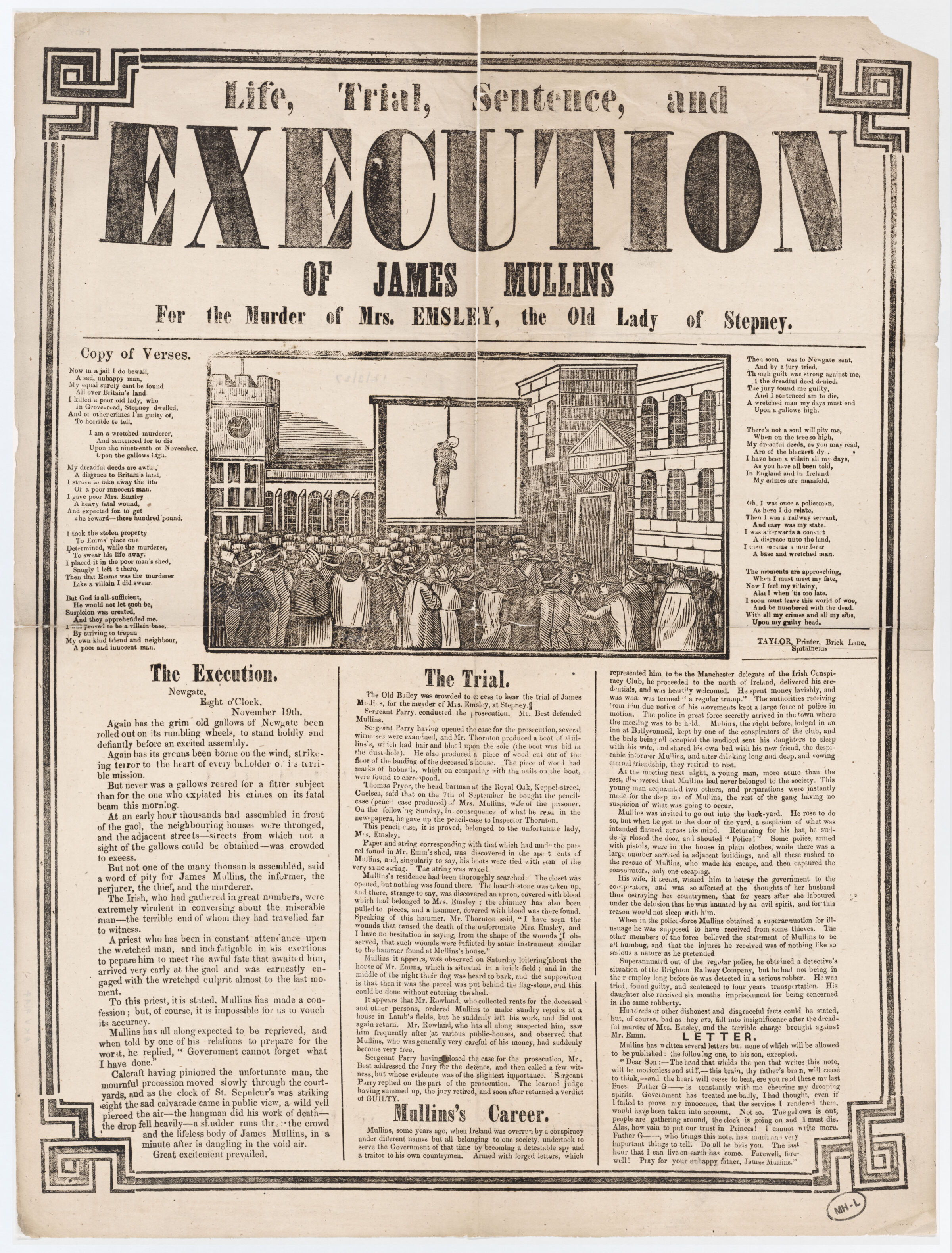
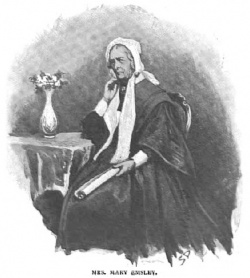
Synopsis: On 16th August 1860 wealthy widow Mary Emsley was murdered in her own home. The investigation that followed had an abundance of suspects, from disgruntled step children concerned about their inheritance and an admirer repeatedly rejected by the widow, to a trusted employee, former police officer and spy. The eventual public trial was dominated by surprise revelations and shock witnesses, before culminating with one of the final public executions at Newgate. But was an innocent person sent to the gallows? 

Years after the case was closed Sherlock Holmes author Arthur Conan Doyle became convinced a miscarriage of justice had occurred but was unable to find the real killer. After confounding the best detectives for years, the case has finally been solved by bestselling author Sinclair McKay.


From Cressida Connolly in The Spectator:
As in all the best Agatha Christies, the person who is murdered here is so universally disliked that suspicion may fall on almost anybody who knew her. Despite owning huge swathes of property, the widowed Mary Emsley employs no servants, living alone in a house she keeps locked and shuttered at night. Suspicious, stingy and scathing, she is all but friendless. She has no children and often remarks that she would sooner leave her considerable wealth to create almshouses than to her various kin. She is in the habit of ejecting any tenant who falls into even a week’s arrears. She is insensible to pleading. Some of her money is kept hidden in her coal store, but most is reinvested into housing stock. In short, she is a miserable miser.

Life, trial, sentence, and execution of James Mullins for the ...
So it is hard to feel too sorry when we learn that Mrs Emsley has been bludgeoned to death on the third floor of her own home one warm August night in 1860. There is a bloody footprint on the landing, but no sign of forced entry. She must have admitted the killer herself. The question here is less why she was killed, than by whom. For although a man named James Mullins was tried and hanged for the murder, many did not believe him to have been the true culprit. Sir Arthur Conan Doyle, examining the details of the case some years later, was flummoxed by it. Sinclair McKay posits a new idea of his own. His villain is someone we have met earlier on in the story; someone who knew Mrs Emsley and was a frequent visitor; someone who hoped, in getting rid of her, to gain an inheritance.

It’s a plausible and enjoyably creepy theory, although in the absence of fingerprinting and forensics, we will never really know. A boot with human hairs attached to it was found in the lodging house of the accused’s wife, and Mullins had certainly pilfered from the widow. But these were slender findings with which to take a man’s life, and McKay does a fine job of dismantling them as proof of guilt.

From Craig Brown in The Daily Mail:
Did he actually commit the crime that sent him to the scaffold? Writing about the case 40 years later, Sir Arthur Conan Doyle, the creator of Sherlock Holmes, felt that his guilt should be reclassified as ‘unproven’, but McKay is completely convinced that Mullins was innocent.

With elaborate taran-taras, he has waited until the last two chapters in his book to reveal the true identity of the guilty party. My lips are sealed. All I will say is that his choice of the real villain is ingenious, and artistically satisfying, too, in that it would have pleased Wilkie Collins, or even Conan Doyle.
The Debatable Case of Mrs. Emsley - The Arthur Conan Doyle ...But is it true? Perhaps it is, and perhaps it isn’t. But it doesn’t strike me that, based on McKay’s fairly slim evidence, a sensible jury would convict. My own suspicion is that Mrs Emsley might have let a total outsider into her house – she had advertised a sale of wallpaper, so would have been expecting strangers – which means that her murderer might have been anyone. 

And I suspect, too, that McKay is not quite as convinced by his solution as his publishers, who confidently state that he has finally revealed the ‘true murderer’, would have us believe. 


read also: 


Tuesday, March 24, 2020

Review: The Canary Keeper by Clare Carson

41730497Synopsis: In the grey mist of the early morning a body is dumped on the shore of the Thames by a boatman in a metal canoe. The city is soon alive with talk of the savage Esquimaux stalking Victorian London and an eye witness who claims the killer had an accomplice: a tall woman dressed in widow's weeds, with the telltale look of the degenerate Irish.

Branna 'Birdie' Quinn had no good reason to be by the river that morning, but she did not kill the man. She'd seen him first the day before, desperate to give her a message she refused to hear. And now the Filth will see her hang for his murder, just like her father.

To save her life, Birdie must trace the dead man's footsteps. Back onto the ship that carried him to his death, back to cold isles of Orkney that sheltered him, and up to the far north, a harsh and lawless land which holds more answers than she looks to find...


London
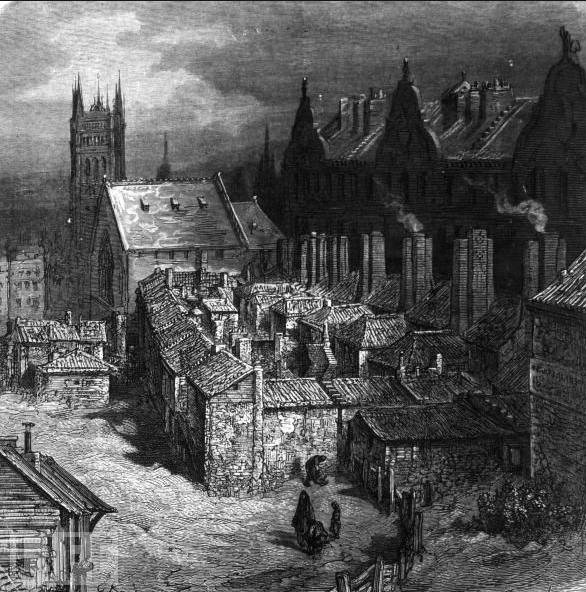
During the 19th century, London was the largest city in the world from about 1825, the world's largest port, and the heart of international finance and trade. The City was also the headquarters of most of Britain's shipping firms, trading houses, exchanges and commercial firms like railway companies and import houses. As one of the most industrialised cities, London was often cloaked in a heavy pall of smoke and pollution.

Related image
As the capital of a massive empire, London became a draw for immigrants from the colonies and poorer parts of Europe - it had a sizable Jewish community and a large Irish population made up of the many refugees from the Great Famine (1845-1849), who settled in an area known as "The Rookery". At one point, Irish immigrants made up about 20% of London's population. 

One component of our story centres around one of the oldest livery companies in London - The Worshipful Company of Skinners, an association of those engaged in the trade of skins and furs. In the present day the Company is an educational and charitable institution, supporting a number of schools. Livery companies are governed by a master and liverymen retain voting rights for the senior civic offices, such as the Lord Mayor, Sheriffs and City of London Corporation, its ancient municipal authority with extensive local government powers.

The Metropolitan Police
During the early 19th century, as London grew, it became evident that the locally maintained system of volunteer constables and "watchmen" was ineffective, both in detecting and preventing crime. Due to this, Royal Assent was given to the Metropolitan Police Act on 19 June 1829, placing the policing arrangements for the capital directly under the control of Sir Robert Peel. A new investigative force was formed as the "Detective Branch" in 1842. It took some time to establish the standards of discipline expected today from a police force - many were intoxicated whilst on duty, corruption was rife, and officers were physically assaulted.

Stromness
Situated in the southwestern part of Mainland Orkney, Stromness became important during the late seventeenth century when Great Britain was at war with France and shipping was forced to avoid the English Channel. Ships of the Hudson's Bay Company were regular visitors, as were whaling fleets. Large numbers of Orkneymen, many of whom came from the Stromness area, served as traders, explorers and seamen for both. 

Image result for stromnessBy the end of the 18th century, three-quarters of the Hudson's Bay Company's workforce in Canada was made up of Orkneymen. Trade continued to expand - with exports from Stromness including hides, feathers, fish (herring) and kelp. By 1841, Stromness had four inns, 34 public houses, a parish church, a post office, a library, three schools, a town hall, a museum and three banks.

Stromness also plays host to Skaill House, situated near the west coast of Mainland overlooking the Bay of Skaill and Skara Brae, and close to St Peter's Kirk. Not far from Skaill House, a Viking hoard was discovered in 1858 - considered one of the largest in Scotland.

John Rae
Image result for franklin's expedition
In 1854, Rae made contact with local Inuit, from whom he obtained much information about the fate of Franklin's lost naval expedition. His report to the Admiralty carried shocking and unwelcome evidence that cannibalism had been a last resort for some of the survivors. When it was leaked to the press, Franklin's widow Lady Jane Franklin was outraged and recruited many important supporters, among them Charles Dickens, who wrote several pamphlets condemning Rae for daring to suggest Royal Navy sailors would have resorted to cannibalism. In return, Rae argued that the Inuit (Esquimaux), whom Dickens viewed very negatively, are more likely to have killed the expedition's survivors. He was awarded prize money for finding evidence of the fate of Franklin's expedition.

Hudson's Bay Company
During its peak, the Company controlled the fur trade throughout much of the British-controlled North America. By the mid-19th century, the company evolved into a mercantile business selling a wide variety of products from furs to fine homewares. The Company functioned as the de facto government in parts of North America for nearly 200 years until the Company sold the land it owned (the entire Hudson Bay drainage basin, known as Rupert's Land) to Canada in 1869.


This is the world in which Carson sets her story with Birdie fleeing London for Stromness in search for a killer and to clear her name. There are many elements and layers to this story, and the author imbues Birdie with "the sight" which is particularly useful when linking past events (to which the reader has not been privy) with those events unfolding. It took me a little while to get into this story, and early on I was tempted to put it aside, but I am glad I persevered as the tale that unfolds is well-told (and well- researched), and gradually draws you ever deeper, from the gloomy narrow streets of London to the wilds of the Orkney Islands.

Sunday, March 15, 2020

Upcoming Blog Tour - The Canary Keeper

I am taking part in the upcoming blog tour for Clare Carson's "The Canary Keeper". And will post my review of the book on the appropriate date.  However, a brief synopsis of the novel follows below.


In the grey mist of the early morning a body is dumped on the shore of the Thames by a boatman in a metal canoe. The city is soon alive with talk of the savage Esquimaux stalking Victorian London and an eye witness who claims the killer had an accomplice: a tall woman dressed in widow’s weeds.

Branna ‘Birdie’ Quinn had no good reason to be by the river that morning, but she did not kill the man. She’d seen him first the day before, desperate to give her a message she refused to hear. But now the Filth will see her hang for this murder.

To save her life, Birdie must trace the dead man’s footsteps. Back onto the ship that carried him to his death, back to cold isles of Orkney that sheltered him, and up to the far north, a harsh and lawless land which holds more answers than she looks to find. 

Monday, June 17, 2019

The Doctor Watson Adventures by Patrick Mercer

Sherlock's Holmes's great friend Dr. Watson was usually happy to chronicle the cases of the master detective.  But occasionally he struck out alone.  And solved a mystery on his own.

Patrick Mercer tells the story of Sherlock Holmes's great friend Watson's formative years in the Army. It is a must-read for fans of Holmes, and for anyone who enjoys historical military fiction.


The Doctor Watson Adventures
Doctor Watson's War: 
Afghanistan. 1880.   A bloodied but unbowed young medic must fight in a war that will test both his courage and conscience to its very limits. Despite his own wound, despite the howling tribesman hounding his every step back to the walls of Kandahar, he will not forsake the injured soldiers and victims of battle who he has sworn to treat and protect. 

The most difficult to save of all though is Alisha Kahn, the beautiful and enigmatic fighting queen - shot down as she led the Afghans against the British and brought to the dressing station by Private 'Posh' Williams, the gentleman ranker.   Her warrior brothers want to save her, whilst the retreating troops can see no reason why she should live.

The terror and nobility of the events fought across blood-soaked desert sands – culminating in the Battle of Maiwand - will scar and inspire Doctor John H. Watson forever.


Doctor Watson's Charge:
The enigmatic army officer Captain JAC Smethwick is a veteran of the The Charge of the Light Brigade.  But when he visits Sherlock Holmes and Doctor Watson he has more on his mind than the conflict in the Crimea. There is a mystery surrounding the death of his former employer, Lord Cardigan.   Smethwick believes that the man responsible for his death is none other than the former Prime Minister, Benjamin Disraeli.

Holmes sends Watson off to Deene Park, Lord Cardigan's estate, to investigate and question the victim's widow - the colourful and flirtatious Adeline de Horsey.   But Watson starts to uncover an altogether more sinister and complex conspiracy.  And rather than unmask the murderer, Watson may become his next victim.  The game's afoot - but who is the hunter and who will be the prey?


Actor Nigel Stock.jpgDoctor Watson's Bout:
The British boxing champion Ezekial Shaw has been knifed to death. Yet the world's greatest consulting detective, Sherlock Holmes, seems indifferent towards the case.  Doctor Watson is intrigued, however, and starts an investigation of his own.  But his line of questioning soon causes him to cross paths with a certain Colonel Moriarty.  And it leads him into an affair with a possible suspect - Amelia, the sensual and seductive wife of Ezekial Shaw.

Yet as he gets closer to the mysterious truth, the boxing underworld stands in his way. And to keep the truth hidden, plans are made to murder the investigator.  Before the case is solved, Watson will have to fight his way out of tighter corner than any he ever found himself in with Holmes. 


Doctor Watson's Terror:
1882. The Irish Republican Brotherhood (the Fenians) are fighting for independence from the UK.  As Doctor Watson is walking back towards Parliament Square, two carriages collide in a serious accident. He rushes to help – and simultaneously a novel dynamite device is discovered outside the Home Office and defused before it can go off. 

During a subsequent visit to Sherlock Holmes, Watson receives a telegram from the Royal Irish Constabulary, asking him to visit Ireland, and the two earlier incidents start to seem related.  Once in Ireland, Watson and his own sidekick Bowler, find themselves embroiled in an assassination plot and are kidnapped by Fenian rebels. Can the two Englishmen escape from the rebel gang in time to prevent further murders? 


Doctor Watson's Battle:
Image result for doctor watsonSherlock Holmes, along with Doctor John Watson and, his friend and one time orderly, Bowler are working on a case involving two chemistry students from Belgrade. However, investigations have to be put on hold as the trio are to attend the Regimental Fete in Colchester.

There is much discussion about Watson’s latest amour, Mrs Daisy Lynch, a widow, and sister of Right Honourable, Major Nicholas Stomark MP. Stomark, also known as Scamper, turned tail from the conflict in Afghanistan when everyone else was attacking, although he doesn’t seem to remember it like that.

Due to Princess Charlotte’s attendance at the Regimental Fete, a special display is called for, the re-enactment of the denouement of Maiwand in Helmand. 

Dressed in costume, Watson and Bowler are roped in, together with the enthusiastic Scamper and Helena Lynch, Daisy’s sister-in-law. Helena is well known for her exploits and drug use, and being part of the Stomark circle. 

During the re-enactment a fatal accident occurs. But was it really an accident?  So follows another case for Sherlock and Watson.   But, things are not as easy to resolve as at first thought. Is there a murderer on the loose?  And can the pair catch him in time...?


Sunday, May 26, 2019

Royal Betrayal: The Great Baccarat Scandal of 1890 by Michael Scott

Royal Betrayal: The Great Baccarat Scandal of 1890 by [Scott, Michael]For two nights at a house party at Tranby Croft, the residence of one of the richest men in England, a card game is played, instigated by the Prince of Wales. One of the players, Lieutenant Colonel Sir William Gordon-Cumming Bt, Scots Guards, is accused of cheating. 


A classic Victorian melodrama: vast amounts of money, illegal gambling, the Royal Family, mistresses, bed-hopping, cover-up, deception and blackmail. 

The saga ranges from the wind-swept remoteness of Gordonstoun in Scotland, big game hunting in Africa and India, to life in the Guards in London and action in the Zulu Wars and Egyptian Campaign of 1882.

For the first time, the Gordon-Cumming family papers are brought to light, including many of Sir William’s diaries and letters, as well as letters from The Royal Archives at Windsor Castle that detail the anxieties amongst the Royal Family. 

Previously undiscovered, there are more than mere coincidental connections between Gordon-Cumming and the Intelligence community. What was he really up to and why didn’t the Prince, his close confidant and friend, bail him out? Views of present-day descendants of those involved are also revealed for the first time. Was Gordon-Cumming a cheat or not? Or was he the scapegoat for something which is shrouded in even more mystery? 


Saturday, April 27, 2019

Review: Time Travelling Professor by Elizabeth Crowens

Silent Meridian (Time Traveler Professor, #1)
Synopsis: Sir Arthur Conan Doyle is obsessed with a legendary red book. Its peculiar stories have come to life, and rumors claim that it has rewritten its own endings. Convinced that possessing this book will help him write his ever-popular Sherlock Holmes stories, he takes on an unlikely partner, John Patrick Scott, known to most as a concert pianist, but a paranormal investigator and a time traveler professor to a select few. Like Holmes and Watson trying to solve a mystery, together they explore lost worlds and their friendship is tested to the limits when they go back in time to find it. Both discover that karmic ties and unconscionable crimes have followed them like ghosts from the past, wreaking havoc on the present and possibly the future.


I found the storytelling very disjointed; I wasn't sure there was any real structure apart from positing the narrator into various historical scenarios strung together on some invisible thread that at various times flirted with past-life regression and astral travel. Too many themes crammed together. that the narrative felt like it was tripping over itself.

I have the second in the series - A Pocketful of Lodestones - and won't be reading or reviewing it anytime soon.


Sunday, November 18, 2018

Review: The Lady In The Cellar by Sinclair McKay

On 8th May 1879, the corpse of former resident, Matilda Hacker, was uncovered by chance in the coal cellar. The investigation that followed this macabre discovery stripped bare the shadow-side of Victorian domesticity, throwing the lives of everyone within into an extraordinary and destructive maelstrom. For someone in Number 4 Euston Square must have had full knowledge of what had happened to Matilda Hacker. Someone in that house had killed her. How could the murderer prove so amazingly elusive?

I love this type of mystery wherein a crime from some time past, with an unsatisfactory conclusion, is dusted off to see if further light can be shed on the mystery at hand. This is not a fictional account of what may or may not have happened; it is an open factual investigation which looks at the crime, the suspects, the criminal investigation at the time, and the conclusion.

Sinclair McKay gives us an overview of the times, in which the population was moving from a closed style of social system, to one in which was often transient, diverse, and anonymous. From an investigative perspective, the CID section of Scotland Yard was newly established and forensic science was developing yet rudimentary. Inspector Charles Hagen was selected due to his close associations and work with the German immigrant community (I liked that fact that he was a contemporary of Inspector Abbeline - later of Ripper fame).

The story as presented was fairly lengthy - I felt some of the components could have quite easily have been condensed: social commentary; family, witness, suspect backgrounds; the investigations and trials (in which the same evidence was presented thrice over). A number of possible scenarios are put forward at the end (though again inconclusive) after a wrap of of where everyone connected to the case ended up.

I realise a lot of research goes into the fleshing out these stories; however, sometimes less is more. When the reader is bombarded with too much information, attentions wander, pages are skipped, and the anticipated enjoyment of reading is lessened. Unfortunately, this is what I experienced. I think the inclusion of some visual aids - street plans, newspaper clippings, etc may have heightened my reading pleasure (I do look forward to these - my edition did not have these, however they may appear in the final published version). And, I wonder if presenting in a more abridged version (ie: adapted for television) may have conveyed enough information for a still engrossing story. 

Having said that, there are many who will definitely love this story in the format presented - though I will add that I did not dislike the book itself just felt a little more subjective editing was required.

Further Reading:
@ Old Bailey Proceedings - Siwerin Bastendorff
@ Town & Country Journal - Euston Square Mystery
@ Canterbury Archaeology - Intriguing Story of Matilda Hacker
@ Murder Research - Victorian Trials 1870 - 1879
@ Mysteries of Police & Crime by Arthur Griffiths (Euston Square Mystery, pg 453)