Showing posts with label libraries. Show all posts

Sunday, March 29, 2020

Books: Medieval Books

Prince of the Press: How One Collector Built History’s Most Enduring and Remarkable Jewish Library by Joshua Teplitsky
"Prince of the Press" by Joshua TeplitskyThe story of one of the largest collections of Jewish books, and the man who used his collection to cultivate power, prestige, and political influence

David Oppenheim (1664–1736), chief rabbi of Prague in the early eighteenth century, built an unparalleled collection of Jewish books and manuscripts, all of which have survived and are housed in the Bodleian Library at Oxford. His remarkable collection testifies to the myriad connections Jews maintained with each other across political borders, and the contacts between Christians and Jews that books facilitated. From contact with the great courts of European nobility to the poor of Jerusalem, his family ties brought him into networks of power, prestige, and opportunity that extended across Europe and the Mediterranean basin. Containing works of law and literature alongside prayer and poetry, his library served rabbinic scholars and communal leaders, introduced old books to new readers, and functioned as a unique source of personal authority that gained him fame throughout Jewish society and beyond. The story of his life and library brings together culture, commerce, and politics, all filtered through this extraordinary collection. Based on the careful reconstruction of an archive that is still visited by scholars today, Joshua Teplitsky’s book offers a window into the social life of Jewish books in early modern Europe.


The Book in the Renaissance by Andrew Pettegree
"The Book in the Renaissance" by Andrew PettegreeThe dawn of print was a major turning point in the early modern world. It rescued ancient learning from obscurity, transformed knowledge of the natural and physical world, and brought the thrill of book ownership to the masses. But, as Andrew Pettegree reveals in this work of great historical merit, the story of the post-Gutenberg world was rather more complicated than we have often come to believe.

The Book in the Renaissance reconstructs the first 150 years of the world of print, exploring the complex web of religious, economic and cultural concerns surrounding the printed word. From its very beginnings, the printed book had to straddle financial and religious imperatives, as well as the very different requirements and constraints of the many countries who embraced it, and, as Pettegree argues, the process was far from a runaway success. More than ideas, the success or failure of books depended upon patrons and markets, precarious strategies and the thwarting of piracy, and the ebb and flow of popular demand. Owing to his expert and highly detailed research, Pettegree crafts an authoritative, lucid, and truly pioneering work of cultural history about a major development in the evolution of European society.


The Bookshop of the WorldMaking and Trading Books in the Dutch Golden Age by Andrew Pettegree and Arthur der Weduwen
40887372The untold story of how the Dutch conquered the European book market and became the world's greatest bibliophiles

The Dutch Golden Age has long been seen as the age of Rembrandt and Vermeer, whose paintings captured the public imagination and came to represent the marvel that was the Dutch Republic. Yet there is another, largely overlooked marvel in the Dutch world of the seventeenth century: books.

In this fascinating account, Andrew Pettegree and Arthur der Weduwen show how the Dutch produced many more books than pictures and bought and owned more books per capita than any other part of Europe. Key innovations in marketing, book auctions, and newspaper advertising brought stability to a market where elsewhere publishers faced bankruptcy, and created a population uniquely well-informed and politically engaged. This book tells for the first time the remarkable story of the Dutch conquest of the European book world and shows the true extent to which these pious, prosperous, quarrelsome, and generous people were shaped by what they read.

Saturday, October 5, 2019

US College Students Just Want Normal Libraries

Yet much of the glitz may be just that—glitz. Survey data and experts suggest that students generally appreciate libraries most for their simple, traditional offerings: a quiet place to study or collaborate on a group project, the ability to print research papers, and access to books. Notably, many students say they like relying on librarians to help them track down hard-to-find texts or navigate scholarly journal databases. “Google can bring you back 100,000 answers,” as the writer Neil Gaiman once said. “A librarian can bring you back the right one.”

read more @ The Atlantic

Saturday, April 6, 2019

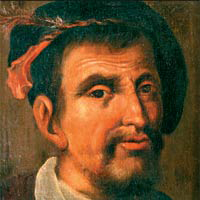
Hernando Colon - The man who tried to read all the books in the world


129,864,880. That’s the number of books in the world, according to an estimate by Google Books, which since its launch in 2005 has been trying to scan them all, convert them to searchable text using optical character recognition and then make them publicly available online. Although Google Books’ hopes have been slowed by wrangles over copyright and fair use, if it succeeds it could become the largest online body of human knowledge ever available.

Half a millennium earlier in Seville, Spain, Hernando Colón (1488–1539) had the same ambitious aim: to create a library that would be universal in a way never before imagined because it would contain everything. And Colón really did try to collect everything: from precious manuscripts to books by unknown authors, from flimsy pamphlets to tavern posters, from weighty tomes to throwaway ephemera.

Colón’s bibliomania took him back and forth across Europe for three decades. According to Dr Edward Wilson-Lee, from Cambridge's Sidney Sussex College and the Faculty of English, he bought 700 books in Nuremburg over Christmas in 1521, before passing on to Mainz where he bought a thousand more in the course of a month. In a single year in 1530, he visited Rome, Bologna, Modena, Parma, Turin, Milan, Venice, Padua, Innsbruck, Augsburg, Constance, Basle, Fribourg, Cologne, Maastricht, Antwerp, Paris, Poitiers and Burgos, voraciously buying all he could lay his hands on.

Today, just over 3,000 books of Colón’s library remain. Until now, the life of this extraordinary man has largely escaped notice; it’s taken another revolution to grasp how visionary he was in recognising the power of tools to order the world of information.


read more from University of Cambridge

Saturday, December 15, 2018

Penn library will return 9th-century documents found to have been stolen from Italian archive

From The Inquirer:

The University of Pennsylvania has voluntarily agreed to return two ancient parchment documents to an Italian archive from which they had been stolen, apparently in the 1990s, according to a formal stipulation filed in federal court in Philadelphia last month.

The heist was the work of an unknown thief and happened years before the papers surfaced at Penn.

The documents, which record land transactions in the 820s in southern Italy, were acquired in the late 1990s by the late collector Lawrence J. Schoenberg, who bestowed his collection of manuscripts and books on the university in 2011.

The Schoenberg Collection at the University of Pennsylvania Libraries, consisting of about 300 separate items, is particularly rich in medieval and Renaissance books and manuscripts.


read more @ The Inquirer

Monday, October 1, 2018

Rules of a Medieval Library

Image result for medieval librariesFrom Medievalists:

When universities started to emerge in Europe during the eleventh and twelfth centuries, they soon also became the most important centres of knowledge on the continent. Their libraries would keep hundreds of books on their shelves, with many of the more important volumes actually chained to desks.

We have few details about how these libraries operated, but one document that sheds light on their operations and rules was created at the University of Angers in western France. Written in the year 1431, it was a kind of rubric to explain what type of rules existed for running the library, although they do not go into specific detail.

read more here @ Medievalists


Sunday, September 9, 2018

Fire at Brazil’s National Museum Threatens Hundreds of Years of History


A fire engulfed the National Museum of Brazil on Sunday night, ravaging the stately, 200-year-old museum in Rio de Janeiro and threatening the years of history encapsulated inside.

Aerial video posted by the television station Globo showed roaring flames and billowing smoke overtaking the large museum. Windows on multiple floors across the museum displayed a burning orange color, and the glow of the fire lit up the dark night sky.

The destruction to the building was significant, and it is unclear whether any historical artifacts had been saved. The museum housed a collection of more than 20 million items, including Egyptian mummies, Greco-Roman artifacts, dinosaur fossils and the oldest human fossil in the region, known as Luzia.


read more here 


Vast Theft of Antiquarian Books Sends a Shudder Through a Cloistered World of Dealers


In this niche world based on trust, where confidants are currency and handshake deals are commonplace, the arrest of a prominent dealer is a shocking suggestion of deceit.

While there have been other infamous rare book thefts, occasionally by industry insiders, the Carnegie Library case, according to prosecutors, notably involved a collaboration between a librarian and a dealer.

“That is absolutely unique,” said Mr. McDade, an expert on rare book thefts who has written several books on the subject. “You just don’t see it.”

As the library archivist, Mr. Priore had access to a collection of rare books and other items at the public Carnegie Library of Pittsburgh. As a well-known dealer and owner of the Caliban Book Shop in Pittsburgh, Mr. Schulman had access to a network of potential buyers.

“It was an amazing setup that was close to foolproof,” Mr. McDade said, noting that most rare book thieves get caught trying to sell their goods.

read more here @  The New York Times

Sunday, August 19, 2018

Library of Makkah Grand Mosque is ‘beacon of knowledge’

From Arab News:

The library of Makkah Grand Mosque ... was named the Library of Makkah Grand Mosque in 1357 AH when King Abdul Aziz bin Abdul Rahman Al-Saud set up a committee of Makkah scholars to study its conditions and organize it in accordance with its status and importance. 

The project is located on the Kaaba Mountain Road on the northwestern side of the services building for the third Saudi expansion project and is crossed by the first ring road.

The multi-purpose library project aims to establish a scientific center and a world-class cultural and knowledge center in the holy capital centered on a central library of 20 million titles.


read more here @ Arab News

Friday, June 29, 2018

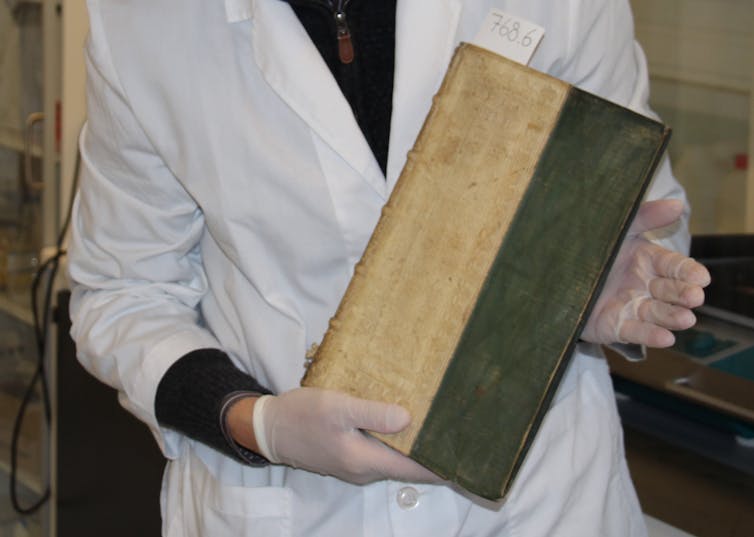
How we discovered three poisonous books in our university library


Some may remember the deadly book of Aristotle that plays a vital part in the plot of Umberto Eco’s 1980 novel The Name of the Rose. Poisoned by a mad Benedictine monk, the book wreaks havoc in a 14th-century Italian monastery, killing all readers who happen to lick their fingers when turning the toxic pages. Could something like this happen in reality? Poisoning by books?

Our recent research indicates so. We found that three rare books on various historical topics in the University of Southern Denmark’s library collection contain large concentrations of arsenic on their covers. The books come from the 16th and 17th centuries.

The poisonous qualities of these books were detected by conducting a series of X-ray fluorescence analyses (micro-XRF). This technology displays the chemical spectrum of a material by analysing the characteristic “secondary” radiation that is emitted from the material during a high-energy X-ray bombardment. Micro-XRF technology is widely used within the fields of archaeology and art, when investigating the chemical elements of pottery and paintings, for example.


read more here @ The Conversation

Sunday, May 20, 2018

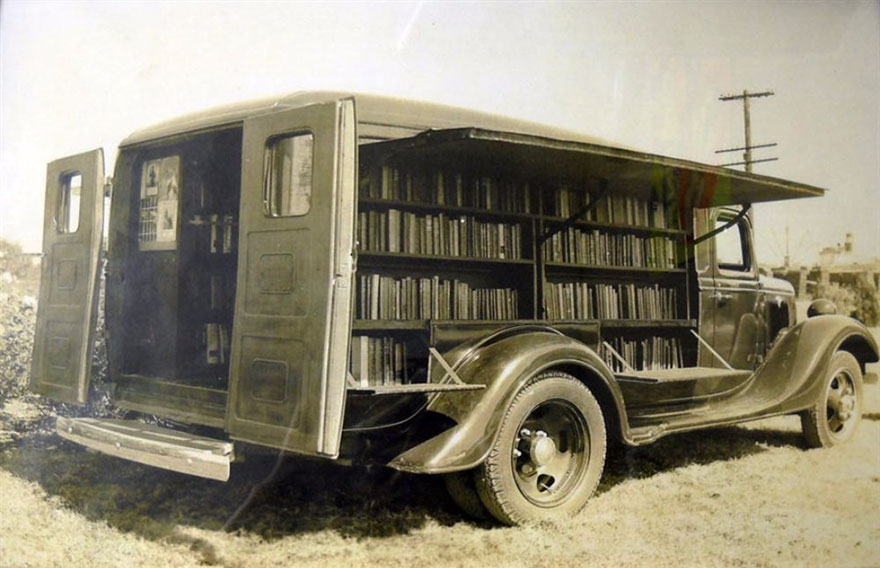
Bookmobiles - Now a thing of the past


The bookmobile’s design is such that once parked, readers could easily access its treasured literary items. Now it’s more like a thing of the past, but back in the day, this way of distributing literature to people functioned perfectly.

It was working exceptionally well in remote areas such as villages or suburbia – places that otherwise did not have an access to a nearby library.

As of more recent times, there has been a 20 percent decline reported in bookmobiles in the years between 1990 and 2003. Nevertheless, the digital revolution of the 21st century and the availability of many books online just may be a good reason why bookmobiles are now thing of the past. Despite that, at current, some bookmobiles still function well, especially in developing parts of the world, fulfilling their initial purpose – to bring the books to some of the most remote places around.


Sunday, April 29, 2018

Every Library Has a Story to Tell


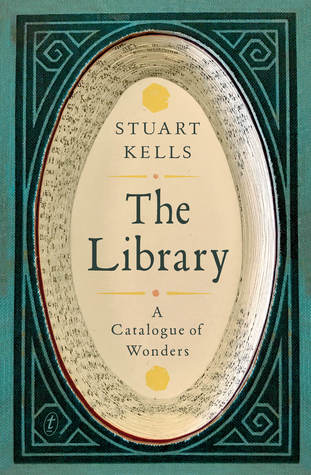
The Library: A Catalogue of Wonders
Libraries, writes Stuart Kells, a historian of the book trade, are “human places … full of stories.” Kells’s new book, The Library: A Catalogue of Wonders, offers a history that begins before the written word and follows the development of book collections through the digital age. At times, he takes a lofty view. “What exactly are libraries for?” he asks, after touching on the Library of Alexandria, medieval monasteries, erotic collections, the Vatican’s closed stacks, private collections, and university libraries, along with writers’ libraries, library fauna, and other curiosities. He takes a few stabs the answer. “Libraries are an attempt to impose order in a world of chaos,” he writes. “They are places of redemption.”

Sunday, November 5, 2017

Horse-Riding Librarians: Bookmobiles of the Great Depression

The Pack Horse Library initiative, which sent librarians deep into Appalachia, was one of the New Deal’s most unique plans. The project, as implemented by the Works Progress Administration (WPA), distributed reading material to the people who lived in the craggy, 10,000-square-mile portion of eastern Kentucky. The state already trailed its neighbors in electricity and highways. And during the Depression, food, education and economic opportunity were even scarcer for Appalachians.


When materials became too worn to circulate, librarians made them into new books. They pasted stories and pictures from the worn books into binders, turning them into new reading material. Recipes, also pasted into binders and circulated throughout the mountains, proved so popular that Kentuckians started scrapbooks of quilt patterns, too.

In 1936, packhorse librarians served 50,000 families, and, by 1937, 155 public schools. Children loved the program; many mountain schools didn’t have libraries, and since they were so far from public libraries, most students had never checked out a book. ”‘Bring me a book to read,’ is the cry of every child as he runs to meet the librarian with whom he has become acquainted,” wrote one Pack Horse Library supervisor. “Not a certain book, but any kind of book. The child has read none of them.” 

read more here @ The Smithsonian

Sunday, October 1, 2017

The Library of William O'Brien


William O'Brien (1832-1899)
About four months ago The Guardian newspaper online ran an article about the forthcoming sale of the personal library of William O'Brien, an Irish judge and bibliophile. A large collection of books held in the Jesuit Library near Dublin for over a century, including many items of incunabula (books published prior to 1501), will go up for sale. The value of those being put up for sale is estimated at £1,500,000 (or about $1.9 million).


According to the Irish Times, Sotheby's described the collection as "one of the most important of its kind to come to the market." It is said to contain rare printed books from the 15th century, early Shakespeare editions, literature, and medieval manuscripts. A catalogue puiblished in 1932 by the Milltown Park Library (Jesuits) listed 117 items bequeathed to it by William O'Brien in 1899. An indication of the size of the collection is that the University of Cambridge had one of the largest libraries at the beginning of the 14th century, which consisted of 122 books.


read more here:
@ The Guardian

@ Sotherby's Blog - Introduction: William O'Brien
Sotherby's- auction results


Sunday, September 24, 2017

10 Legendary and Mysterious Libraries of the Ancient World

Beyond Science has listed ten of the most remarkable libraries in the world.

In today’s list, we take a step back thousands of years to days when information and knowledge are stored and jealously guarded in giant libraries that are often the first monuments to be destroyed and sacked in times of war or invasion. Libraries that have shaped the world we now know of and the civilizations that have walked the earth, each contributing to humanity’s progress.


Thursday, June 22, 2017

Unique library Remained untouched for 150 years and now goes under the hammer

How could I not re-post this story that was sent to my by my Facebook friend Jean Doorn.
From: De Redactie dot be
An exceptional library of the
18th century by a French intellectual who fled the French Revolution to Bouillon, will be auctioned next week. The library, both books and the furniture was not touched in nearly 200 years. "Utterly unique. It has pulled the door closed behind him, then no one has ever touched those books, "said the master safe. The rich collection of books there are 182 extremely rare.
It is undoubtedly the dream of every book collector: entering an authentic 18th century library from Bouillon where no book was touched in almost two hundred years. It happened to a Belgian expert from the Brussels auction Henri Godts.
The expert came across the unique library when some relatives of the original owner stepped into the Brussels auction house and dropped that they had an untapped library in the south of our country.
What did the expert revealed the life work of a French intellectual who fled to Bouillon during the French Revolution. About who is right, the family should not be disclosed. But most notable: any book that was saw in the library, there was exactly like in the original owner so left. The reason can only guess for now.
And not only the books were still in their original condition, including the furniture such as tables, chairs and seats are at least 150 years old and almost untouched.
The owner of the library apparently had a fondness for geography, ethnography and exoticism, and the auction was held in the library then 182 authentic 18th and 19th century, rare books with exceptional descriptions of countries and regions, peoples and cultures of the most exotic locations.
Expert Godts of the auction was ecstatic about the experience: "The books are all kept in good condition and still look like they are at that time rolled off the press in their original paper cover, "he said.

As Jean commented:
A library and sale with a lot of questions: (1) Why was it not touched for 150-200 years? (2) Why does the family not want to share the name of the French intellectual? (3) What's the relation between family and this intellectual? (4) What's the story behind him/ her? (5) Analysis of collection (6) Which books were (un)read?


Saturday, June 10, 2017

Boston library to return historical artifacts to Italy

The Boston Public Library is returning to Italy medieval manuscripts and a volume of works, ending in one case a mystery dating back seven decades.  The items include a manuscript from 1392, an illuminated leaf from a manuscript dating between 1418 and 1422, and a collection of works by Bernardino Telesio, published in 1590.

"Boston Public Library purchased these rare and important materials in good faith for the public to see and study and we took our stewardship of them seriously during the many years that they were in our care," said Beth Prindle, the library's head of Special Collections. "We are fully committed to their safe return."

read more here @ Daily Sabah


Monday, June 5, 2017

The Book on the Book Shelf by Henry Petroski

The author of The Pencil has now written a book about bookshelves. Boring you say? I wondered about that, too, but from the first page I was trapped. Henry Petroski is the author of The Book on the Book Shelf. It turns out he also authored a staggeringly long paean to the humble pencil.

The Book on the Book Shelf is an interesting look at the evolution of book shelves from Alexandria all the way to modern libraries with all sorts of digital tools and equipment to keep track of, sort, and shelve tens of thousands of books. I must admit I was incredulous that such a book existed, or would be widely read, yet, I secretly yearned to find out what it is all about. 

read more here@ KWBU

Monday, February 27, 2017

Protect Your Library With Horrifying Book Curses


Given the extreme effort that went into creating books, scribes and book owners had a real incentive to protect their work. They used the only power they had: words. At the beginning or the end of books, scribes and book owners would write dramatic curses threatening thieves with pain and suffering if they were to steal or damage these treasures.

Drogin’s book, published in 1983, is the most thorough compendium of book curses ever compiled. 

To those historians, the curses were curiosities, but to Drogin they were evidence of just how valuable books were to medieval scribes and scholars, at a time when even the most elite institutions might have libraries of only a few dozen books.

Read More Here @ Atlas Obscura


Wednesday, February 22, 2017

The Faded Page


is an archive of eBooks that are provided completely free to everyone. The books are produced by volunteers all over the world, and we believe they are amongst the highest quality eBooks anywhere. Every one has been scanned, run through OCR software, proofed, formatted and assembled extremely carefully, using hundreds of volunteer hours. These books are public domain in Canada (because we follow the Canadian copyright laws), but if you are in another country, you should satisfy yourself that you are not breaking the copyright laws of your own country by downloading them.

Access the library here @ fadedpage.com

Internet Sacred Text Archive

Internet Sacred Text Archive - the largest freely available archive of online books about religion, mythology, folklore and the esoteric on the Internet. The site is dedicated to religious tolerance and scholarship, and has the largest readership of any similar site on the web.