Showing posts with label spies. Show all posts

Saturday, August 7, 2021

Review: A State of Secrecy by Alison Lewis

Synopsis: Secret police agencies such as the East German Ministry for State Security kept enormous quantities of secrets about their own citizens, relying heavily on human modes of data collection in the form of informants. To date little is known about the complicated and conflicted lives of informers, who often lived in a perpetual state of secrecy. This is the first study of its kind to explore this secret surveillance society, its arcane rituals, and the secret lives it fostered.

Through a series of interlocking, in-depth case studies of informers in literature and the arts, A State of Secrecy seeks answers to the question of how the collusion of the East German intelligentsia with the Stasi was possible and sustainable. It draws on extensive original archive research conducted in the BStU (Stasi Records Agency), as well as eyewitness testimony, literature, and film, and uses a broad array of methods from biography, sociology, cultural studies, and literary history to political science and surveillance and intelligence studies. In teasing out the various kinds of entanglements of intellectuals with power during the Cold War, Lewis presents a microhistory of the covert activities of those writers who colluded with the secret police.


Lewis begins with a rather apt observation that no-one escapes the notice of the Stasi octopus ... informers and collaborators were the Trojan horses of the counter-revolution.

Lewis presents us with five interlaced biographical studies of writes who were Stasi informers - either by choice or by coercion. Through the medium of these cultural icons, Lewis "sets out to explore the secret surveillance society that enabled, controlled and subverted cultural life in the GDR". To this end, this is a well constructed study of the Stasi apparatus and its use of cultural diplomacy as a weapon against the subversive activities of its citizenry. However, by the 1980s, as people found the courage to refuse to collaborate, the Stasi found themselves with a distinct shortage of informers.

We find that through the stories presented that the Stasi preferred to "work" with people with intrinsic rather than extrinsic motivations - patriotism and ideology. All those featured had crossed paths at one point or another during their lifetimes - all joined for varying reasons. We find that the likes of Paul Wiens believed that the emancipation of Jews would come about through communism rather than fascism, and was one who enjoyed the "benefits" of collaboration. His daughter Maya was part of the Stasi machinery from an early period, though as a struggling novelist, became embittered with the struggle against censorship. Student Helga Navak was blackmailed into collaborating, but proved to be the least effective. Paul Gratzik was ideologically motivated, however still enjoyed the financial and materials gains to be had. And lastly Sascha Anderson, whose "employment" is still being questioned today - did he volunteer or was he recruited.  Through these five, Lewis reveals an unholy alliance between the personal and political, and the private and the secret realm.

For those wishing to expand upon and enhance their knowledge and understanding of Stasi activities and the GDR machinery, this will make a compelling read. It is a well researched tome that explores the recruitment process, the motivations and ultimately, the justifications for collaboration. It also demonstrates that the Stasi did not necessarily need to employ "good cop bad cop" thug tactics to get what it wanted - a little sweetner here, a bit of blackmail there worked just as well. As the saying goes, you catch more flies with honey than vinegar - and the Stasi demonstrate this idiom rather well.


There are a number of other books dealing with specific aspects of the Stasi's use of certain societal and cultural segments, and this will prove a valuable addition to that core study group.

Sunday, April 25, 2021

Too Secret Too Long by Chapman Pincher

Chapman Pincher, the Cold War and the spy scandals which shocked the nation.

Chapman Pincher, the “lone wolf of Fleet Street”, is now regarded as the godfather of investigative journalism. During the Cold War era he became notorious as a relentless investigator of spies, uncovering the shocking extent of Soviet infiltration of the British Secret Services – and the collusion and incompetence at the heart of the British Establishment.


Pincher’s Their Trade is Treachery, published in 1981, became an instant classic. While helping to unmask the Cambridge five, the conclusion he drew was that there must be someone right at the heart of the Secret Services who allowed these men to go undetected. And he concluded that it could be none other than Roger Hollis, then head of MI5 (as did Peter Wright in his autobiography, Spy Catcher).

In this sequel he presents a compelling case against Hollis, with a torrent of new disclosures about the appalling extent to which the British secret services had been penetrated and manipulated by Soviet agents. Pincher builds evidence that Hollis, the man he calls ‘Spy of the Century’, must have colluded. Working with him was a woman, Moscow trained, of such dedication and courage that she qualifies to be regarded as the most successful female spy ever.

Too Secret Too Long paints a riveting picture of Cold War espionage, of corruption within the British Secret Service and the cover-ups by successive governments.

Sunday, October 27, 2019

Review: Best of Enemies by Gus Russo & Eric Dezenhall

The thrilling story of two Cold War spies, CIA case officer Jack Platt and KGB agent Gennady Vasilenko -- improbable friends at a time when they should have been anything but.

Two dedicated agents of opposing counter-intelligence agencies who become friends - a buddy story.  Who were these men.  On the one hand we have Gennady Vasilenko, a dedicated KGB and on the other, "Cowboy" Jack Platt of the CIA.  Both were given the task of trying to turn the other into a double agent - this was, we are told, was never going to happen as both were strongly patriotic and dedicated agents.

After a series of carefully structured meetings, it was found that both shared the same interests and so continued to meet on a regular basis (under the cover of work) until Vasilenko returned to Moscow three years later.  When Vasilenko is then posted to Guyana, Platt goes out of his way to make contact, even after Platt retires from the CIA.  All the while both agencies are wondering why these men are still in contact as it is blatantly obvious to one and all that neither had any intention of turning.  As as result, it is Vasilenko who comes under closer scrutiny by the KGB and is arrested then fired from the KGB.  Vasilenko suspects Platt has betrayed him, whilst outwardly Platt seeks revenge on those that did.

Despite knowing that both are under the ever watchful eye of the KGB who want him brought down a peg or two, Vasilenko continues to tempt fate by either reaching out to Platt or accepting Platt's overtures (which seem to come with some sort of request for assistance).  Against the back-drop of the mole hunting activities of the CIA and FBI (1990s), Vasilenko continues to reach out to Platt and takes risks, which only raises the KGB's suspicions that he was turned afterall.  

It was during this mole hunt that Platt reaches out to Vasilenko for assistance which would lead to the arrest of one of the US's more notorious spies - Robert Hassan.  For Vasilenko, this turns out to be a fateful decision, and when he discovers he inadvertantly played a role in this, he is quite naturally furious as despite his statements to the contrary, he comes across in this episode, as working for the CIA.  This will come to roost a few years later when - after a small paragraph in a 2002 book written by David Wise reaches Russian authorities -Vasilenko is arrested.

"... Gennady's relationship with Jack had been insanely reckless and had provoked the Russians into taking an understandable, if draconian, retalitory actions.."

Platt's frequent attempts at intercession through various channels made it look like Vasilenko was guilty of the charges brought against him. Vasilenko is finally released in a swap for the Russian illegals discovered in the US - but the kicker - he has to admit to being the one thing he strenuously denied being through those years of imprisonment and torture - a US spy. Vasilenko and family come to the US and the rest is history.

Jack Platt (left) and Gennady Vasilenko (right)


Whilst obviously written for the mass market, I found this to be a conflicting read for me. I was interested to know how the two men - Jack Platt and Gennady Vasilenko - managed to become close friends. Yet both men come off as arrogant, self-absorbed, renegades, who both thought themselves untouchable and assumed that everyone else saw them as they saw themselves, and whose respective agencies seemingly put up with despite going totally against the grain, that I felt no empathy with either of them.

For me, the striking thing to come out of all of this was how one-sided this friendship seemed to be. Valisenko seems to be taking all the risks and makes all the overtures (after Platt's initial contact), and appears to have come out of it all extremely worse for wear - used even by Platt.  In Michael Smith's "Anatomy of a Spy", he discuss the "unwitting agent" - and this to me sums up Vasilenko's position.

There's a lot of school boy hi-jinks and very little espionage - except for the revealing of two spies, but by this stage both men were actually no longer members of their respective agencies but still, somehow, managed to stay in the game.

The more I read this book, the more I wanted to slap Vasilenko across the head with it or throw it at Platt that is how much both men infuriated me. Either that, or it was the writing style of both authors (journalists, documentary producers) that just failed to convey any sense the personal to attract me to wanting to know more of their stories beyond what was written here.

If you are interested in this genre, you will no doubt pick it up and read at some stage.


see also 


Friday, October 11, 2019

Review: The Anatomy of a Spy by Michael Smith

46779497. sy475
Synopsis: Why do people put their lives at risk to collect intelligence? How do intelligence services ensure that the agents they recruit do their bidding and don't betray them? What makes the perfect spy? Drawing on interviews with active and former British, American, Russian, European, and Asian intelligence officers and agents, Michael Smith creates a layered portrait of why spies spy, what motivates them, and what makes them effective.

Love, sex, money, patriotism, risk, adventure, revenge, compulsion, doing the right thing— focusing on the motivations, The Anatomy of a Spy presents a wealth of spy stories, some previously unknown and some famous, from the very human angle of the agents themselves. The accounts of actual spying extend from ancient history to the present, and from running agents inside the Islamic State and al-Qaeda to the recent Russian active measures campaigns and operations to influence votes in the UK, European Union, and United States, penetrating as far as Trump Tower if not the White House.


This is a history of espionage and betrayal, peppered with real stories, predominantly from the 20th century.  Whilst outlining the difference between a spy and an agent, this book explores the motives for espionage under seven main headings, all of which cross over into each other. So why do spies spy: sex, money, tribal loyalty, revenge, control, ideology, compromise, ego, patriotism, adventure or just the right thing to do.

In summary -
(1) Sexual Relationships: the use of the honey trap, sexual coersion and blackmail.
(2) Money: contraband as currency, no loyalty when selling to the highest bidder, the need for money; unreliable method of recruiting and obtaining information.
(3) Patriotism: doing something for the good of your country, use of civilians (expats or business folk), undermining from within to bring down the rival regime (trojan horse), or the recruitment of citizens of occupied territories.
(4) Adventure: risk takers, egotists, fantasists, psychopaths, self obsession, wounded pride.
(5) Revenge: losers in a civil war, death of a loved one, exiled emigre population, anger at the ruling regime.
(6) Right Thing To Do: ideology, moral duty, belief, feeling of belonging, support for the underdog.
(7) Unwitting Agents: exertion of influence, covert use of someone without their knowledge, tactics of deception and confusion, cybercrime, whistle-blowing.

Some of these larger than life characters I was familiar with from prior reading - though not in such detail as provided here. Fleming is well featured as is that near-fictional Reilley Ace of Spies. None of these fantastical schemes would get past HR today and you are often left wondering how so many of them actually succeeded.

I was particularly interested in wartime espionage and the Cold War, as we moved further closer to our own time, my interest waned a little - but that was just me as I found the "old school" spycraft was more interesting - the human element rather than the current, modern day cybercrime and whistle-blowing (spying from a distance).

If this is your genre, it's well worth the read. 


Saturday, December 29, 2018

A Spy's Life - An Eclectic Selection

An eclectic selection of titles featuring that all time favourite character in novels - the spy.

A Spy's Journey by Floyd Paseman
For thirty-five years, Floyd Paseman served in the Operations Directorate of the Central Intelligence Agency. From spy in the field to the top ranks of the Company's career agents, he experienced it all as well as seven different presidential administrations. While Paseman's account of his long service has enough real-life derring-do to keep the reader engaged, of even greater interest, however, are Paseman's observation on politics and the CIA, especially how change of presidential administrations could bring sweeping, and often negative changes to the agency.

Blowing My Cover: My life as a CIA Spy and Other Misadventures by Lindsay Moran
This is a frothy, lightweight, and highly entertaining memoir of life in the CIA by a female case officer who had absolutely no business being there. Lindsay Moran served in the Agency from 1998 to 2003. She trained as a case officer, served one unsuccessful tour overseas, and has written an account of her adventures that may leave the reader wondering which was worse, Ms Moran as a spy or the CIA as an agency.

Agente: Female Secret Agents in World Wars, Cold Wars and Civil Wars by Douglas Boyd
This book records the lives of the "agentes" and investigates the powerful motives that drove them to undertake such dangerous work—like patriotism, ideology, love and revenge. The book is full of all sorts of trickery and treachery, double and even triple crossing, daring escapades and escapes, and death in the experiences of these women, many of whom are lesser known in the annales of history.

Spy of the Century: Alfred Redl and the Betrayal of Austria-Hungary by John Sadler & Silvie Fisch
Redl was a rare Austro-Hungarian officer who came from quite modest roots, virtual poverty in fact. Gifted with a brilliant mind and with a little luck and influence, Redl secured a commission, and eventually became a staff officer and rose to colonel. At some point Redl began spying for Russia. As the authors note, his motives are unclear, certainly his fondness for high living may have played a role, but he may also have been blackmailed into espionage, as the Russians were early aware of his homosexuality.

The Widow SpyThe Widow Spy by Martha D Peterson
This is a first hand account of a true Cold War spy operation in Moscow, told exclusively by the CIA case offiicer who lived this experience. She was one of the first women to be assigned to Moscow, a very difficult operational environment. Her story begins in Laos during the Vietnam War where she accompanied her husband, a CIA officer. She describes their life in a small city in Laos, ending with the tragic death of her husband. Then her own thirty year career begins in Moscow, where she walks the dark streets alone, placing dead-drops and escaping the relentless eye of the KGB. Experience her arrest and detention in Lyubianka Prison, as only she can relate it.

Who's Who In espionage by Ronald Payne & Christopher Dobson
MI6, the CIA and SMERSH are amongst the many intelligence services that have been exploited by writers of fiction in recent times. Unlike some of their fictional counterparts, however, intelligence officers have evolved from adventurers to career professionals, mirroring their parent services’ similar shift.  Following years of research into the world of intelligence, Dobson and Payne have profiled over three hundred personalities from the inter-war years to the early 1980s.  From effective spymasters like ‘C’ to the less well-known operatives such as Colonel ‘Z’, their stories are too captivating to remain untold.

Saturday, May 26, 2018

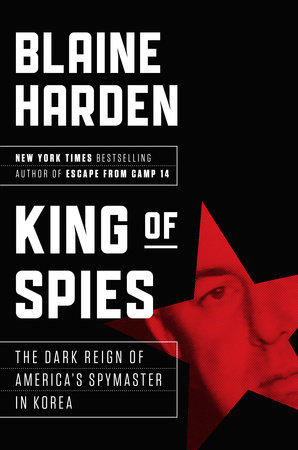
"King of Spies: The Dark Reign of America's Spymaster in Korea"

Image result for king of spies blaine hardinPatrick McEachern reviews King of Spies by Blaine Hardin for 38 North:

Blaine Harden has written another captivating narrative on Korea, this time telling the story of an American military intelligence operative, Donald Nichols, who lived and worked in South Korea for eleven years before, during and after the Korean War. The book’s teaser promises a spy story with the intrigue of a great novel or film plus the added benefit of being a true story. Through a series of interviews, Freedom of Information Act requests on Nichols’ official performance files, legal proceedings for criminal conduct and obscure autobiography, Harden separates the tall tales from the facts to create a compelling story of a relatively unknown individual’s tortured participation in the American involvement in this critical period on the Korean Peninsula.

No one is better placed to write this story than Blaine Harden. A New York Times best-selling author, Harden is a master of his craft. He knows Korea well, and his research has produced a treasure trove of information for a compelling personal account of a significant and virtually unknown American in the Korean War. King of Spies is a page-turner that is difficult to put down, and I imagine many readers will finish it in one sitting.

The Fascinating Story of the Russians Who Spied for the West on Moscow

31448970. sy475 Jefferson Flanders reviews Spies in the Family by Eva Dillon for History News Network:

We have learned since the end of the Cold War that the West had well-placed spies in the Kremlin, and that those double agents provided timely intelligence about Soviet aims and intentions. It’s impossible to gauge their full impact in hastening the fall of the Communist regime, but it’s clear that these inside sources helped policymakers in London, Paris, and Washington in assessing the thinking of the Politburo and other Soviet leaders.

A new memoir/history by Eva Dillon, Spies in the Family, offers a fascinating and deeply sympathetic account of perhaps the most important of the Kremlin spies, Dmitri Polyakov, code name TOPHAT, who was the third major GRU (military intelligence) officer to pass vital information to the CIA. All three were discovered. Polyakov lasted the longest; the other two—Pyotr Popov and Oleg Penkovsky—were betrayed, it is believed, by British mole George Blake (who is in his 90s, living in exile in Moscow).