Sunday, February 23, 2020

City and Society in the Low Countries 1100-1600

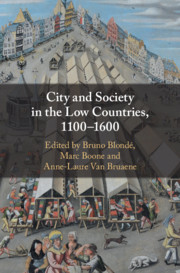
City and Society in the Low Countries, 1100–1600The Low Countries was collectively one of the earliest and most heavily urbanised societies in European history. Present-day Belgium and the Netherlands still share important common features, such as comparatively low income inequalities, high levels of per capita income, a balanced political structure, and a strong 'civil society'. 

This book (edited by Bruno Blondé, Marc Boone and Anne-Laure Van Bruaene) traces the origins of this specific social model in medieval patterns of urbanisation, while also searching for explanations for the historical reproduction of social inequalities. Access to cheap inland river navigation and to the sea generated a 'river delta' urbanisation that explains the persistence of a decentralised urban economic network, marked by intensive cooperation and competition and by the absence of real metropolises. Internally as well, powerful checks and balances prevented money and power from being concentrated. Ultimately, however, the utmost defining characteristic of the Low Countries' urban cultures was located in their resilient middle classes.

This multi-authored and accessible volume, that resulted from a collaborative inter-university project on the social history of the city, offers a balanced and up-to-date view on relevant debates, and explicitly deals with the spatial and material dimensions of urban history.

Prince Felix Yusupov: The Man Who Killed Rasputin by Christopher Dobson

Prince Felix Yusupov: The Man Who Killed Rasputin by [Dobson, Christopher]This powerful biography tells the compelling story of Prince Felix Yusupov — the man who murdered Rasputin.

In pre-revolutionary Russia, Grigori Rasputin’s influence over Tsar Nicholas II and Tsarina Alexandra meant he was effectively ruling the country. In a time of great unrest in Russia, his controversial involvement with the imperial family made him a target for many – including the notorious Prince Yusupov and his associates, who would eventually murder the ‘Mad Monk’ with poisoned cream cakes and a bullet to the head.

One of the richest men in Russia, Prince Yusupov was married to the Tsar’s niece, Irina – thought by many to be a sham marriage designed to hide his homosexuality. From his flamboyant lifestyle and friendships to his commitment to a cause so great he’d kill for it, his life story makes for a fascinating read. 

Based on personal interviews and meticulous research, this enthralling biography captures the flavour of the bizarre, eventful and extraordinary life of the man who assassinated Rasputin and unintentionally helped to precipitate the Russian Revolution.

The Mirror & the Light by Hilary Mantel - Excerpt

From The Guardian: 
The first chapter of the final volume of Mantel’s award-winning Thomas Cromwell trilogy opens at the execution of Anne Boleyn.


London, May 1536
Once the queen’s head is severed, he walks away. A sharp pang of appetite reminds him that it is time for a second breakfast, or perhaps an early dinner. The morning’s circumstances are new and there are no rules to guide us. The witnesses, who have knelt for the passing of the soul, stand up and put on their hats. Under the hats, their faces are stunned.

But then he turns back, to say a word of thanks to the executioner. The man has performed his office with style; and though the king is paying him well, it is important to reward good service with encouragement, as well as a purse. Having once been a poor man, he knows this from experience.

The small body lies on the scaffold where it has fallen: belly down, hands outstretched, it swims in a pool of crimson, the blood seeping between the planks. The Frenchman – they had sent for the Calais executioner – had picked up the head, swaddled it in linen, then handed it to one of the veiled women who had attended Anne in her last moments. He saw how, as she received the bundle, the woman shuddered from the nape of her neck to her feet. She held it fast though, and a head is heavier than you expect. Having been on a battlefield, he knows this from experience too.

read more here @ The Guardian

'The most boring part': why the killer didn't matter to Georges Simenon

From The Guardian: 

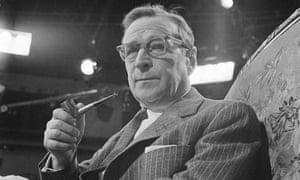
Georges Simenon GNM Archive ref: OBS/6/9/3/2/S Box 7 Published in Observer on 30 September 1962.
Identifying the murderer in Maigret and the Man on the Bench is of scant concern to a writer preoccupied with deeper secrets.
It isn’t normal to begin reviews of detective novels by discussing their last chapter. But Maigret and the Man on the Bench is not a normal detective novel – and its conclusion is so striking that it demands immediate attention.

If you’ve read the novel, you’ll know exactly what I mean. If you haven’t, I don’t think it’s giving away too much to say that in just 10 pages in David Watson’s (excellent) translation, Maigret discovers the identity of the murderer of Louis Thouret, the eponymous man on the bench. This murderer has barely been mentioned before in the novel, and Maigret doesn’t care about his identity. “This was the most boring part,” he reflects as he is writing up the case. Just six lines later, the book ends.

It’s possible to view this dashed-off ending as evidence that Simenon didn’t care either. The book was written in the early 1950s, when the author was allotting himself just 11 days to complete a Maigret novel. His heart – as he revealed in a 1955 interview with the Paris Review – was not with his beloved Parisian detective, but in the more serious romans durs he was writing concurrently.

read more @ The Guardian


Saturday, February 22, 2020

Review: Indigo by Loren D Estleman


Indigo: A Valentino MysterySynopsis: Film detective Valentino is summoned to the estate of Ignacio Bozel to collect a prized donation to the university’s movie library: Bleak Street, a film from the classic noir period, thought lost for more than sixty years. Bleak Street was never released. Its star, Van Oliver, a gifted and charismatic actor with alleged ties to the mob, disappeared while the project was in post-production, presumably murdered by gangland rivals: another one of Hollywood’s unsolved mysteries. Studio bosses elected to shelve the film rather than risk box-office failure. UCLA’s PR Department is excited about the acquisition, but only if Valentino can find a way to sell it in the mainstream media by way of a sensational discovery to coincide with its release: “We want to know what happened to Oliver.”

Valentino searches for and restores lost films, and in between has restored his own movie theatre. An opportunity to showcase a film thought long lost comes at a price - find out what happened to its star. The more Valentino digs, the more he realises someone doesn't want this film to see light of day.

This was a nice little noir outing with the twist at the end slowly revealing itself in the final chapters. You sort of get a hint that something is not quite what it should be. I hadn't read any of the previous books in this series, though had no real issues with picking up the threads as I read along. Loved the bibliograghy and filmography at the end.

An afternoon's escapism for those that get the chance to read it one sitting. 

Review: Sisters In Arms by Julie Wheelwright

Synopsis: A history of female combatants, from those who joined the military disguised as men to the current role of women in the armed forces. The book follows the evolution of women in combat, from the Scythian women who begat the Amazonian myth, to the passing women in the eighteenth century, and on to the re-emergence of women as proud members of the armed forces in various countries in the 20th and 21st centuries. The book also explores the formalization of women’s military roles and questions the contemporary relationship between masculinity and combat.


I'll begin with a quote: "Beginning with the founding myth of the Amazons--in reality female warriors of a nomadic tribe to whom the Greeks attributed super-heroic powers--Julie Wheelwright explores the history of women in arms. " Not my advanced copy.

Whilst ever so briefly mentioning the Amazons, this lengthy tome focuses heavily on the period from the 18th Century onwards and predominantly on the UK, USA and USSR (for want of a better collective term). It covers quite succinctly the areas of gender disguise and open enlistment, the maintenance of the fiction (ie: women disguised as men), the fear of discovery and punishment, and the experiences of these women upon their return from active duty and their new-found celebrity. I, however, was looking for more of the historical aspect rather than the more "recent" history.

It is the final chapters that looks at the continuity between historical and contemporary female warriors, but again within the parameters as set out above. There is a good section on sources, notes and extensive bibliography for those wishing to explore this topic further.

This will still make for a good sourcebook for those wishing to explore more - again, within the actual parameters.


Review: The War Queens by Jonathan & Emily Anne Jordan

Synopsis: The ingenious wartime tactics of some of history’s most powerful female leaders, from the stifling battlefields of ancient Egypt to the frigid waters off the Falkland Islands.

History’s killer queens come in all colors, ages, and leadership styles. Elizabeth Tudor and Golda Meir played the roles of high-stakes gamblers who studied maps with an unblinking, calculating eye. Angola’s Queen Njinga was willing to shed (and occasionally drink) blood to establish a stable kingdom in an Africa ravaged by the slave trade. Caterina Sforza defended her Italian holdings with cannon and scimitar, and Indira Gandhi launched a war to solve a refugee crisis.

From ancient Persia to modern-day Britain, the daunting thresholds these exceptional women had to cross―and the clever, sometimes violent ways in which they smashed obstacles in their paths―are evoked in vivid detail. The narrative sidles up to these war queens in the most dire, tumultuous moments of their reigns and examines the brilliant methods and maneuvers they each used to defend themselves and their people from enemy forces.


I will preface this by saying that I read this around the same time as "Sisters In Arms" by Julie Wheelwright; and as with that tome, I - personally - was left wanting a little more. Mayhap because I was already familiar with the women featured (Tomyris, Artmeisia, Boudicca, Cleopatra, Elizabeth I, Caterina Sforza, Tamar of Georgie, Catherine the Great - to name but a few) that I was looking for a bit more variety - maybe, someone not on anyone's top ten list.

What I will say is that each woman featured has her own story to tell and it is told well, with some background information and a focus on the well known battles in which their are noted for (these are are explained quite well for the lay-reader). One reviewer commented that Maggie Thatcher should not have been included as she wasn't a "queen" per se - well neither was Indira Gandhi, Golda Meir or Caterina Sforza for that matter.

There are many more examples of women who could have been included (Empress Matilda and her rival Matilda of Boulogne, Zenobia, Isabella of Castile, Rani of Jhansi, Amanitore of Nubia, even Katherine of Aragon) for whilst many did take to the battlefield, they were also strongly supported by seasoned military commanders - and I was particularly struck by the quote from Gen. George Patton: "... tactics .. belong at battalion level, not in the supreme commander's palace ..." - a sly reference to the fact that a good leader need not always be required to know everything military-wise.

The extensive bibliography, secondary sources, and notes will provide those with an interest the stepping stones for explore and research at their leisure.


Review: The Emperor's Assassin by Autumn Bardot

Synopsis: History paints her as the first female serial killer…
The Emperor's AssassinLocusta is the daughter of a winemaker in the Roman province of Gaul. She enjoys the indulged childhood of the elite, her concerns only about the day’s amusements. She rides gentle ponies, attends parties, reads Ovid, and learns the herbal arts from her servant. But the day after meeting her betrothed, Locusta discovers the consequences of possessing such dangerous knowledge.

Ordered to leave her pastoral life, Locusta is thrust into a world of intrigue, scandal, and murder—where treason lurks behind every corner and defying an emperor means death. Locusta’s life changes forever when a young Emperor Nero requires her herbal expertise. And commands her to be his personal poisoner. Caught in an imperial web, Locusta must embrace her profession or die.


Who was this ancient roman series killer and how did some become the "personal poisoner" of Emperor Nero? That hooked me in from the beginning. Whilst familiar with all the usual suspects of the early Roman period, Locusta was not one that came to mind quite readily and I was intrigued to read more, even if only from a fictional account.

Bardot uses the first person narrative to recount Locusta's story - in her own words so to speak. We begin with a naive provincial girl who learns the hard way that her own idyllic life is not truly reflective of the Roman Empire as a whole. From the loss of innocence grows the worldly wisdom as she uses her skills in herbal knowledge to recreate a life for herself. It is only when sent to Rome where the ".. decadent world of the the Roman elite was laid wide open .." that this naivety is really drummed home. The use of the maid Priscilla as a " entree " into or teacher of, these dark arts, creates a sort of empathy with Locusta as if this was not all of her own doing but as a direct result of her personal circumstance .... she readily recounts that " .. my first ethics lesson in poisoning ... confess to noone ..".

So, for those not familiar with the " ... poisoned filled world ... " of the scandalous Roman Empire where ".. the wicked hold hands like old friends.." under the reigns of Caligula and Nero, it is from the great writers of the period that we are first introduced to the poisoner, Locusta. 

Suetonius in his Life of Nero :


From Tacitus' Annals:


From Cassius Dio's Roman History:


From Juvenal's Satires:


There is no doubt that these pages from the early Roman writers inspired Bardot to give life to this mysterious woman. After being sent to Rome and coming to the attention of a number of noble women, it is when she is introduced to the Empress Agrippina that Locusta's life as a poisoner begins. As Emperor Nero avails himself of her talents, she is well rewarded with property, money and gifts; though finds herself at his beck and call to perform those deeds he would prefer kept well hidden. She consoles herself with the thought that to reject Nero would be to sign her own death warrant, and so she does what she can to ensure her own survival.

The introduction of the character of the centurion Marcus earlier in the piece provides another component to the Locusta story, and one that plays out in the final chapters of both this book and her (fictional) life.

The life and death of Locusta is shrouded in mystery and fueled by chinese whispers with each re-telling. There are many legends of her graphic and barbarous death following the death of her patron, Nero, from being raped to death by a specially trained giraffe to being torn apart by wild animals in the arena as befits a notorious sorceress. It is presumed that she perished shortly after Galba succeeded.

Bardot provides us with an entertaining story that more than adequately fits in with what I call the "rehabilitation genre" - whereby - mostly - historical women with a less than pristine pasts are given a dusting off and are having their stories told from a slightly different perspective (history being written by the victors, etc etc). It is an enthralling tale, and the reader certainly finds empathy with the character of Locusta, which is the ultimate aim of the author. It is also a tale of the cesspit that was ancient Rome - the salacious scandals, the sex and violence, the notoriety of its citizens, murder, greed, envy, social position.

If you are looking for a "new" historical heroine, then you have found her in Locusta.


Sunday, February 16, 2020

The Royal Minorities of Medieval and Early Modern England by Charles Beem

The term minority reign or royal minority refers to the period of a sovereign's rule when he or she is legally a minor. Minority reigns are of their nature times when politicians and advisors can be especially competitive. Some scholars claim that, in Britain, primogeniture, the growth of conciliar government, and the emergence of the Parliament as a representative and administrative force all occurred within the context of the minority reigns. And there are numerous instances from history where minority reigns have occurred.


This particular study covers the history of the underage male kings of England (Henry III, Edward III, Richard II, Henry VI, Edward V, and Edward VI), examining their historical relationship to one another and assessing their collective impact on the political and constitutional development of England. But this was not the first, as Beam mentions at the very outset of his book:


Some further reading:
The minority of Henry III by David A. Carpenter
The Minority of Henry the Third by Kate Norgate
Regency in Sixteenth-century Scotland by Amy Blakeway
Perilous Performances: Gender and Regency in Early Modern France by Katherine Crawford
Queen, Mother, and Stateswoman: Mariana of Austria and the Government of Spain by Silvia Z. Mitchell
Child Emperor Rule in the Late Roman West, AD 367-455 by Meaghan McEvoy
The Reign of Richard II: From Minority to Tyranny 1377-97 by A. K. McHardy