Showing posts with label ancient books. Show all posts

Saturday, January 18, 2020

An Ancient Mayan Book Oldest In The Americas

From Mitú:
Archeologists uncovered an astronomy book from the Mayan civilization and the 900-year-old book is considered the oldest book written in the Americas.

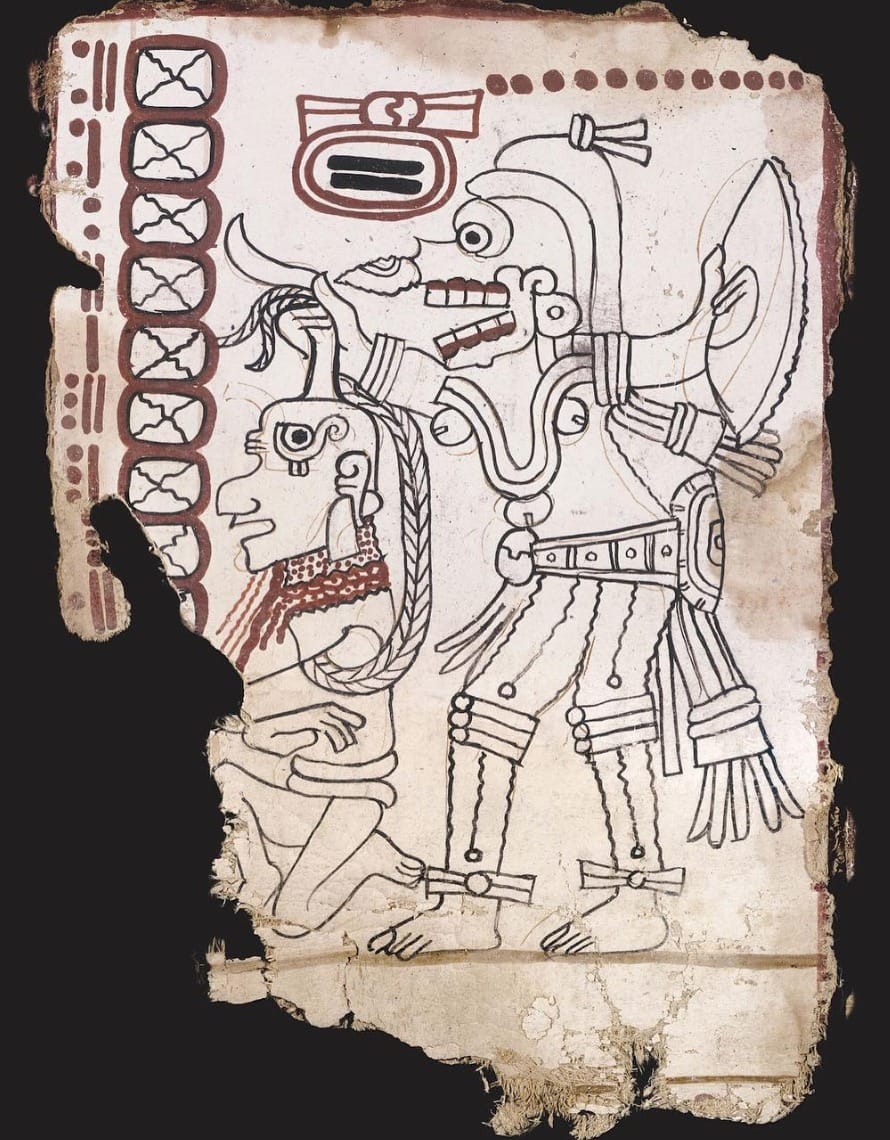
After decades of research, experts concluded in 2016 that a book they found years ago, in fact, is a 900-year-old authentic astronomy guide from the Mayan period. The book is called the Grolier Codex, and archaeologists say this is the oldest book found in the Americas.

The 10-page book is said to be an insightful guide into astronomy and how the Mayans kept track of the sun and the planets. It was their early forms of calendar-keeping.

read more here @ Mitú

Sunday, May 26, 2019

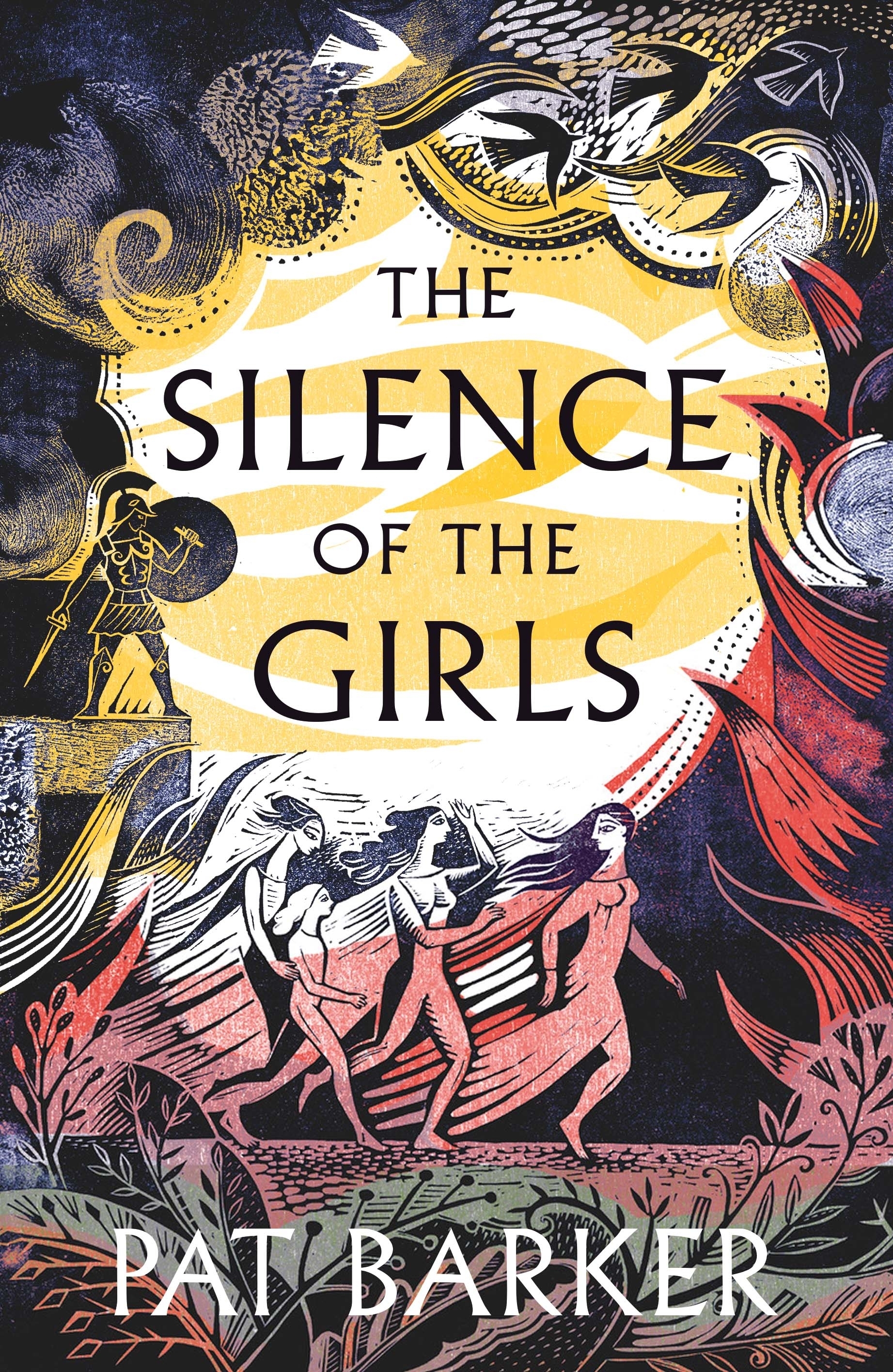
Troy Story Revisited | The Silence of the Girls

Image with no descriptionSynopsis: The greatest war story in literature, retold by our greatest living storyteller on war - in the voice of the forgotten woman who lived through it.


Queen Briseis has been stolen from her conquered homeland and given as a concubine to a foreign warrior. The warrior is Achilles: famed hero, loathed enemy, ruthless butcher, darkly troubled spirit. Briseis's fate is now indivisibly entwined with his.

No one knows it yet, but there are just ten weeks to go until the Fall of Troy, the end of this long and bitter war. This is the start of The Iliad: the most famous war story ever told. The next ten weeks will be a story of male power, male ego, male violence. But what of the women? The thousands of female slaves in the soldiers' camp - in the laundry, at the loom, laying out the dead? Briseis is one of their number - and she will be our witness to history.

Serena Millen's review @ Cherwell: 
The Silence of the Girls is a novel which, though enhanced by prior knowledge of the Iliad, could very well stand without it. Such books are important transitions for those unfamiliar with, but interested in, the Classical world, and we owe it to writers such as Barker who rejuvenate ancient texts without stripping them of their original greatness.

What is interesting about her character in the Iliad is the disparity between such a brief appearance and her narrative importance, as the unwitting cause of Agamemnon and Achilles’ fateful feud. Barker’s text uses this paradox by giving Briseïs an active voice, while still maintaining the passivity of Homer’s original character.
Sunday, May 28, 2017

The History of Medicine in Armenia

In Armenia, folk remedies aren’t just offhand suggestions from your grandmother. When it comes to minor illnesses, trained doctors are not shy about recommending them either. And you can find all kinds of packaged herbs and natural oils in Armenian pharmacies, sitting inconspicuously on shelves next to conventional pharmaceuticals.


Historian Stella Vardanyan notes this interaction in her book The History of Medicine in Armenia. According to her research, folk medicine in Armenia dates back nearly three millennia. The herbs of the Armenian highland were especially well-reputed among ancient writers, like the Greek physician Galen or the famed Islamic philosopher Ibn Sina, who wrote on the healing properties of Armenia’s clay in his treatise The Canon of Medicine: “Armenian or Ani clay has a remarkable influence on wounds. It is especially beneficial against tuberculosis and the plague. Many people were saved during great epidemics, since they were in the habit of drinking it in wine diluted with water.”

Read more here @ Smithsonian Magazine 

Saturday, September 17, 2016

Life Lessons from the Roman Empire

Ancient Greek manuscripts reveal life lessons from the Roman empire | Books | The Guardian
Ever been unsure about how to deal with a drunken family member returning from an orgy? A collection of newly translated textbooks aimed at Greek speakers learning Latin in the ancient world might hold the solution.
Professor Eleanor Dickey travelled around Europe to view the scraps of material that remain from ancient Latin school textbooks, or colloquia, which would have been used by young Greek speakers in the Roman empire learning Latin between the second and sixth centuries AD. The manuscripts, which Dickey has brought together and translated into English for the first time in her forthcoming book Learning Latin the Ancient Way: Latin Textbooks in the Ancient World, lay out everyday scenarios to help their readers get to grips with life in Latin. Subjects range from visiting the public baths to arriving at school late – and dealing with a sozzled close relative.
The oldest versions of the texts exist as fragments on papyri in Egypt, where the climate meant they survived. Due to the size of these fragments, Dickey had to refer to medieval manuscripts from across Europe. “They have been copied and copied over many centuries, with everyone introducing more mistakes, so they’re not that readable. As an editor, I had to find all the different manuscripts and try to work out what the mistakes were, so I could get to the original text.”
Dickey shows how the students had glossaries to help them get to grips with the new language, collecting together lists of words on useful subjects such as sacrifices (“exta” means entrails, “victimator” is a calf-slaughterer and “hariolus” is a soothsayer) and entertainment. “They’re definitely not the same sorts of words as we’d need,” said Dickey.

Read more here at The Guardian

The Fierce, Forgotten Library Wars of the Ancient World

The Fierce, Forgotten Library Wars of the Ancient World | Atlas Obscura
In the Hellenistic Era—that's 323 BC to 31 BC, for all you numbers fans—the Library of Alexandria, Egypt was a research hub of high prestige. But while certainly the largest of its time and the most famous, the Library of Alexandria wasn’t the only institution of its kind. Libraries throughout the ancient world competed to be the best Greek library, in rivalries that proved as dangerous and unscrupulous as actual wars.
Perhaps the most vicious rivalry of all was between the libraries of Alexandria and Pergamum in the city of Pergamon—present-day Bergama, Turkey. In this conflict, the ego-driven kings of both cities enforced various sneaky maneuvers to stunt the growth of the opposing collections.

Continue reading article by Lauren Young


Thursday, September 15, 2016

Mayan Grolier Codex Is Genuine


Grolier Codex
In a rare reversal, archaeologists have determined that a Maya book written almost 900 years ago is genuine—after decades of believing it was fake. The Grolier Codex was so named because it was first displayed in 1971 at the book lovers' Grolier Club in New York City. Archaeologist Michael Coe, who arranged the 1971 showing, later described its rather questionable history in a book.
It was acquired in a spectacularly scammy way in 1966 by a Mexican collector named Josué Sáenz. Coe says that Sáenz told him that a group of unknown men offered to sell the book to him, along with a few other items found "in a dry cave" near the foothills of the Sierra de Chiapas. They would only sell it if Sáenz agreed never to tell anyone or show the book. The collector, intrigued, took a plane to a remote airstrip with two experts, who declared the codex fake. But Sáenz went with his gut and bought the codex. After allowing Coe to display it in New York, he gave it to the Mexican government.


In the 1960s, what is said to be one of the rarest books in the world was discovered: an ancient Maya book called the Grolier Codex. While the physical book itself — meaning the actual pages — were quickly dated back to the 13th century, researchers have long speculated that the drawings contained in the book were forgeries, something sellers would have made to try and get more money for the product. That’s not true, it turns out. Researchers with Brown University have announced that the Grolier Codex is genuine in every way, making it the oldest known manuscript found in America.


Since it was reportedly unearthed in the 1960s, the 13th century Grolier Codex – one of the rarest books in the world – has been regarded with scepticism. Some people have questioned the authenticity of the book, suggesting that it was forged by modern writers. However, a new study has reviewed all known research on the manuscript, and suggests that the Grolier Codex is both genuine, and likely the oldest of all surviving manuscripts from ancient America.