Showing posts with label japanese history. Show all posts

Saturday, June 29, 2019

Samurai Text Tells Secrets of Sword-Fighters' 'Supernatural Powers'

Image result for the twelve rules of the swordFrom Live Science: 

A newly translated samurai text called "Twelve Rules of the Sword" reveals the secrets of a sword-fighting school that mastered a technique that seemed to give supernatural powers.

Dating back to the 17th century, the text contains knowledge passed down from a samurai named Itō Ittōsai (born around 1560), who fought and won 33 duels in Japan. Researchers aren't sure when he died, but historical records suggest he may have lived to be over age 90. Ittōsai never wrote down his "Twelve Rules of the Sword," and instead passed them on orally to his students at the One Cut sword-fighting school. The descendants of his students later recorded them in writing.

The text describes rules for beating an opponent as well as two magical prayers to enhance a samurai's spirit and mind, according to Eric Shahan, who recently translated the text. Shahan is a Japanese translator who specializes in translating Japanese martial-arts texts. He also holds a San Dan (third-degree black belt) in Kobudō, a Japanese martial art.

read more here @ Live Science

Sunday, May 5, 2019

African Samurai by Thomas Lockley and Geoffrey Girard


Thomas Lockley and Geoffrey Girard’s biography of Yasuke, an African slave-turned-mercenary who became Japan’s first foreign-born samurai, is an extraordinary story that feels especially poignant today. Lockley, an associate professor at Nihon University College of Law in Tokyo, wrote the first academic paper describing Yasuke’s life. African Samurai adds flesh and blood (and smoke and entrails and steel) to the paper’s bones, chronicling a history that reads like a legend.

bb april samurai-min.pngWhen Yasuke arrived in Japan in the late 1500s, he had already traveled much of the known world. Kidnapped as a child, he had ended up a servant and bodyguard to the head of the Jesuits in Asia, with whom he traversed India and China learning multiple languages as he went. His arrival in Kyoto, however, literally caused a riot. Most Japanese people had never seen an African man before, and many of them saw him as the embodiment of the black-skinned (in local tradition) Buddha. Among those who were drawn to his presence was Lord Nobunaga, head of the most powerful clan in Japan, who made Yasuke a samurai in his court. Soon, he was learning the traditions of Japan’s martial arts and ascending the upper echelons of Japanese society.

African Samurai presents the never-before-told biography of this unique figure of the 16th century, one whose travels between countries, cultures and classes offers a new perspective on race in world history and a vivid portrait of life in medieval Japan.

read more here @ Paste Magazine

Sunday, September 16, 2018

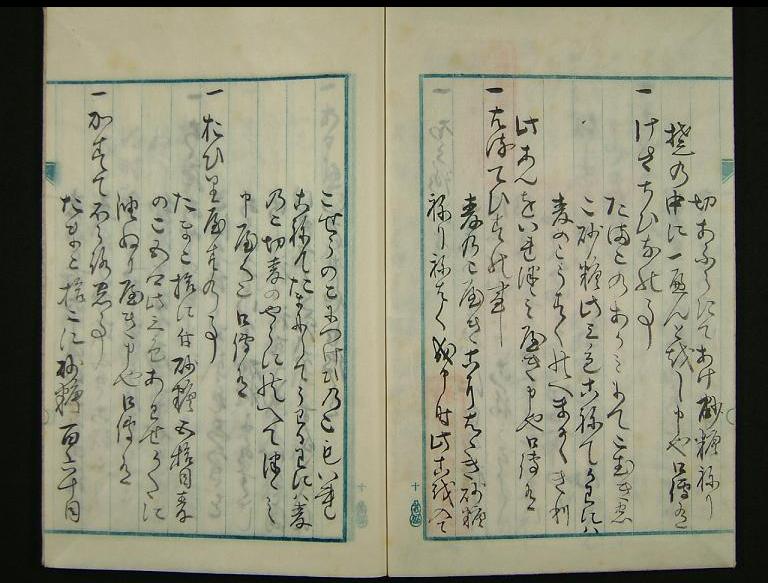
Inside a 17th-Century 'Barbarian' Cookbook From Japan


These day, treats including tempura, konpeitō hard candy, and fluffy castella cake are available in restaurants, convenience stores, and bakeries across Japan. It might seem hard to believe that these dishes, especially fried tempura, were once curiosities even to the Japanese. Early recipes for these things and more were compiled in a cookbook manuscript dating from the 17th century. It’s called the Nanban ryōrisho, or the “Southern Barbarians’ Cookbook.”

Who were the “southern barbarians?” According to Eric C. Rath, author of Food and Fantasy in Early Modern Japan, that was the term for the largely Portuguese Europeans who sailed to Japan beginning in the 16th century. As traders and missionaries, they brought along Christianity and Western technology. But they also brought their food.


The author is unknown, though Rath writes that they were obviously very familiar with Iberian cuisine, perhaps even knowing Portuguese and Spanish people personally. A collection of 45 recipes, which Rath translates in his book, the Barbarian’s Cookbook long existed as a handful of handwritten manuscripts in Japanese libraries, only to be published by the 20th century. The recipes therein offer a glimpse into changing attitudes towards food in Japan at the time, and the development of the nanban cuisine still enjoyed today.

Front CoverThe other half of the Barbarian’s Cookbook contained savory dishes, notable for the eggs and meat they required. At the time, lingering dietary taboos over both existed in Japan for health and religious reasons. 

By the time the Barbarian’s Cookbook was written, Christianity had been outlawed, and most foreigners prohibited from Japan. But nanban cuisine lingered. The sweet and meaty treats in the Barbarian’s Cookbook “became increasingly popular over the course of the Edo period,” writes Rath. But even today, many nanban treats remain favorites.


Wednesday, October 25, 2017

450-Year-Old Book Reveals What to Name a Baby Samurai

From Live Science: 

What should you name a baby samurai? What food should a samurai bring to a battle? What is a samurai's most treasured possession? 
A newly translated 450-year-old book supposedly written by a renowned samurai provides answers to these and many other questions about the Japanese swordsmen. Called "The Hundred Rules of War," the book is a series of songs that could be sung by samurai, who had never gone into battle. It was supposedly written in Japanese in 1571 by a famous samurai named Tsukahara Bokuden, who lived from 1489 to 1571, during a war-ridden time in Japan. 
Stories told about Bokuden claim that he fought in over 100 battles and slew hundreds of swordsmen. The book was recently translated into English by Eric Shahan, who specializes in translating Japanese martial-arts texts. The book was first printed in Japanese in 1840, and has been republished in Japanese several times since then, Shahan told Live Science. 

read more here @ Live Science

Sunday, October 8, 2017

'In the Woods of Memory': Okinawan novelist makes history visceral

From an article in The Japan Times:

It is almost impossible to find a serious novel that does not touch on the subject of death. “In the Woods of Memory,” taking for its theme the death of the soul, is no exception.
The rape of a 17-year-old girl by four U.S. soldiers during the Battle of Okinawa forms the animating horror at the core of this story, based on a number of similar cases related to the author [Shun Medoruma] by his relatives.
In writing this novel, Medoruma creates a sound chamber of voices, time shifts and associations, moving back and forth from 1945 to 2005. He filters experiences through eye witnesses, a wartime Okinawan-American interpreter, an obsequious village ward chief, an American attacker now tormented in his old age by his collusion in an act of barbarity, and his grandson, who is given the harpoon head used by Seiji in the attack on his grandfather.

read more here @ The Japan Times

read reviews here @ Foreword Reviews, @ Asia-Pacific Journal, @ Stone Bridge Press