Saturday, November 24, 2018

Kate Mosse on The Burning Chambers


Bestselling author Kate Mosse visited the graveyard in Franschhoek several years ago and felt such a strong sense of the links between the southwest of France and the Cape, the landscape and Huguenot history that, she says, a shiver ran down her spine. It inspired The Burning Chambers.

Readers are plunged into 16th-century France, to a time of bloody strife between Protestants and Catholics, persecution of the Huguenots and the massacre of Toulouse. Like her Languedoc trilogy (Labyrinth, Sepulchre and Citadel), this novel is set predominantly in Carcassonne.

“All my fiction is inspired by place, by landscape,” she says. Mosse knows the place – she goes there every month to write. When she’s there the history of this fortified medieval city is palpable to her. She’s walked the ancient streets and climbed the towers and seen the sun on the citadel, and this intimate knowledge she bring to The Burning Chambers.

read more here @ Sunday Times Books and Kate Mosse's WEBSITE

In the realms of gold: exploring Africa’s rich history


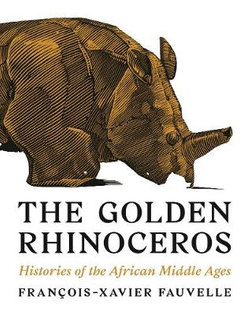
The Golden Rhinoceros is bursting with new worlds from Africa’s medieval past — a time when merchants began connecting a patchwork of ancient kingdoms, stretching from modern-day Morocco to South Africa, into wider networks of power, wealth, religion, goods and ideas. Fauvelle has created a collage of the continent from 34 different sources, each relating to trade and eloquently discussed in brief chapters. They are dots of light which, when combined, illuminate whole swathes of the dark continent, ranging from the coming of Islam in the western Sahara in the 7th century, to the 4,000 gold mines pockmarked across 14th-century Zimbabwe.


Book Seller Link: Angus & Robertson

Two new English books on Byzantium and Mediterranean history by a Greek

From Tornos News:

Greek historian and researcher Dr. Georgios Theotokis has contributed to the large volume of knowledge in the post-ancient Roman era, by releasing two titles in English: “Byzantine Military tactics in Syria and Mesopotamia in the 10th Century” and “A Military History of the Mediterranean Sea”, protothema.gr reports.

Two new English books on Byzantium and Mediterranean history by a Greek

The dynamic and laborious researcher proved with his efforts that Greek intellectuals remain relevant in the international arena.

His first book was published by Edinburgh University Publications and the second by the world-renowned Dutch publishing house Brill.

The first book “The Byzantine Army Tactics in Syria and Mesopotamia in the 10th Century” has been in bookshops in Great Britain and the US since October.

For the release of the second (“A Military History of the Mediterranean Sea “), published internationally in July 2018, Theotokis collaborated with Turkish historian Aysel Yildiz.

Dr. Theotokas has the third book in the pipelines and is scheduled to be launched in bookstores across the UK and the US next February, while he has already signed a contract for three more books with English publishing houses.

Monday, November 19, 2018

Review: Henry VIII and the Men Who Made Him by Tracy Borman

When we see Henry through the men in his life, a new perspective on this famous king emerges...

40527728I am not sure what I was expecting when selecting this book; however, on the basis of the title "... the men who made him" I thought I was getting a new spin of the character of Henry VIII.  What I read was nothing new, nothing I could not have read in in number of tomes on this monarch.  The only difference here is that there is very little mention of the wives.

So what was I expecting: I guess a little more on the main figures in Henry's life.  We have plenty on Wolsey, Cromwell, Cranmer, Brandon, and even a little on some of the men who served him in various capacities - his "youths of evil counsel".  But how much of an influence on Henry were any of them?

We read that Henry's father was aloof, cool, suspicious and that when Henry finally came to rule, was determined to not be like him.  We read that his tutor and chaplain John Skelton was "responsible for shaping his spiritual and intellectual upbringing".  But did either man "make him"?

From an early age - usually around the time of Arthur's marriage - we get a sense of a young Henry enjoying the spotlight, of wanting to be the centre of attention, of his future vanity, of his early need for adulation. 

As his rule progresses, we get more of a sense of the man - his jealousies, his fickleness, his insecurities, his need to be surrounded by fawning sycophants, his ability to change from benevolent patron to destroying angel.  But how much an affect did those surrounding the king actually have on him.  He swings from one direction to another - loathe to take on the task of government then micro-managing his ministers.  Some may have been able to briefly bend the ear of the king, flaming his paranoia or indulging him like a doting parent; but did they actually contributed to the development of the king's persona??

I am not sure if the brief is actually met - I had no understanding of how any of the men in Henry's circle really had so much of an influence on him that they "made" the king the man as we have come to know him.  What I would have liked, rather than yet another history of Henry and his reign, were vignettes of the more prominent men - detailing what role they played.  I wanted to know how these men actually contributed to the making of this monarch - but I was left unsatisfied. I could pick up any number of books on my own bookcase and glean the same information that was contained herein.  

Also, I am not sure that you could consider the rule of Wolsey and Cromwell to be anything other than two lowly born men, who had an aptitude for government, which merely facilitated Henry's self-indulging and aggrandizing lifestyle.  I just had no real sense that any of them shaped the man.  Afterall, to whom do we ascribe the tyranny, the volatility, the cruelty, the almost bipolar nature of Henry - who will put his hand up to this?  I had many questions that went unanswered.

I have no complaints about the writing, the research, the overall presentation - it is an acceptable biography on this great Tudor monarch (though very pro-Tudor).  But, like Oliver Twist - I wanted more and was left wanting.

Sunday, November 18, 2018

Review: The Lady In The Cellar by Sinclair McKay

On 8th May 1879, the corpse of former resident, Matilda Hacker, was uncovered by chance in the coal cellar. The investigation that followed this macabre discovery stripped bare the shadow-side of Victorian domesticity, throwing the lives of everyone within into an extraordinary and destructive maelstrom. For someone in Number 4 Euston Square must have had full knowledge of what had happened to Matilda Hacker. Someone in that house had killed her. How could the murderer prove so amazingly elusive?

I love this type of mystery wherein a crime from some time past, with an unsatisfactory conclusion, is dusted off to see if further light can be shed on the mystery at hand. This is not a fictional account of what may or may not have happened; it is an open factual investigation which looks at the crime, the suspects, the criminal investigation at the time, and the conclusion.

Sinclair McKay gives us an overview of the times, in which the population was moving from a closed style of social system, to one in which was often transient, diverse, and anonymous. From an investigative perspective, the CID section of Scotland Yard was newly established and forensic science was developing yet rudimentary. Inspector Charles Hagen was selected due to his close associations and work with the German immigrant community (I liked that fact that he was a contemporary of Inspector Abbeline - later of Ripper fame).

The story as presented was fairly lengthy - I felt some of the components could have quite easily have been condensed: social commentary; family, witness, suspect backgrounds; the investigations and trials (in which the same evidence was presented thrice over). A number of possible scenarios are put forward at the end (though again inconclusive) after a wrap of of where everyone connected to the case ended up.

I realise a lot of research goes into the fleshing out these stories; however, sometimes less is more. When the reader is bombarded with too much information, attentions wander, pages are skipped, and the anticipated enjoyment of reading is lessened. Unfortunately, this is what I experienced. I think the inclusion of some visual aids - street plans, newspaper clippings, etc may have heightened my reading pleasure (I do look forward to these - my edition did not have these, however they may appear in the final published version). And, I wonder if presenting in a more abridged version (ie: adapted for television) may have conveyed enough information for a still engrossing story. 

Having said that, there are many who will definitely love this story in the format presented - though I will add that I did not dislike the book itself just felt a little more subjective editing was required.

Further Reading:
@ Old Bailey Proceedings - Siwerin Bastendorff
@ Town & Country Journal - Euston Square Mystery
@ Canterbury Archaeology - Intriguing Story of Matilda Hacker
@ Murder Research - Victorian Trials 1870 - 1879
@ Mysteries of Police & Crime by Arthur Griffiths (Euston Square Mystery, pg 453)


Review: The Man of Dangerous Secrets by Maxwell March

"In the past twenty four hours he had stumbled into the very midst of something which baffled him completely.  In that brief interval he had caught glimpses of a web of intrigue and danger so closely knit that it seemed doubtful if , once within it, one could ever escape."

The perfect summary for this classic tome from noted author Margery Allingham writing under the pseudonym of Maxwell March.  I love classic crime, especially that written between the 1920s - 1970s.  There is just something about the style, the mystery, the whole set up - which is why they are classics.

In this installment, Robin Grey, who works in the murky shadows of Scotland Yard or the Home Office (one never quite knows), witnesses an incident at Waterloo Station that sets him off on a mission to rescue a damsel in distress.

Without revealing too much of the plot, Grey inserts himself into the life of the damsel, Jennifer Fern, in an attempt to find out why she is being so cruelly persecuted - and who is behind it all.  There are some shady characters with whom Grey comes into contact - however, like all good mysteries, no-one is really who they claim to be, leaving Grey wondering what he has gotten himself into.

The story rolls on towards its inevitable conclusion; however, clues are dropped like the proverbial breadcrumbs, leading this way and that, as each of the five protagonists are revealed for what they really are.

Related imageThis is storytelling at its best - and this was one of three stories Allingham wrote as Maxwell March (the other two being Rogues' Holiday and the Shadow in the House).

See more here:


Saturday, November 17, 2018

Review: Handsome Johnny by Lee Server

Synopsis:

Handsome Johnny
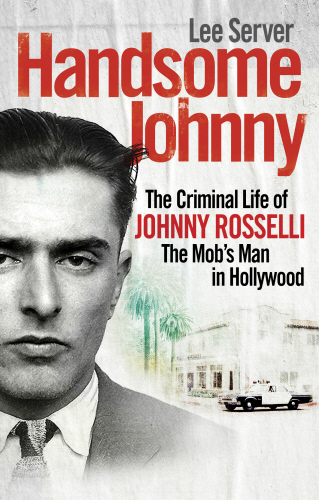
A singular figure in the annals of the American underworld, Johnny Rosselli’s career flourished for an extraordinary fifty years, from the bloody years of bootlegging .... to the modern era of organized crime as a dominant corporate power. The Mob’s “Man in Hollywood,” Johnny Rosselli introduced big-time crime to the movie industry, corrupting unions and robbing moguls in the biggest extortion plot in history. A man of great allure and glamour, Rosselli befriended many of the biggest names in the movie capital ....  seduced some of its greatest female stars .... and produced two of the best film noirs of the 1940s.

Following years in federal prison, Rosselli began a new venture, overseeing the birth and heyday of Las Vegas. Working for new Chicago boss Sam Giancana, he became the gambling mecca’s behind-the-scenes boss, running the town from his suites and poolside ..... enjoying the Rat Pack nightlife with pals Frank Sinatra and Dean Martin. In the 1960s, Rosselli became the central figure in a bizarre plot involving the Kennedy White House, the CIA, and an attempt to assassinate Fidel Castro. Based upon years of research, written with compelling style and vivid detail, Handsome Johnny is the great telling of an amazing tale.

A smile can get you far, but a smile with a gun can get you further. - Al Capone

Now I was intrigued. Having read Martin Short's "Crime Inc" many times, I could not for the life of me remember coming across Johnny Rosselli's name in any context. In fact, I picked up the book again to ensure that I hadn't missed it - I hadn't - he's not listed or mentioned.

So who was this shadowy figure? From Server's well-researched and vivid biography, Rosselli is hardly camera shy, being involved in some of the biggest Mob activities from the 1920s to the 1960s. Server does well to tease out the little that is known about Rosselli's life, particularly his early life in Boston, which he himself endeavoured to keep secret - changing his name to ensure that it was. He moved in notable crime circles with the likes of Capone, Siegel, Lansky, Luciano, Giancana; produced two Hollywood films; was a mover and shaker in the early Las Vegas casino era of the 1940s & 1950s, where he hob-nobbed with the likes of Hollywood's Rat Pack, aspiring politicians and dodgy union bosses.

Yet nearly everything about Rosselli was cloaked in mystery; that is, until the FBI had him in their crossfire, and his wheeling and dealing was revealed, via a snitch. This investigation by the FBI opened up old wounds and long kept secrets, and eventually involved the CIA. Even in death, another mystery; why was Rosselli killed (or rubbed out) and by who - the Mob, the FBI, the CIA? Theories still abound.

Quite frankly, you can't make this stuff up - even if it does read like fiction. Rosselli lived through some of the most fascinating events and decades in history: the Roaring Twenties, Prohibition, the Great Depression, the Second World War, McCathyism, JFK and the Cuban Missile Crisis.

Server's research stands him in good stead in bringing to the fore a man who had his finger in many pies - and yet, Rosselli still somehow manages to remains an enigma.  If the Mob history is your genre, then add this to the shelves of your library.


Further Reading: 
All American Mafioso: The Johnny Rosselli Story by Charles Rappleye & Ed Becker
The FBI Records: The Vault - John (Handsome Johnny) Roselli
New York Times - Mafia Said To Have Slain Rosselli
The Harold Weisburg Archive - Obituary of Johnny Rosselli
Wikipedia - John Roselli
Break Shot Blog - Johnny Rosselli

See also my review @ Book Browse

Saturday, November 10, 2018

Guide to the Classics: The Icelandic Saga


Icelanders love books, both reading and writing them, and in recent years, translations of contemporary Icelandic literature have made it into bookshops and literary pages abroad in increasing numbers.

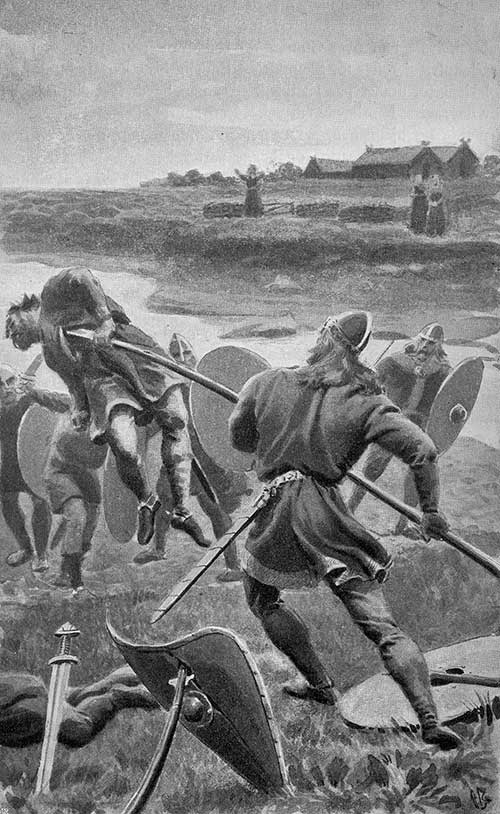
“Saga” is an Icelandic word that means “something said, a narrative.” Originally, the term is likely to have been applied to stories that were probably formed and transmitted orally. Later, they came to be recorded in writing, in handwritten manuscripts, many of which survive to the present day, though a good number have perished over the past 500 years or so.

Sagas of kings are historical biographies of the kings of Norway (and to a lesser extent, of Denmark) from prehistoric times into the 14th century.

The most widely accessible at present are probably the most recent Penguin translations, which are new editions of a five-volume series originally published in Iceland in 1997 as “The Complete Sagas of Icelanders.” 

My personal favourite compilation is Jane Smiley's "Sagas of the Icelanders

Bigamy, bankruptcy and poisoning at ancient Monks Hall, Waveney


Bigamy, arsenic and a tragic wartime pilot are all part of the story of a stunning Waveney manor house. One tenant was accused of arsenic poisoning, another was a convicted bigamist. Monk’s Hall, a beautiful manor house in Syleham, near Diss, has seen 1,000 years of history and could be the oldest continually-occupied house in Suffolk.

Monks Hall: The History of a Waveney Valley Manor, by Elaine Murphy, is published by Poppyland Publishing

Image result for Monks Hall: The History of a Waveney Valley Manor
From the publisher:
This story of a Waveney Valley manor house and estate is told through the lives of its owners, occupants and admirers, a tale that spans 1000 years and provides a fascinating social history of rural England in one place, extensively researched and written by someone with a love of the Waveney Valley. The manor was unusually well documented from medieval times because it was owned by the monks at Thetford Priory, who kept a detailed record of expenditure and gave a description of a house recognisable today, despite its 16th century ‘renovations’. After the dissolution of the priory in the mid 16th century, a succession of owners and scientifically gifted absentee landlords neglected to modernise the hall, leaving it remarkably little changed over the centuries until it was restored and renewed in the 1930s. The people who lived at Monks Hall weathered famine, riots, plague, religious intolerance and war; their family lives reflect the rigours of country living over a millennium.