Sunday, January 4, 2015

January Arrivals

Just before Xmas Day, the following books were ordered for addition to my Library.

Stewart Binns' : "Conquest, Anarchy, Crusade & Lionheart".
Set in the period after the Norman Conquest till the reign of Richard I, so looking forward to this series.


Elizabeth Van Houts' "The Normans In Europe".

Another one of those books on the Normans that I had read but had not yet added to my Library.

Alexander Callander Murray's "From Roman to Merovingian Gaul".
From Roman to Merovingian Gaul documents events that are both remarkable in themselves and that demonstrate what made this era of history distinct. A nice addition to my French History shelf as I have books following this period but not dealing with this history of this area prior it.


Monday, December 22, 2014

Yultide Bargains

Snapped up after work on Saturday after a colleague mentioned a book stall was set up in the nearby shopping centre.  Could not resist a look and came away with:

Thursday, November 20, 2014

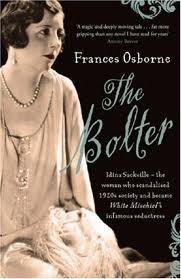
Review: The Bolter by Frances Osborne

Synopsis:
On Friday 25th May, 1934, a forty-one-year-old woman walked into the lobby of Claridge's Hotel to meet the nineteen-year-old son whose face she did not know. Fifteen years earlier, as the First World War ended, Idina Sackville shocked high society by leaving his multimillionaire father to run off to Africa with a near penniless man. An inspiration for Nancy Mitford's character The Bolter, painted by William Orpen, and photographed by Cecil Beaton, Sackville went on to divorce a total of five times, yet died with a picture of her first love by her bed. Her struggle to reinvent her life with each new marriage left one husband murdered and branded her the 'high priestess' of White Mischief's bed-hopping Happy Valley in Kenya. Sackville's life was so scandalous that it was kept a secret from her great-granddaughter Frances Osborne. Now, Osborne tells the moving tale of betrayal and heartbreak behind Sackville's road to scandal and return, painting a dazzling portrait of high society in the early twentieth century.


Review Number 1 - 30th - 31st October 2011:
Interesting story of a woman who was obviously ahead of the time she lived in. A woman - who rightly or wrongly - acted according to her own free will and refused to be constrained by the mores of the time. Notorious or notable - or both.


Update - 20th November 2014: 
I have just finished this book for the second time (19th November 2014). I am still held in the grip of this fascinating woman's personality and character. Even the second time round I am still feeling some empathy with Idina, despite the heartbreaking choices that she made in her married life, and despite some of the choices she made thereafter.

Book 1 deals with Idina's early life, her childhood and her first marriage and its subsequent breakdown. The Second Book deals with Idina's life in Kenya and her next set of marriages - making it five in total - and five divorces (we don't count her many, many lovers).


The 1920s and 1940s were a somewhat liberating time for women - many deciding to break free from the constricting structure of Edwardian life in England, and following their own path - sometimes towards happiness, sometimes towards self destruction.


The author Frances Osborne is the great-granddaughter of Idina - a woman not mentioned in family circles and one who was not regarded as a role-model. The author takes us through her own journey of discovery and presents for us a woman with all her foibles, a woman of strength and frailty, a woman not of her times, a woman who draws us back into her web and keeps us within her grip as her life unfolds before us.


Read this in conjunction with Paul Spicer's "The Temptress" and James Fox's "White Mischief".


Sunday, November 2, 2014

November Additions To The Library

November is now here and with a lovely gift voucher from my online book shop, here are the additions to the Library for November:


The Borgias: A Hidden History by G.J. Meyer
The startling truth behind one of the most notorious dynasties in history is revealed in a remarkable new account by the acclaimed author of "The Tudors" and "A World Undone." 

Lucretia Borgia: An Exceptional and Notorious Woman of the Renaissance Papacy by Ferdinand Gregorovius
A legend of beauty and seduction The very name of Lucrezia Borgia remains, some 500 years after her time, enough to send a frisson of a thrill down the spine-particularly of men! The Lucrezia of legend has become an archetypal 'femme fatale'-beautiful, seductive and potentially deadly. 

Late Merovingian France: History and Hagiography, 640-720 edited & translated by Richard A. Gerberding
This collection of documents in translation brings together the seminal sources for the late Merovingian Frankish kingdom. 

The Welsh Kings: Warriors, Warlords and Princes by  K. L. Maund
When Edward I's troops forced the destruction of Dafydd ap Gruffudd in 1283 they brought to an end the line of truly independent native rulers in Wales that had endured throughout recorded history. In the early middle ages Wales was composed of a variety of independent kingdoms with varying degrees of power, influence and stability, each ruled by proud and obdurate lineages. 

Kingdom and People of Kent: Their History and Archaeology by Sue Harrington and Stuart Brookes
The Kingdom and People of Kent

Northumbria: The Lost Kingdom by Paul Gething and Edoardo Albert
Northumbria was one of the great kingdoms of Britain in the Dark Ages, enduring longer than the Roman Empire. Yet it has been all but forgotten. This book puts Northumbria back in its rightful place, at the heart of British history.

The Death of Kings: A Medical History of the Kings and Queens of England by Clifford Brewer
Distinguished surgeon Clifford Brewer T.D F.R.C.S. has made the death of kings the study of a life time, examining every act of violence and each unpleasant disease with a razor sharp eye for detail. 

The Gourmet Farmer Deli Book by Matthew Evans, Ross O'Meara and Nick Haddow
Matthew Evans brings us a beautifully photographed new book celebrating the way we used to cook food and how it used to taste.

Happy reading!

Wednesday, October 1, 2014

Additions For October

August's books arrived safe and sound in September so here is the order for October:

  • Absolute Power: The Real Lives of Europe's Most Infamous Rulers by Chad Denton
  • Joan of Arc: By Herself and Her Witnesses by Régine Pernoud
  • The Retrial of Joan of Arc: The Evidence for Her Vindication by Regine Pernoud
  • The Templars: Knights of Christ by Regine Pernoud
  • Defending the City of God: A Medieval Queen, the First Crusades, and the Quest for Peace in Jerusalem by Sharan Newman
  • Mediaeval Prince of Wales: Life of Gruffudd Ap Cynan by Simon D Evans
  • Lost Capital of Byzantium: The History of Mistra and the Peloponnese by Steven Runciman
  • The King in the North: The Life and Times of Oswald of Northumbria by Max Adams
  • The Last Templar: The Tragedy of Jacques De Molay, Last Grand Master of the Temple by Alain Demurger
  • The Northern Earldoms: Orkney and Caithness from AD 870 to 1470 by Barbara Crawford
A number of these books I have read in the past but have never before added to my own personal library - until now.


Monday, August 25, 2014

Autumn Additions

Well, it is autumn in the land down under, and the order for August has been submitted - albeit rather late in the season.  So here is the bag of bargains heading south over the next week or so:


The Northern Crusades by Eric Christiansen
The 'Northern Crusades', inspired by the Pope's call for a Holy War, are less celebrated than those in the Middle East, but they were also more successful: vast new territories became and remain Christian, such as Finland, Estonia and Prussia. Newly revised in the light of the recent developments in Baltic and Northern medieval research, this authoritative overview provides a balanced and compelling account of a tumultuous era. 

Duchessina: A Novel of Catherine de Medici by Carolyn Meyer
Young Catherine de' Medici is the sole heiress to the entire fortune of the wealthy Medici family, but her life is far from luxurious. This novel chronicles the life of a young woman who becomes one of France's most powerful queens. Includes a family tree.

Fideles Crusis: Papacy, the West & the Recovery if the Holy Land 1274 - 1314 by Sylvia Schlein
Schein challenges the view that the fall of Acre in 1291 was a watershed dividing the "classical age" of the crusade from the late Middle Ages, when the ideal had become sterile, the obsessive dream of a handful of individuals. She shows instead that the desire to recover the Holy Land remained powerful and pervasive, and was an important consideration in the policy-making of European rulers.

Princesses of Wales by Deborah Fisher
This exciting new Pocket Guide offers an in-depth discussion of the developing role of Princess of Wales, through an account of the lives of those who have held the title. 

Blood & Beauty: The Borgias by Sarah Dunant
Stripping away the myths around the Borgias, "Blood & Beauty" is a majestic novel that breathes life into this astonishing family and celebrates the raw power of history itself: compelling, complex and relentless. 

The Borgias by Michael Mallett
Fact is deftly sorted from fiction in this description of the incredible rise of the Borgias from obscurity to the very center of the Renaissance.

Lucrezia Borgia by John Faunce
“A fascinating story, rich in detail. In every case, Faunce portrays [Lucrezia] believably, with wit and sensitivity.”--Library Journal Hundreds of years after her death, Lucrezia Borgia remains one of the most enigmatic and notorious women of history.

Margeret of York, the Diabolical Duchess: The Woman Who Tried To Overthrow The Tudors by Christine Weightman
The amazing life of Margaret of York, the woman who tried to overthrow the Tudors.

Anne Neville, Richard III's Tragic Queen: The Real Story of the Kingmaker's Daughter by Amy Licence
Amy Licence reassesses the longstanding myths about Anne's role, her health and her marriages, to present a new view of the Kingmaker's daughter.

Lucrezia Borgia: The Life of the Pope's Daughter in the Renaissance by Maike Vogt-Luerssen (trans: Dr Holger M Luerssen)
This biography will reveal the true Lucrezia Borgia. It is an unfortunate reality that many descriptions of the life of the Pope's daughter and her family are based on malicious rumours by her opponents and sensationalist historians of the 16th century.

The Borgias: History'a Most Notorious Dynasty by Mary Hollingsworth
Mary Hollingsworth's account of the dynasty's dramatic rise from its Spanish roots to the heights of Renaissance society forms a compelling tale of brutality, incest, unparalleled corruption and extortionate greed.


Owain Gwynedd: Prince of the Welsh by Roger Turvey
A study of the life and career of Owain Gwynedd (c. 1100-70), who played a dominant role in the history of Wales before her conquest. He was king of Gwynedd from 1137 until his death, and was the first to be styled Prince of Wales. He was considered the most successful of all the north Welsh princes prior to his grandson Llywelyn the Great.

Daughter of Heaven: the True Story of the Only Woman to Become Emperor of China by Nigel Cawthorne
In this sensational true story, bestselling author Nigel Cawthorne reveals the dark and dramatic story of the only woman ever to rule China, Wu Chao: concubine, manipulator, politician, murderer, Emperor. From her instruction in the art of love by palace officials, to her eventual sticky end, this book opens a window into the colourful world of Tang Dynasty in China - a world of sex and of power. 

On the Trail of the Real Macbeth, King of Alba by Cameron Taylor & Alistair Murray
Travel what is now Scotland with a touring itinerary as you follow "On the Trail of the Real Macbeth, King of Alba".


A rather interesting collection of known and lesser known titles - all reasonably priced (lets face it - cheap!) which is why they have found their way into the Library.




Sunday, July 13, 2014

Miniature Books


Following on from this article in the LA Times:

In 1829-30, Charlotte Brontë was 13 and her brother Branwell Brontë 12. Creating fantasy worlds they called Angria and Glass Town, the siblings made teeny tiny books. 

Measuring less than 1 inch by 2 inches,  the books were made from scraps of paper and constructed by hand. Despite their diminutive size, the books contained big adventures, written in ink in careful script. 

Twenty books, all by Charlotte and Branwell, remain. Similar books created by the other sisters, Anne and Emily, did not survive. Nine of the existing books, known as Bronte juvenalia, are in the collection at the Houghton Library at Harvard University.


Here are my miniature books that I have had since I was quite small - although the plastic case in which they originally came is now long lost, the books themselves are in very good condition.  All are beautifully illustrated, published by Merrimack Publishing Group and printed in Hong Kong - though no other details, including the year of printing, is available.


Women of the World

 
The following is part of a review by John Gallagher of the Telegraph of Helen McCarthy's book Women of the World: The Rise of the Female Diplomat.

Women’s involvement in global politics is nothing new. Elizabeth I’s ladies-in-waiting were adept in international intrigue; Mary Wortley Montagu penned dispatches from the 18th-century Ottoman harem; and one could even argue that the biblical Judith’s decapitation of Holofernes was early proof of women’s aptitude for cutthroat diplomacy.

But in Britain, women’s entry into the diplomatic service was approved only in 1946, 30 years after they had won the vote, and long after the rest of the civil service. In this carefully researched, stylishly written and highly entertaining history, Helen McCarthy traces the roles that women have played in British diplomacy from the 19th century onwards, and highlights the issues that bedevil their service into the present day.

The story is rich with female pioneers who proved in practice what the establishment could not accept in principle. Of course, the barriers to female progression did not fall away so quickly: in particular, the marriage bar introduced in 1946 meant that many young women had promising careers cut abruptly short. It would be 1987 before Britain named its first married female ambassador.


Sunday, July 6, 2014

July Additions to the Library

Well, as mentioned in my last post, the Library is well and truly open for business, and taking in new titles. Here are some that should be arriving this month:


The First Crusade: The Call From The East by Peter Frankopan
The First Crusade is one of the best-known and most written-about events in history. This book intends to address the history of the First Crusade from the perspective of the east, examining the role of the Byzantine Empire and its ruler, Emperor Alexios I Komnenos.
(have been promising myself to get this one for some time)

The Writings of Agnes of Harcourt: The "Life of Isabelle of France" and the "Letter" on Louis IX and Longchamp trans: Sean L Field
An abbess in the Franciscan abbey of Longchamp, Agnes of Harcourt wrote a biography of Isabelle of France and a letter detailing Louis IX's involvement with the abbey, both of which provide a window on 13th-century religious life. This translation also contains an introduction to her life and work.

The Murder, Betrayal, and Slaughter of the Glorious Charles, Count of Flanders by Galbert Of Bruges, translated by Jeff Rider
The craven murder of Glorious Charles, who had no progeny and had not yet named a successor, upset the fragile balance of power between England, France and the Holy Roman Empire, giving rise to a prolonged struggle for the countship and bloody civil war while impacting the commercial life of the most prosperous regions of medieval Europe.

William Marshal: The Flower of Chivalry by Georges Duby
Recreates the life of William Marshal, the Earl of Pembroke from a thirteenth century poem and describes medieval daily life
(another one that has spent way too long on the TBR list)

The Normans by Trevor Rowley
The Normans were a relatively short-lived cultural and political phenomenon. They emerged early in the tenth century and had disappeared off the map by the mid-thirteenth century. Drawing on the archaeological and historical evidence, this title examines how the Normans were able to conquer and dominate significant parts of Europe.

The Gesta Tancredi of Ralph of Caen trans Bernard S. Bachrach and David S Bachrach
Presents a narrative of the First Crusade and its immediate aftermath, covering the period 1096-1105, but is often neglected, due in no small part to the difficulties of its Latin.

Burgundians in the Mist by Marc Comtois
A historical work focusing on the Burgundians--a Germanic people of the Late Antique/Early Medieval period--and the role they played in the transition of Western Europe in the wake of the Fall of the Rome.

Strongbow: The Norman Invasion of Ireland by Conor Kostick
The coming of the Normans to Ireland from 1169 is a pivotal moment in the country's history. It is a period full of bloodthirsty battles, both between armies and individuals. With colourful personalities and sharp political twists and turns, Strongbow's story is a fascinating one. Combining the writing style of an award-winning novelist with expert scholarship, historian Conor Kostick has written a powerful and absorbing account of the stormy affairs of an extraordinary era.

Galloglas: Hebridean and West Highland Mercenary by John Marsden
This exciting new work offers a Scottish perspective on a particularly bloody chapter of Irish history. The Galloglas were a group of mercenary warriors from Western Scotland who settled in Ireland and achieved extraordinary prominence over the next 300 years. By the 15th century they had become Ireland's first professional warrior class.