Saturday, April 6, 2019

Pierre de L'Estoile and his World in the Wars of Religion - Tom Hamilton


CoverThe Wars of Religion embroiled France in decades of faction, violence, and peacemaking in the late sixteenth century. When historians interpret these events they inevitably depend on sources of information gathered by contemporaries, none more valuable than the diaries and collection of Pierre de L'Estoile (1546-1611), who lived through the civil wars in Paris and shaped how they have been remembered ever since. Taking him out of the footnotes, and demonstrating his significance in the culture of the late Renaissance, this is the first life of L'Estoile in any language. It examines how he negotiated and commemorated the conflicts that divided France as he assembled an extraordinary collection of the relics of the troubles, a collection that he called 'the storehouse of my curiosities'. The story of his life and times is the history of the civil wars in the making. 

Focusing on a crucial individual for understanding Reformation Europe, this study challenges historians' assumptions about the widespread impact of confessional conflict in the sixteenth century. L'Estoile's prudent, non-confessional responses to the events he lived through and recorded were common among his milieu of Gallican Catholics. His life-writing and engagement with contemporary news, books, and pictures reveals how individuals used different genres and media to destabilise rather than fix confessional identities. Bringing together the great variety of topics in society and culture that attracted L'Estoile's curiosity, this volume rethinks his world in the Wars of Religion.


Hernando Colon - The man who tried to read all the books in the world


129,864,880. That’s the number of books in the world, according to an estimate by Google Books, which since its launch in 2005 has been trying to scan them all, convert them to searchable text using optical character recognition and then make them publicly available online. Although Google Books’ hopes have been slowed by wrangles over copyright and fair use, if it succeeds it could become the largest online body of human knowledge ever available.

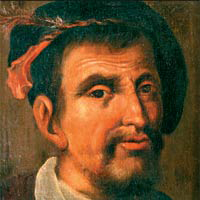
Half a millennium earlier in Seville, Spain, Hernando Colón (1488–1539) had the same ambitious aim: to create a library that would be universal in a way never before imagined because it would contain everything. And Colón really did try to collect everything: from precious manuscripts to books by unknown authors, from flimsy pamphlets to tavern posters, from weighty tomes to throwaway ephemera.

Colón’s bibliomania took him back and forth across Europe for three decades. According to Dr Edward Wilson-Lee, from Cambridge's Sidney Sussex College and the Faculty of English, he bought 700 books in Nuremburg over Christmas in 1521, before passing on to Mainz where he bought a thousand more in the course of a month. In a single year in 1530, he visited Rome, Bologna, Modena, Parma, Turin, Milan, Venice, Padua, Innsbruck, Augsburg, Constance, Basle, Fribourg, Cologne, Maastricht, Antwerp, Paris, Poitiers and Burgos, voraciously buying all he could lay his hands on.

Today, just over 3,000 books of Colón’s library remain. Until now, the life of this extraordinary man has largely escaped notice; it’s taken another revolution to grasp how visionary he was in recognising the power of tools to order the world of information.


read more from University of Cambridge

Simon V of Montfort and Baronial Government, 1195-1218 - G.E.M. Lippiatt

CoverDissenter from the Fourth Crusade, disseised earl of Leicester, leader of the Albigensian Crusade, prince of southern France: Simon of Montfort led a remarkable career of ascent from mid-level French baron to semi-independent count before his violent death before the walls of Toulouse in 1218. Through the vehicle of the crusade, Simon cultivated autonomous power in the liminal space between competing royal lordships in southern France in order to build his own principality. 

This first English biographical study of his life examines the ways in which Simon succeeded and failed in developing this independence in France, England, the Midi, and on campaign to Jerusalem. Simon's familial, social, and intellectual connexions shaped his conceptions of political order, which he then implemented in his conquests. By analysing contemporary narrative, scholastic, and documentary evidence-including a wealth of archival material-this volume argues that Simon's career demonstrates the vitality of baronial independence in the High Middle Ages, despite the emergence of centralised royal bureaucracies. More importantly, Simon's experience shows that barons themselves adopted methods of government that reflected a concern for accountability, public order, and contemporary reform ideals. 

This study therefore marks an important entry in the debate about baronial responsibility in medieval political development, as well as providing the most complete modern account of the life of this important but oft-overlooked crusader.

Behind the Lawrence Legend - Philip Walker

From Oxford University Press:
CoverT. E. Lawrence became world-famous as 'Lawrence of Arabia', after helping Sherif Hussein of Mecca gain independence from Turkey during the Arab Revolt of 1916-18. His achievements, however, would have been impossible without the unsung efforts of a forgotten band of fellow officers and spies. This groundbreaking account by Philip Walker interweaves the compelling stories of Colonel Cyril Wilson and a colourful supporting cast with the narrative of Lawrence and the desert campaign. These men's lost tales provide a remarkable and fresh perspective on Lawrence and the Arab Revolt.

While Lawrence and others blew up trains in the desert, Wilson and his men carried out their shadowy intelligence and diplomatic work. His deputies rooted out anti-British jihadists who were trying to sabotage the revolt. Meanwhile, Lieutenant Lionel Gray, a cipher officer, provided a gateway into unknown aspects of the revolt through his previously unpublished photographs and eyewitness writings. Wilson's crucial influence underpinned all these missions and steadied the revolt on a number of occasions when it could have collapsed. Without Wilson and his circle there would have been no 'Lawrence of Arabia'.

Yet Wilson's band mostly fell through the cracks of history into obscurity. "Behind the Lawrence Legend" reveals their vital impact and puts Lawrence's efforts into context, thus helping to set the record straight for one of the most beguiling and iconic characters of the twentieth century.

Sunday, March 31, 2019

Book on medieval India out


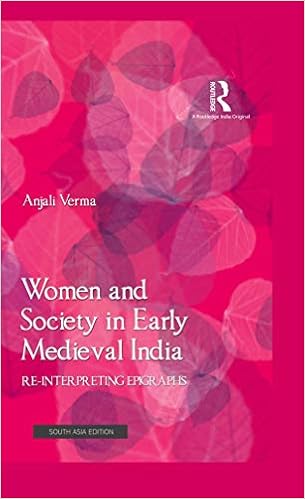
The book, written by Anjali Verma, titled as ‘Women and Society in Early Medieval India - Re-interpreting Epigraphs’ has been released during the Indian History Congress Session in Bhopal by a galaxy of eminent historians like R Mahalaxmi, BP Sahu, Irfan Habib, Ishrat Alam and Sucheta Mahajan.

The book is an extensive pan-India study on women and society of the early medieval period (600-1200AC) through more than 650 epigraphs. Anjali Verma is working as assistant professor, department of history, Himachal Pradesh University, Shimla. She specialises in ancient Indian history, culture and archaeology.


Threads of Life review: Clare Hunter embroiders a unique history


Threads of Life by Clare Hunter.Threads of Life should not be mistaken for a docile, meandering read about the joys of sewing. On the contrary, you can expect insightful, moving and thrilling stories, as Scottish-born textile artist and curator Clare Hunter singles out textiles with historical importance and pulls them into tight focus by pairing each one with a theme such as power, captivity, identity, loss and protest.

Hunter captures the sentiment perfectly: "Sewing is a way to mark our existence on cloth: patterning out place in the world, voicing our identity, sharing something of ourselves with others and leaving an indelible evidence of our presence in stitches held fast by our touch."


Saturday, March 30, 2019

Review: Odin's Game by Tim Hodkinson

Orkney, 931: A young woman flees her home to secure a life for her unborn child. Eighteen years later, a witch foretells that she must lose him once more. The subject of a Viking prophecy, it is Einar's destiny to leave Iceland and fight his father – of whom only only one will survive. As the clouds of war gather, he will fight unimaginable foes, forge new friendships, and discover what it truly means to be a warrior. Not everyone will survive, but who will conquer all?

Image result for thorfinn skull splitterI was immediately drawn to the first two words - Orkney 931. Finally some new historical fiction set in the 10th century, and littered with actual historical characters that were, themselves, larger than life. In the Scandinavian world, this was a period rife with political turmoil, with, at times, murderous power struggles between nations and families; it was an age of exploration and settlement as the Scandinavian world spreads out over northern Europe - to Greenland, Iceland, Scotland, Kiev; it was an age where old Gods were being replaced by one God, though in some instances it was hardly a smooth and voluntary process.

Into this we are introduced to Unn Kjartinsdottir, a woman who fled her home and now must send her only son, Einar, out into the Viking world to face his fate. This tale is styled in the manner of your typical hero's quest - a young man come of age must go out in the world, seek his true identity, battle with heroes against villains, or with villains against others, and return home. However, in this instance, this is also a saga steeped in fact and history, that takes us on a journey that is far from straight forward - the Viking world was as combative as it was poetic.

The story begins in Iceland - a land settled by those fleeing persecution or tyranny in the Norse Kingdom. As a fledgling nation populated mainly by farmers, the land is "ruled by The Law not Kings" with the Icelandic Free State coming into being in 930 with the establishment of the Althing (parliament). Its is about this time that Icelandic historians began to document the nation's history in books commonly referred to as the Sagas of Icelanders. Another topic discussed in detail is religion. The Norse Gods were still powerful influences in everyday life, whilst Christianity was still in its infancy. It wasn't until many decades after our story does the nation - as a whole - convert to Christianity (through an act of parliament). In fact new research has suggested that the eruption of the volcano Eldgjá in 939, may have been viewed as an apocalytic omen, signalling the end of the old Gods and the arrival of a new God as laid out in the "Vǫluspá" . 

Among the cast of wonderfully crafted dramatis personae, we are, as I mentioned, introduced to such real life extraordinary characters as Thorfinn "skull-splitter" Jarl of Orkney, Eric "blood-axe"; Gurthfrith, King of Dublin, each worthy of a tome of their own: 

Thorfinn "skull-splitter": the Heimskringla of Icelandic historian Snorri Sturluson, and the anonymous compiler of the Orkneyinga Saga, write that Thorfinn was the most powerful of all the earls of Orkney. He is said to have been earl for seventy-five years and ruler of nine earldoms in Scotland, of the Hebrides, and of part of Ireland. A sizable part of the account in the Orkneyinga Saga concerns his wars with a "King of Scots" named Karl Hundason whose identity is very uncertain.

Eric "blood-axe": Eric was the son of Norwegian King Harald Fairhair. According to the colourful Icelandic sagas he began his Viking career aged 12. On one expedition he met and married a witch called Gunnhild, the daughter of the king of Denmark. The sagas paint Bloodaxe – a name they gave to Eric – as a barbarian, a murderous tyrant whose savagery was shocking even by Viking standards. Contemporary evidence, mainly from the Anglo-Saxon chronicles, is less vivid.

Image result for vikings in icelandGuthfrith of Dublin: a Viking leader who ruled Dublin and briefly Viking Northumbria in the early 10th century. How he came to rule Dublin is often a matter of debate. He may initially have been a de facto ruler in his kinsman's stead, before heading to Northumbria to take control there. Six months later, after being ejected from Northumbria, he returns to Dublin, where he reigns and continues his wars against the Vikings of Limerick until his death a few years later.

This was a world I was familiar with, having read many of the Scandinavian Sagas - a must if you are looking to delve deeper into this era. The tale that Hodkinson weaves in the Skaldic tradition is a page-turner - a gripping action adventure like the sagas of old; and once finished, you just want to go back and read it all over again.  In fact the scene is set for more adventures.


read more here

Review: The Execution of Justice by Friedrich Durrenmatt

The Execution of Justice
Synopsis: A respected professor is dead - shot in a crowded Zurich restaurant, in front of dozens of witnesses. The murderer calmly turned himself in to the police. So why has he now hired a lawyer to clear his name? And why has he chosen the drink-soaked, disreputable Spat to defend him? As he investigates, Spat finds himself obsessed, drawn ever deeper into a case of baffling complexity until he reaches a deadly conclusion: justice can be restored only by a crime.


Interesting concept - a very public murder; a known killer; an unknown motive; an disorientating plot; the verdict - "justice can be restored only be a crime".

The plot is very disorientating - one never knows whether we are looking back, looking forward, or are in the moment (as my copious notes will attest). This may be as a result of the length of time it took to complete the novel (approx 30 years); instead the story weaves and totters like its alcoholic narrator. The twist at the end ... clever.

Sunday, March 24, 2019

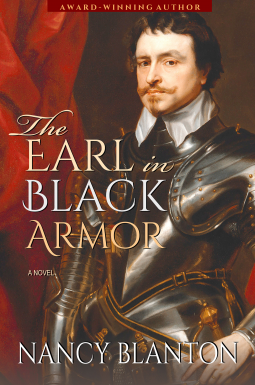
Review: The Earl in Black Armour by Nancy Blanton

IRELAND, 1635: England had recently completed a military conquest, which was further complicated by the official policy of plantations. The early decades of the seventeenth century saw a large number of native Irish landholders (particularly in Ulster) being replaced by New English and Scottish protestant settlers, who totally dominated the colonial administration in the kingdom. They viewed their catholic neighbours with distrust and disdain, and actively discriminated against them.


Most of the Irish upper classes, however, were not ideologically opposed to the sovereignty of the King of England over Ireland, but wanted to be full subjects of the triple Stuart monarchy and maintain their pre-eminent position in Irish society. This was prevented by their religious dissidence and the threat posed to them by the extension of the Plantations. The Protestant settler-dominated Government of Ireland tried to confiscate more land from the native landowners by questioning their medieval land titles and as punishment for non-attendance at Protestant services. In response, Irish Catholics appealed directly to the King, first to James I and then Charles I, for full rights as subjects and toleration of their religion: a program known as The Graces. On several occasions, the Monarchs appeared to have reached an agreement with them, granting their demands in return for raising taxes. However, Irish Catholics were disappointed when, on paying the increased levies, the King postponed the implementation of their demands. What was more, by the late 1630s, Thomas Wentworth, Charles' representative in Ireland, was proposing further widespread confiscations of native land to break the power of the Irish Catholic upper classes. It is likely that this would eventually have provoked armed resistance from Irish Catholics at some point, but the actual rebellion was sparked by a political crisis in Scotland and England that led to civil war in the three Kingdoms.

Richard Burke, 4th Earl of Clanricarde, was an Irish nobleman and politician, in addition to being one of the leading landowners in Ireland. His power and influence in Connaught was the source of increasing animosity between himself and the acquisitive Dublin government, who decided to use the method of empanelling juries to "find" defective titles, in order to recover the lands in question for the English Crown. And yet, as Viscount of St Albans, Burke had official immunity from these recusancy proceedings. 

Thomas Wentworth, 1st Earl of Stafford, whose tenure as Lord Deputy of Ireland would have long and damaging consequences (It is likely that this would eventually have provoked armed resistance from Irish Catholics at some point, but the actual rebellion was sparked by a political crisis in Scotland and England that led to civil war ), was not above using a method of bullying and curated jury selection in his persecution of Catholics as he made his way through the west coast of Ireland in his quest to secure lands for the Plantations.

It is against this backdrop that the opening scenes are played out - a jury in Galway refuses to find the King's title (prerogative) to land under the Sovereignty Act of 1633:
Oure Soverane Lord With advyse consent and assent of the whole estaites acknowledging his Majesties Soveraigne authoritie princelie power royall prerogative and priuiledge of his crowne over all estaites persones and causes quhatsumevir within this kingdome Ratifies and approues the act of parliament maid in the yeir 1606 Anent the kings royall prerogative And perpetuallie Confirmes the same for his hienes his airs and successors Als amplie absolutelie and frielie in all respectis as ever any of his Majesties royall progenitors did possess and exercise the same . . .
The jury subsequently find themselves imprisoned in Dublin castle (Aug 1635) and a substantial fine (or ransom) is imposed on Ulick Burke, who has now succeeded to the lands of Clanricarde upon the untimely death of his father, for their release. 

" .... can it be imagined that a stranger should come to this county of Galway and think to compass his ends ..."  (Ulick Burke, 1st Marquess of Clanricarde, 1642)

Meanwhile, Faolán Burke is sent to Dublin to spy on Thomas Wentworth, with two aims: to free the imprisoned jurors and to discover any dark deeds that could force King Charles to recall Wentworth to England. This shouldn't be too hard as Wentworth was collecting enemies through not upholding the promises to return lands back to the landowners in return for their full support. In politics, however, nothing is ever quite that simple. The story of Thomas Wentworth is played out through the eyes of Faolin Burke, who is now in his service and travels freely with Wentworth throughout England and Ireland, and is there to act witness.

The view of Charles I during this period is not that of a benevolent and popular figure - here he is portrayed as a tyrant, who has crippled his subjects with taxes and forcing them to war. In London and elsewhere, bloody riots and fires result in the King's termination of Parliament - chaos and arrest soon follow.

Wentworth laments "... never came a man to so lost a business ..." and yet he still continues with his unpopular policies in his service of the King ".... I am but a servant. I must stand by my beliefs .."

Without delving further and revealing all, this is a well researched and crafted tale, which keeps the reader wondering just how far into Wentworth's career the author is taking them. This is one in a series, though can be read as a stand alone novel. It is long as there is much to encapsulate, and a knowledge of the period is recommended.


Further reading:
A New History of Ireland: Volume III: Early Modern Ireland 1534-1691 by T. W. Moody, F. X. Martin, F. J. Byrne
Contested Island: Ireland 1460-1630: Ireland 1460-1630 by SJ Connolly
Divided Kingdom: Ireland 1630-1800 by S. J. Connolly
The Political World of Thomas Wentworth, Earl of Strafford, 1621-1641 edited by J. F. Merritt
Thomas Wentworth: First Earl of Strafford, 1593-1641 : a Revaluation by Cicely Veronica Wedgwood
Thine is the kingdom: the trial for treason of Thomas Wentworth, Earl of Strafford, First Minister to King Charles I and last hope of the English Crown by John H. Timmis
Strafford in Ireland 1633-1641: A Study in Absolutism by Hugh F. Kearney


Further reading online:
The Earl of Strafforde's Letters and Dispatches: Volume 1 by Thomas Wentworth Earl of Strafford
The Last Speeches of Thomas Wentworth, Late Earle of Strafford, and Deputy of Ireland: The One in the Tovver, the Other on the Scaffold on Tower-Hill, May the Twelfth 1641 : Together with His Deportment Before and at the End of His Execution
Two Speeches Made by Sr. Thomas Wentworth Now Earle of Strafford, in the Parliament Holden at VVestminster, 1628: The One Concerning the Liberty of the Subject : the Other the Priviledge of the Houses of Parliament