Tuesday, September 29, 2015

Septembers Additions - Part 2


Part 2 of September's additions to the Library include:


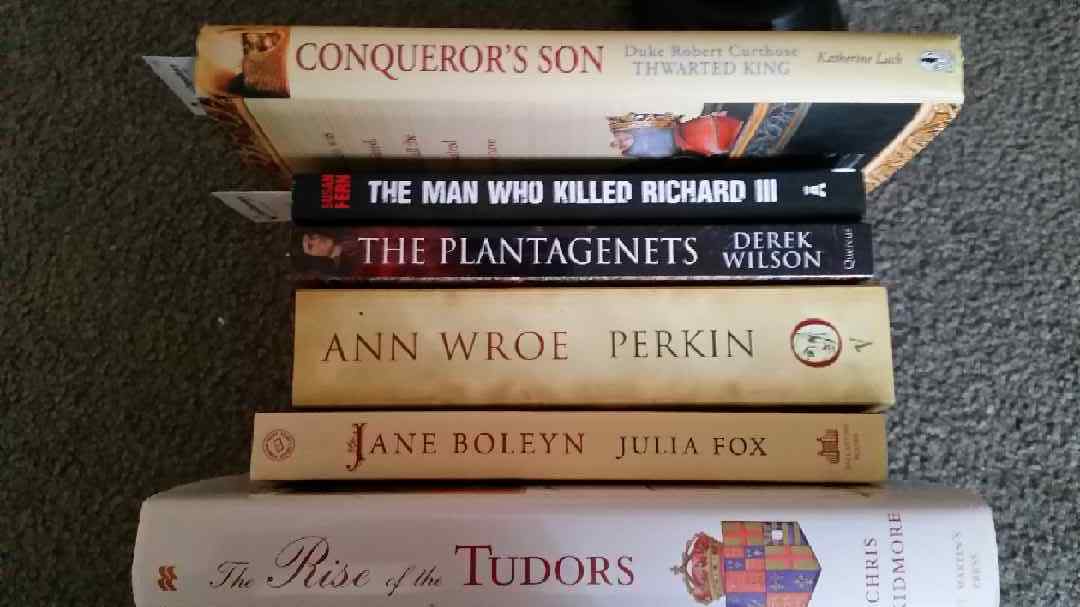
Conqueror's Son : Duke Robert Curthose, Thwarted King by Katherine Lack - In "Conqueror's son" Katherine Lack redresses the balance of opinion on Robert Curthose. There is no doubt that Robert was rebellious, but the fact remains that the throne of England was meant to pass to him on the death of William the Conqueror. William Rufus and Henry I were thus usurpers, which casts a new light on English history.

The Man Who Killed Richard III : Who Dealt the Fatal Blow at Bosworth? by Susan Fern - On 22 August 1485 on a battlefield in Bosworth, Leicestershire, King Richard III, the last of the Plantagenet kings, was dealt a death blow by the man who had sworn loyalty to him only a few months earlier. That man was Rhys ap Thomas, a Welsh lord, master of Carew Castle in Pembrokeshire. For his service that day he was knighted on the field of battle by Henry Tudor. 

The Plantagenets : The Kings That Made Britain by Derek Wilson - Featuring some of England's greatest but also most notorious kings, the house of Plantagenet would reign for over 300 blood-soaked, yet foundational, years. 

Perkin: A Story of Deception by Anne Wroe - Anne Wroe manages to achieve the impossible: to reconstruct the life of a young man whose identity can never be taken for granted. On the way she described in breathtaking detail the illusions, longing and deceptions that characterised the last years of the fifteenth century: a world quickly losing its medieval certainties, and trembling on the brink of a whole new age of discovery.

Jane Boleyn : The Infamous Lady Rochford by Julia Fox - The story of Henry VIII's queens - as seen through the eyes of Jane Rochford, sister-in-law to Anne Boleyn and cousin to Katherine Howard. Jane Rochford was sister-in-law to Anne Boleyn and Lady of the Bedchamber to Katherine Howard, whom she followed to the scaffold in 1542. 

The Rise of the Tudors : The Family That Changed English History by Chris Skidmore - The Rise Of The Tudors is much more than the account of the dramatic events of that fateful day in August 1485. It is a tale of brutal feuds and deadly civil wars, and the remarkable rise of the Tudor family from obscure Welsh gentry to the throne of England--a story that began sixty years earlier with Owen Tudor's affair with Henry V's widow, Katherine of Valois.

Septembers Additions - Part 1

September was a busy month in the Library for additions.  Part 1 includes the following:

Ducal Brittany, 1364-99 : Relations with England and France During the Reign of Duke John IV by Michael Jones - 
Traditionally John IV, Duke of Brittany has been considered an Anglophile. This book re-examines his role in Anglo-French relations by a full study of the diplomatic, administrative and military evidence. It suggests that the Duke's policies were designed principally to create an autonomous duchy.

The Franks : From Their Origin as a Confederacy to the Establishment of the Kingdom of France and the German Empire by Lewis Sergeant - That aim implied that the greater part of the volume should be devoted to periods in which the historical foundation was least secure-to the long struggle between Romans and Teutons, during which the tribes on the east of the Rhine were perpetually combining against their enemies until the Frank confederacy clearly emerged, and to the subsequent Merovingian period, during which the Franks were gradually subjecting the whole of Gaul.

A Tale of Two Murders : Passion and Power in Seventeenth-Century France by James Farr - As scandalous as any modern-day celebrity murder trial, the "Giroux affair" was a maelstrom of intrigue, encompassing daggers, poison, adultery, arch-enemies, servants and royalty, and legal proceedings that reached to the pinnacle of seventeenth-century French society.

Medieval Naples : A Documentary History, 400-1400 by Ronald Gusto - This is the first comprehensive English-language collection of sources yet to treat the city of Naples from late antiquity to the beginning of the Renaissance. Sources are drawn from its historical, economic, literary, artistic, religious and cultural life from the fall of Rome through the Byzantine, ducal, Norman, Hohenstaufen and Angevin periods.

Monday, September 28, 2015

Patti Smith: 'It's not so easy writing about nothing'


M Train tells the story of Patti Smith's musical creativity. She was such an influential part of the punk rock movement that it’s easy to forget she had influences of her own. Her new memoir M Train follows the journey that led her to create her most iconic work. The “train” in this memoir stops at 18 “stations,” each representing one of the most significant turning points in Smith’s life, that she believes were responsible for shaping her creative identity.


M Train begins in the tiny Greenwich Village cafe where Smith goes every morning for black coffee, ruminates on the world as it is and the world as it was, and writes in her notebook. Through prose that shifts fluidly between dreams and reality, past and present, and across a landscape of creative aspirations and inspirations, we travel to Frida Kahlo's Casa Azul in Mexico; to a meeting of an Arctic explorer's society in Berlin; to a ramshackle seaside bungalow in New York's Far Rockaway that Smith acquires just before Hurricane Sandy hits; and to the graves of Genet, Plath, Rimbaud and Mishima. Woven throughout are reflections on the writer's craft and on artistic creation. Here, too, are singular memories of Smith's life in Michigan and the irremediable loss of her husband, Fred Sonic Smith. Braiding despair with hope and consolation, illustrated with her signature Polaroids, M Train is a meditation on travel, detective shows, literature and coffee. It is a powerful, deeply moving book by one of the most remarkable artists at work today.

How to Plan a Crusade by Christopher Tyerman review – the role of reason in medieval religious wars | Books | The Guardian


This book opens disarmingly with a novice historian stumbling through a lecture, “wondering why he had ever begun”. He is saved by his students, who storm the hall and, with cries of “Deus lo volt”, demand to be taken to Jerusalem, AKA the pub next door. Thirty-six years later, Christopher Tyerman, now professor of the history of the Crusades at the University of Oxford, returns to the subject of his lecture: how to plan a crusade.

How to Plan a Crusade is serious and scholarly, the synthesis of decades of work on difficult, fragmented sources. Administrative records weren’t routinely kept until around 1300, which makes Tyerman’s task harder and more impressive. 


Tuesday, September 22, 2015

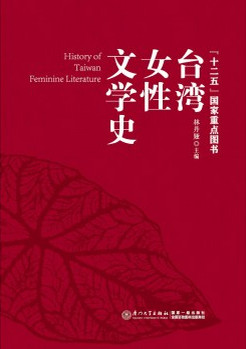
History of Taiwan Feminine Literature

A new book, which maps out the historical lineage of Taiwan women's literature spanning from ancient times to the early 21st century, was launched at the 11th Cross-Strait Book Fair held in Xiamen, a coastal city in southeast China's Fujian Province, on September 12.
The book titled "History of Taiwan Feminine Literature", consists of nearly a million characters. It deftly portrays the origin, development and evolution of the distinctive South Asian literary arena.
Publishing insiders recognize that the book is the first on the Chinese mainland to feature such a long time span of Taiwanese literature studies, filling a notable gap in the history of Chinese literature, and of women's literature worldwide.

Tuesday, August 25, 2015

Agincourt, by Anne Curry - book review: The archers omnibus - Reviews - Books - The Independent

Agincourt, by Anne Curry - book review

Anne Curry’s interesting, commendably accessible, and admirably well researched book commemorates this autumn’s 600th anniversary and is very good at sorting fact from fiction. She begins by piecing together what actually happened when Henry V led a smallish English army against a large French one in an expansionist bid to seize France. She uses a number of contemporary or near-contemporary accounts. 

Yes, Henry really was a charismatic orator well able to whip up the morale of his men. Yes, the sky was, at one point, dark with a shower of English arrows. Yes, he named the battle after a nearby castle. And he most definitely gave an order to kill the French prisoners. Shakespeare included that, of course. Olivier omitted it. The last thing Britain needed in 1944 after five years of war with Germany was a film about an English leader with  ambivalent morality. 

University of Delaware Library acquires rare Shakespeare quarto

University of Delaware Library acquires rare Shakespeare quarto


The University of Delaware Library has announced the purchased acquisition of a rare early quarto edition of a play by William Shakespeare and John Fletcher, The Two Noble Kinsmen (London: by Tho. Cotes, for John Waterson, 1634). 

The piece was made possible with support from the B.H. Breslauer Foundation; the University of Delaware Library Associates; the College of Arts and Sciences; the recently retired Lois Potter, professor emeritus of the Department of English; and Mark Samuels Lasner, senior research fellow in the Special Collections Department.

Q5: Professor emeritus explores Middle Ages with new novel


After a long and eventful military career, including battalion command in Vietnam and four tours as an intelligence officer and Russian foreign area specialist in Europe during the Cold War, Col. George Steger began a second career in academia. He is a professor emeritus in history and international affairs at the University of Saint Mary. He has written a book entitled “Sebastian's Way.”

The novel is the story of two men: Charlemagne, “The Thunderer,” master of all Europe in the 8th century, who fights and rules like the pagan enemies he seeks to conquer, and Sebastian, a young warrior who challenges the king to forge a new path to peace. The pitch of the book is how difficult it is to have radically different ideas from those around you, especially if you are right and those in authority are wrong. Being different needs courage and a very good reason, and one needs to be prepared to pay the price. The background for the novel was the 30-year war Charlemagne fought with the Saxons.

Tuesday, June 23, 2015

May Additions

Although May has long gone and June has all but vanished, below are the recent additions to the Library for May 2015.


I love Marlowe and Richard III - so these will make welcome additions to my Wars of the Roses - Elizabethan Poets shelves.  I am not averse to reading various authors - it just adds to a more rounded view of a character.  So read nothing into the choice of authors!